

For this edition of Classic Ink we are going to take a look back at ads and promotional material for Honda’s 1986 ATV lineup.
The 1986 season was an important one in the ATV world. Increasing pressure from the US government and the runaway success of Suzuki’s quad lineup was quickly pushing the Japanese away from three-wheeled ATVs. In production since 1971, Honda’s ATCs had been a phenomenon during the late seventies and early eighties. The little three-wheelers were everywhere, piloted by children, parents, and enthusiasts alike.
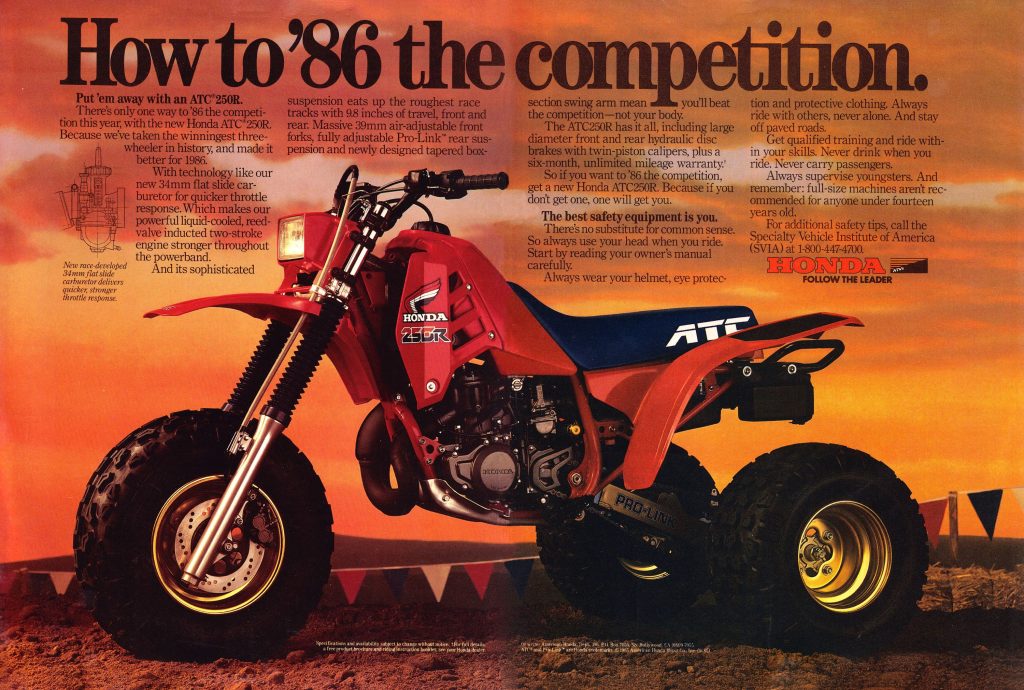 The ultimate expression of ATC performance, Honda’s iconic ATC250R ruled the high-performance three-wheeled market from its introduction in 1981 through its retirement in 1986. Strong challenges from Kawasaki and Yamaha put pressure on the ATC250R, but it was the arrival of Suzuki’s revolutionary LT250R Quadracer that finally spelled the end of the 250R’s reign at the top of the ATV standings.
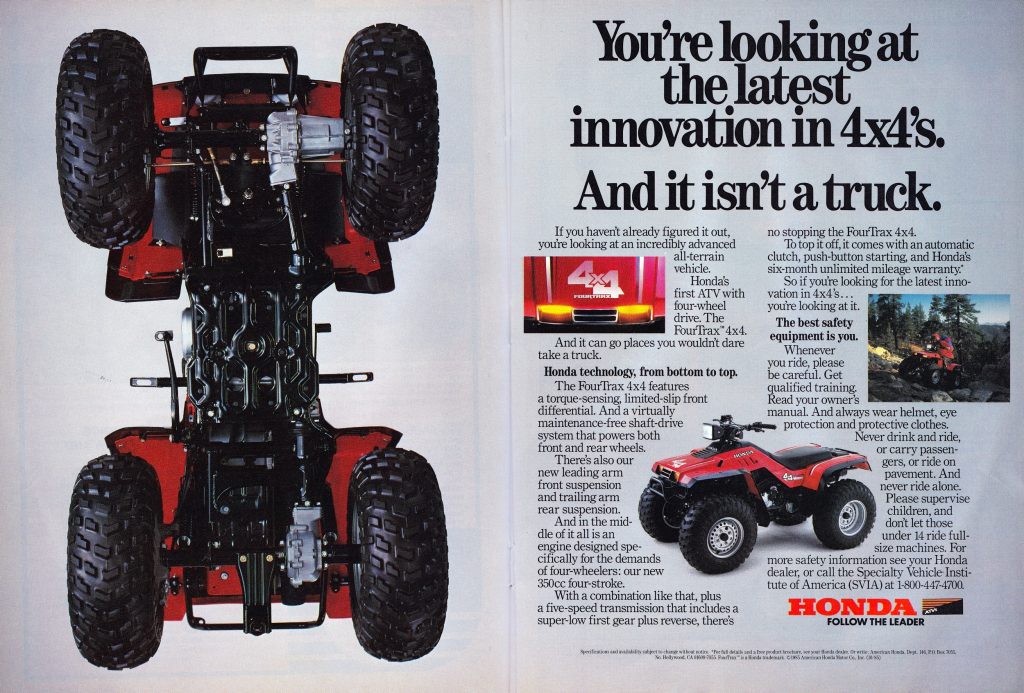 Today, 4×4 ATVs are the backbone of the ATV industry but in 1986, the idea of a go-anywhere four-wheel drive ATV was quite an innovation. Today, the Fourtrax’s 350cc four-stroke single would be underwhelming in a world full of 1000cc fuel-injected behemoths, but in 1986, this little 4×4 could take you places that no other ATV could hope to reach.
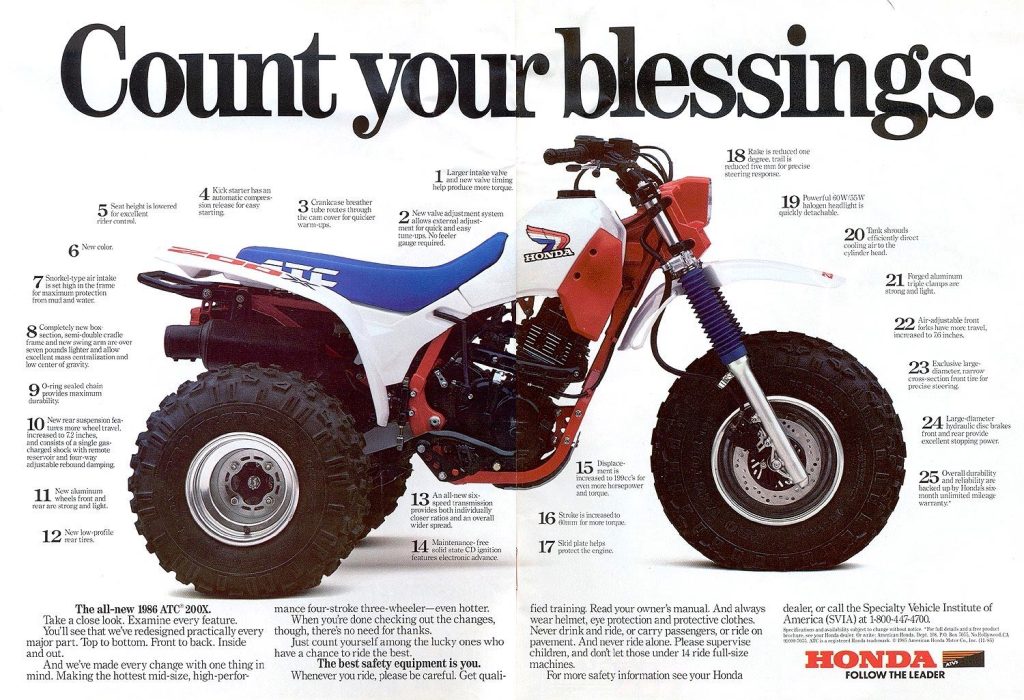 Introduced in 1983, the Honda ATC200X perfectly captured everything that made Honda’s three-wheelers so popular in the early 80s. With solid power, excellent suspension, and surprisingly good handling for an ATC, the 200X delivered some of the most grins-per-dollar in the entire off-road world.
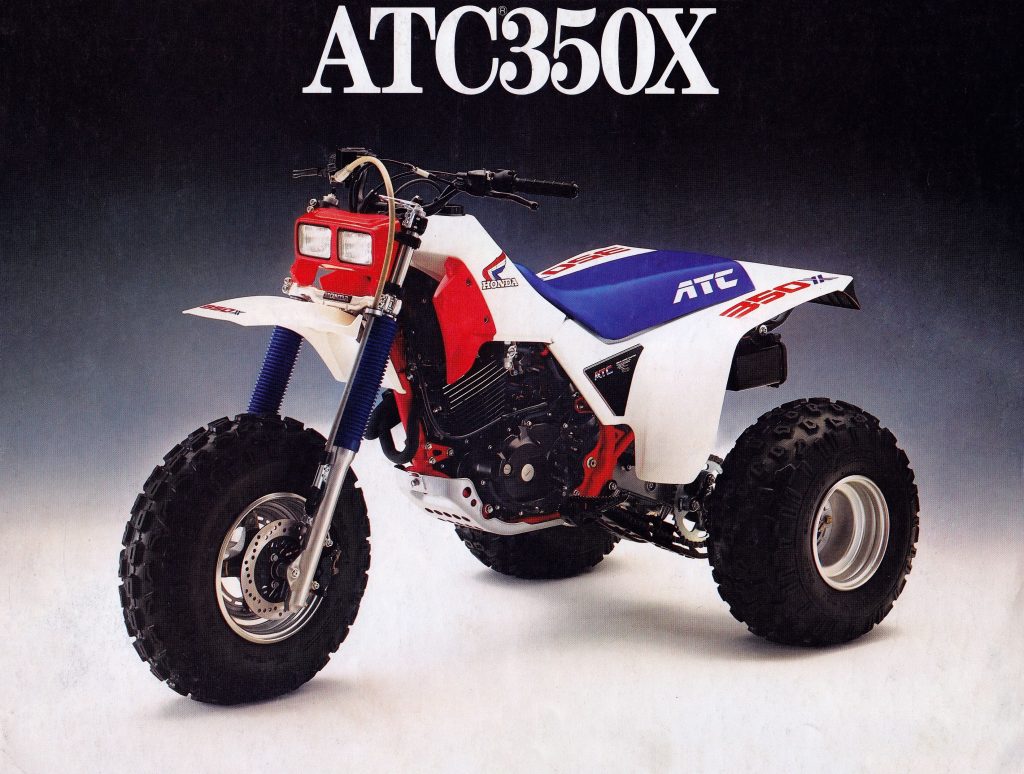 The ATC200X picked up a big brother in 1985 in the form of Honda’s all-new ATC350X. Powered by a torquey 350cc OHC four-stroke, the 350X was much more of an expert-only machine than the playful 200X. After two short seasons on the market, the 350X would roost off into the sunset at the end of the ’86 season.
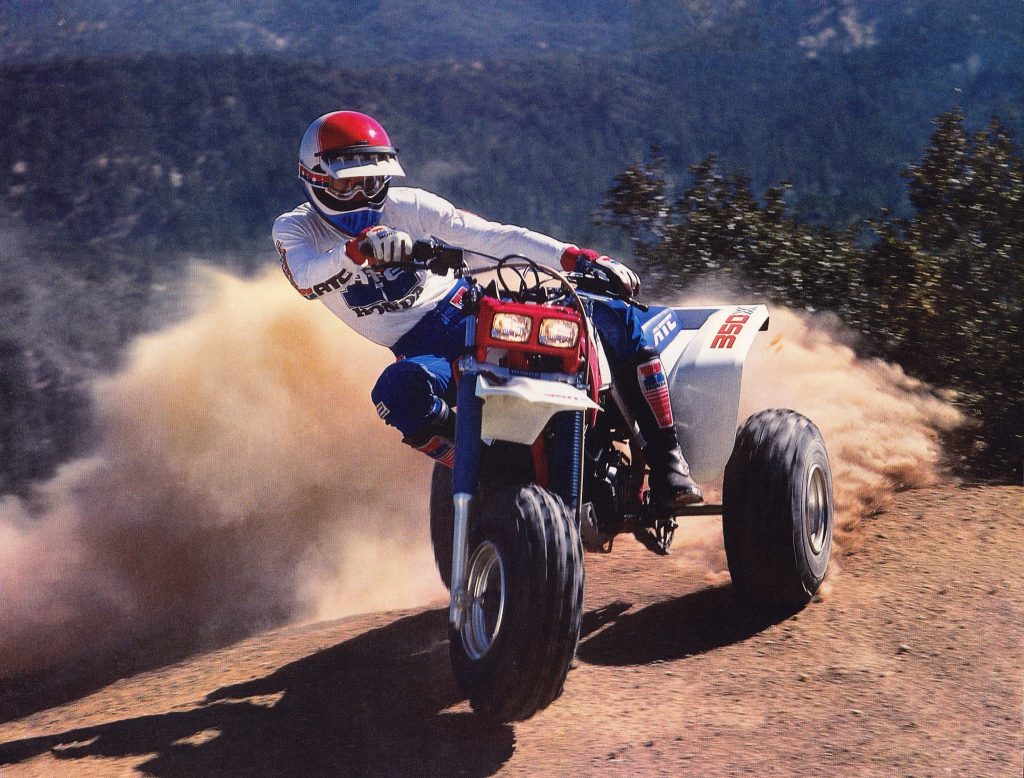 With its potent motor, high center of gravity, and tall balloon tires, the stock ATC350X could be a real handful — especially for inexperienced riders. It was very easy to run out of talent long before the 350X ran out of performance.
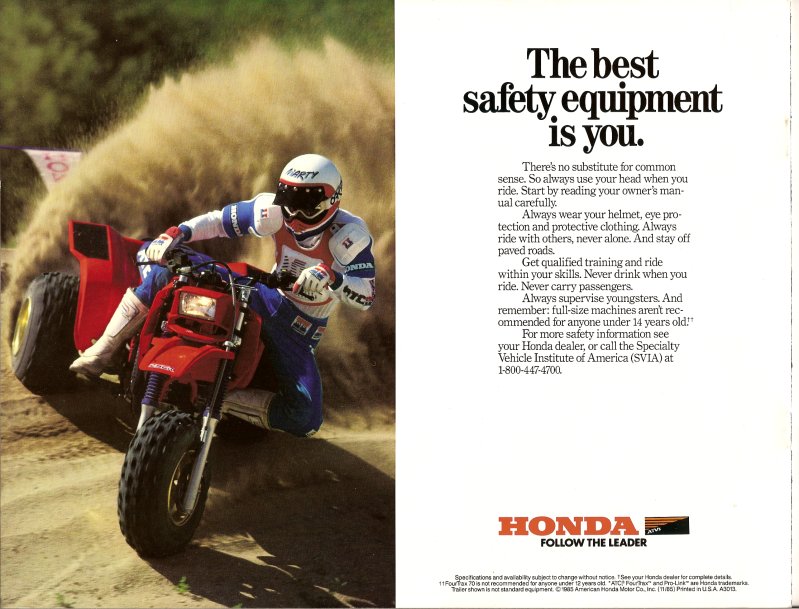 In the early to mid-1980s, Honda ran several magazine ads promoting helmet use and safe ATV riding. Yet the handwriting was already on the wall for the ATC and its three-wheeled siblings. Intense scrutiny from the federal government and mainstream media proved too much for these fun but often tricky-to-handle machines.
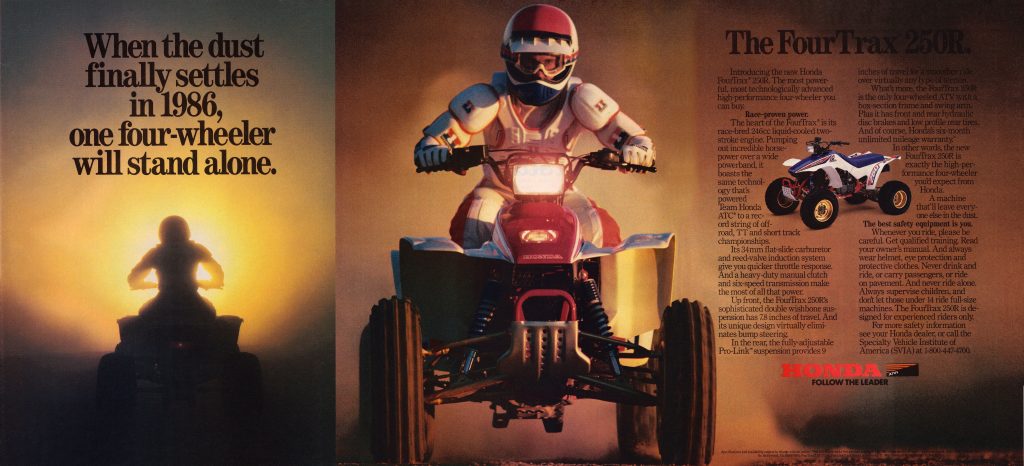 A year after the introduction of Suzuki’s Quadracer, Honda unveiled its own high-performance four-wheeled competitor in the form of the all-new TRX250R Fourtrax. The Fourtrax was predictably a bit slower than its ATC cousin, but its superior handling more than made up for any drag racing deficiencies. With broad power, excellent handling, and well-sorted suspension, the Fourtrax 250R continued to dominate high-performance ATV racing long after its retirement in 1989.
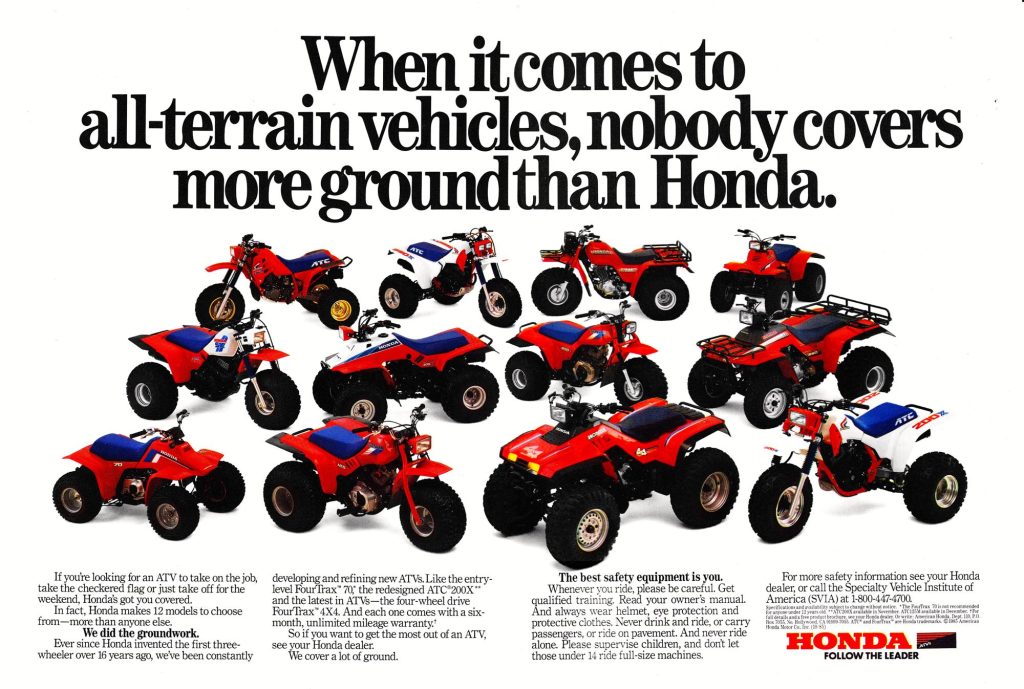 After 1987, Honda ended production of its ATCs and shifted to a quad-only portfolio following an agreement between the major ATV manufacturers and the U.S. Consumer Product Safety Commission (CPSC). While the “ATV Consent Decree” was the final nail in the coffin for three-wheelers, the move to more stable and easier-to-handle four-wheelers was likely inevitable.