
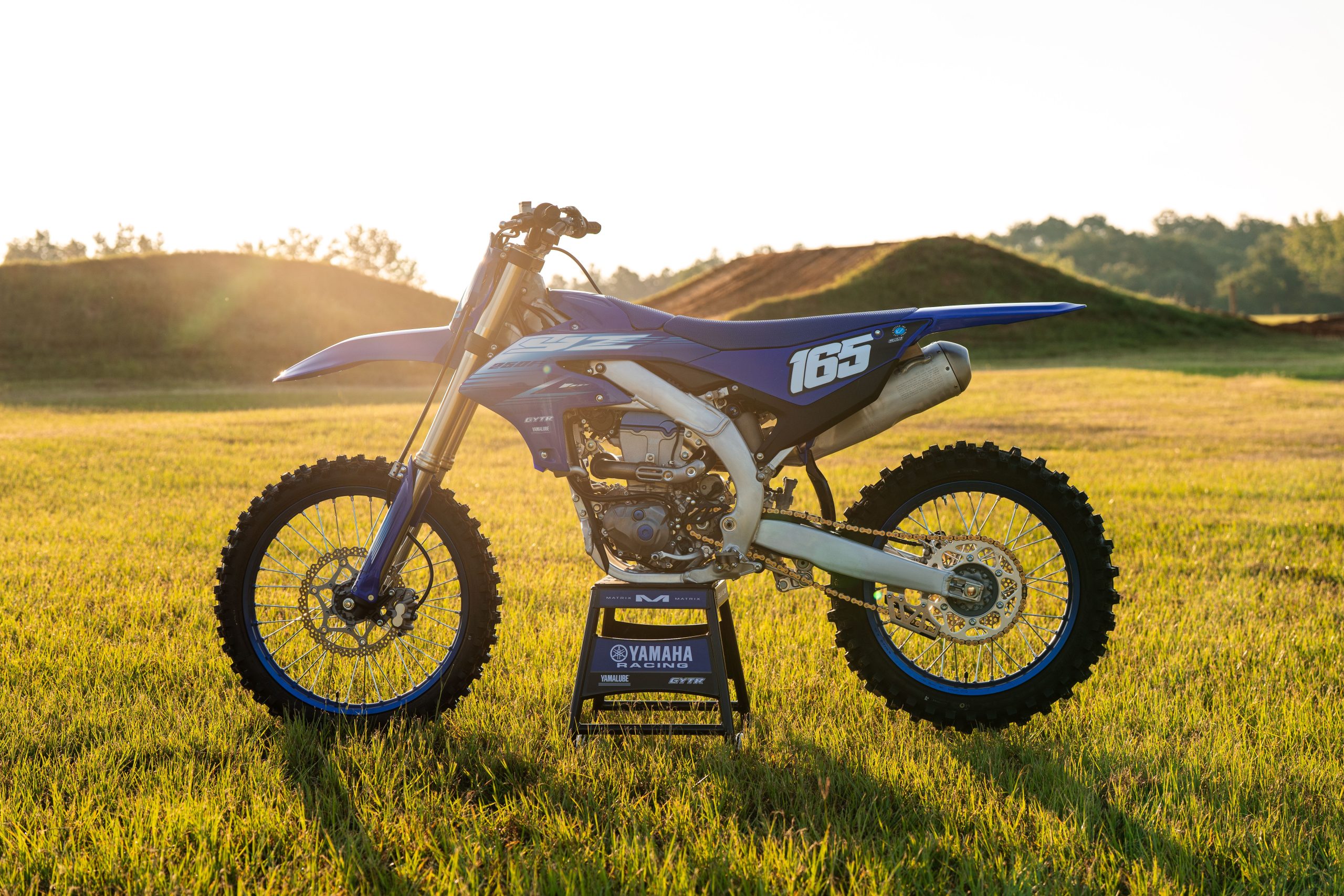
The Yamaha YZ250F enters 2027 as an extensively redesigned 250cc four-stroke motocross bike. Yamaha has gone far beyond a graphics update, giving the YZ250F a new engine, new frame, hydraulic clutch, revised suspension and a host of other changes aimed at making it have longer pulling power, easier to ride and better handling. We had the chance to travel to Club MX to ride the all new blue machine so we put together “10 Things” you may want to know.
1. How Is The Engine?
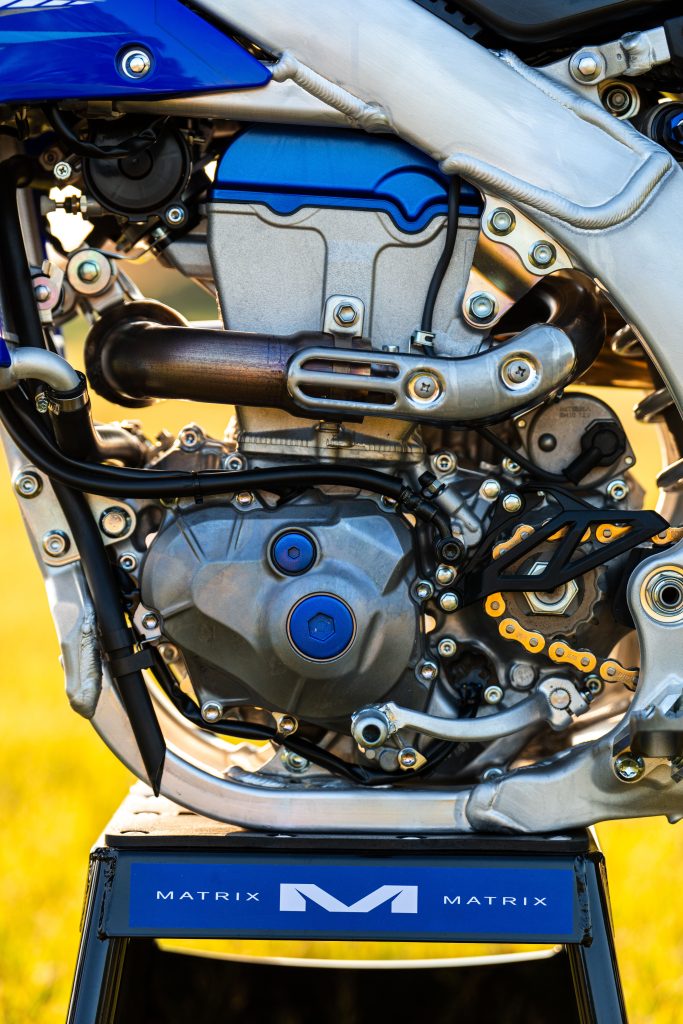
The biggest story is underneath the bodywork. Yamaha has completely redesigned the 250cc liquid-cooled, DOHC four-stroke engine, with the goal of increasing power and torque throughout the rev range while making the delivery more linear and controllable. Did they succeed this? Yes! The 2027 machine didn’t lose bottom end (but didn’t gain any) and pulled much farther in second gear than we expected. Out of corners the new YZ250F invited us to keep it in the same gear and allowed us to be lazier, yet more aggressive all in the same straight! Lazy because we didn’t need to shift so soon and more aggressive because the new engine likes to live up in high rpms. Third gear feels shorter than the 2026 version as the new engine doesn’t pull that middle gear as long but we were told that 3rd gear spacing internally is a little tighter so this made sense. Shifting to fourth however isn’t a problem as the new engine with the 13/49 gearing ratio pulls fourth gear better/without feeling lazy like the 2026 did if we shifted too early into fourth gear.
The new engine also gets a 700-rpm increase in its rev limit and we think with this new rev cut that it allows more freedom within your riding. It opens the track up a little more for you to take a tighter line and/or rail the outside and jump that double that may be right of the corner and have you guessing if you need to shift to third. You don’t, the new 2027rev-cut babysits you more than the 2026 did. We really liked the new engine character!
2. Yamaha borrowed technology from the YZF-R1.
One of the more interesting changes is the new valve-train design. The YZ250F uses a rocker arm with a finger-follower system derived from Yamaha’s YZF-R1 SuperSport program.
Combined with intake refinements, the system helps the 250F breathe better and operate at higher engine speeds. Yamaha has also fitted new double-spring intake valves to provide the stability required by the higher-revving engine. This accommodates that longer power feel.
3. The chassis is now closely related to the YZ450F.
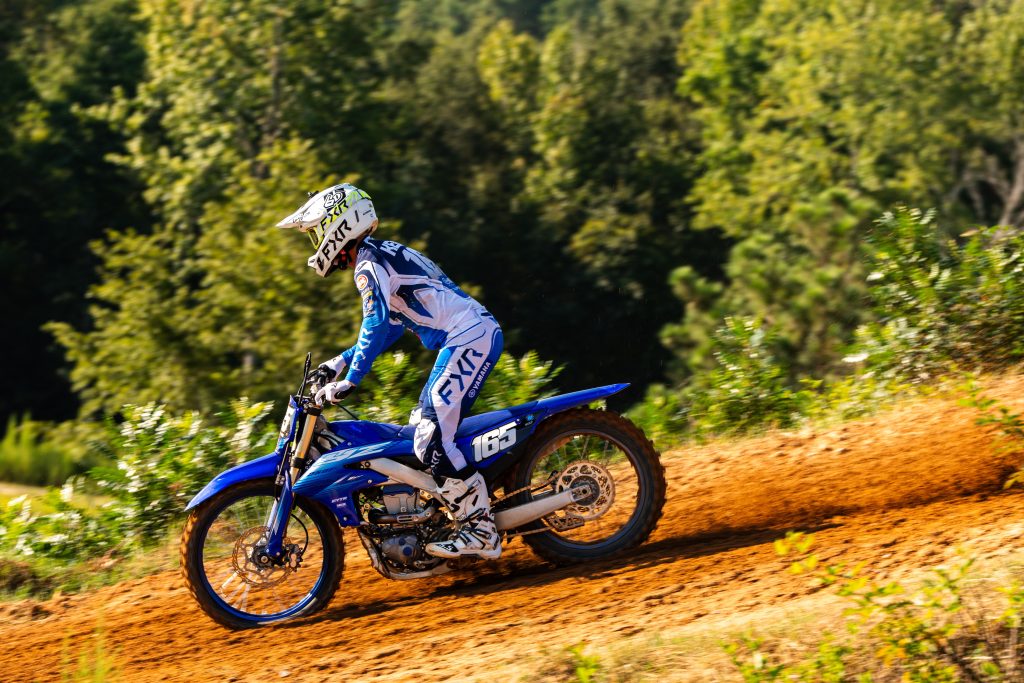
The 2027 YZ250F adopts Yamaha’s compact aluminum bilateral-beam frame derived from the YZ450F. The frame has been redesigned around a different balance of rigidity and flex, including a thinner front downtube and redesigned engine mounts. Yamaha says the changes are intended to produce a calmer front end, improved stability and better cornering performance.
Did it do that? We feel like it did but we also had really good traction at Club MX so it felt like it stuck inside the ruts better than the older bike. We didn’t have an older bike to ride back to back but I did ride a 2026 the week before on the same track and can feel that the new chassis feels lighter in corners as well as feels more planted. What we don’t know yet is if it feels as rigid as the 450 frame but we will be diving into this soon!
In practical terms, Yamaha is targeting a bike that’s easier to put into a rut, easier to hold on a chosen line and more predictable when the track gets rough. So far we know that two out of those three statements are true.
4. The cable clutch is gone. Is this bad?
Sigh… Kinda.. For 2027, Yamaha replaces the previous cable-operated clutch with a hydraulic clutch. The new design uses a disc spring and integrates the primary gear and clutch basket into a single steel unit. The objective is a lighter, smoother and more consistent clutch feel, with less need for riders to make on-track adjustments. Yamaha succeeded and the hydraulic clutch on the 2027 YZ250F doesn’t feel as on/off as the YZ450F. So far so good! For racers who spend an entire moto working the clutch adjuster, that’s potentially one of the most noticeable upgrades for you
5. How’s the updated KYB suspension?
Yamaha isn’t starting from scratch with the YZ250F’s suspension because its KYB package has long been one of the bike’s strengths.For 2027, the fork receives revised settings while the rear gets a new KYB shock with updated damping characteristics. Yamaha says the changes reduce bump reaction and pitching while improving control. That is also a true statement.
There is less fore/aft movement and I like that the rear feels up while under acceleration. There’s also a new hand-operated low-speed compression clicker on the rear shock, making trackside adjustments easier. We ran the suspension a little stiffer back east for my 185 pound ass so going to a stiffer fork setting of +2 and a shock sag of 102 and a LSC setting of +2 stiffer helped on bigger jump landings. I do enjoy the damping quality feel of the new suspension settings that KYB came up with as even when I bottomed the fork/shock there was still some comfort near the end of the stroke.
6. A quieter YZ250F that still performs?
Noise regulations are becoming increasingly important in motocross, and Yamaha has redesigned both the intake and exhaust systems for the 2027 model. The revised airbox and exhaust system are designed to meet FIM/AMA noise requirements, despite the engine’s increased output and higher rev limit.
That’s an interesting engineering challenge: Yamaha claims more performance while simultaneously reducing overall noise. I do feel like Yamaha made a better sounding exhaust note without the loud suction of the intake (due to not having frontside holes on the air box cover). Gone is the raspy muffler tone. The ECU setting feels cleaner without no de-cel popping and my ears were not bleeding after one day of riding! That is success to me!
I did try a 2027 GYTR YZ250F with their larger airbox/cover with holes and an FMF slip on. My ears were ringing once again but I did get more mid range pulling power which was nice but to me I would rather keep the quieter suction sound of the closed off airbox. The FMF slip on sounds great but it is a little louder to the ear. I think the move would be to go with the larger GYT airbox with the closed off 2027 cover and FMF slip on! Thank me later!
7. The Yamaha Power Tuner App.
The YZ250F continues to use Yamaha’s Power Tuner App, which lets riders adjust the motorcycle’s electronic engine-management characteristics. I think this app is the best in business as it can alter the power curve and is fairly easy to navigate your way around the app!
For 2027, Yamaha retains features such as engine tuning, traction control and launch control while adding an ECU lock function. The lock can prevent unauthorized engine start-up through the app. AKA some dude isn’t going to wheelie away on your new steed! For racers, the ability to quickly alter engine character without immediately reaching for a laptop or aftermarket ECU remains one of the YZ250F’s biggest advantages.
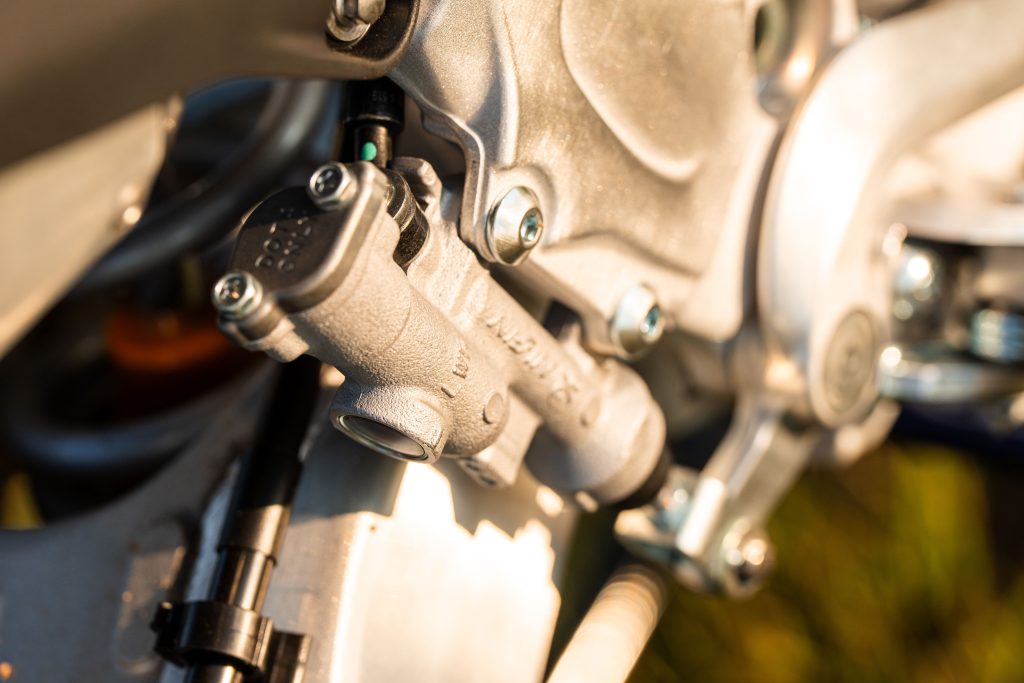
8. Yamaha’s rear brake set up.
The rear braking system is smaller and lighter for 2027.
Yamaha reduced the size of the rear caliper piston, master-cylinder piston and brake disc while also making changes to the brake line and rotor hardware. The goal is to reduce unsprung weight while delivering a more linear buildup of braking force. I did not feel a difference.
The rear brake pedal tip also switches to bolt-type fasteners, making maintenance simpler. This is awesome for you west coast moto guys because rocks are more apparent out on the west coast. GH always bends my brake tip so now I can just change it with two bolts.
9. The bodywork gets slimmer.
The 2027 YZ250F gets a visual overhaul that brings it closer to the latest YZ450F. Changes include a slimmer front number plate, new two-piece side covers, a sharper rear fender and updated YZ graphics. Yamaha has also fitted a honeycomb-pattern seat cover designed to make it easier to slide forward while providing more grip against sliding backward under acceleration. C
The result is a more compact-looking motorcycle with an emphasis on rider movement.
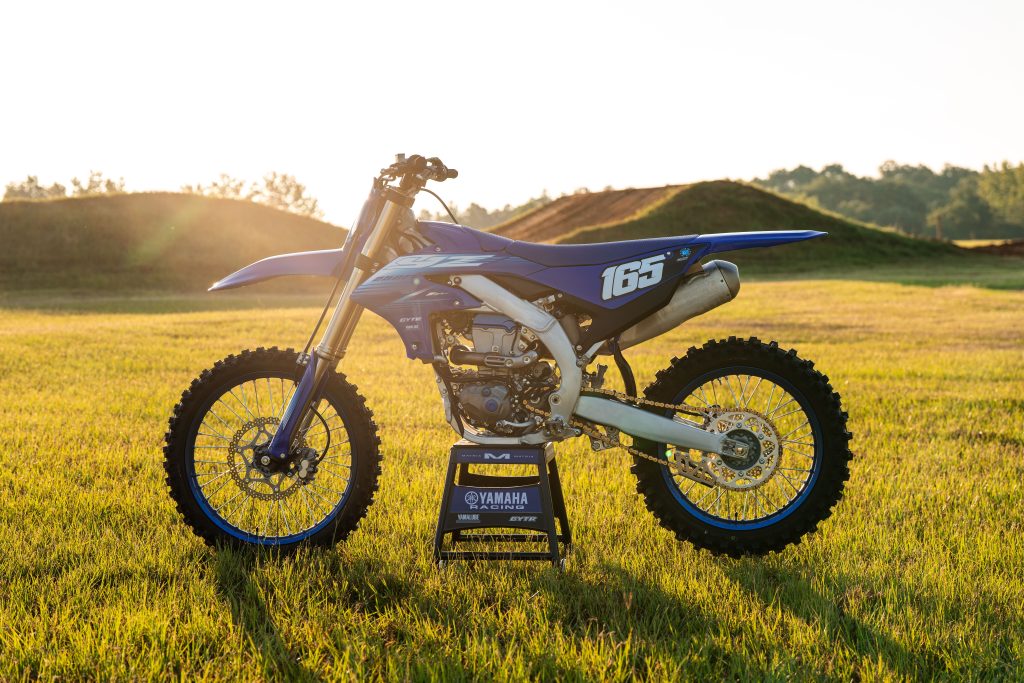
10. Yamaha by the numbers.
According to Yamaha’s official specifications, the 2027 YZ250F has a 77.0 x 53.6mm bore and stroke (same as last year), a 14.1:1 compression ratio, 44mm Mikuni fuel injection and a five-speed transmission. It rides on 21/19-inch Dunlop Geomax MX33 tires, which should be immediately replaced with a MX3S or MX54 front tire.
Other key numbers include:
- Seat height: 38.2 inches
- Wheelbase: 58.3 inches
- Ground clearance: 13.8 inches
- Fuel capacity: 1.6 gallons
- Wet weight: 236 pounds
- Front suspension travel: 12.2 inches
- Rear suspension travel: 12.3 inches Y
For the U.S. market, the standard 2027 YZ250F is listed at $9,099 MSRP, while the Monster Energy Edition is $9,299.
The Bottom Line
The 2027 Yamaha YZ250F is much more than a minor model-year update. Yamaha has attacked virtually every major area of the motorcycle: engine performance, valve train, chassis balance, clutch operation, suspension, braking, electronics and ergonomics.
The most significant changes are arguably the all-new higher-revving engine, YZ450F-derived chassis and hydraulic clutch. Together, they suggest Yamaha’s goal wasn’t simply to make the YZ250F faster, it was to make the bike’s performance easier for a rider to access. No question this is a better YZ250F. I am looking forward to getting ours and seeing how we can possibly make it even better!
Don’t forget to watch our first review video over on racerxonline.com and listen to the whole breakdown of the new bLU cRU machine over on the RMATVMC Keefer Tested Podcast at keeferinctesting.com.