


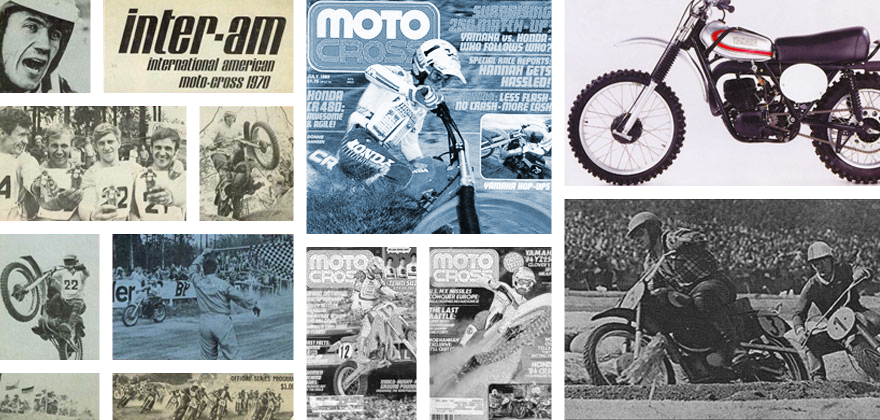

For this edition of Classic Steel, we are going to look back at the history of Kawasaki’s iconic KX250. This first installment is going to cover the KX250s of the 1970s; parts 2 through 4 are going to cover each individual decade of the green (and occasionally purple) deuce-and-a-halfs.
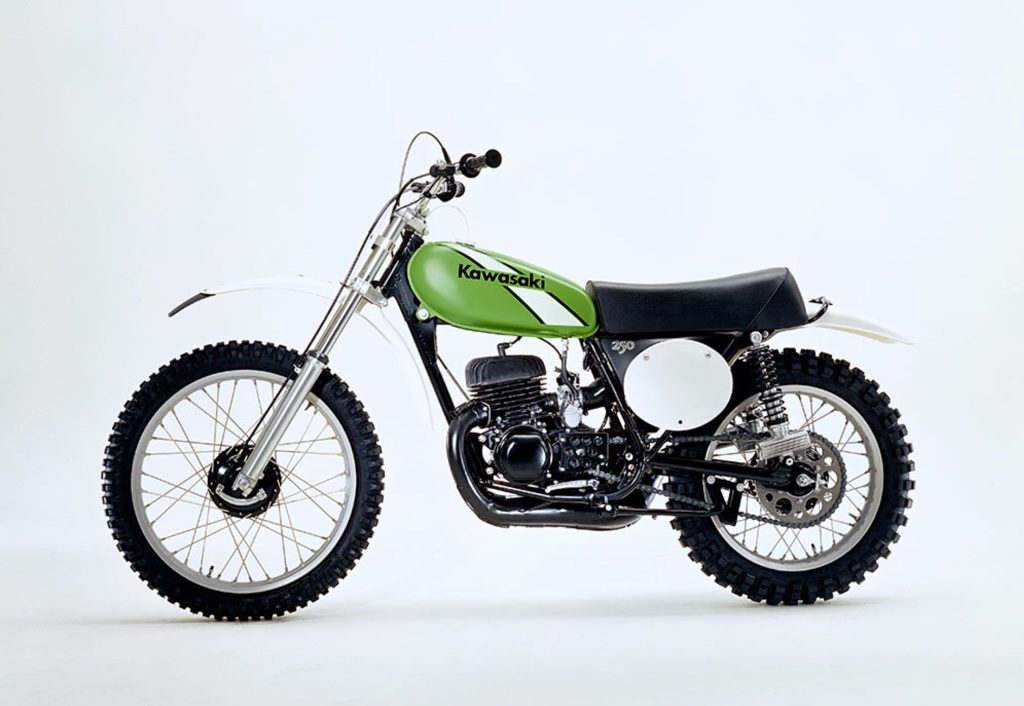
1974 Kawasaki KX250 MSRP $1150.00 Photo: Kawasaki
The story of Kawasaki’s KX line starts in 1974 with the introduction of the green team’s first serious 250 racer, the all-new KX250. Prior to the introduction of the KX, Kawasaki’s motocross offerings had been converted enduro machines and mildly made-over street bikes. Machines like the B8M, F21M, F11M, and G31M made fine play bikes and clubman racers, but they were far less serious than the Husqvarnas, CZs, and Maicos being produced over in Europe.
With the introduction of the 1974 KX250, Kawasaki jumped into the deep end of motocross racing with purpose-built machines designed to go head-to-head with Honda’s Elsinore and Yamaha’s new YZ. Retailing for $1150.00, the all-new KX250 featured a 246cc piston-port air-cooled two-stroke single putting power to the ground through a manual clutch and close-ratio five-speed transmission.
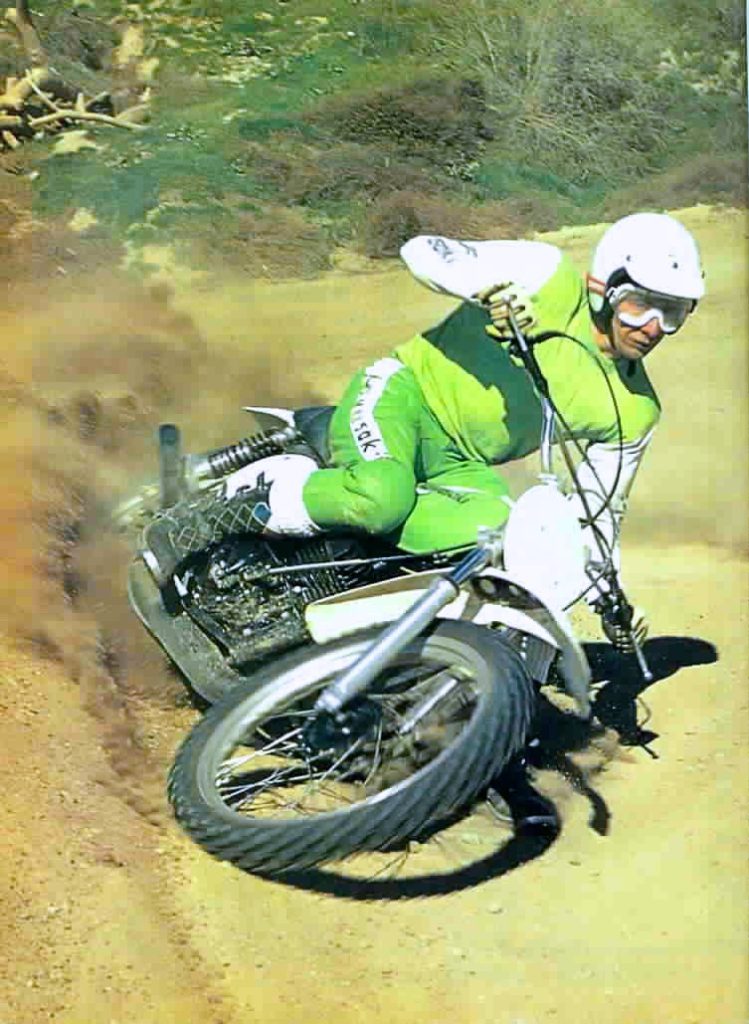 Jammin’ Jimmy Weinert could make the new KX sing, but most testers felt the green machine needed a bit more refinement to challenge its European and Japanese rivals. Photo: Dirt Bike
The KX’s frame was made from chromoly steel, which was a significant step up from the old F11M, but still a significant step behind the super-tough Swedish chromoly steel seen on Husqvarnas of the time. Up front, a set of 36mm Kayaba in-line axle forks delivered 7.9 inches of travel with no external adjustments available for damping. In the rear, a pair of KYB “hammerhead” (thusly named for the large rectangular reservoirs at their base) shocks delivered a modest 3.9 inches of travel. Like the forks, the shocks offered no external adjustments for damping.
On the track, the 1974 KX250 was certainly an improvement over the enduro-based F11M, but it remained a step behind the best machines in the class. The piston-port motor was strong down low and easier to ride than the high-strung YZ250, but not particularly fast. Its power output was on par with the Honda and more than competitive for most riders below the expert level. The bike also handled decently for the most part aside from the occasional unexpected washout by the poorly rated stock Dunlop tires. Where things got a bit uncomfortable for the KX was in the suspension department.
This proved to be the new bike’s weak point, with both ends rating very poorly. The forks were particularly grim and imparted every rock, rut, and bump back to the rider’s hands. The hammerhead shocks were only slightly less reviled, and every tester agreed that the KX needed some kind of aftermarket shock upgrade if the bike was going to be used for any sort of serious motocross competition. The KX was also panned for its sacking seat foam, unsprung footpegs, and easily cracked “unbreakable” plastic fenders. At $1150.00, the KX was a good value when compared to the substantially more expensive $1800.00 YZ, but if the Honda was also on your shopping list, its only slightly higher $1197.00 retail price made the KX a bit of a harder sell. Overall, it was a solid effort for a first-year design, but the green machine needed some serious suspension love if you were going to get the most of its full potential.
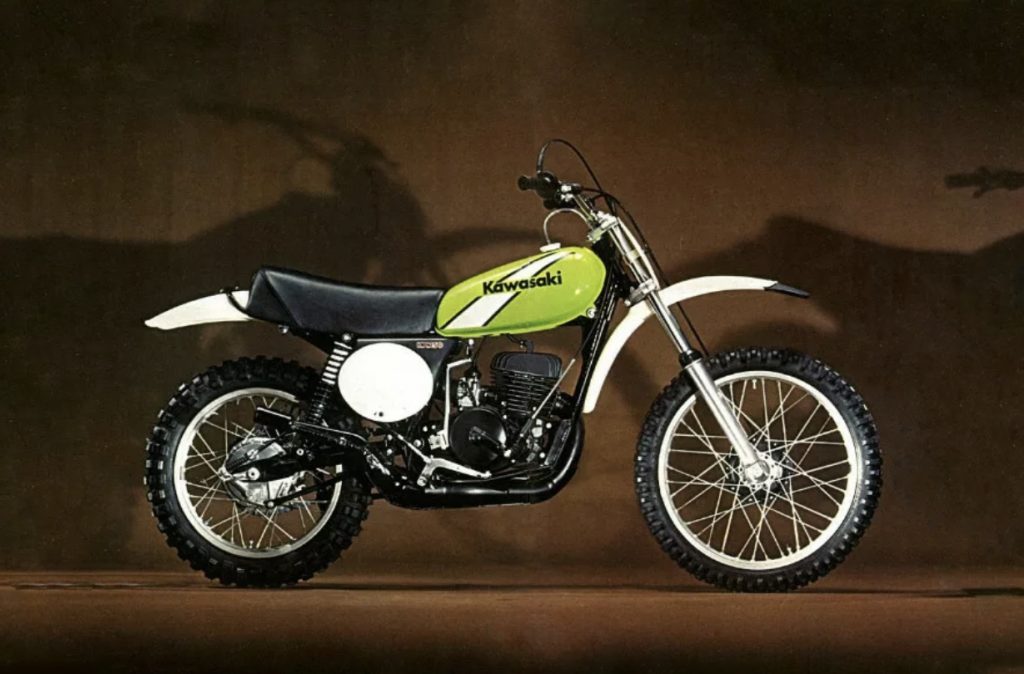
1975 Kawasaki KX250-A MSRP $1216.00 Photo: Kawasaki
For 1975, the KX250 received a significant list of upgrades to improve power and upgrade its handling and suspension performance. First up was a revised motor with a 0.5mm larger bore. This boosted the air-cooled single’s displacement up to 249cc for 1975. Porting remained largely unchanged, but Kawasaki did add a new electrofusion coating to the cylinder liner for improved heat dissipation and increased durability. Like the Honda, the motor remained a fairly simple piston port design that lacked the Yamaha’s reed valve “Torque Induction”.
Chassis changes were fairly minimal for 1975, but Kawasaki did dial up some updates to improve the KX’s handling and overall refinement. The frame was unchanged aside from a new mounting for the rear shocks that moved them forward slightly to deliver 5.75-inches of rear wheel travel. The longer Kayaba shocks also moved to a gas/oil construction that Kawasaki claimed would provide the KX with more consistent damping. External adjustment remained limited to a five-position preload collar for the springs.
The Kayaba front forks were upgraded as well with all-new internals and 5mm of additional travel. They remained 36mm in diameter with the front axle in-line and no external adjustments for damping performance. The front wheel was new for 1975, with a move away from the full-width hub of 1974 to a new conical design that Kawasaki claimed was both stronger and lighter. Other welcome upgrades for 1975 included new firmer and more sack-resistant seat foam, a return spring for the folding footpegs, a move from bushings to bearings for the swingarm, an upgraded metal chain guide, and a new formulation for the plastic to prevent cracking.
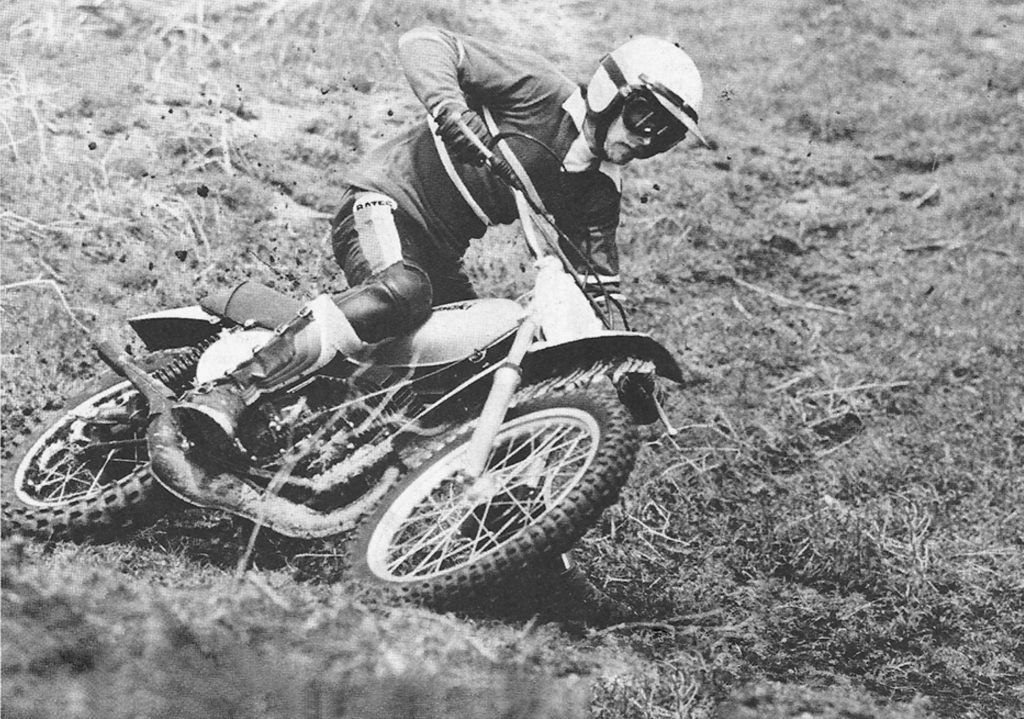
Kawasaki’s green meanie for 1975 was much improved, but its relatively short suspension travel held it back from seriously contending for the class title. Photo: Cycle World.
On the track, the KX250-A was a rather underwhelming performer. On the plus side were the KX’s new firmer seat, less brittle plastic, and much improved footpegs. The motor remained a strong component and was well-matched, with a pleasant and tractable delivery. It was not particularly fast, but most riders did not want more power unless the KX’s chassis and suspension were upgraded. On the suspension front, the KX was improved but still not very good. The updated forks suffered from less hydraulic lock on successive hits, but they still bottomed and topped out if pushed. The new KYB gas/oil shocks were a significant improvement over the grim 1974 units, but no one was willing to call them good. At a modest pace they kept the KX in line, but if you tried to ride like the Jammer, you quickly reached the limits of their modest travel and minimal damping. Fast guys also complained of chassis flex and noted a concerning tendency for the front end of the KX to randomly go rogue at unexpected moments.
As concerning as these issues were, the real problem for the KX turned out to be the rapid improvement of its competition. This season, Yamaha introduced the first of their long-travel monoshock YZs, and this put shorter-travel bikes like the KX, TM, and CR at a severe disadvantage. The green machine remained a decent bike for less serious racers, but if you took your racing seriously, it was going to need some significant suspension upgrades to keep the monoshock Yamahas in sight.
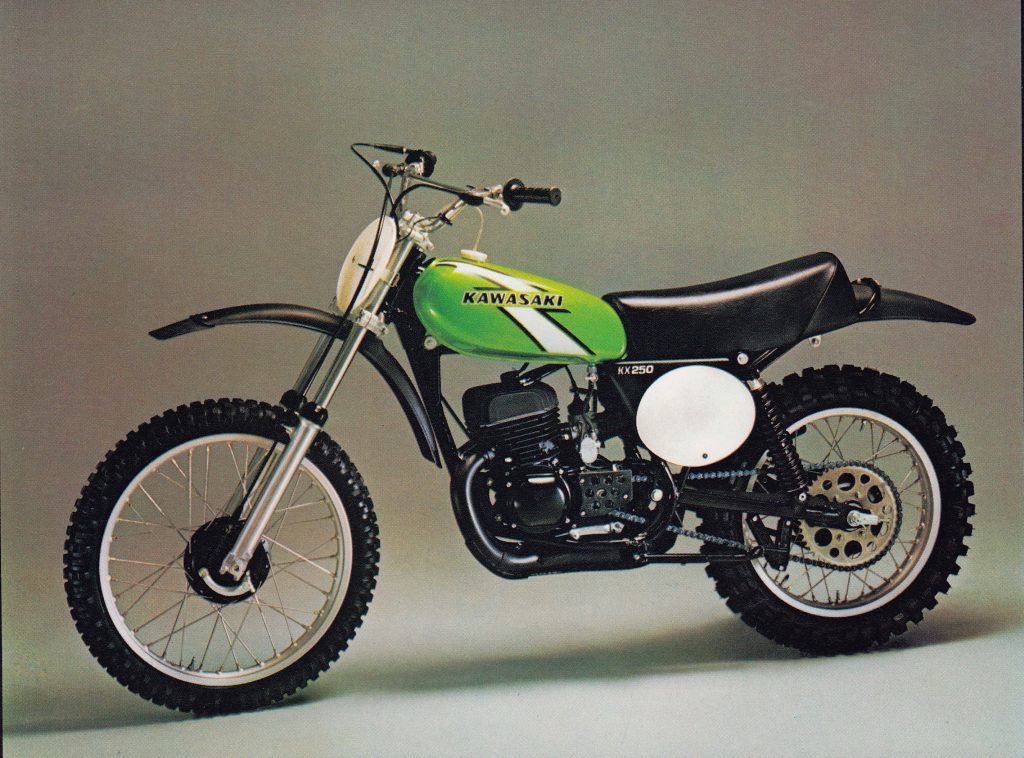 1976 Kawasaki KX250-A3 MSRP $1216.00 Photo: Kawasaki
Not a lot of significant changes on the KX250 for 1976 aside from some updates to the machine’s appearance. This year Kawasaki moved from white to black for the front and rear fenders and added a new “Candy Lime” paint to the tank. The rest of the machine was unchanged from 1975.
At $1216.00, the KX was the least expensive of the Big Four Japanese 250s in 1976, but that lower price turned out to be a good indication of the bike’s performance. This season, Suzuki joined the long-travel movement with their all-new works replica RM250, and it immediately reset the class standard for showroom stock performance. Neither the short-travel Honda nor Kawasaki had much hope of hanging with the long-legged Suzuki and Yamaha in 1976. Both yellow machines delivered far superior suspension and handling performance. Bumps and whoops that the yellow pair took in stride easily overwhelmed the stock Kawasaki’s dampers. Pushing the KX to stay with the others on a rough track typically ended with the Kawasaki topping, bottoming, and swapping like a 220-pound pogo stick.
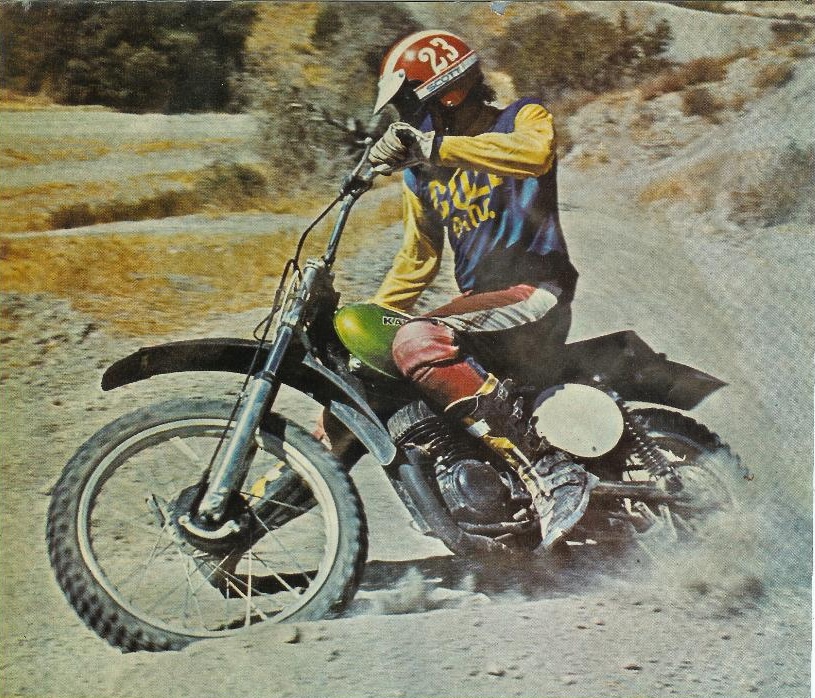 The KX’s short-legged suspension and old-school “down” pipe made the green machine feel like a bike from a different era in 1976. Photo: Dirt Rider
While the KX’s 1974 era suspension was grim, its old-school piston-port motor remained quite competitive. It was the most tractable of the 250 machines and capable of propelling the KX250 faster than the rest of the chassis could comfortably handle. It made a great play bike motor, and if you kept the scope of your riding to that vein, you were likely to be happy with your candy apple green purchase in 1976.
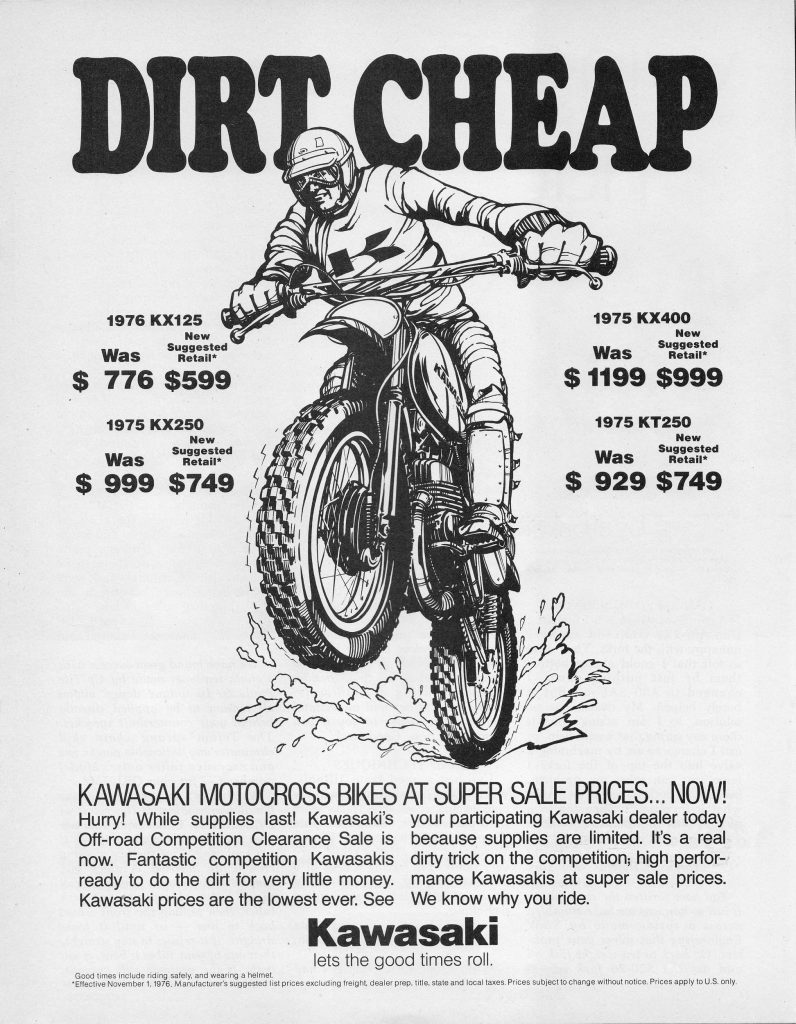 While the ’76 KXs were a step or two behind their rivals in performance, they were available at some very attractive prices. Photo: Kawasaki
After a disappointing showing in 1976 with the KX250 finishing a distant fourth to its red and yellow rivals, Kawasaki chose to take the 1977 season off entirely. Kawasaki did not produce any motocross machines in ‘77, choosing rather to sell off their remaining inventory at significant discounts. If you were not looking for the latest and greatest, a brand new ’75 KX250 for $749.00 may have seemed like a pretty good deal in 1977.
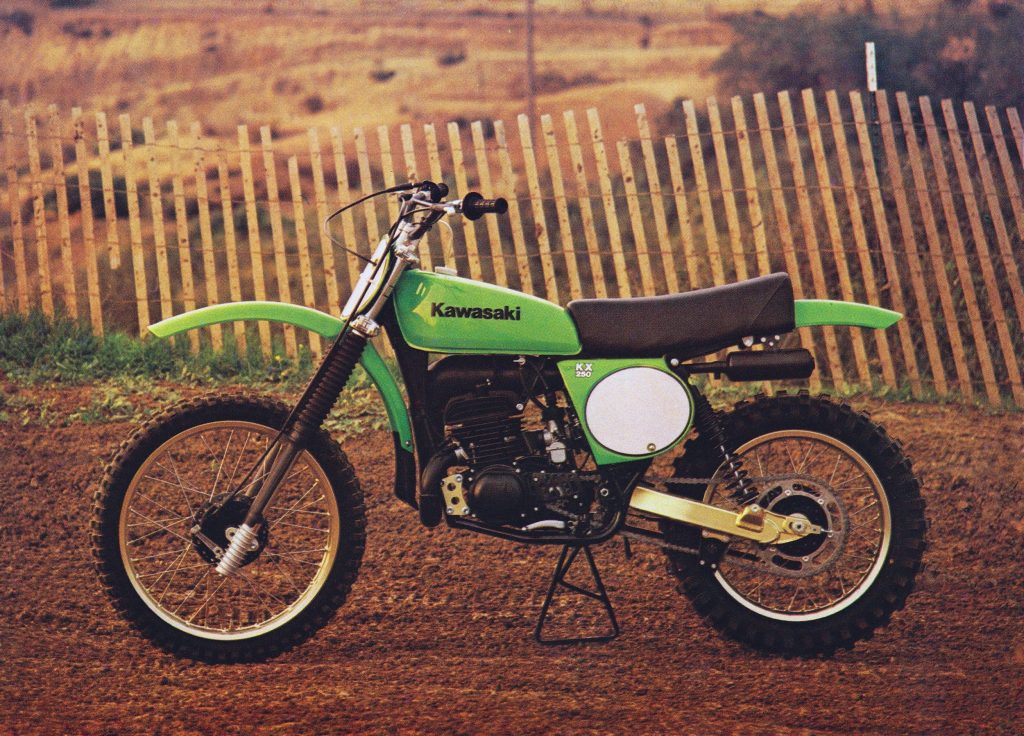 1978 Kawasaki KX250-A4 MSRP N/A (set by individual dealers) Photo: Kawasaki
After taking the ’77 season off to regroup, Kawasaki came back with a much more serious effort in 1978. This season, they introduced an all-new limited-edition machine that finally brought the KX into the long-travel era. Redesigned from the ground up, the KX250-A4 featured a powerful new 249cc air-cooled two-stroke single that featured a reed valve for the first time. Licensed from Boyesen Engineering, the KX’s new six-pedal intake breathed through a 4mm larger Mikuni carburetor and larger, freer-breathing airbox. A new “up” pipe was added that increased ground clearance and was paired with a larger and less obnoxious steel silencer.
The all-new semi-double cradle frame was much less flexy than the ’74 through ’76 designs and featured strong gusseting throughout and a beefy works-style alloy swingarm. Up front, an all-new set of 38mm Kayaba air/oil forks moved to a leading axle design and delivered a claimed 9.3 inches of travel. In the rear, a pair of large Kayaba remote reservoir shocks punched out a claimed 8.5 inches of rear wheel travel. All-new lime green bodywork retired the candy apple and black of ’76 for a much more monochromatic look. Bold gold accents for the rims and swingarm made sure you knew that you were still in the 1970s, however.
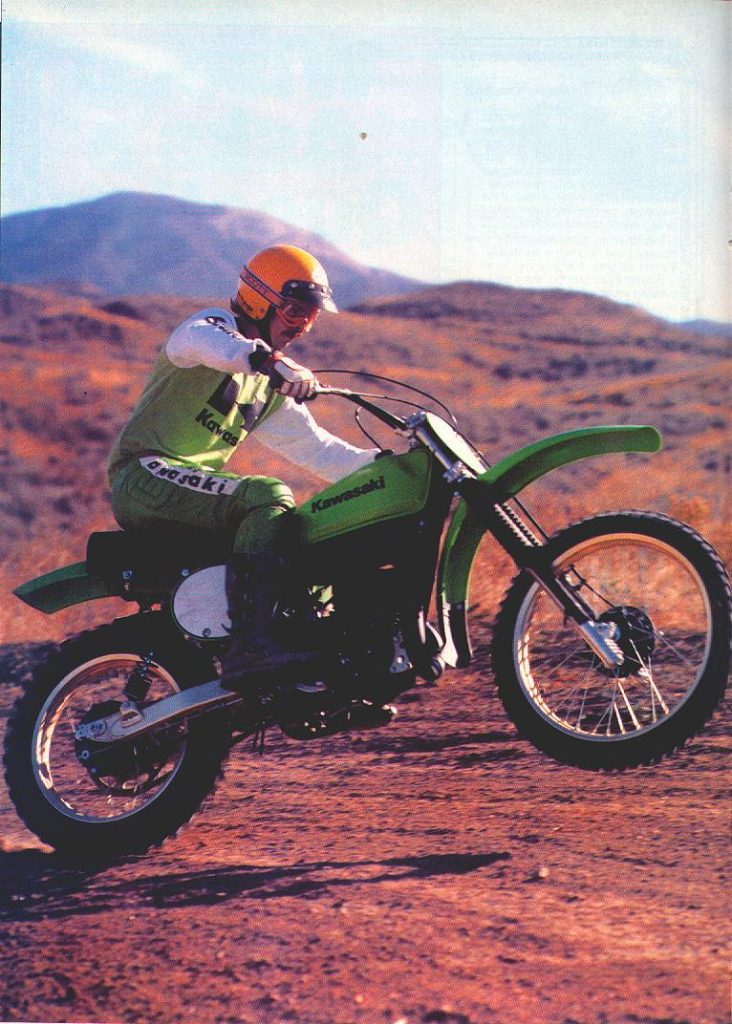 After a year on the sidelines, Kawasaki came roaring back in 1978 with an all-new and much improved KX250. Photo: Dirt Bike
On the track, the ’78 KX250-A4 was a much-improved motocross machine. Kawasaki stated in their literature that the bike was aimed at experts and its performance reflected that focus. The power was aggressive with a hard-hitting, but somewhat narrow powerband. The steering was ultra-quick, and the motor’s strong hit did tend to loft the front end out of corners. On the track, the KX felt very light, and that impression was borne out on the scale. It was easily the lightest bike in the class, undercutting some of its rivals by as much as fourteen pounds.
The new suspension was a tremendous upgrade from 1976, but by ’78 standards the KX remained a bit behind its rivals. With Honda’s all-new CR250R Elsinore pushing front and rear travel close to a full foot of movement, the KX’s 8 and 9 inches of travel seemed a bit less impressive. It offered the least travel of all the ’78 Japanese 250s and suffered somewhat for that on the track. The forks were well liked, but nearly everyone seemed to feel that the new shocks were too stiff and choppy.
Overall production of the A4 was very limited, with 1500-1700 (accounts of the actual production numbers vary) units built globally and only around 600 allocated to the US market. There was no set retail price, and reportedly some dealers even requested a racing resume be submitted before allowing the A4 to be purchased. It was a very exclusive machine designed to bring Kawasaki’s racing reputation back from the ashes. In the major motocross shootouts, it lost to Honda’s radical new Elsinore, but the amount of press and consumer attention the A4 generated far outpaced any of its exploits on the track. The 1978 KX250 shouted to the motocross public that the green team was back and this time, they were serious about going head-to-head with their yellow and red rivals.
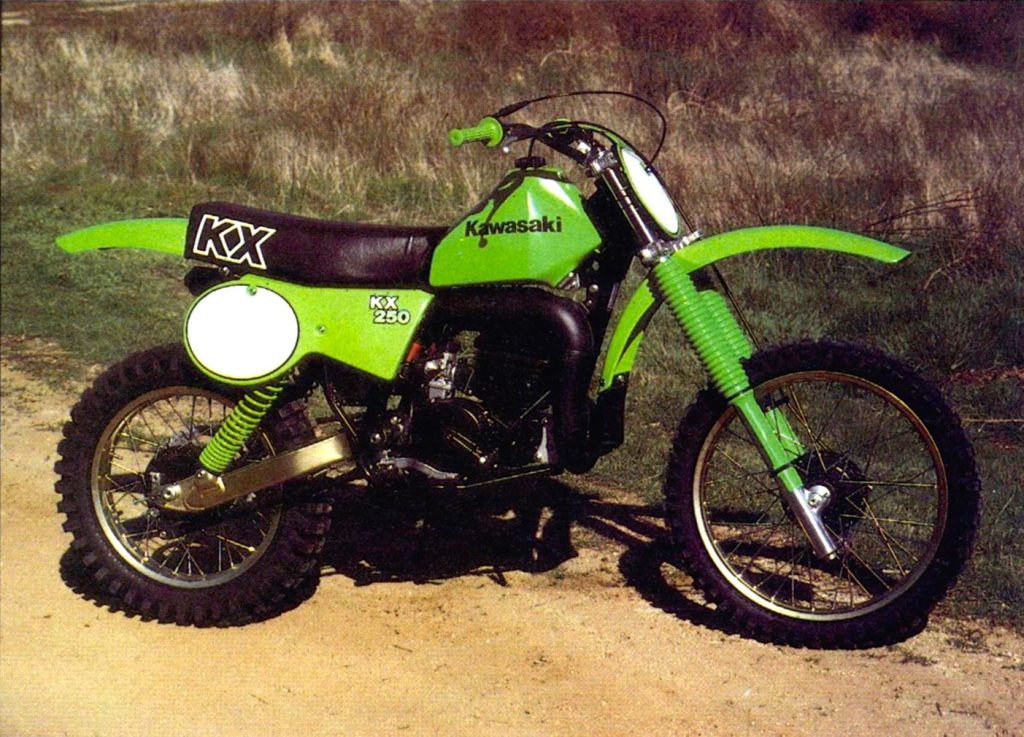 1979 Kawasaki KX250-A5 MSRP N/A (set by individual dealers) Photo: Cycle World
Another all-new machine produced in very limited numbers, the 1979 KX250-A5 finally brought Kawasaki the press accolades they had been seeking since the days of the F11-M. The new A5 featured major upgrades to the motor, chassis, and suspension of the green machine, and those changes delivered an excellent racing motorcycle.
For 1979, Kawasaki finally got serious about long-travel suspension and fitted the KX with a full 11 inches of travel front and rear. Up front, a set of all-new 38mm Kayaba forks handled the suspension duties, and in the rear, a pair of all-new Kayaba remote reservoir shocks helped put the power to the ground. An all-new chassis featured tighter steering geometry, a 1.5-inch longer wheelbase, and 2-inch higher footpegs. Redesigned bodywork kept the lime green of ’78 but added a new coat of green for the fork boots, grips, lower fork covers, and rear shock springs. An all-new tank moved to plastic for its construction and featured a shorter and taller profile that mimicked the tanks seen on the works Kawasakis in Europe. All-new side plates moved the number plates rearward to make them easier to read and comply with the new FIM plate standard on the GP circuit. A new rear fender for ’79 was longer and reshaped to provide additional roost protection. With the increase in travel, the KX’s seat height also grew by 2 inches. Motor changes for ’79 included all-new porting, a beefed-up crank, freer-breathing airbox, updated Boyesen reeds, and slightly taller ratios for first and second gear.
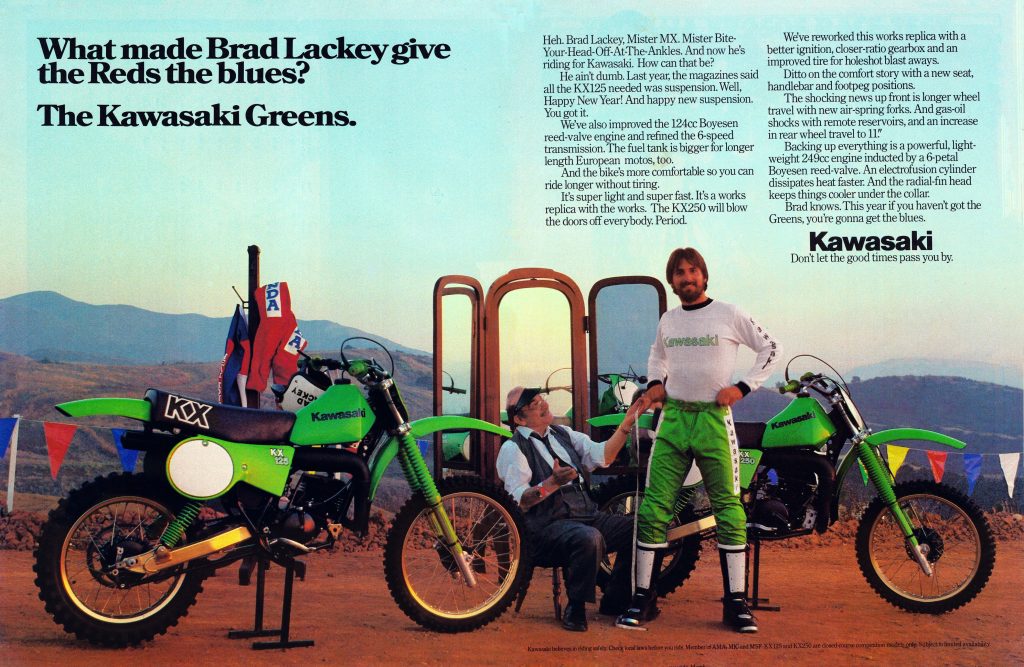 Kawasaki’s all-new KX125 and KX250 were both very impressive bikes in 1979. Photo: Kawasaki
On the track, the 1979 Kawasaki KX250 was an excellent motocross machine. The new motor was torquey down low and very strong through the middle. It did not pull particularly far on top, but most testers did not seem to feel the lack of top end was a serious problem. With its snappy response and strong low-to-mid delivery, the KX was plenty fast enough to run with its rivals. The new chassis was even more impressive than the motor, and the KX was crowned the best handler of the ’79 field. The forks worked extremely well, but the new shocks were less loved by testers. They worked well on hard hits but were busy and prone to hopping on braking bumps and small track chatter.
Overall, the limited edition KX250-A5 turned out to be just the machine Kawasaki needed to help turn their tarnished motocross reputation around. It was not available in significant numbers, but it did prove Team Green could produce a truly competitive motocross racer. It was light, fast, super trick, and one of the best 250s of 1979.
Next up, Part 2: The 1980s