
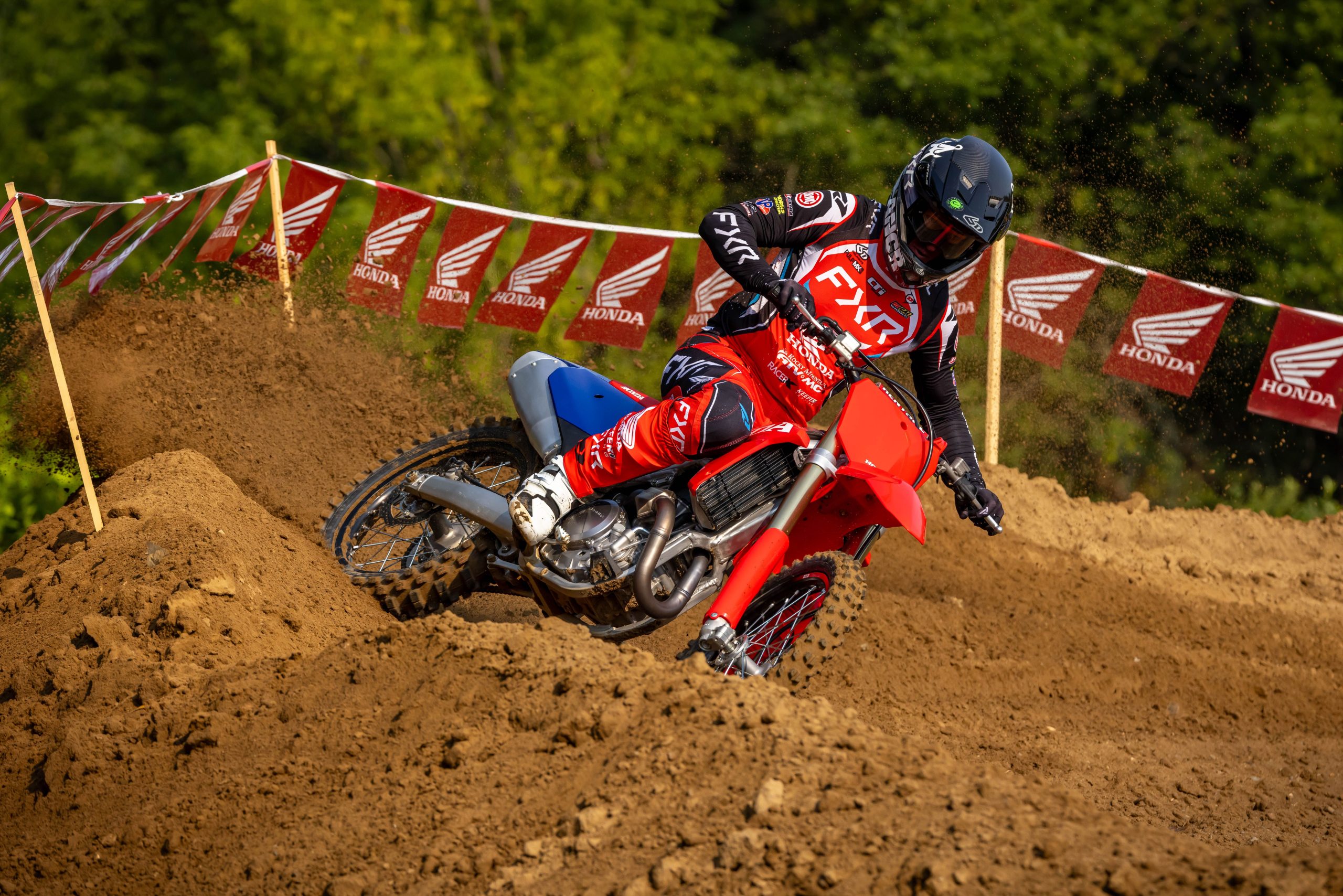
If you’re here then it means you like to digest your new bike info via long form reading instead of watching review videos. Or maybe you’re the type that watches the review videos and reads testing info as well? If so I salute you, as you are one of the few committed riders that want to maximize their knowledge on any given machine. I have accumulated the eight most important things that I feel like you should know about the 2027 Honda CRF450R after riding it a full day at Spring Creek MX Park in Millville, Mn.
I also had Matthes chime in on each subject as well so take his opinion for what it’s worth. He did wear a FLY jersey with a Yamaha patch to a Honda intro, so don’t know if he can be trusted? If you read and watched the test on racerxonline.com and still have some questions, please feel free to email me anything you may need help with at kris@keeferinctesting.com. I am here to help!
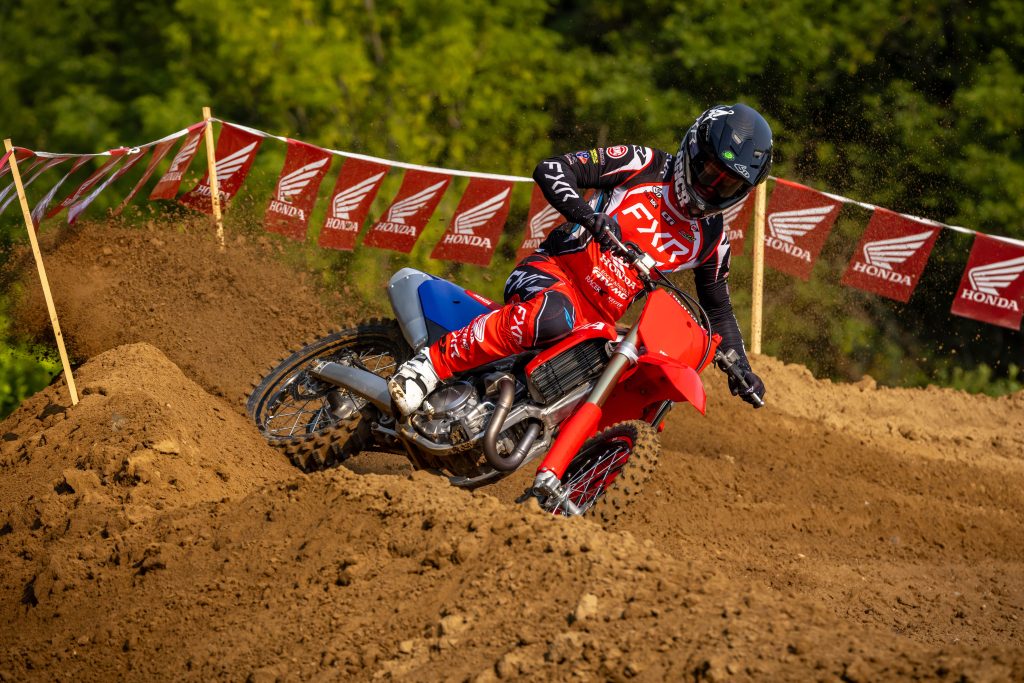
Is It Less Rigid Feeling than the 2026 model? Yes! Now I can’t say that I rode on true hard pack conditions but the easiest way for me to decipher if it was less rigid feeling was to ride the 2026 and 2027 back to back and that is what I did. If you’re coming from an older CRF450R you will notice immediately that the 2027 version is more calm and relaxed on slap down landings, bumps and rolling whoops. The 2026 feels bound up in those situations but the 2027 machine feels less reactive to each hit. The chassis seems to soak up and have more of a dead feel to it than the older bike. If you come up short on a jump or overshoot a landing, the 2027 chassis sticks to the ground better and doesn’t react (or feel as springy) which leads to the new CRF450R sticking to the ground better. Is it going to be the most comfortable chassis in class? Hard to say until we ride the new KX450 come September.
Matthes Take: I don’t have enough time on the older model to know this for sure. Just go with what Kris says.
Is It More Stable? Yes! What I like immediately is that the 2027 CRF450R’s front wheel doesn’t feel like it is tucked underneath you nearly as much as the 2026 version. The whole bike feels longer (in a good way). Off throttle situations the front end doesn’t feel as nervous nor does it want to tuck (oversteer) as much as the 2026. The ride attitude of the 2027 is much more balanced and not as front wheel heavy as the older model. I like that I can cut across the track and not have a Honda that is deflective off of bumps. A stable Honda? Who knew we could possibly get this!
Matthes Take: I do have enough time on the old bike to know that it was more SX-ish than I liked. Front end wanted to knife in a lot and this bike def does not do that. It’s very neutral feeling and takes some effort to steer into a rut.
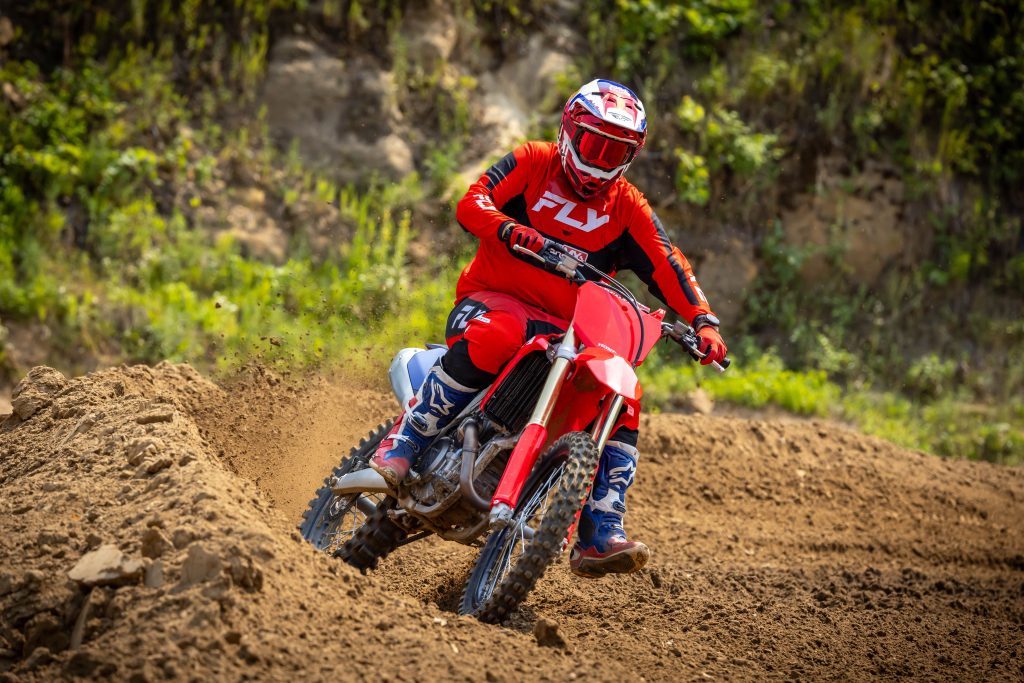
How Does It Corner? It’s not the cornering master that it once was and I say that in a good way! This is what I really wanted out of this bike a few years ago. When testing I always complained about the bike needing to be longer and less reactive to inputs from the rider when leaning. The 2027 needs a little more coaxing from the rider to initiate a lean but once leaned into a rut, the 2027 has more cornering stability and is a lot more neutral feeling. There is less weight on the front end under a lean yet you still have enough front tire feel that you’re not getting a push mid corner. For how much weight the bike has lost (almost 10 pounds) it does feel a little heavy on initial tip in. I feel like this is a positive change. Some of you loved the cornering of the older Honda so I think this new style Honda chassis character will take some getting used to for die hard red bleeders. For me it is a welcome change because of the straight line stability trade off.
Matthes Take: Yeah, what he said. It seems like it doesn’t do anything great but as I said, it takes some effort to drop it into a rut but also, it feels stable. Very neutral handling bike but I think thats a good thing.
Vibration Check? Less vibration! Hallelujah! Hopping from the older bike to the newer bike was an eye opener through the handlebars. I got much less of harmonic feel through my feet and hands which actually helps with fatigue during riding.
Matthes Take: IDK man.
What Is The Engine Like To Ride? I really didn’t have a lot of negatives about the older engine character besides an on/off low RPM roll on feel (AKA, snatchy) and I wanted more third gear rideability. The 2027 has a redesigned transmission that is much friendlier to the average rider. Second gear is longer and third gear feels closer (or there is more torque feel) because I can be a little more free to choose second or third gear around the track. At Spring Creek I used second gear on purpose around the whole track to see if it ran out of power or bound up the chassis too much and I was blown away that neither really happened. Sure, I am not Trey Canard speed or Jett Lawrence, but I feel the way I ride would be indicative of what most feel around the track. Second gear through the sand rollers didn’t upset the rear end as much as when I did the same thing with the 2026. I could also ride corners in second gear (with the 2027) without upsetting the chassis as much in lower RPMs like the 2026 did. Pulling second gear out of corners without shifting into third was made easier with the 2027. I guess the big thing for me was how second gear felt freer at higher RPM’s than the 2026 engine did. The 2026 chassis felt super bound up/tight feeling when revving at higher RPMs in second gear.
Third gear was more usable (chuggier/more lugable) on the 2027 and third gear engine character had more recovery than the 2026 engine. I do think the 2026 engine character is snappier and has more excitement but the 2027 engine is just easier to ride which makes it more exciting for me. I used map 1 most of the day but it did have some lean popping to it in the early morning hours. Map 2 (smooth map) was much more friendly down low and had a cleaner ECU setting. Map 3 was a bit too much for me through tighter sections of Spring Creek and also had a lean de-cel pop in the AM.
Matthes Take: I definitely noticed the longer transmission second and third gears. I made an effort to make sure I was in second in some sections and then third in some and liked the feel of both. You did not need to shift really, a stab of the clutch in third and power was right back there. Second is good and when you rev up there, you don’t get that twitcheness where the handling of the bike gets wonky. Power was good, pulled strong. I don’t think it has the hit of my Yamaha but in talking to Trey Canard, they didn’t want that hit- they wanted to make it more rideable.
What About The New Clutch? I am not a huge fan of the 2026 clutch action or engagement feel. I have been on the 10mm FLO master cylinder on our test bike which made us happier but I haven’t been a NISSIN hydraulic clutch fan. The 2027 clutch was redesigned and even though some Japanese engineers said it was similar to a “slipper clutch” it officially IS NOT a slipper. Totally redesigned using HRC WORKS feedback and developed on the MXGP circuit, the clutch-disc diameter is smaller this year, and the primary drive gear is redesigned for less weight. A new back-torque-limiting system uses rubber dampers instead of springs and also provides a slipper-clutch type/style function without that dreaded judder feel through your couch lever. The improvement to me is with length of engagement feel for starts and slipping clutch through/out of corners. The on/off feel is much improved and de-cel engine braking is also less when entering soft/deep corners. The lever pressure could still be a little lighter to me but if the engagement is good, I am not complaining too much.
Matthes Take: Didn’t notice this new clutch thingee but did like the overall feel of it, pull was fine and yeah man, it’s a clutch.
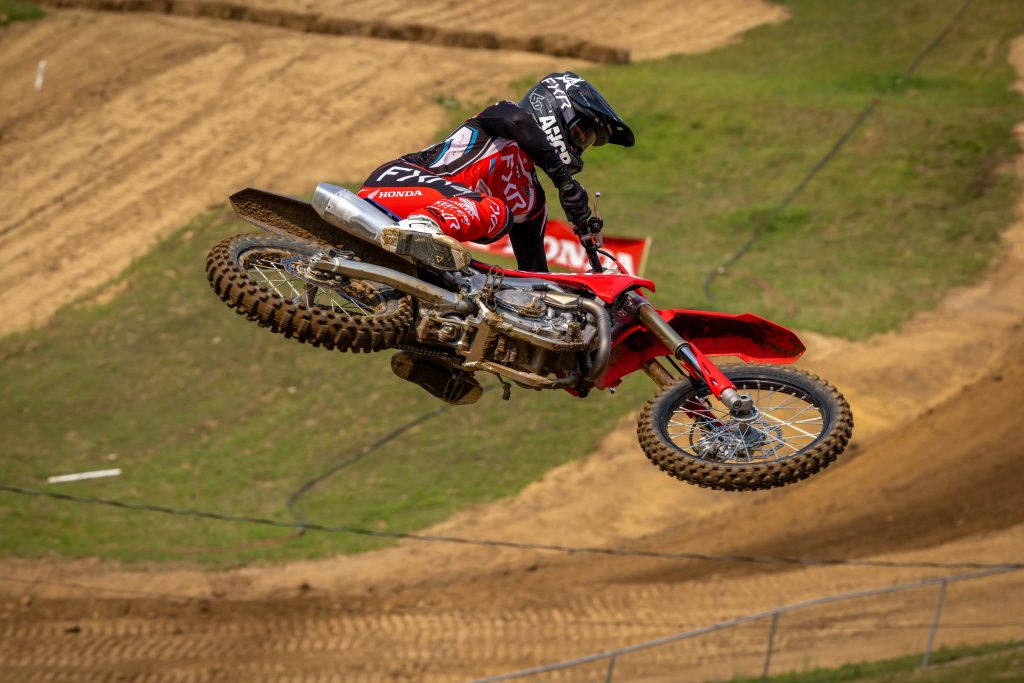
Suspension Feel? The 49mm Showa fork features Kashima coating to the internal sliding components, which felt like it helped with stroke feel compared to the 2026. The smoothness of the stroke was noticeable but near the end of the stroke it still felt like it got stiff really quick. When compressed this made the fork feel like it popped back up quickly so I actually opened the rebound up a little to help it move through that “stiff shelf” more, which in turn helped the front end stick better through corners. A DBS (Dynamic Blow System) is utilized which is a main-piston valve that increases compression damping in the extremely low-to-low speed range, which could have resulted in what I was feeling. I dropped the fork down to 3mm (from 5mm) and that helped with on throttle front end feel. I was getting a little hunt and peck on throttle with a 5mm fork height but dropping the setting 2mm helps calm down the front end a bit when the fork is light in the stroke.
A lighter shock body in 2027 is surrounded by a new spring. The shock itself is more responsive, which made for a more quality damping feel in the low-speed compression range. When riding the 2026 the end stroke of the shock felt empty and didn’t have a quality damping feel. The 2027 shock was more consistent through the stroke and didn’t give me any feelings to change much. The only thing I did was raise the rear up to 102mm (unlike the old 105-106mm sag of the 2026 model). This balanced the bike out more for me and helped with lightening up that tip in cornering feel.
Matthes Take: We had Honda legend Drey Dircks working with us to get the bike dialed in and I had an issue with coming into the sand whoops at a lean angle and the rear going sideways on me but it was because, at 230LBS, I’m not the ideal weight for the springs. I’m not going to hold that against Honda. We had a lot of free sag in the thing by cranking down the spring to get it close. I had to make sure I was straight going into the whoops to make it work for me. So yeah, rear was soft. Forks however felt good to me, they held up great and I never felt like they were too soft. Poor Drey was trying to get me happier with one click changes, etc but I’m like “Drey, I’m just too fat- it’s fine!”
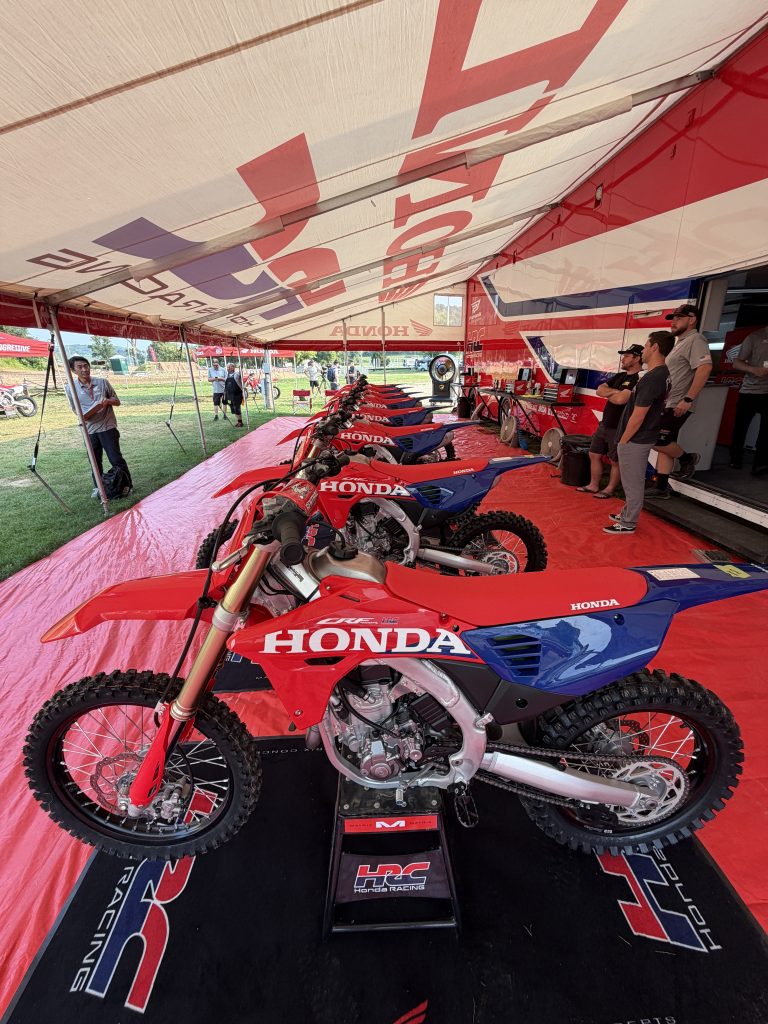
How Does The Updated Ergos Feel? Thank you sweet baby Jesus for a better seat shape in 2027. My ass hurt on the 2026 just riding it a few laps but the 2027 has more meat on the sides of the seat which is more square shaped. The CRF450R plastic layout is a little wider near the back of the 2027 and that helps me lock in with my feet more. Something I didn’t notice until I rode the 2026 and 2027 back to back was that the older model was a little too narrow at times for me to lock in with my feet. The 2027 model has a little flare to it behind my legs, which helped me direct the bike in the air easier. It isn’t a drastic measure and maybe you won’t feel it, but it is noticeable once you’ve ridden both back to back. The longer shifter wasn’t noticeable at all to me and the -5mm down and back peg setting also wasn’t really noticed when going back and forth on bikes.
Matthes Take: Felt like a Honda to me, which is a good thing. Everything is done right and very clean and the bike felt fine underneath me. Kris loved the new seat so…ok?
These 8 things were the big takeaways for me after one day. Is it a better CRF450R? Yes! That is an easy answer. However, I am not going to sit here and say it is a shootout winner yet and get too hyped up until we ride a few more 2027 models to compare back to back. After these new model intros I know sometimes things get all cotton candy and rainbows but I can safely say is if you’re coming off of an older Honda and you’re a Honda rider, you will love all the changes to this new 2027 model. Kudos to Honda for moving into a direction they haven’t been in quite sometime (maybe 20 years).