
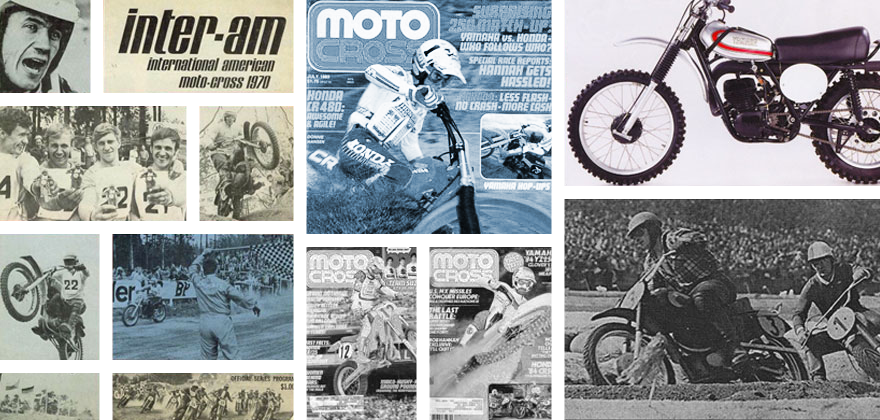

For this edition of Classic Steel, we are going to take a look back at the 500 class of 1985.
By 1985, the 500 class was no longer the premier class in motocross in the minds of many American racers. Over in Europe, the 500 World Motocross title was still the crown jewel of the FIM schedule, but on this side of the pond, the luster of Supercross had tarnished the Open classes’ appeal. Real men still lusted for their heavy vibes and luscious sound, but most garden variety racers found the lighter and easier to manage 125s and 250s more appealing.
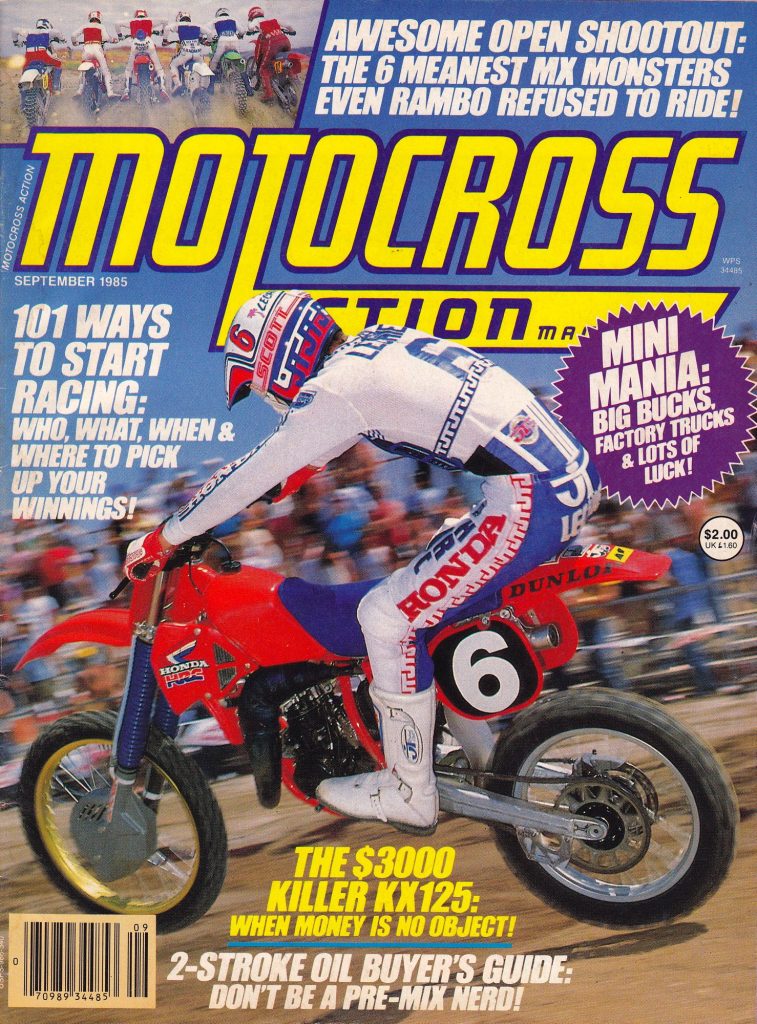 Normally, I prefer for the shootout to take prominence on the cover, but I will allow it in this instance due to the pure badassery of the Dogger’s RC125. How about that $3000 KX125 when money is no object? Damn this were the days. Photo Credit: Motocross Action
With this shift came reduced sales, and in 1984, Suzuki decided to pull their RM500 from US shores. The mighty yellow 500 limped on one more season in other markets, but here in the US, the Yellow Magic team became the first of the Japanese to pull the plug on 500 support. While Suzuki decided to walk away from the class, at least two of the Big Four Japanese manufacturers were still fully engaged in 1985. Both Kawasaki and Honda rolled out all-new machines for ’85 with big changes and much-improved performance. Yamaha chose to make fewer substantial updates, but the YZ490 remained competitive despite its three-year-old air-cooled motor.
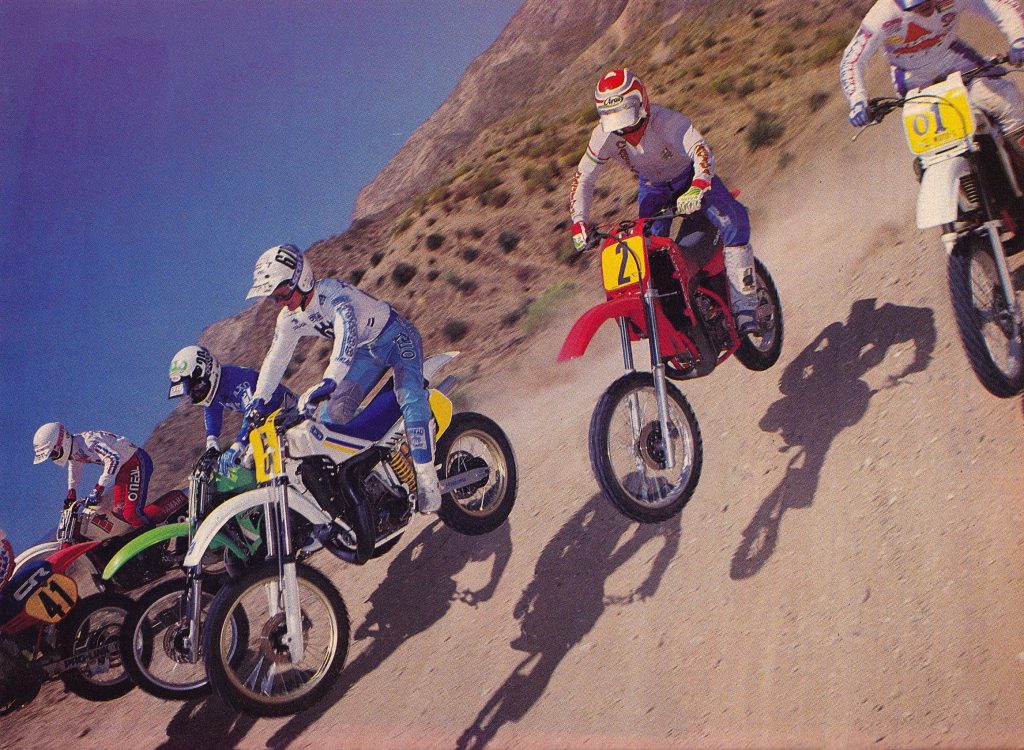 The Open class was falling out of favor by 1985, but that did not stop a full stable of machines from Europe and Japan from doing battle for 500 supremacy. Photo Credit: Dirt Bike
Across the pond, the 500 class was still well respected, and in 1985, Husqvarna, Cagiva, and KTM introduced all-new machines to take on the Japanese. All three were fully modern, with liquid-cooling, disc brakes, and single-shock linkage rear suspension. In the case of KTM’s 500MX, the big Austrian even featured White Power’s incredibly trick 4054 inverted forks. On paper, they were all on par with the Japanese and ready to claim glory back for the Old-World marques.
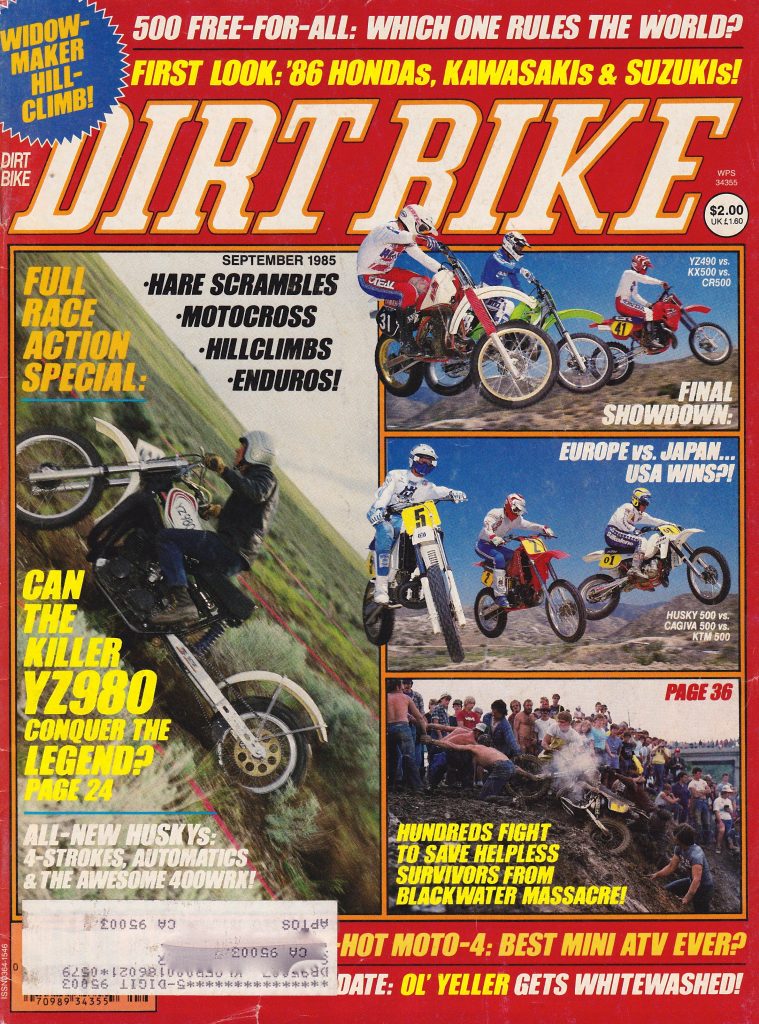 Europe vs the US! Blackwater Massacre! A killer YZ980! Film at eleven… Photo Credit: MXA
For this shootout rundown, we are going to look back at how Dirt Bike and Motocross Action ranked the 500 contenders. In perhaps a sign of the times for the 500 division, I could not find an official 500 shootout in any of my issues of Dirt Rider, Cycle News, or Cycle World. This year, it seems that the Hi-Torque twins were the only magazines with the man berries to take on these beasts. So here, without further ado, is how the 500 class of 1985 stacked up in the minds of the editors of MXA and Dirt Bike.
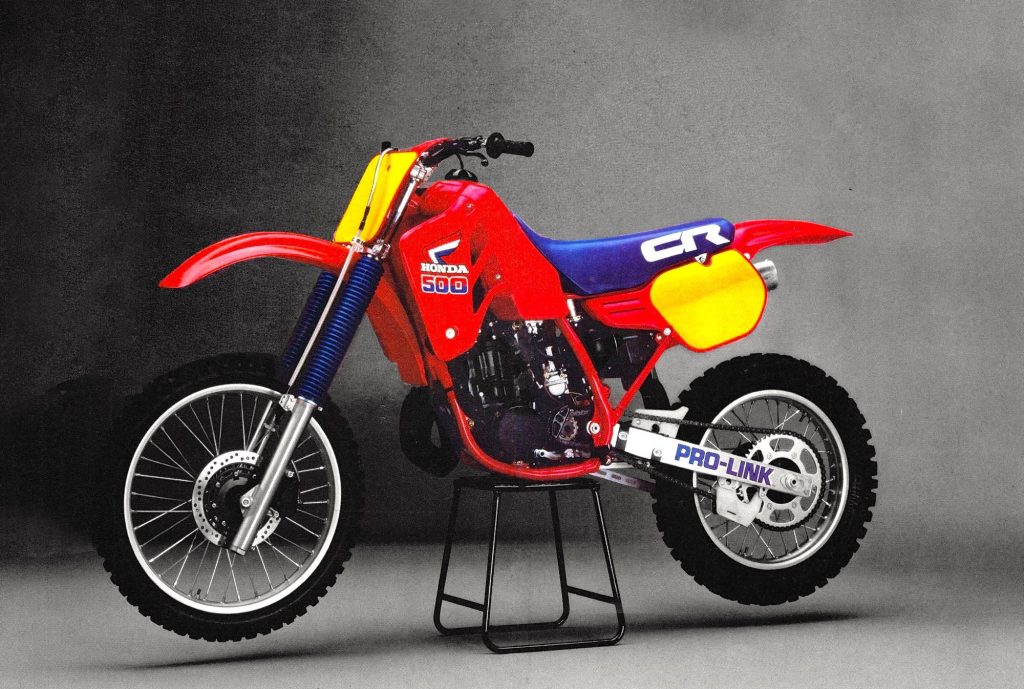 1985 Honda CR500R Shootout Ranking: MXA – 1st (out of 6) Dirt Bike – 2nd (out of 6)
1985 Honda CR500R Overview – In 1984, Honda’s CR500R was a potent but very flawed machine. Its 491cc air-cooled single was a rattling and pinging rocket that shredded tires and roached crankshafts. It was too much machine for most riders and a significant step back from the excellent CR480R it replaced.
For 1985, Honda completely scrapped the ’84 machine in favor of an all-new design that moved to liquid cooling for the first time. The redesigned motor maintained the 491cc displacement of the old mill but featured all-new porting, a beefed-up crank, and a new flat-slide Keihin carburetor. Like the previous design, the CR500’s revamped powerplant eschewed any sort of variable valve for the exhaust. The chassis was just as all-new for 1985 with a redesigned frame, handsome new bodywork, and updated suspension.
On the track, the ’85 CR500R was a much-improved machine in most respects. The liquid-cooled motor pumped out a huge dose of low-to-mid thrust that rocketed the CR out of turns. It signed off past the midrange, but only riders with Magoo-like talent were likely to lament the missing revs. With its liquid cooling and new flat-slide carburetor, it ran much cleaner than in 1984 and never burbled or pinged. Its five-speed transmission and durable clutch were easily the smoothest in the class. Starting could be a chore, however, and the big Honda could be an unwilling partner at times.
Handling was very sharp for such a big and powerful machine. Honda’s new bodywork was slightly pudgy at the tank, and this made it a bit more difficult to get forward in the turns, but the CR offered excellent front-end traction. It could turn under all of its rivals and was an excellent flyer. When coming down from speed, the Honda suffered from wicked headshake, and it felt heavier than its 234 pounds. The CR’s front disc was excellent, with tons of power and feel, but the rear drum was only adequate and prone to wearing out its shoes very quickly.
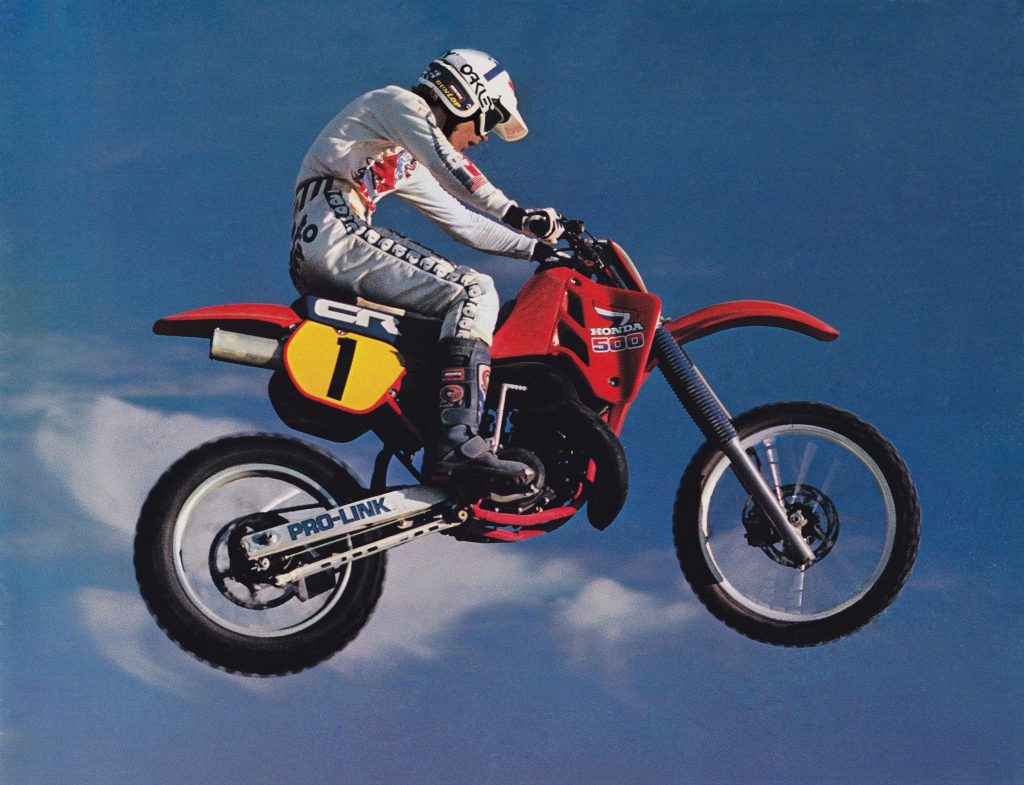 With gobs of low-to-mid power and ultra-sharp handling, the CR500R was a motocross weapon in 1985. Photo Credit: Honda
By far, the Honda’s most significant weakness was the performance of its revised Pro-Link rear suspension. The Showa damper worked decently when fresh, but its damping faded into oblivion quickly. Once hot, the CR’s rear end became a hopping and swapping handful to control. The Showa front forks were much better than the shock, but far from the best in the ‘85 field.
Overall, the 1985 CR500R was an incredibly potent and competitive machine. It offered the hardest-hitting motor, best turning, and stellar looks. Its monster motor made it a bit too much for many, and its wimpy stock shock demanded an aftermarket upgrade. For hard-core racers like MXA, the CR’s massive power and aggressive handling made it the choice for chasing trophies. For the more versatility-minded testers at Dirt Bike, the CR’s poor shock, sketchy high-speed handling, and ultra-abrupt power made it a less appealing choice than one of its rivals.
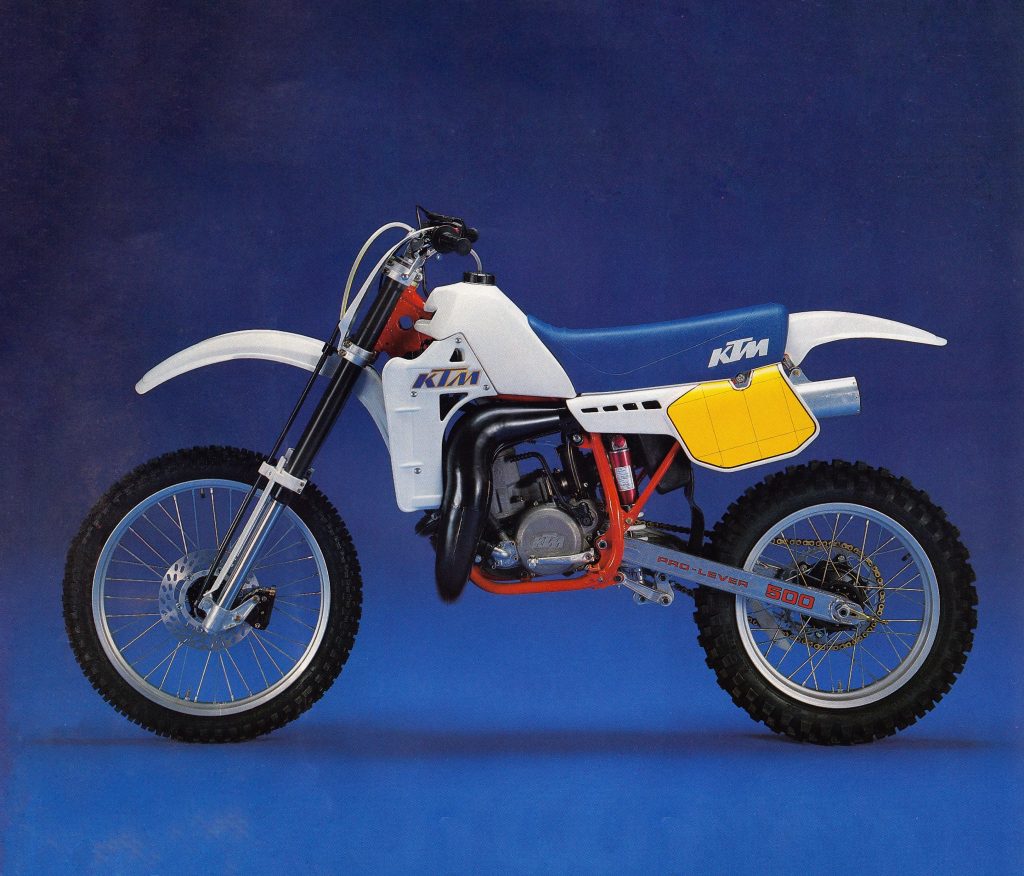 1985 KTM 500MX Shootout Rankings: MXA – 3rd (out of 6) Dirt Bike – 1st (out of 6)
1985 KTM 500MX Overview: Another all-new machine, KTM’s 500MX was the tip of the spear of European motocross in 1985. With its inverted WP 4054 forks, liquid-cooled 485cc motor, and clean Teutonic bodywork, the KTM was a legitimate contender to the ubiquitous Japanese. In 1985, KTM hired American motocross star Danny “Magoo” Chandler to race the all-new KTM 500 in Europe, but it remained a niche product in the US. There was no official KTM factory team in the 500 Nationals, and their dealer network remained much spottier than the Japanese. If you sought out the KTM, it was a worthwhile endeavor, but finding a bike and a tuner knowledgeable in its inner workings was not always an easy task.
If you were lucky enough to procure a KTM 500MX in 1985, you were rewarded with a very capable machine. Its all-new motor pumped out a solid low-to-mid powerband that was smoother and easier to control than the abrupt Honda. It pulled well off idle, jetted cleanly, and hooked up with little fuss. There was a bit more rev than the Honda and Kawasaki, but not nearly as much top-end pull as the Quasar Yamaha. Its five-speed transmission made it very versatile, and its motor produced the least objectionable vibration of the big singles.
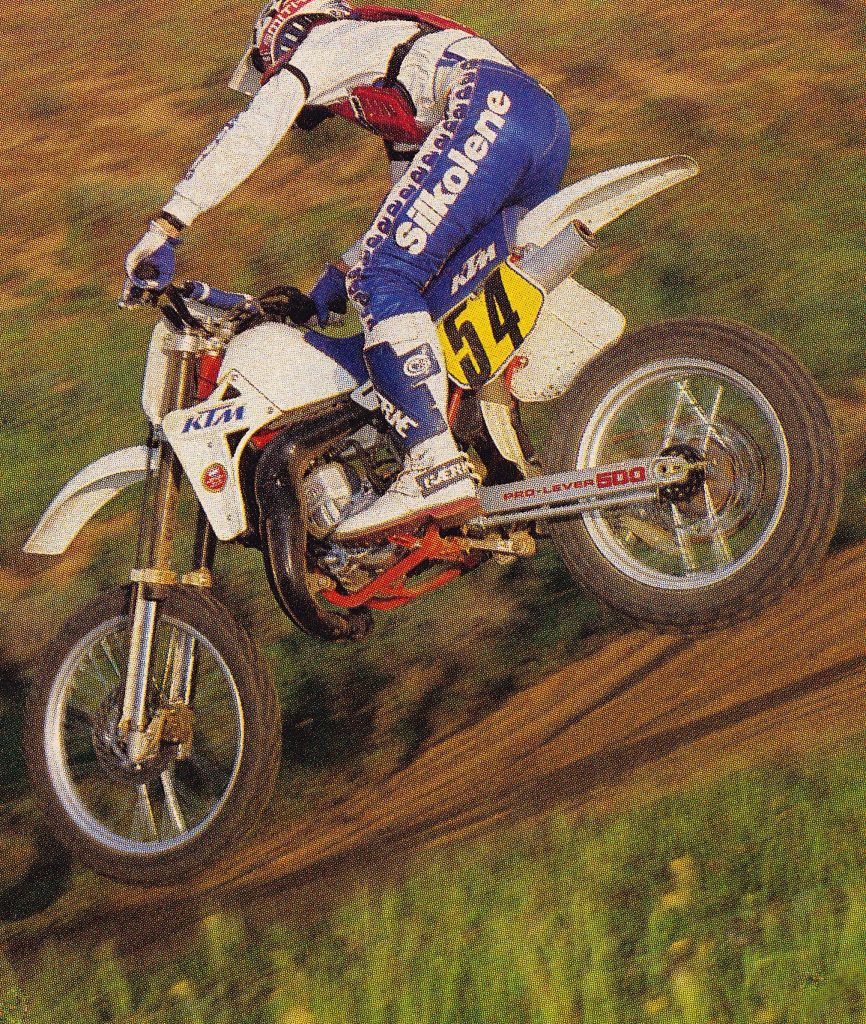 Most European machines did not get a lot of respect in the US press in the mid-eighties, but KTM broke that trend in 1985 with an excellent and very competitive 500 machine. Photo Credit: Dirt Rider
Riders loved the KTM’s handsome looks and slim ergonomics, but shorter riders found its sky-high seat height somewhat daunting. The ultra-trick WP forks delivered by far the best performance in the class, with tons of adjustability and a more precise feel than the conventional forks found on the others. The WP shock was equally praised for its plush feel and resistance to fading. Some riders felt its rebound was a bit quick, but overall, the WP damper was picked either first or second by the testers. Handling was less aggressive than the Honda and Yamaha, but superior to the Kawasaki, Cagiva, and Husky. Steering response was much better than previous KTM Open bikes, and the bike was far more stable than the twitchers like the CR.
For most riders, the KTM’s most glaring flaw was its lackluster brakes. The Brembo front disc and trick dual-leading shoe rear drum were both underpowered compared to the other machines in the class. Both ends delivered subpar bite and an utter lack of feel. On a 125, this could have been overlooked, but on a 60hp beast, it was a serious handicap.
In the end, the 1985 KTM 500MX delivered just the sort of ease-of-use and versatility that Dirt Bike’s editors were looking for in their 500 racer. Its smooth and refined motor, do-it-all handling, and excellent suspension made it an easy choice in a field of more flawed rivals. For MXA, its less spicy motor, poor brakes, and European feel made it a less appealing choice than the harder-edged Honda.
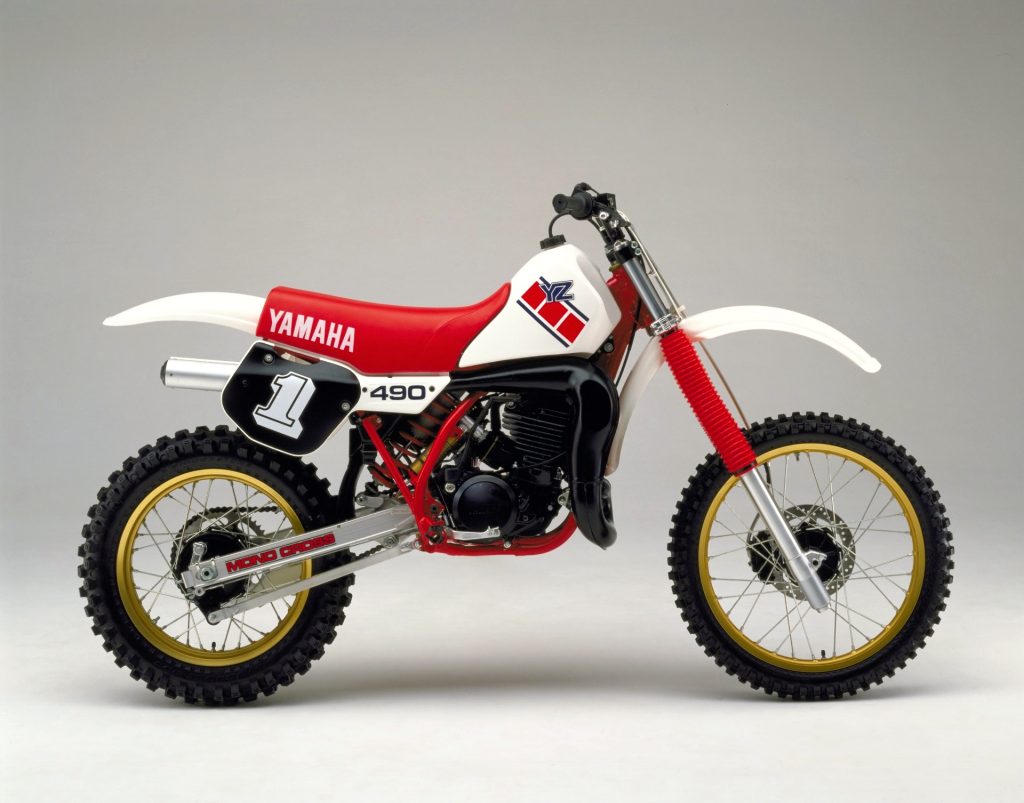 1985 Yamaha YZ490 Shootout Rankings: MXA – 2nd (out of 6) Dirt Bike – 4th (out of 6)
1985 Yamaha YZ490 Overview: The winner of MXA and Dirt Bike’s 1984 motocross shootouts, Yamaha’s YZ490 was the cream of the 500 crop that season. Its air-cooled 487cc motor blubbered down low, pinged when hot, and shook like a paint mixer, but it also barked in the midrange and roosted on its rivals. New bodywork slimmed its lines and upgraded suspension bested all but the Full Floating Suzuki. Overall, the 1984 YZ490 was the best big-bore Why-Zed since the days of the 465 and the “readiest to win” stock machine in the class.
With such a successful machine in their stable, Yamaha chose to refine rather than redesign their big-bore package in 1985. Visually, the machine looked quite different with its new red and white motif replacing the yellow and black of the previous decade. This brought the US YZ in line with its international counterparts. Aside from this color swap, however, the 490 was largely unchanged from 1984. The motor remained air-cooled and retained its motocross-only four-speed transmission. Updates included a slight change to the porting, revamped jetting, and a longer kickstart to aid in getting the big single lit.
The frame and bodywork were unchanged aside from the color swap and a slightly taller and flatter seat to aid movement. The front forks remained a set of non-cartridge 43mm units from Kayaba, but all-new valving aimed to reduce the midstroke harshness some riders complained about in 1984. In the rear, an all-new KYB damper added a bypass valve for the compression damping that Yamaha called BASS. This new system was designed to provide smoother action under braking by allowing the shock to follow the terrain more easily when the rear brake pedal was depressed. Lastly, an all-new disc brake for the front greatly aided stopping and brought the YZ up to par with its green and red rivals.
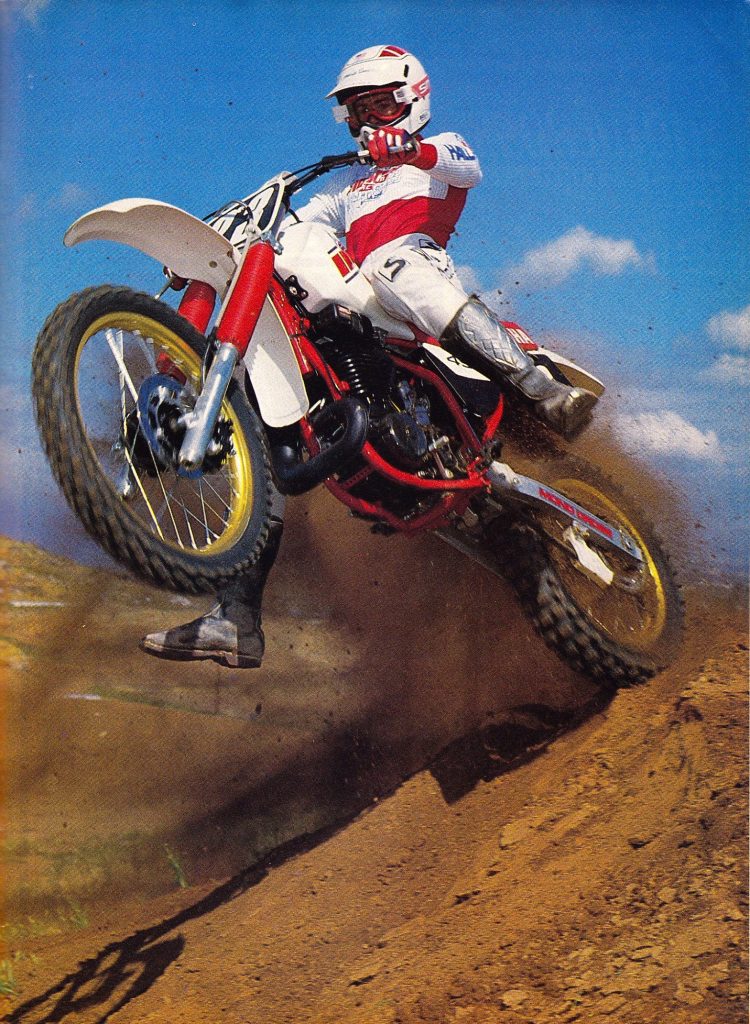 In a class of rapidly improving machines, Yamaha’s air-cooled YZ490 needed motor and suspension upgrades to keep up with the top contenders in 1985. Photo Credit: Motocross Action
On the track, the YZ remained a very competitive machine despite its lack of significant updates. The motor still suffered from erratic jetting and a serious case of the pings, but it was wicked fast once on the pipe. It was softer down low than any of the other 500s, but far faster on top. It caught fire in the midrange and pulled well past the point that the other 500s were demanding a shift. Its four-speed transmission limited it to motocross use, and its action remained the notchiest in the group. With its unorthodox Open class powerband, blubbery jetting, heavy vibration, and four-speed trans, the YZ’s motor was not the friendliest in the group, but if speed was your main concern, then the 490 was more than competitive.
As in 1984, the 490’s handling remained quite good for an Open class machine. It was not as aggressive in the turns as the Honda, but still quite good for such a big and heavy machine. The YZ was largely stable at speed aside from the occasional “Yama-hop” by its overworked stock damper. This turned out to be the YZ’s biggest weakness, however, with both ends delivering disappointing performance. Both the front forks and rear shock were badly undersprung and underdamped for the YZ’s weight and performance. The big Yamaha wallowed in the whoops, kicked under braking, and crashed to the stops on big hits. It was easily the 490’s most glaring flaw, and anyone looking to race the air-hammer needed to get it addressed.
Once the forks and shock were sorted, the YZ490 was a very capable motocross machine. It was good enough to take Broc Glover to the 1985 500 National Motocross title and more than capable of winning at any level with minor upgrades. To get the most out of its motor, it needed to have the head modified, and the forks and shock required heavier springs and a revalve at a minimum.
With these deficiencies, the YZ was knocked out of the top spot in both major motocross shootouts. The addition of liquid cooling to all the Yamaha’s rivals reduced clatter, improved jetting, and eliminated much of the pinging that plagued nearly all the ’84 machines. For MXA, the YZ was still good enough to outclass all but the Honda, but Dirt Bike felt the four-speed transmission, marshmallow suspension, and unrefined motor were just too much to overlook in a rapidly improving class of 500 competitors.
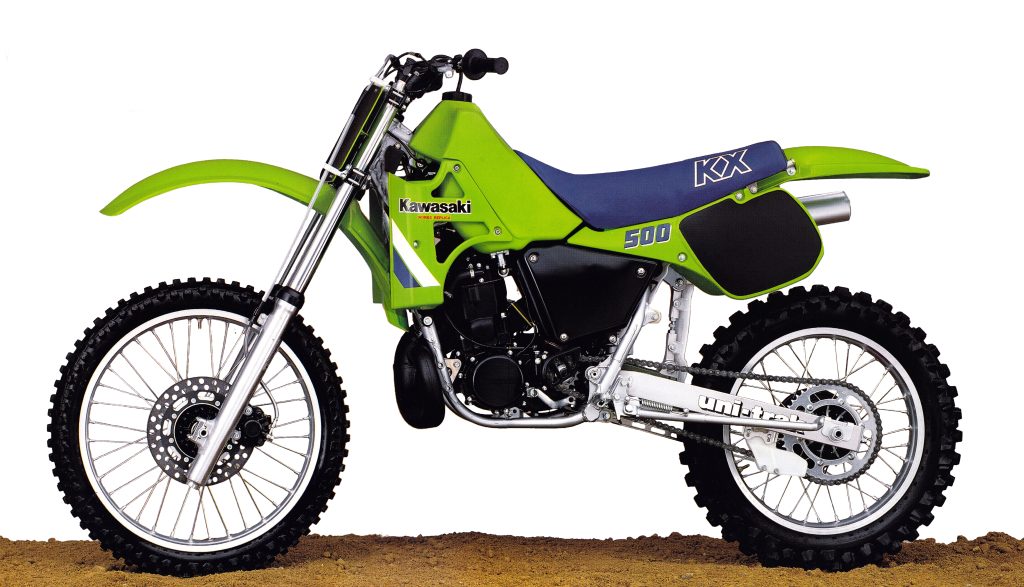 1985 Kawasaki KX500 Shootout Rankings: MXA – 4th (out of 6) Dirt Bike – 3rd (out of 6)
1985 Kawasaki KX500 Overview: All-new from the ground up, Kawasaki finally ended its run of utter Open class futility in 1985. Previous green 500s had been unreliable, ill-handling beasts that detonated themselves to bits and fell apart in short order. With the 1985 redesign, Kawasaki finally entered the realm of serious 500 performance. The all-new liquid-cooled motor was as advanced as anything else in the class, and its trick triple adjuster rear shock was the most innovative in the 500 division. Add in slim and handsome new bodywork and a revamped frame, and you had by far the most competitive Kawasaki big bore ever.
On the track, the new water-pumping KX500 was much improved over past Kawasaki efforts but still a tick behind the best bikes in the class. The new 499cc mill offered good bottom end and a smooth midrange that tapered off as the revs climbed. It was easy to manage and far less challenging to ride than the brutish Honda and high-strung Yamaha. At its peak, it gave up a whopping 7.4 horsepower to the CR, but most riders did not seem to miss the added bark. Out of turns, it was far easier to get hooked up than the monster-motored Honda and less prone to unexpected wheelies. David Bailey types missed the added boost, but most normal humans felt the KX was fast enough to win. Deep sand did bring out the old motor’s penchant for detonation, so if you were riding in mud or heavy soil, running race gas was advisable. Overall, it was a good motor for the majority of the 500 racers.
Where the KX lost its battle for 500 supremacy was on the chassis front. The new bodywork was slim and comfortable with the narrowest seat/tank juncture in the class, but the KX’s frame geometry and suspension performance were just not up to par with the best of the other machines. The KX was very reluctant to turn, and there was a pronounced push to the front end if there was not a berm to bounce off. It was very hard to execute changes of direction if the turn was flat and slick, and the bike liked to push and then tuck the front end. This annoying trait was not easily addressed, and no amount of tire swapping, front-end weighting, and fork height adjustment seemed to lessen its reluctance to turn.
Stability, however, was good, and the big green machine jumped well. As long as the track was fast and flowing, the KX was a decent handler, but throw in a few tight turns, and be prepared for a CR or YZ to divebomb you on the inside.
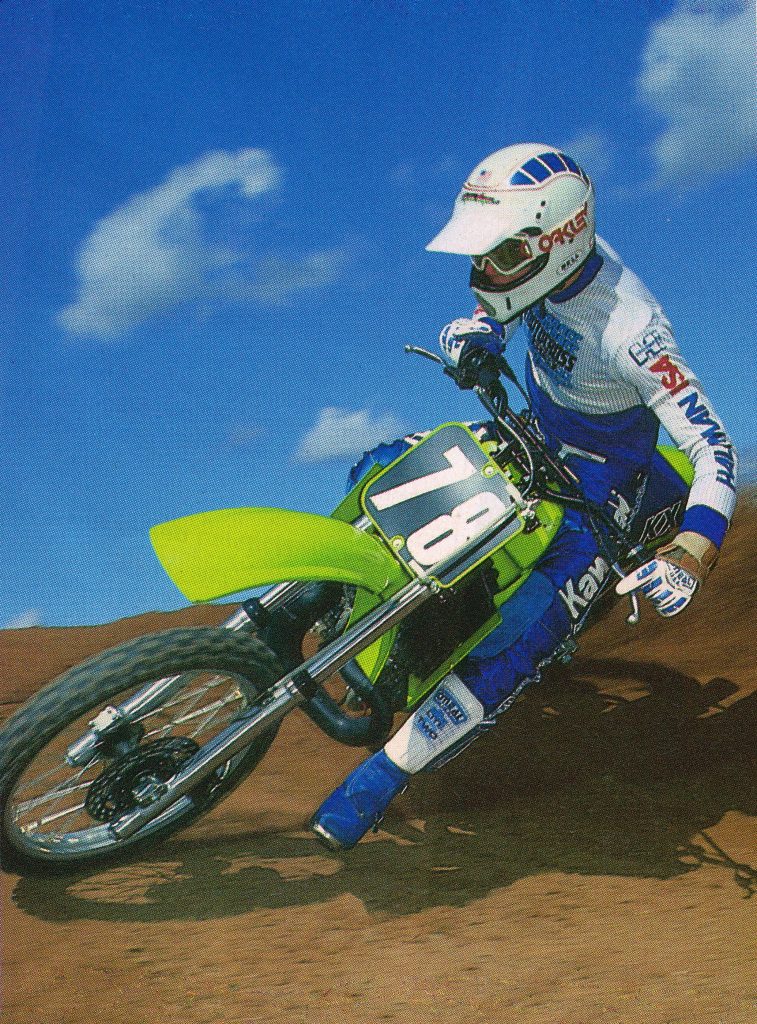 One of the trickiest bikes in the 500 division, Kawasaki’s KX500 offered a slim 250-like layout, mellow motor, and the most-adjustable suspension in the class. Photo Credit: MXA
The other half of the KX’s handling equation was its very advanced but somewhat confused suspension. Up front, the Kawasaki used a set of 43mm KYB forks that offered external adjustments for spring preload and compression damping. As delivered, they were softly sprung, harsh in the mid-stroke, and very light on rebound. This was not a great combination on a fast, heavy, and powerful bike.
Out back, the KX offered a works level of adjustment with its adjustable linkage strut, high and low speed compression and rebound adjusters. This gave riders a lot of choices, and it was very easy to get things very messed up. Some riders really liked its action, aside from a tendency to kick and hop on stutter bumps. Others declared the damper an utter disaster that had to be shipped off to the moto graveyard immediately. No one, however, cared for its propensity to bend linkage arms and eject its shock reservoir.
Altogether, the 1985 KX500 was a tremendous improvement over previous Kawasaki Open class efforts and a good performer overall. Its motor was no powerhouse, but it was easy to control and plenty fast enough for most mortals. The cranky chassis was not easy to address, but a knowledgeable suspension tuner could get the forks and shock up to snuff without too much difficulty. This placed it firmly in the midpack of 500 entries in 1985.
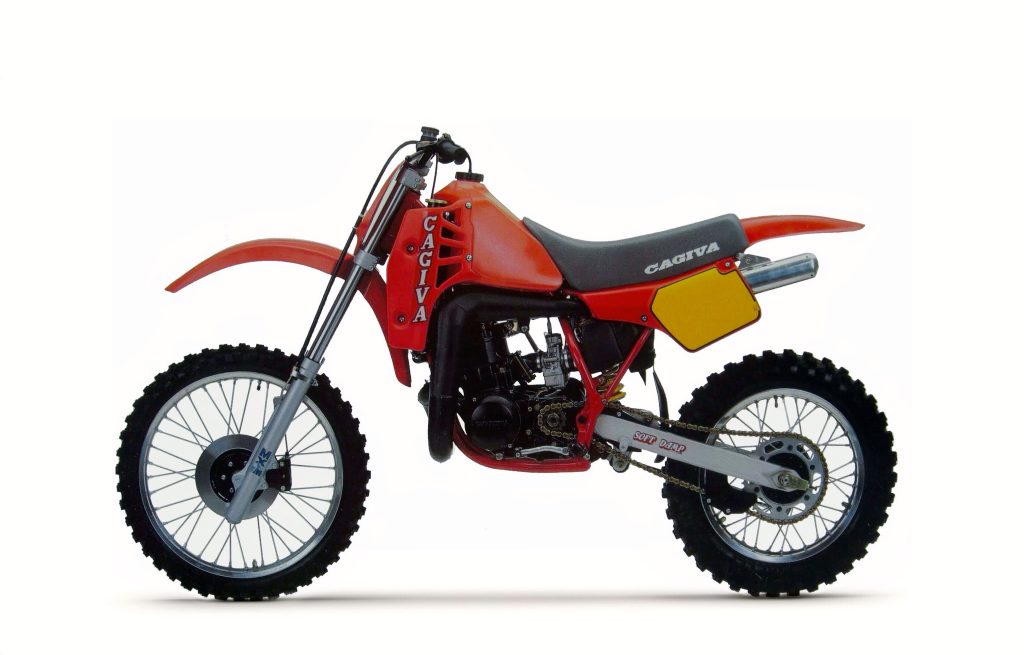
1985 Cagiva WMX500 Shootout Rankings: MXA – 5th (out of 6) Dirt Bike – 5th (out of 6)
1985 Cagiva 500WMX Overview: With roots that carried all the way back to the AMF Harleys of the mid-seventies, Italy’s Cagiva was becoming a serious motocross contender by the mid-eighties. Their WMX125 captured its first 125 World Motocross title this season with Pekka Vehkonen at the controls, and their all-new WMX500 looked to take on the powerhouses from Japan with a thoroughly modern Italian take on the Open class ideal.
The all-new Italian stallion featured a 487.5cc liquid-cooled single fed by a 38mm Italian-made Dellorto carburetor. A close-ratio five-speed transmission and manual clutch put its ponies to the ground. Up front, the WMX featured a 44mm set of Marzocchi forks with 11.8 inches of travel. In the rear, Cagiva employed a Swedish-made Öhlins damper with 12.6 inches of travel and external adjustments for compression and rebound damping.
On the track, the Cagiva was a surprisingly capable machine for a first-year design. Its big single produced an incredibly wide and usable spread of power that was both very flexible and easy to ride. The Cagiva was the only machine of the six to produce usable power in all three phases of its power curve. It was smooth enough for off-road work and fast enough to be competitive on the track. It was a big tractor of a motor that less-experienced 500 pilots loved. It came geared for Baja, but once it was geared down, it was a very quick machine. While not the fastest of the 500 machines, on the track where traction, turns, and tricky terrain come into play, it was more than competitive.
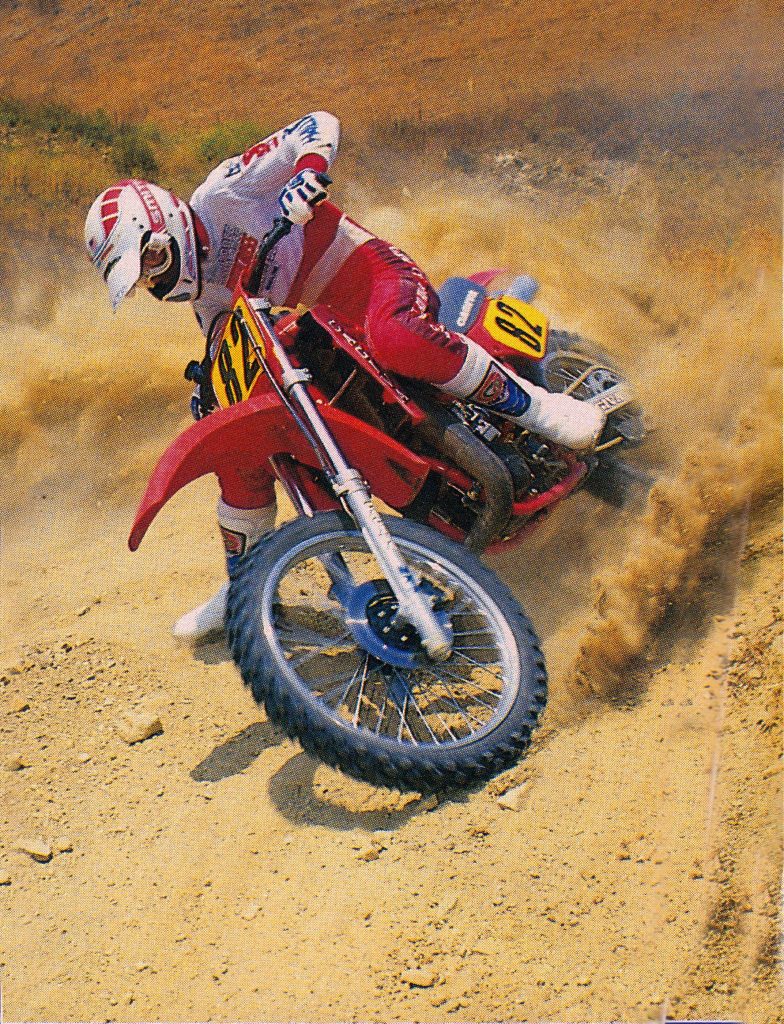 In 1985, Cagiva was looking to fill out their motocross lineup by adding a 500 to their successful 125 and 250 machines. At the time, it was surprisingly competitive for a rushed design, but it remained a niche product with only around 1000 of the WMX500s ever seeing production. Photo Credit: MXA
Like the Kawasaki, the Cagiva’s most glaring deficiencies were on the chassis front. The bike was extremely tall and the heaviest of the Open class machines. This made it feel unwieldy in the turns and less willing to change direction than any of the Japanese machines. The design of the tank and banana-shaped saddle made it difficult to slide forward in turns, and a chore to get back in the rough. Its bodywork was wide, and the big Italian’s weight was apparent on the ground and in the air. Unlike the slim and trim Kawasaki, no one was going to mistake it for an ultra-powerful 250. It was stable at speed and made a much better desert machine than many of the others, but on a typical motocross track, the Cagiva was too big and heavy-feeling to slice and dice with the competition.
The front Marzocchi forks were harsh in action as delivered and not set up to handle America’s jump-filled tracks. There was a lot of stiction from the seals and feedback to the bars from the track. Some testers compared their action to a pair of pogo sticks, and that was not going to get better without a trip to a tuner knowledgeable in the inner workings of the Italian silverware.
In the rear, the story was better with the Swedish Öhlins shock generally acquitting itself well on the track. The shock worked well for most racers and offered a great deal of adjustability. The majority of the complaints seemed to be aimed at the Cagiva’s Soft Damp linkage, which let the bike drop under acceleration and gave it a “stinkbug” stance. Overall, it was rated as a mid-pack performer.
In the end, the 1985 Cagiva WMX500 turned out to be a surprisingly competitive machine. It offered one of the best motors in the class and premium-quality suspension components. Both ends needed a bit of fine-tuning, but they could be excellent once dialed. Its main drawback was its tall and unwieldy chassis, which was not easily addressed. If you were looking for a machine to race occasionally and ride off-road, then the Italian Stallion made an attractive choice. For hard-core motocross, however, there were many better choices available in 1985.
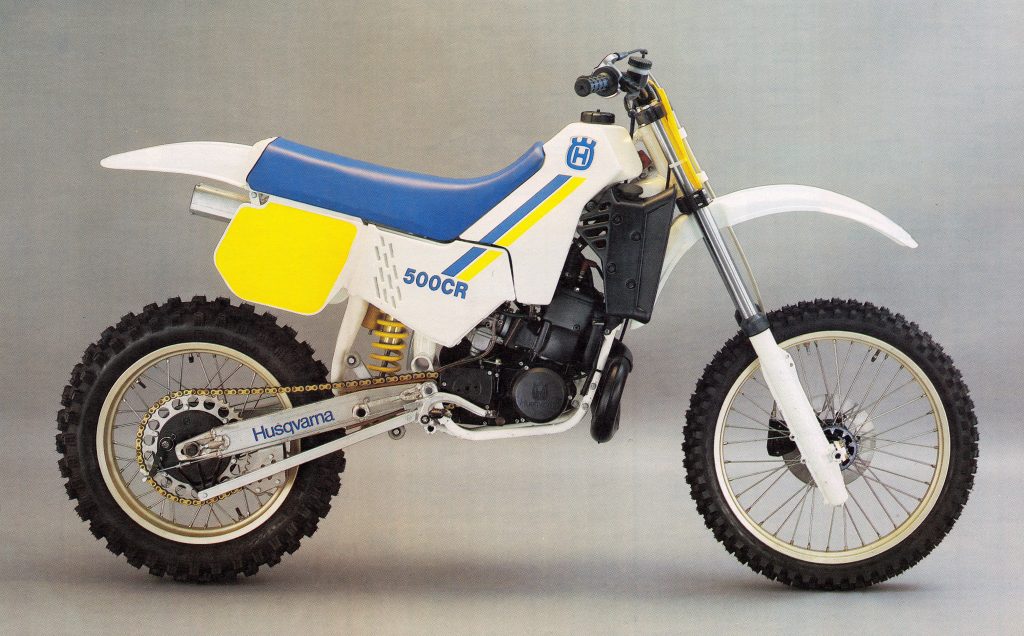 1985 Husqvarna 500CR Shootout Rankings – MXA 6th (out of 6) Dirt Bike – 6th (out of 6)
1985 Husqvarna 500CR Overview: Once the premier machines in motocross, Sweden’s powerhouse Husqvarna brand had been in a steady decline for more than a decade by 1985. In 1984, their 500CR was firmly entrenched in the 1970s with its air-cooled motor, puny 40mm forks, and dual rear shocks. Its spindly rear swingarm looked like it was stolen off Marty Smith’s 1976 factory Honda, and its old-school handling was more comfortable at Bonniville than Budds Creek. It was a thoroughly traditional design in serious need of a major refresh.
For 1985, Husqvarna finally jumped into the new decade with an all-new and thoroughly modern 500 design. The redesigned 500CR featured an all-new 488cc liquid-cooled motor, revamped chassis, front disc brake, and Husqvarna’s first linkage-equipped single shock rear suspension system. This allowed Husqvarna to slim the 500’s midsection considerably and bring its ergonomics and feel more in line with its rivals. The updated Husqvarna employed a Swedish-built Öhlins multi-adjuster damper out back, and a set of Husqvarna-designed and Marzocchi-built forks up front. Styling was very handsome as well, with clean lines and a works-style “drop tank” that lowered the big Swede’s center of gravity.
On the track, the 1985 Husqvarna was certainly improved, but it remained a tick behind its European and Japanese rivals. Like the Cagiva, the Husky’s frame geometry seemed to have been designed for Baja with a tall and long feel that loved to go straight but averted its eyes at the first sight of a corner. It was cranky at turn-in and stubborn to lean into berms. Its Brembo front disc and rear drum were also extremely underwhelming when compared to the works-like pucker power found on the Honda and Kawasaki 500s.
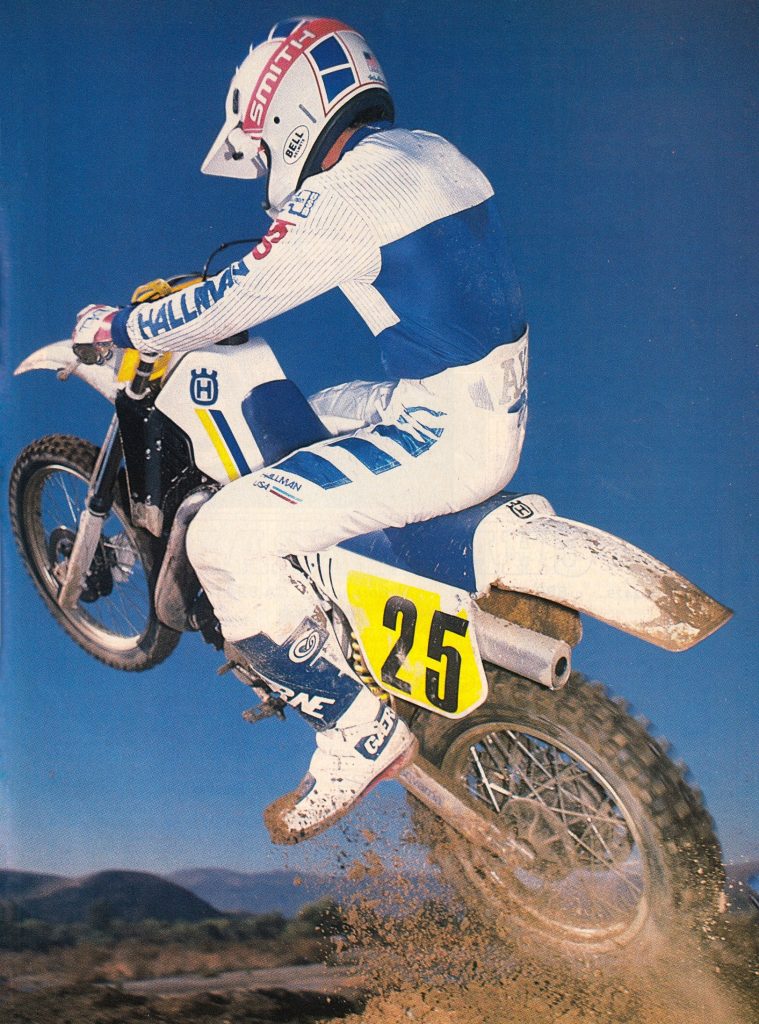 With big power and a towering 38-inch seat height, the 500CR was no machine for the faint-hearted in 1985. Photo Credit: Motocross Action
Its Öhlins rear damper was too softly sprung and underdamped for most motocross applications, but it worked very well off-road. In stock condition, it wallowed under acceleration and blew through its travel on hard hits. With proper setup, it had the potential to be the best damper in the field, but as delivered, it was way closer to Dick Burleson’s setup than Håkan Carlqvist’s.
Up front, the Husqvarna-designed 40mm conventional forks were equally undersprung and underdamped for serious motocross use. Unlike its Japanese competitors, the fork’s damping was fixed at the factory with no external adjustments available for compression or rebound control. The forks hung down in their travel, crashed to the stops on hard hits, and offered minimal rebound control. Their 40mm sliders were noticeably flexier than the 43mm forks found on the competition and prone to deflecting when pushed to their limits. Like the shock, they worked well off-road, but serious racers needed to invest in some springs and valving modifications to get the most out of the Husky’s chassis.
On the motor front, the new liquid-cooled mill was an ultra-strong if somewhat unrefined competitor. The new four-speed water-pumper produced a violent chunk of low-to-mid power that rocketed the big Swede down the track. It snorted out of the hole and ripped into an arm-jerking midrange blast that sent rooster tails flying. It revved farther than the Honda and Kawasaki, but most of its knobby-shredding ponies were to be found in the midrange. It worked best if you kept it a gear high and used its mountain of torque to keep the chassis freed up.
For most riders, the biggest bugaboos with the Husky’s motor were its excessive vibration, four-speed gearbox, and rather cranky clutch. The big Swedish was a real shaker and could numb its rider’s hands in a few hard-ridden laps. If you revved it out, it shook like one half of its crank weights had fallen off. The vibration was so bad that even YZ490 riders objected to its exorbitant shaking. The four-speed transmission was also an annoyance to anyone hoping to do more than track the Husky. It worked fine for moto, but many big-bore pilots hoped for a bit more versatility and a more cooperative clutch.
Overall, it was a much-improved machine in need of a bit more refinement. It had the power to win at moto, but its chassis and suspension seemed much better suited for cross-country and desert competition. With its moto-focused motor and off-road-focused suspension, the 500CR was a bit of a contradiction that ended up fully satisfying neither end of the racing spectrum.