
Yes, I have my preferences when I race, but that doesn’t mean I don’t test or like other tires. I like to try other tires to see what character each one has in hopes to guide some of you more on some choices of moto rubber. To me a great feeling tire needs to have a soft enough feeling carcass (for bump comfort), but also not fold when pushing under lean angle. This is a dream and is like saying I want suspension that is plush but has hold up. It is tough for a tire manufacturer to make a motocross tire that is great on durability and great on traction. You have to pick a side, people! Yes, you may get a blend of both but I can guarantee you that one will outweigh the other when it comes to rubber on your motorcycle.
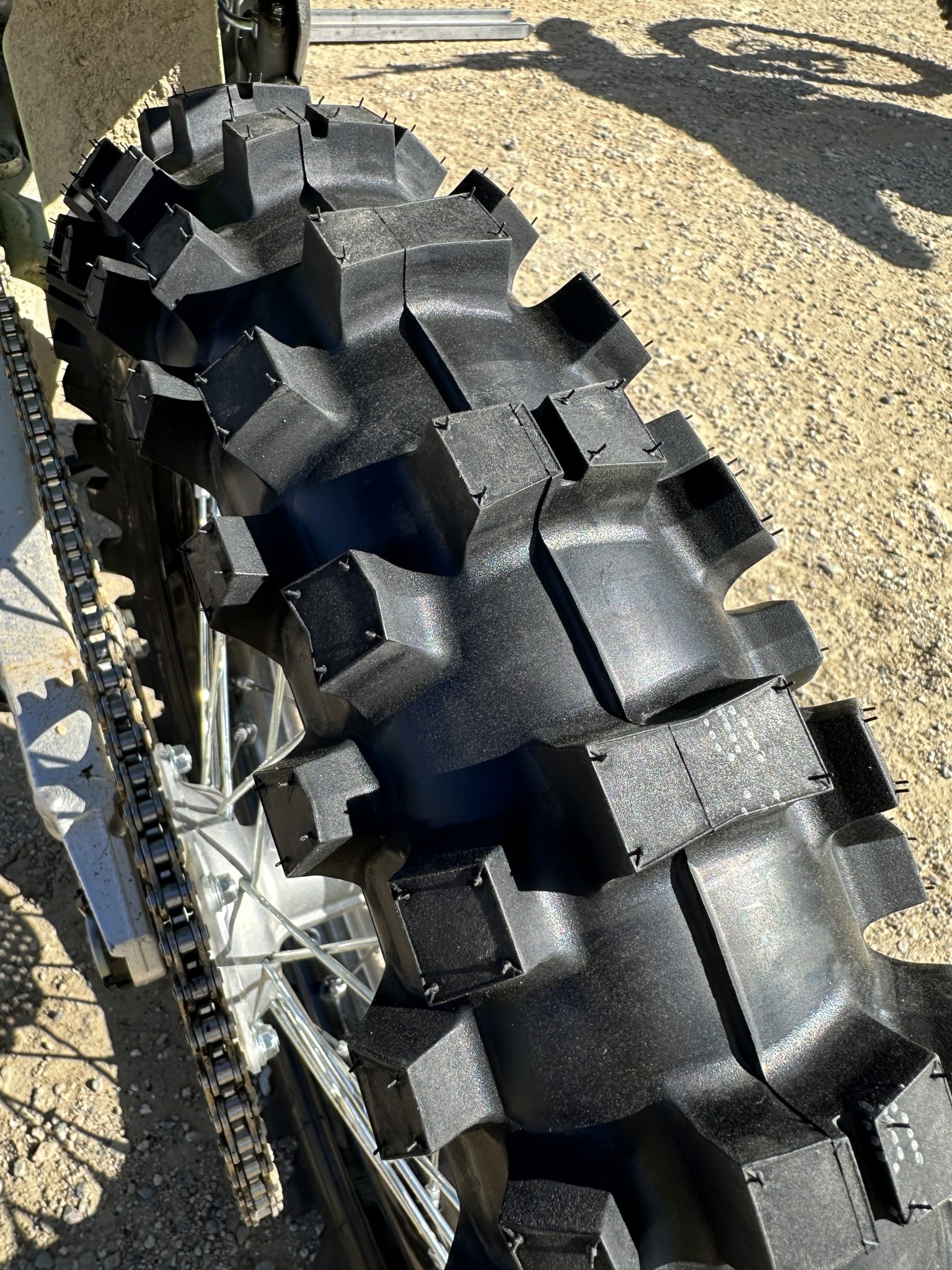
Maxxis introduced a performance tire back in 2023 that was developed with “The King” Jeremy McGrath once again exclusively for us die hard moto guys called the Maxxcross MX-SI. The SI (which stands for Soft Intermediate) features changes with its tread design from the ST. The main points for the MX-SI is that the mold/tread pattern design has been improved to provide better block rigidity. The biggest point of improvement for the Maxxis engineers was to increase stiffness from the ST. At first glance it almost looks like a Pirelli Scorpion MX32 tread pattern design with a slightly different side wall/side knobs, but once evaluated closer you can tell the difference. I ran a set of 80/100-21 and 120/80-19’s MX-SI’s for a bit on a Yamaha YZ450F and Kawasaki KX450 and wanted to give you all some feedback for an option for your motocross tires.
Rear Tire:
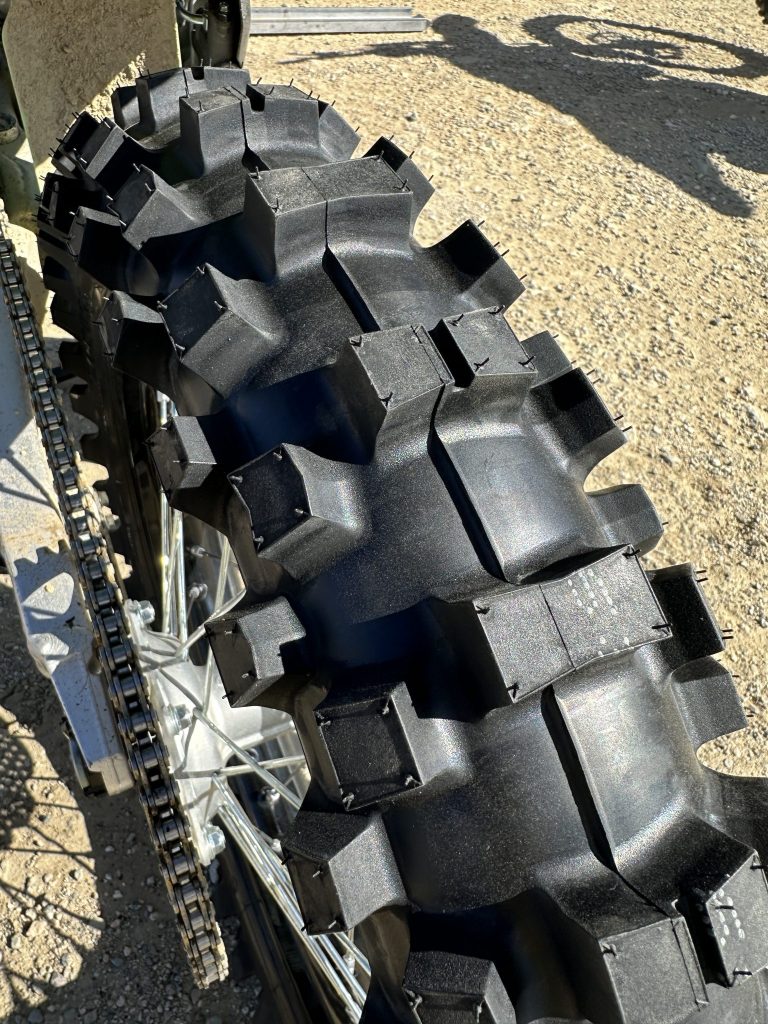
Let’s start off with what I like. I found that the first thing that impressed me was that the Maxxis Maxxcross MX-SI rear tire offers great forward bite (traction on middle part of tire) under acceleration (out of corners) in intermediate/soft terrain through ruts while exiting corners. The Maxxis side knob design works slightly better under lean angle compared to the older ST that I tried years ago and forward/straight traction (or the middle part of the tire) is one of the MX-SI’s (rear tire) strong suits, as the rider is able to get on the throttle sooner (while leaning) without washing/sliding out (compared to the older ST I tried). You are also able to start your lean sooner (than any other Maxxis tire I have tried in the past) while coming into a corner and the MX-SI remains planted to the ground. Braking predictability is also good as it gave me confidence to pivot and throttle out of flat corners without much thought.
Previous Maxxis tire compounds would step out (or wash out) on you once you completed your braking and were back on the throttle, but the MX-SI lets you pivot/lean under throttle through flat corners adequately. One complaint I had is that when the track surface was freshly watered/slightly hard, I couldn’t get as much predictability from the rear tire as I wanted (which is commonplace for this kind of thing), but it gave me more of a pushing or loose feeling rear end compared to a Dunlop MX34/54 or even a Bridgestone X20. Running the correct air pressure in the MX-SI tires is crucial as I found the happy setting at 13-14 psi for most conditions. If you find yourself washing a little on intermediate terrain don’t be scared to go to 14psi in the rear. Even though Maxxis claims that the SI carcass is stiffer in nature compared to the ST it does have more carcass comfort on braking bumps or square edge (slightly firmer feeling than the Pirelli MX32 mid soft). When you normally get a harder carcass tire, the rider usually feels harshness or deflection when the track deteriorates but Maxxis did a good job at keeping most of that squish feeling at a friendly level for the average consumer. This is the best rear tire Maxxis has put out to date so a job well done to the guys over there! Weight: 120/80-19 = 12 lbs.
Front Tire:
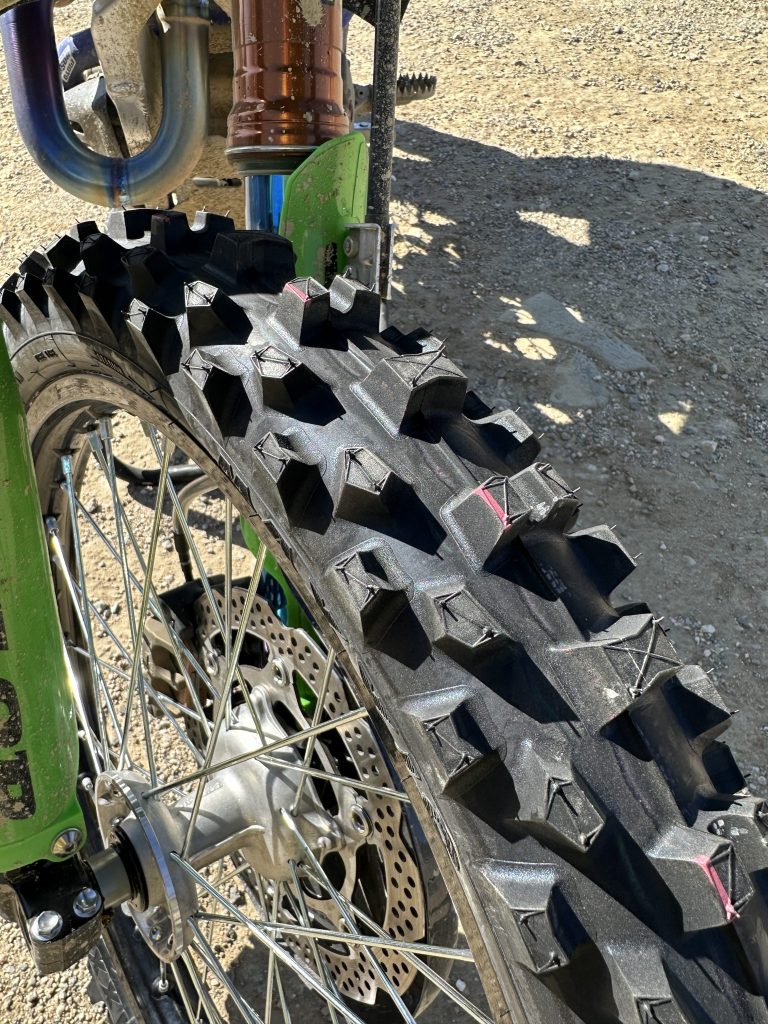
I am kind of a nutball when it comes to front tires so this is a picky front tire assessment! Strap in… Once again, the Maxxis MX-SI front tire is 100% better for front-end feel and lean angle traction than the ST, in hard pack conditions. Even for a soft-intermediate terrain tire the SI dealt with hard pack well. This part is easy. The MX-SI front tire has decent bite not only in soft soil, but also in looser hard pack soil as well (good track toughness from a front tire). I notice more traction/feel on the hard pack than I was used to comparative to other Maxxis front tires I have tried in the past.
When the ground is soft, I notice that lean angle is predictable and gives the rider confidence in leaning his machine over, but when the track gets the good dirt pushed off, some of that confidence/lean angle goes away. Now, before you jump out of your seat and tell me that I am saying the MX-SI front tire is no good, I will say that all tires have a breaking point when under lean angle. The thing that we all should look for in a front tire is if that “breaking point under lean” is consistent. For example, the Dunlop MX33 front tire NEVER gave me that confident lean angle feel. It would wash out unexpectedly and wasn’t consistent enough for me. At least the MX-SI is consistent and I can predict when it will start to wash out when leaning. The MX-SI front tire will accommodate the moderate front end steering rider and is able to be leaned into corners fairly aggressively. The contact patch feel on lean angle is fairly wide on the MX-SI and is better than a Bridgestone Battlecross X20 or 30. The carcass feel of the SI has nice comfort when hitting bumps straight on and can help some harshness on stiffer feeling new bike chassis’.
Acceleration on lean angle traction (on the MX SI front) is not quite as predictable as it is on de-cel however. If accelerating on a fast sweeper, the front tire does want to “hunt and peck” or deflect somewhat. What is “hunt and peck”? Hunt and peck is a testing term we use when the tire feels like it is moving underneath you and doesn’t feel as planted. Or another word would be a narrower contact patch feel. Off-throttle planted sensation is great, but on-throttle sensation, I notice the front tire moves around and deflects a little more than I would like. When the track had just been freshly watered (wet slick) and was slick on top (think of the second moto on late afternoons, at a Southern California type of track) the MX-SI also loses a little predictability. On dry slick this tire gives me more confidence, but when watered that contact patch feel goes down more than I would like. This kind of condition would give the front end a vague feel (pushing sensation) as the bike would have a tendency to slide the front-end through flat corners more. I found that going up slightly in air pressure helps this out tremendously and gives the front end less push. The best recommend air pressure is 13-13.5 psi as I get a little more predictability in wet slick conditions with this pressure.
The wear of the MX-SI front tire is also much better and hasn’t shown signs of chunking yet, but to be fair almost all of the tracks I have ridden have been mostly softer in nature with the occasional afternoon hardback for a couple hours. You can go down in pressure on a softer track east coast style track (12.5 psi) but I stick with around 13-13.5 psi mostly here in So. Cal. The SI front tire didn’t cause me to complain too much or the want to take it off in a hurry. This says something as I am most picky when it comes to front tires. Weight: 80/100-21 = 9.12 lbs.
Lifespan:
I have not had enough time on the Maxxis SI tires to give you all a proper durability check as I only have around 6 hours on the tires. Unlike California, the Georgia clay dirt is A LOT friendlier to the lifespan of the knobbies.
The Maxxis SI is a good option for you riders that want a performance based moto tire. Another tip of that hat to Maxxis on the price point as well. They go for $90.00 at online retailers for the 80/100-21 and $110.00 for a 120/80-19. That is in the ballpark of other top players in the soft to intermediate category! Any questions about the Maxxis tires, please let me know at kris@keeferinctesting.com.