
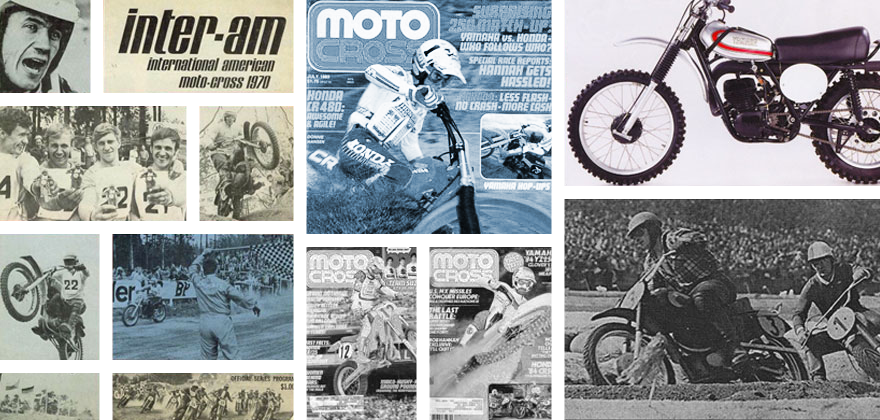

For this edition of Classic Steel, we are going to take a look back at Honda’s all-new CR125R for 1993.
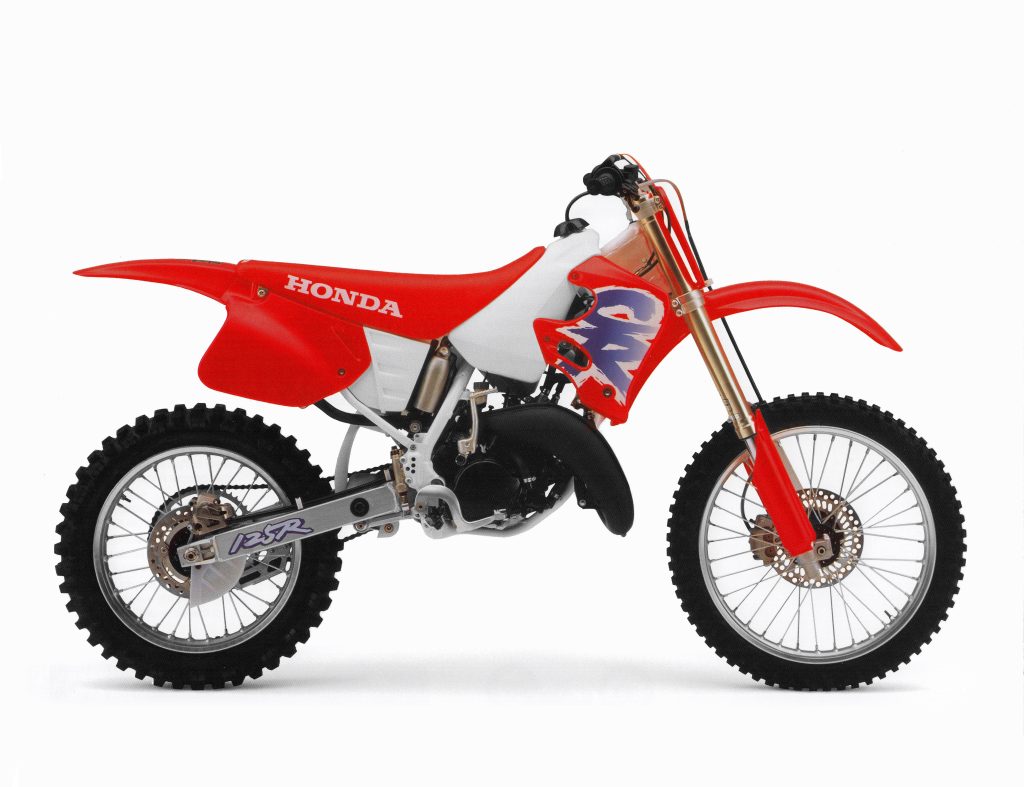 The all-new CR125R offered tighter handling, improved power, upgraded suspension, and sleek new bodywork for 1993. Photo Credit: Honda
The early 1990s were a great time to be riding red in the 125 class. Honda’s smallest full-sized machines were the perennial horsepower champs of the tiddler division going back to the mid-1980s. Starting in 1986, Honda’s one-two-fives began delivering the kind of big power numbers that captured National Motocross titles and the hearts of magazine editors alike. The red machines were often poorly suspended and not the easiest to ride, but if peak power was your top priority, then it was hard to go wrong riding red in the 125 division.
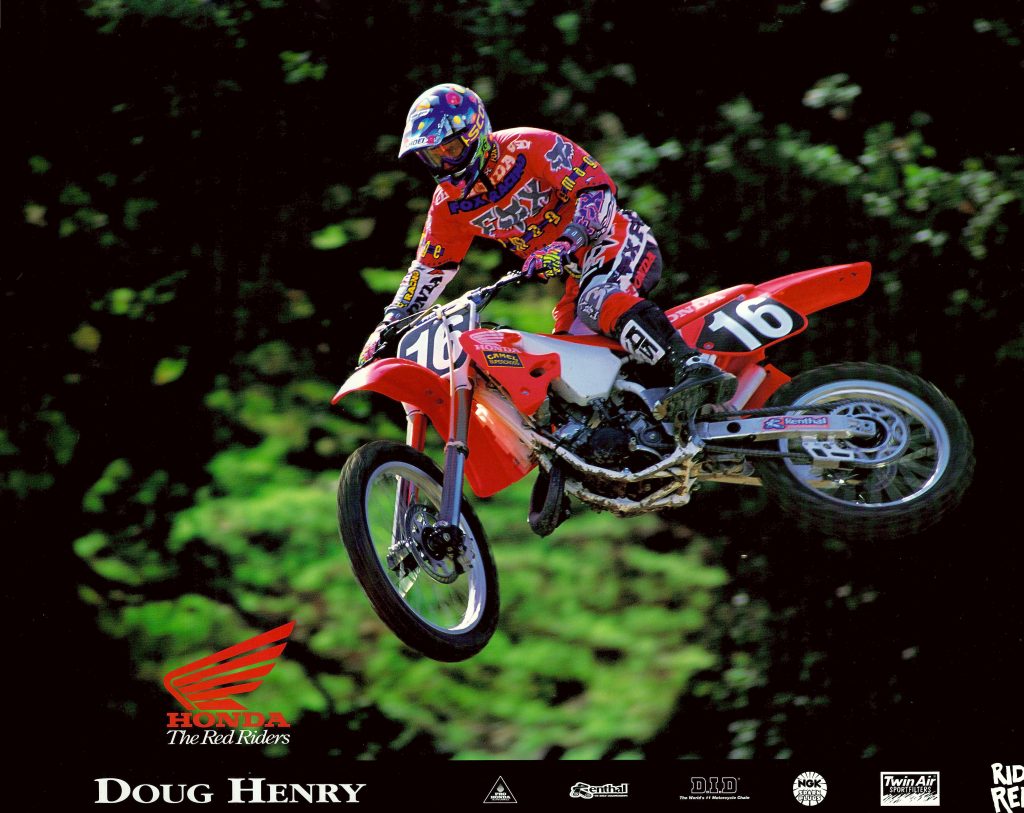 In 1993, Honda dropped its support of Mitch Payton’s Peak Pro Circuit team and moved their 125 program back to the factory rig. DGY’s Doug Henry was hired to campaign the all-new CR125R indoors and out. Photo Credit: Honda
In 1992, the CR was once again the horsepower champ of the 125 class, but a few chinks were beginning to show in the armor of the Nuclear Red rocket. The little Honda remained wicked fast, but its peaky powerband, penchant for popping, and surprisingly fragile pistons marred an otherwise winning motor package. The suspension woes that had plagued the CRs since 1988 remained and its once-laudable chassis was beginning to show its age. Riders still loved its top-end rush, but for the average racer, Suzuki’s RM125 offered a superior combination of handling, suspension, and powerband in 1992.
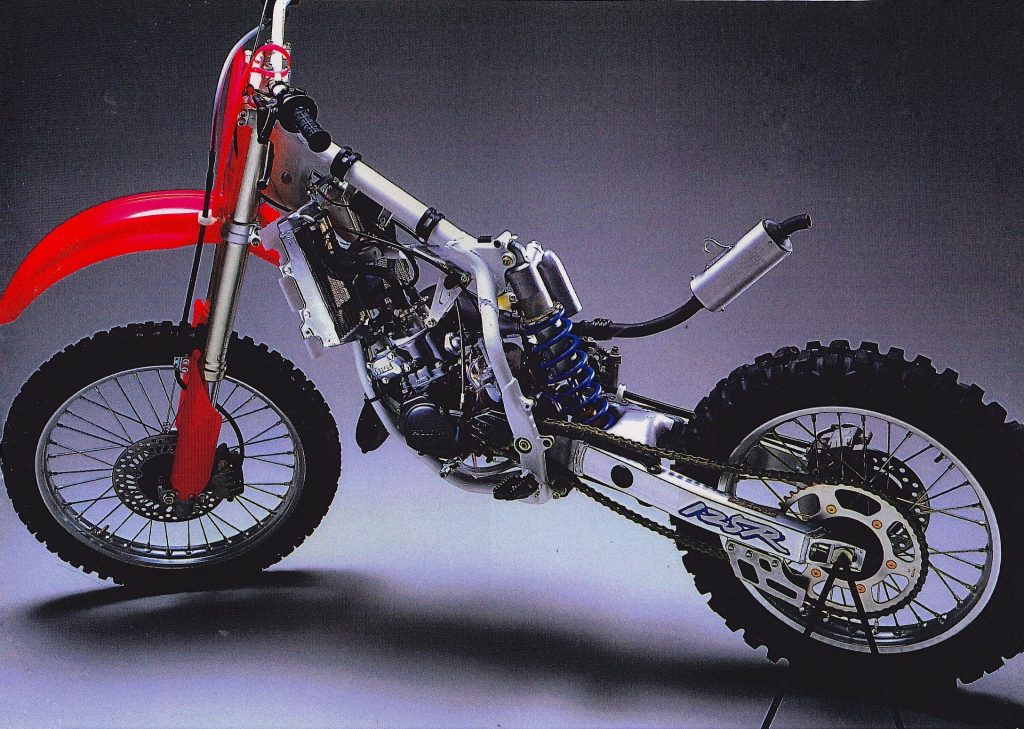 All-new from the ground up, the CR125R featured a redesigned frame and majorly revamped suspension for 1993. Photo credit: Honda
After a year of minor updates in 1992, Honda’s engineers were ready to pull out all the stops with their 125 package in 1993. In 1992, the CR125R received a bold new look, but its bodywork was unchanged aside from the move to a controversial shade of neon red/pink Honda coined Nuclear Red. The new bodywork made the CR look more changed than it actually was and not everyone at the time was a fan of the quickly-fading shade of red Honda chose for their 1992 machines.
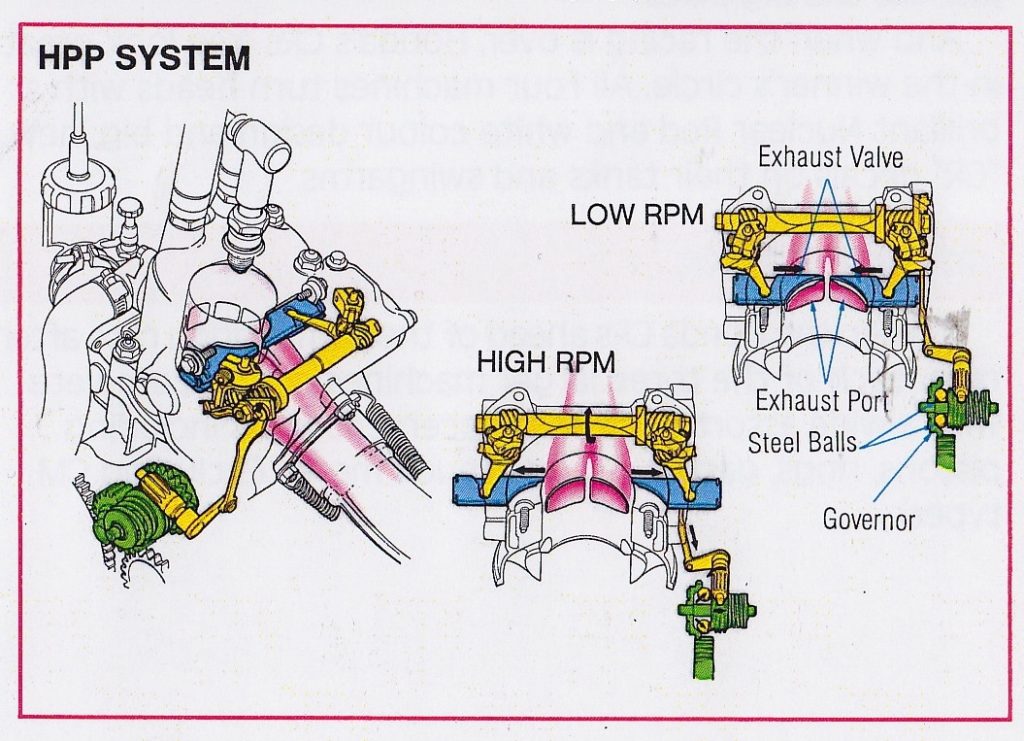 In use on CR125Rs since 1990, the Honda Power Port (HPP) was renowned for its ability to produce top-end power and reviled for its complicated-to-service construction. Photo Credit: Honda
For 1993, Honda addressed the fading concerns by reformulating the dye to be less pink and more resistant to fading. The Nuclear Red remained glowing, but it was slightly more orange than the year before. In addition to the new color, Honda dialed up an all-new frame designed to both improve the CR’s tight track manners and calm down its high-speed instability. The new chromoly steel frame featured stronger tubing with additional gusseting to fight flex (a problem the all-new CR250R frame suffered from the year before), larger steering head bearings, 0.5 degrees less rake, and 6mm less trail than in 1992. The fork offset was also changed from 22mm to 24mm, and the wheelbase was extended 0.2 inches to 57.0 inches.
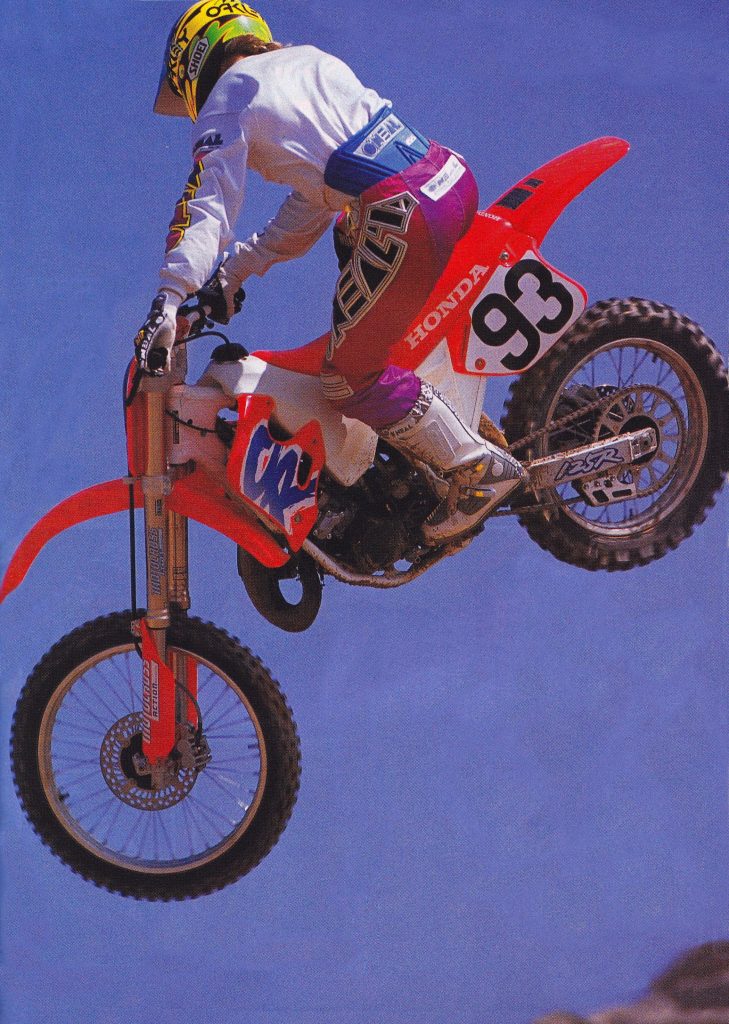 With superb ergonomics, tons of power, and a feathery feel, the CR125R was an excellent jumper in 1993. Photo Credit: Motocross Action
Sitting on top of the redesigned frame was all-new bodywork borrowed from the 1992 CR250R. The new tank and shrouds were slimmer and lower with a flowing design that worked much better with the white/neon red color scheme than the old 1991 bodywork. The seat was longer and flatter, with 10 percent denser foam and a 0.2mm thicker seat cover to improve comfort and durability. Interestingly, the 125’s stock saddle was an inch taller than the seat found on the CR250R in 1993. All-new side plates featured a smaller and sleeker profile with clean lines that flowed into an all-new slimmer rear fender. The new airbox was shared with the CR250R and featured small inserts Honda called “separators” on each side of the airbox to generate a “ram air” effect to the filter. An all-new gas cap for 1993 added an internal baffle to prevent fuel leakage out of the vent tube and all-new pegs added 6mm of width to improve grip and rider comfort.
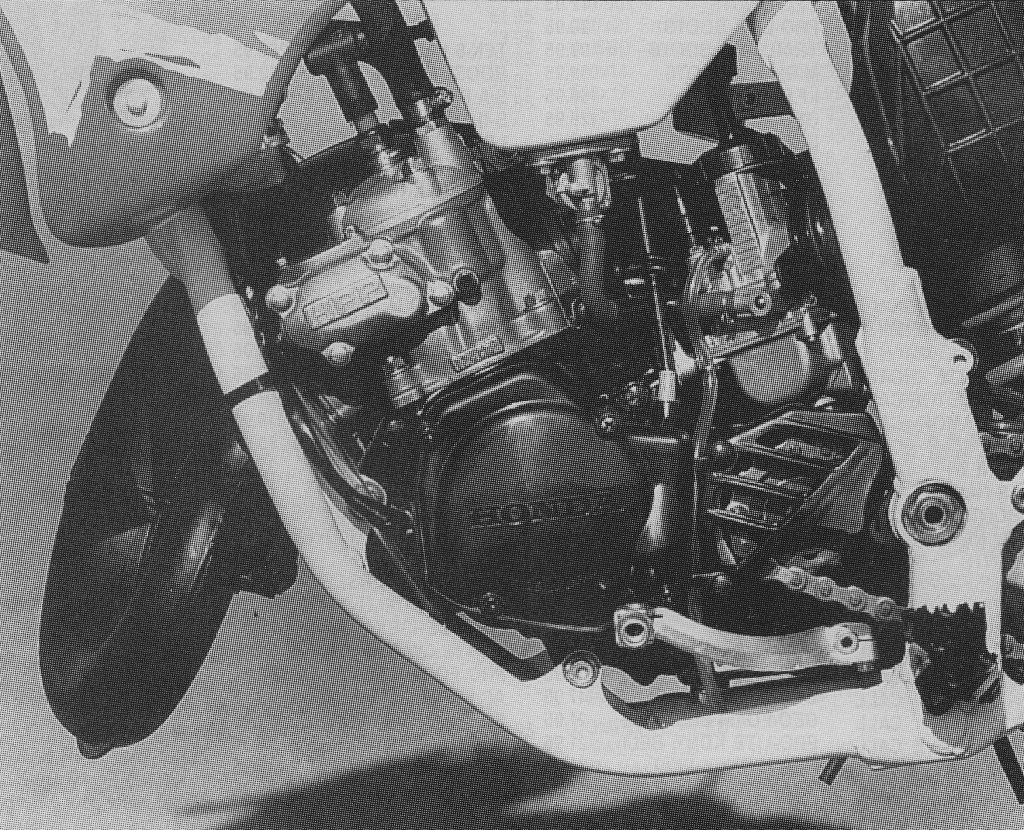 Motor changes for 1993 included updated porting, reduced compression, a widened intake, an enlarged airbox, and revamped HPP linkage. Photo Credit: Motocross Action
On the suspension front, the CR125R was thoroughly revamped as well for 1993. In 1992, Honda reduced the diameter of their forks by 2mm in an attempt to bring a bit of comfort back to their notoriously unforgiving front end. The new “triple tapered” 43mm inverted Showa forks were an improvement, but still not very good when compared to the Honda’s rivals. For 1993, Honda kept the 43mm size but ditched the triple tapering. Honda claimed the new stronger tubes provided improved steering precision and better feel on hard hits. Internally, the revamped Showa legs featured all-new damping settings, stiffer springs, and a new blow-off valve designed to reduce harshness. Fork travel was set at 12.2 inches with 17 available adjustments for compression and 14 selectable settings for rebound control.
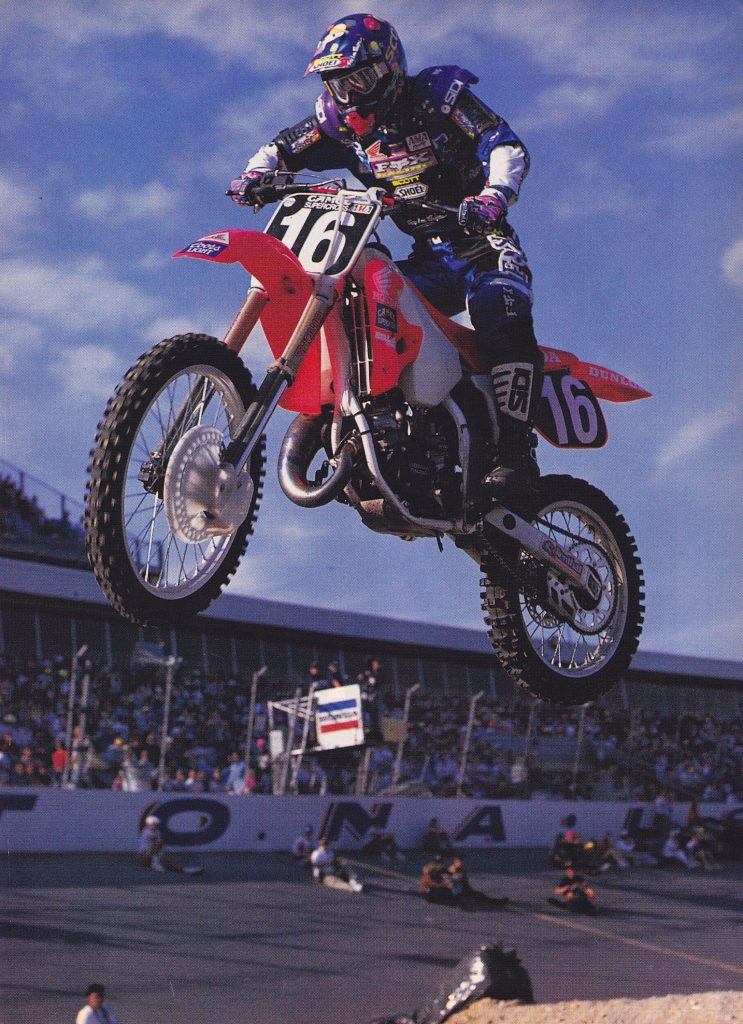 After two moderately successful seasons on Yamahas, Doug Henry took a major step up on the all-new CR125R, carding seven victories on his way to the 1993 125 East Coast Supercross title. Photo Credit: Motocross Action
In the rear, Honda dialed up an all-new Pro-Link design for 1993. The revamped rear end featured an all-new linkage engineered to provide a flatter leverage curve and a beefed-up swingarm designed to prevent the cracking that plagued the all-new CR250R’s rear end in 1992. A redesigned Kayaba shock was added with all-new valving and a 2mm larger shock shaft for an improved feel and greater durability. Rear travel remained unchanged at 12.6 inches with 22 settings for compression and 20 external adjustments available for rebound.
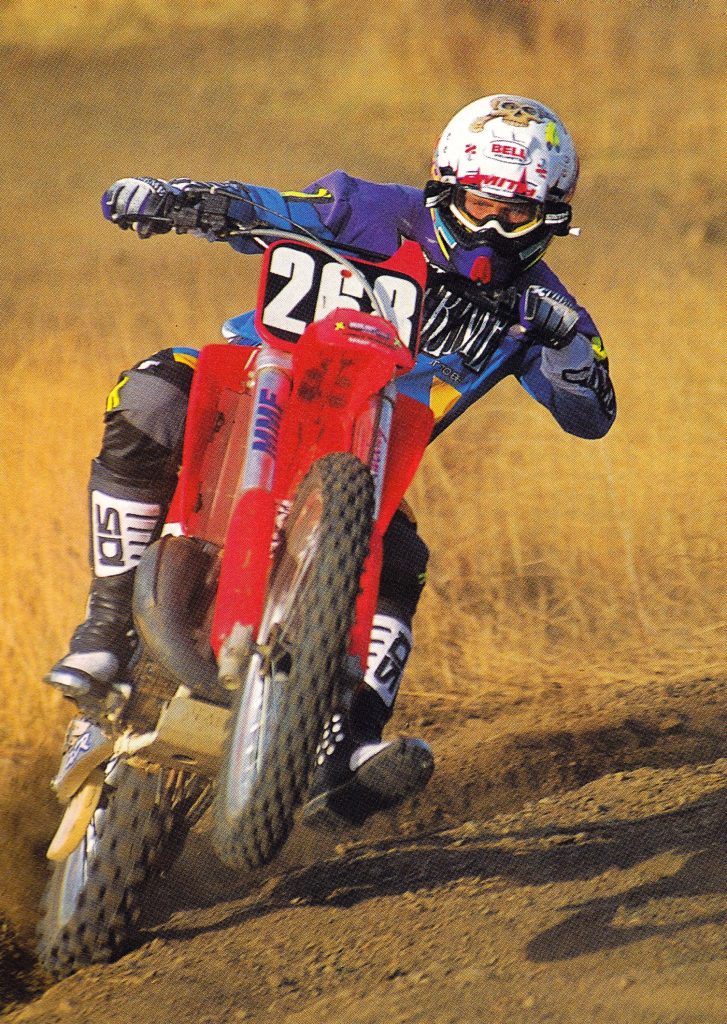 Big power had been the CR125R’s calling card since 1986 and the 1993 CR125R was no exception. Serious boost from the midrange on up rocketed the hot-blooded Honda out of turns and to the front. Photo Credit: Ken Faught
One area where the CR125R was not lacking in 1992 was horsepower. The 124ccc case-reed mill delivered tons of top-end pull, but very little in the way of low-end torque. When it was on the pipe it was nearly untouchable, but keeping it at full boil required skill and commitment. For 1993, Honda looked to broaden the CR’s power and improve its reliability. Unlike the CR250R, which received an all-new power-valve system in 1992, the CR125R continued to employ the Honda Power Port (HPP) first introduced on their 250 in 1986. Using a set of sliding guillotine valves to alter exhaust port timing, the HPP lacked the exhaust valve resonance chamber employed to boost low-end torque on Honda’s new Composite Racing Valve (CRV) and the Kawasaki Integrated Power-Valve System (KIPS).
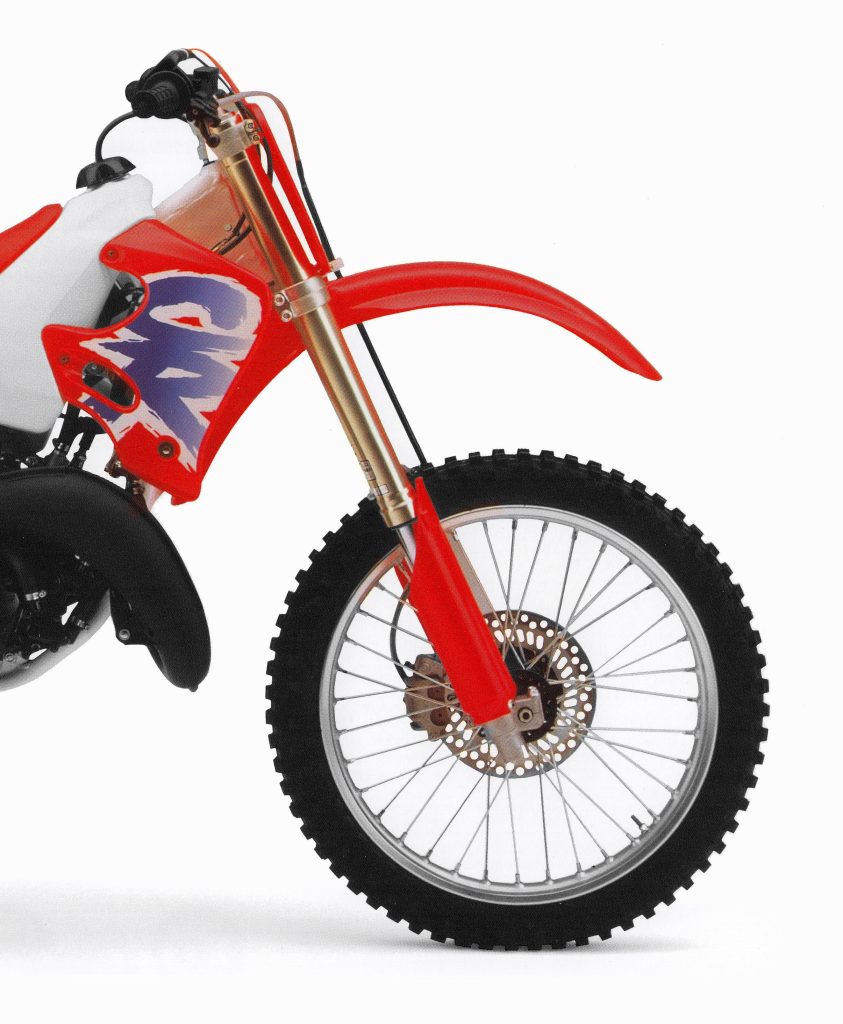 All-new 43mm Showa forks for 1993 offered improved but still disappointing performance. They worked well on serious leaps but proved harsh and unforgiving most everywhere else. Photo Credit: Honda
For 1993, Honda looked to broaden the high-strung CR’s power by lowering the cylinder slightly to alter the port timing, increasing exhaust port volume, widening the intake tract on each side by 6mm, reshaping the exhaust valve guides and retiming the HPP to open 450 RPM sooner. Detonation and piston failure had been noted by many CR125R riders in 1992, so for 1993 Honda lowered the compression from 9.9:1 to 8.8:1 and beefed up the cases to improve mainshaft durability. A new reed valve was spec’d with a horizontal “wing” designed to improve intake velocity and beef up low-end power. This was a trick borrowed from Boysen’s aftermarket intakes of the time. The carburation duties continued to be handled by Keihin’s venerable 36mm PJ flat-slide mixer but a new “whirlpool” throttle offered a smoother pull and lighter effort for 1993.
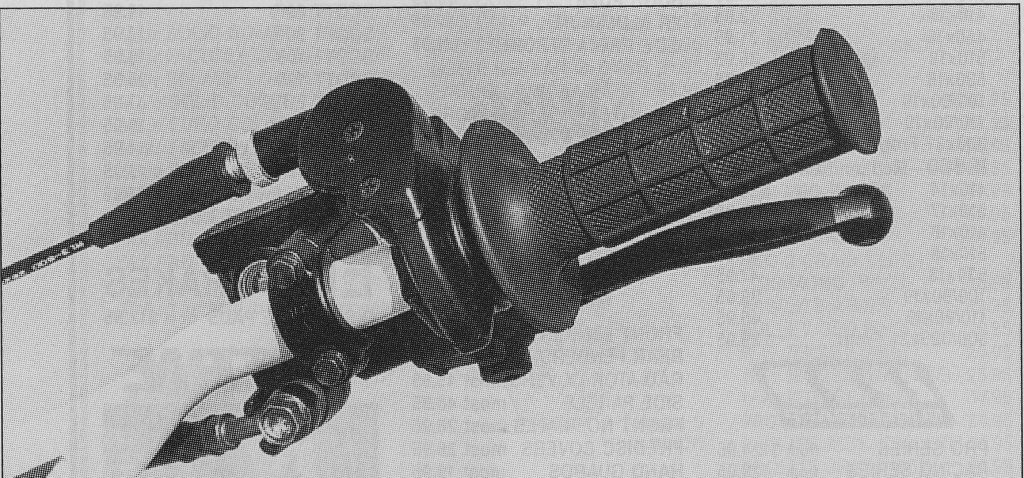 An all-new “whirlpool” throttle assembly for 1993 offered a lighter pull and smoother action. Photo Credit: Motocross Action
On the track, the 1993 Honda CR125R was a much-improved version of the bike that took Jeremy McGrath to the 125 West Coast Supercross title in 1992. The new motor picked up sooner down low and pulled stronger into the midrange before igniting the rocket boosters and shrieking to a top-end crescendo that had dogs howling a county away. As in 1992, the stock gearing was a bit tall and most non-pros found that adding one or two teeth to the rear helped keep the hot-blooded Honda churning. While low-end torque was improved, the CR was still much less friendly down low than the ultra-responsive Kawasaki KX125. The Honda tolerated running below 5000 rpm but there was not much really going on down there. There was just enough grunt to keep the motor spinning before the real fun started. Once the CR hit the midrange, however, there was not another machine in the class with a prayer of keeping its Nuclear Red rear fender in their sights. It was quasar fast on top and a huge advantage if you had the talent to keep its high-RPM powerband singing.
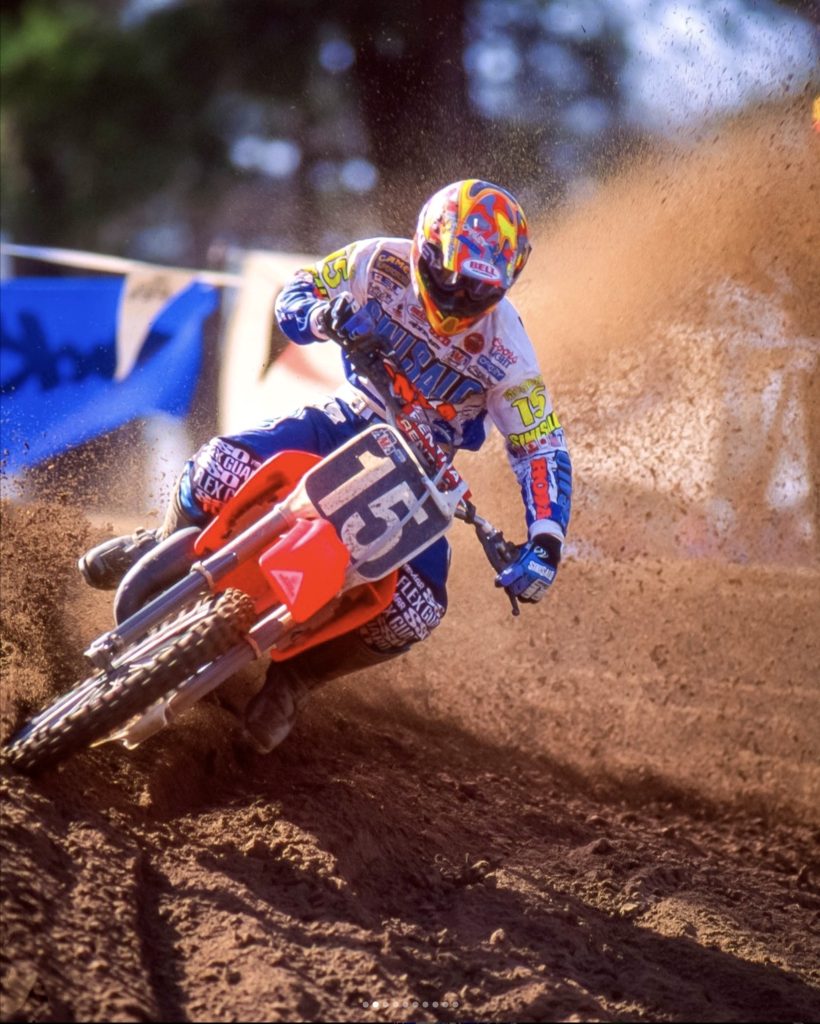
After dominating the 1993 AMA 250 Supercross series, Jeremy McGrath moved back down to the 125 class outdoors on the CR125R. McGrath would capture the overall victory at round one and go on to finish third overall in the final 125 National Motocross standings. Photo Credit: Motocross Action
While the CR125R’s motor was the unanimous pick of fast experts and pros, it remained a bit of a challenge to use effectively for less experienced 125 pilots. Even if you geared it down, there was not a lot of snap down low and the RM and KX were far easier to ride if you lacked the skill to keep it pinned out of every corner. Just hammering the clutch was not always enough to wake up the high-strung CR’s powerband and if you shifted too soon and/or failed to keep your speed up in a turn you might find a green or yellow machine roosting past as you tried to find your way out of the land of bog. Thankfully, however, the CR’s clutch was up to lots of abuse and its transmission was well-spaced and flawless in action. Once you learned to carry a bit more speed and keep the RPMs up, then the CR125R motor was almost an unfair advantage. It was equal parts fast and demanding, with a bit of a learning curve that rewarded bravado and punished timidity. If you had the talent and experience to effectively use its power, then it was by far the best 125 motor in the class, but if you lacked that level of commitment, then the easier-to-ride RM and KX motors were probably going to be a better fit.
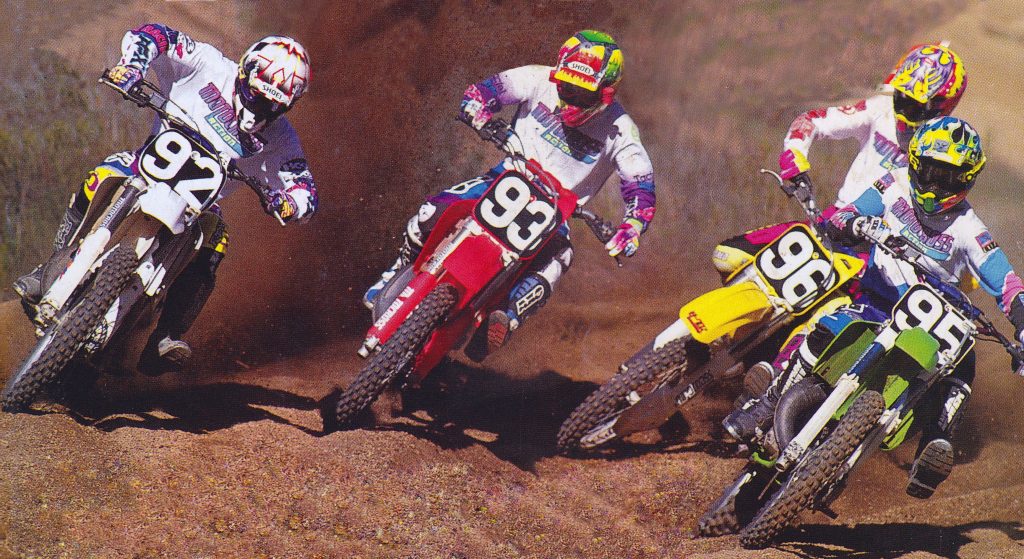 In 1993, all of the 125s were good-handling machines, but each had their own distinct personalities. The Honda and Suzuki favored turning over stability, while the Kawasaki was rock solid at speed but more reluctant to change direction. Yamaha’s YZ125 was a bit down on power compared to the other three, but many riders felt it offered the best combination of turning precision and high-speed stability in the class. Photo Credit: Motocross Action
On the chassis front, the CR125R was even more impressively improved for 1993. The previous CR was a decent handler, but most riders felt the RM outplayed the Honda at its own game in 1992. In 1993, Honda pulled out all the stops in a campaign to reclaim the title of King of the Quick handlers. The new stiffer frame, revised geometry, and revamped ergonomics were all aimed at bringing back Honda’s legendary ownership of the inside line. Once again, this mission proved to be a tremendous success. The new chassis was incredibly responsive, with turning manners that bordered on effortless. The CR’s front end stuck like glue and carved circles around the green and white competition. The all-new 1993 RM125 was equally quick, but most riders preferred the more planted feel of the CR’s chassis in turns. The revamped layout was super comfortable and slim, with the best seat and excellent controls. Jumping the Honda was just as effortless, with a light feel and flickable personality.
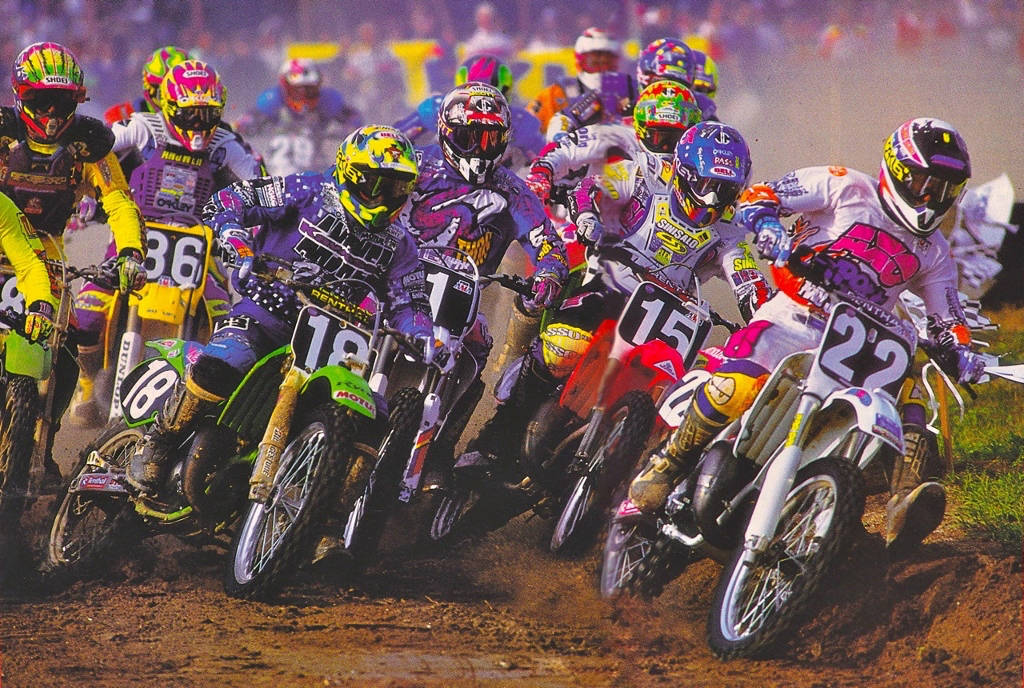 Eric Kehoe (22) was a high-profile Honda privateer in 1993 taking his Honda of Troy CR125R to a hugely popular second moto win in the 125 season opener at Gatorback Cycle Park. Photo Credit: Motocross Action
As with most Honda machines of the previous decade, the newest CR125R remained a bit of a handful when coming down from speed. Unlike the RM, which always felt a bit busy, the new CR was happy when going fast, but less sure-footed once it was time to slow things back down. Under braking, the Honda continued to suffer from occasional bouts of headshake that were scary enough to elicit a second moto change of shorts. Once the front end started dancing, the rider was pretty much along for the ride until the party stopped or a snow fence got in the way. The front-end oscillations were a bit less frequent than the year before, but the CR remained a Coney Island thrill ride compared to the rock-stable KX and YZ. Longtime Honda riders seemed to accept the CR’s penchant for headshake as a fair tradeoff for its remarkably quick handling, but not everyone was comfortable with its random fits of front-end schizophrenia.
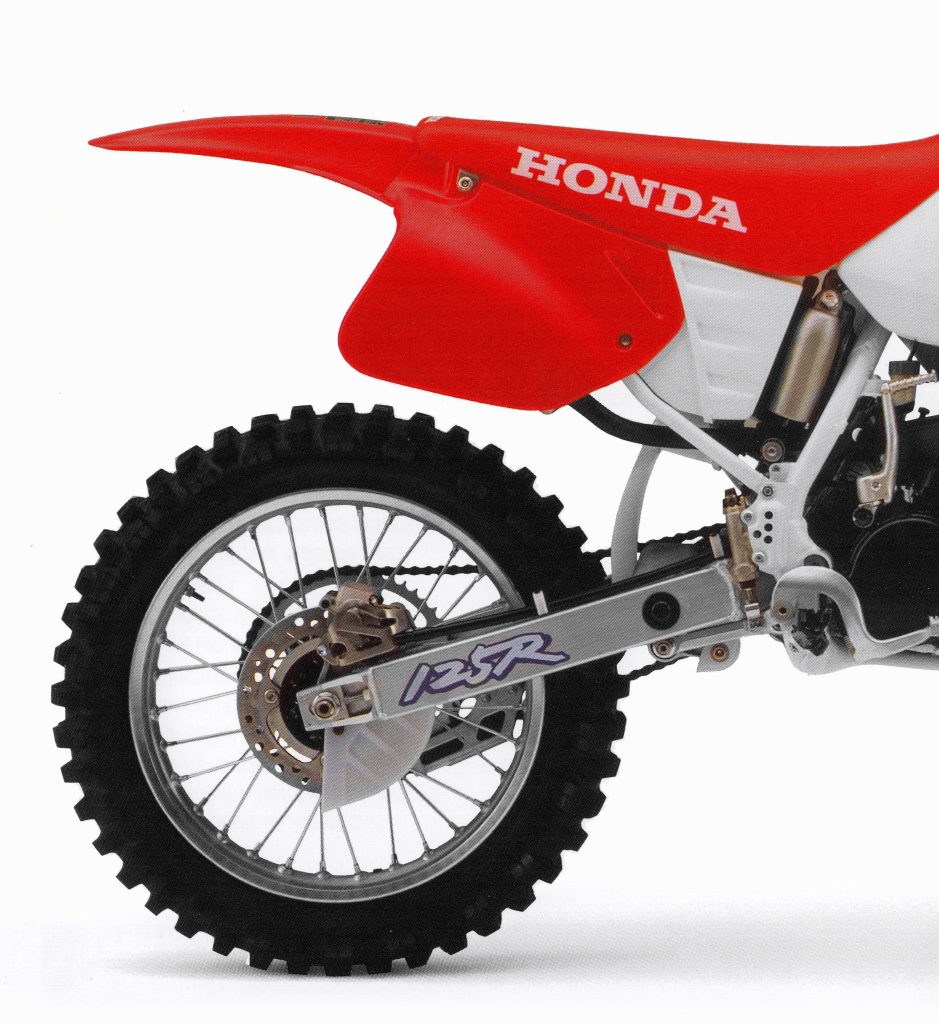 Like the forks, the CR’s KYB shock was set up for hard chargers in 1993. It was great at big air but choppy in the rough and prone to the occasional kick under braking. Photo Credit: Honda
On the suspension front, the CR was improved but still not particularly good in 1993. The revamped forks remained harsh in the midstroke and uncompliant in the rough. They took big hits well but transmitted far too much of the track back to the rider’s wrists for most racer’s tastes. Fast guys could find settings they were happy with but pretty much everyone else was beat to death if the track was choppy and rough. They were the best CR125R forks since 1988, but still the worst silverware in the 1993 125 class.
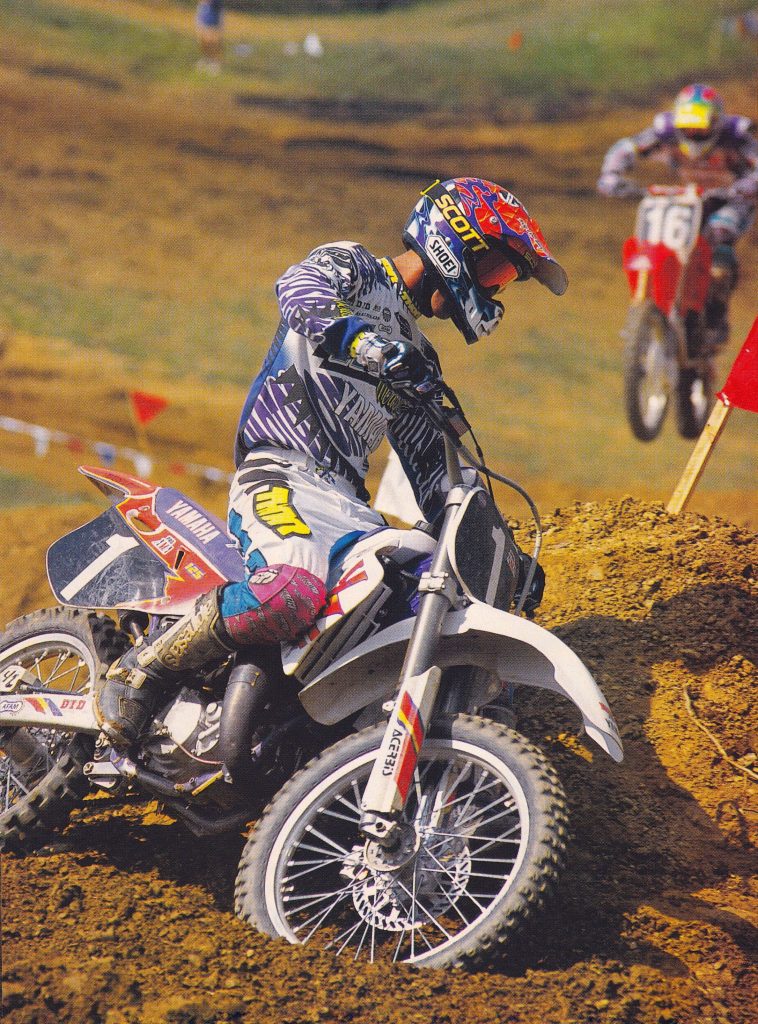 Doug Henry (16) backed up his impressive Supercross showing by besting the reigning 125 National Champ Jeff Emig (1) in an epic duel for the 1993 125 National Motocross title. Photo Credit: Chris Hultner
Out back, things were a bit better for Honda pilots in 1993. The new KYB shock was not particularly plush, but it did a good job of handling big jumps and deep whoops. Fast and aggressive riders could charge the track without any fear of the damper blowing through its stroke or rebounding suddenly. Much like the forks, it was small chop and braking bumps that most flummoxed its stock settings. Here, the shock could be a bit busy and unsettled. If you were on the gas, it worked well, but if you backed off the shock was not as cooperative. For hard-core racing, it was a good shock, but riders looking for comfort would have been a lot happier riding green in 1993.
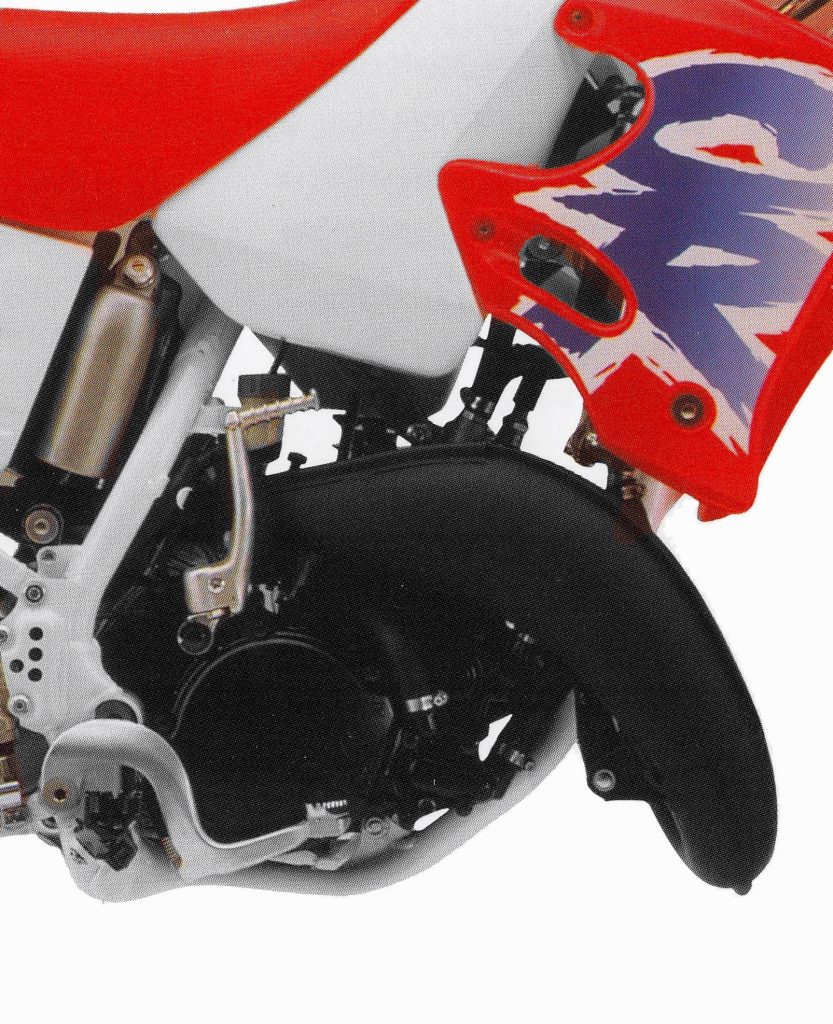 The 124cc case-reed mill on the ’93 CR125R offered the most top-end in the class but its powerband was the most demanding to use of the Big Four contenders. There was not a lot of power below the midrange and the CR tended to fall off the pipe between shifts if not ridden aggressively. Fast riders could make it sing, but those of lesser talent could find it frustrating. Photo Credit: Honda
On the detailing front, the CR125R was the class of the field in 1993. The new bodywork was excellent fitting, handsome, and offered the most comfortable ergonomics in the class. Riders loved its shape and appreciated the firmer seat foam and tougher cover. If the 14mm taller CR125R saddle was a bit tall, it was easy to switch to the shorter one found on the CR250R. The new Nuclear Red plastic proved more fade-resistant but it still showed ugly white lines if it was creased and turned pink if left in the sun for too long. The CR’s bars, levers, grips, and controls were well-shaped, comfortable, and the most durable in the class. The new throttle was buttery smooth, and the clutch’s action was flawless.
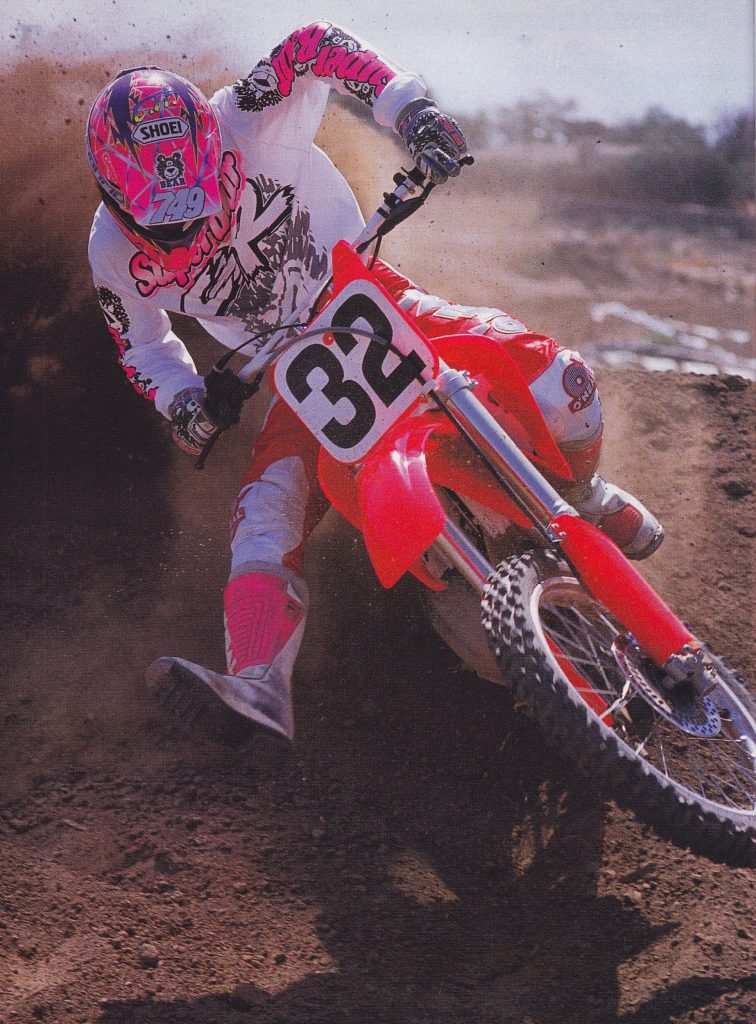 Power to the People: With tons of horsepower on tap, the CR125R was a serious soil mover in 1993. The high-strung Honda took skill to use effectively but rewarded aggression with mega rooster tails and massive holeshots. Photo Credit: Dirt Bike
The selection and quality of the fasteners were also a clear step above the pot metal found on most of the competition. Servicing the Honda took a smaller assortment of tools and the odds of stripping a bolt or nut were far less than on a KX or RM. The quality of the stock chain and sprockets was nothing special, but they were no worse than the flimsy offerings found on the other Big Four 125s. The Honda’s brakes continued to dominate stopper standings with unparalleled power, feel, and reliability. The continued use of an 18” rear wheel might have cost the Honda a bit of traction in certain situations, but it did offer a bit of added comfort and insurance against flats. At the time, most riders below AMA pros did not feel it was a disadvantage. The new wider pegs were an improvement, but they were still smaller than the massive floorboards found on the Kawasaki.
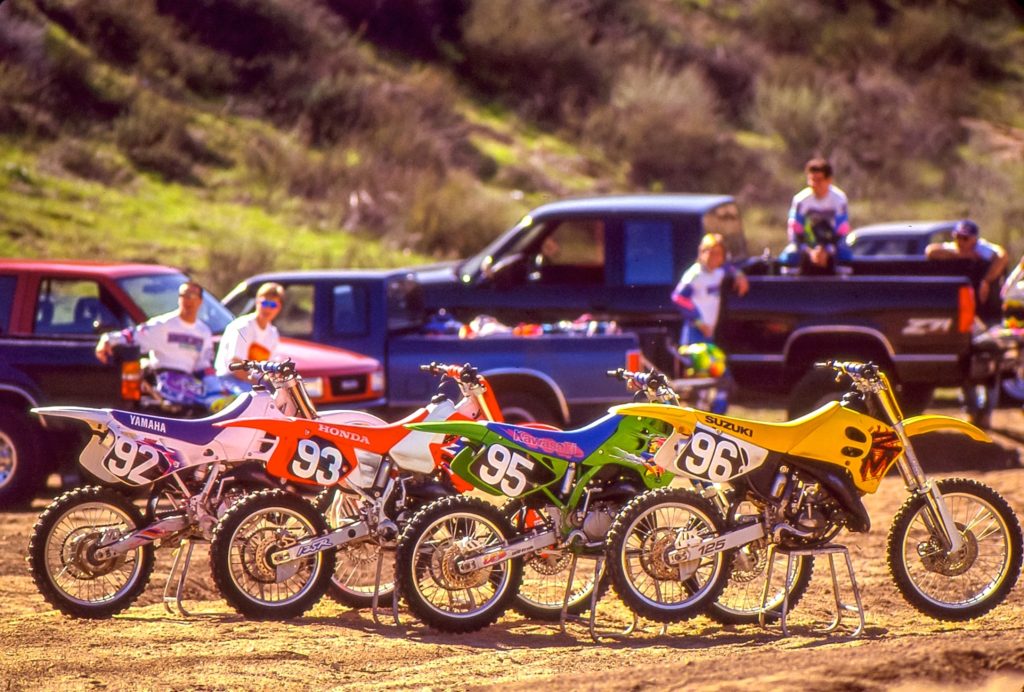
In 1993, the 125 class offered quite a wide selection of contenders. The Yamaha offered the best all-around handling and well-sorted suspension, but its lack of power was too much for most serious racers to overlook. The CR dominated the horsepower standings, but its harsh suspension and demanding powerband made it a hard sell to some. If comfort was your priority, then Kawasaki’s KX125 was the top choice with an easy-to-use powerband and excellent suspension. Unfortunately, however, it also suffered from serious reliability issues that left many KX125s DOA on the side of the track. For many racers, it was the Suzuki RM125 that offered the best combination of comfort, handling, performance, and ease of use in 1993. It was not the best in any one category, but when you added it all up, the yellow machine was the most complete racer in the class. Photo Credit: Motocross Action
The motor changes for 1993 alleviated most of the reliability issues suffered by CR125R owners in 1992. Cracked pistons were far less common and the Honda was easily the most bulletproof of the ’93 125s. As long as you kept the filter clean, ran good oil, and serviced the HPP regularly, the red ripper kept on running and running. Servicing the power valve continued to be a serious pain in the kidney belt, but most found it was a fair price to pay for all that high-RPM Honda horsepower.
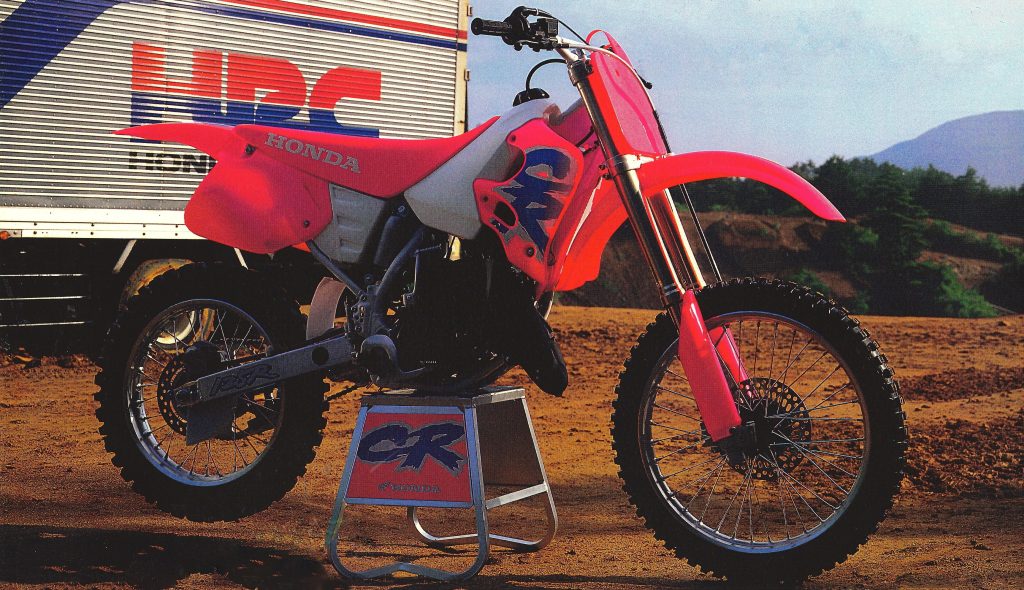 Honda’s red rocket offered aspiring pros the perfect combination of tight handling and blistering motor performance in 1993. Photo Credit: Honda
In the end, the 1993 Honda CR125R turned out to be a fantastic pro machine that was not always the best choice for less-skilled pilots. Its motor was wicked fast, but also seriously demanding. Its lack of low-end and hard hit made it frustrating to some and intimidating to others. Its fork and shock were also far better suited to hard-charging than cruising. It stopped on a dime, flew for a mile, and carved rings around its rivals. If you could keep it pinned, then the 1993 CR125R could be your ticket to the winner’s circle. If, however, you needed a bit more comfort in your suspension and flexibility in your power, then the KX or RM were probably a better fit.