
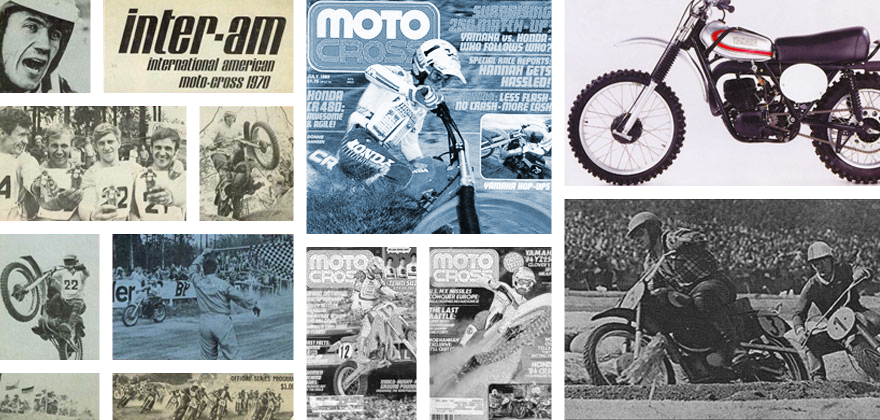

For this edition of Classic Steel, we are going to take a look back at the 125 Class of 1990.
The 1990 season was a great year for 125 racing, but not a particularly good one for magazine shootouts. Of the Big Three US off-road enthusiast magazines, only Dirt Bike had the cajónes to produce a proper shootout to rank all the bikes from top to bottom. Their shootout included Honda’s CR125R, Yamaha’s YZ125, Kawasaki’s KX125, Suzuki’s RM125, and even KTM’s 125MX. Each bike was ranked individually and assigned a final ranking just as the moto gods intended.
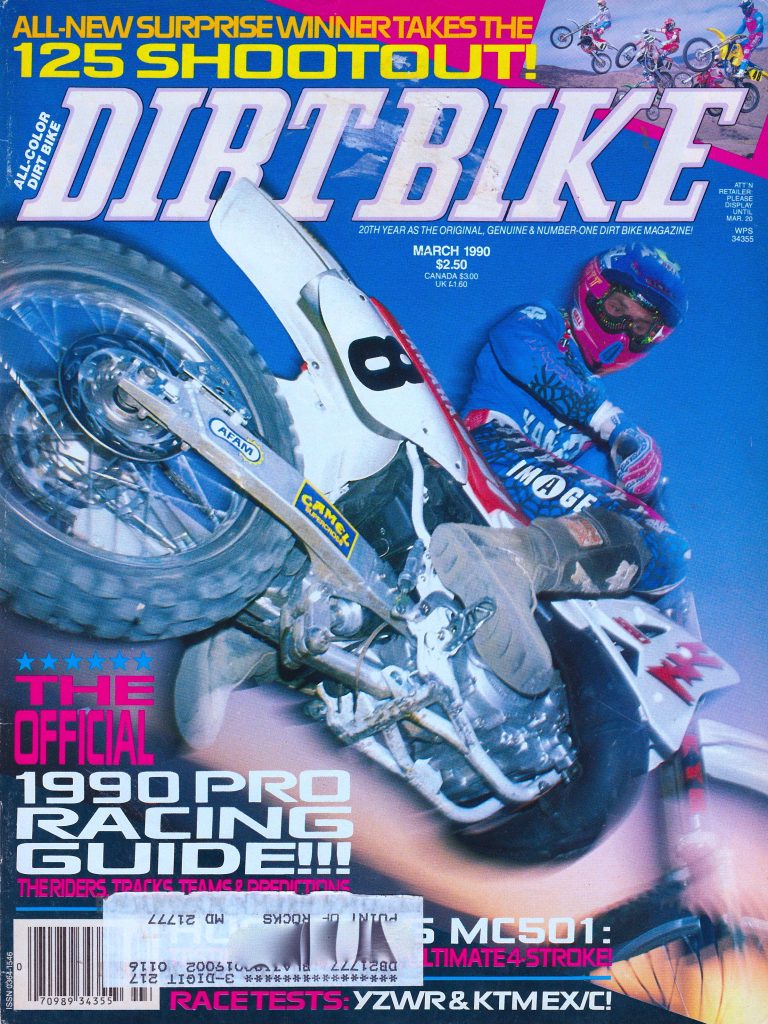 Dirt Bike was the only magazine to do a proper 125 Shootout in 1990.
In MXA’s 125 shootout, they made a very odd editorial choice by framing the shootout as a conversation between the magazine and someone from one of the Japanese manufacturers’ marketing departments. They did the same thing in the 250 shootout this year to equally unsatisfying results. This odd narrative choice was both less informative and too cute by half for my taste. Their shootout named a winner but took the coward’s way out by declaring everyone else tied for second. BOO!
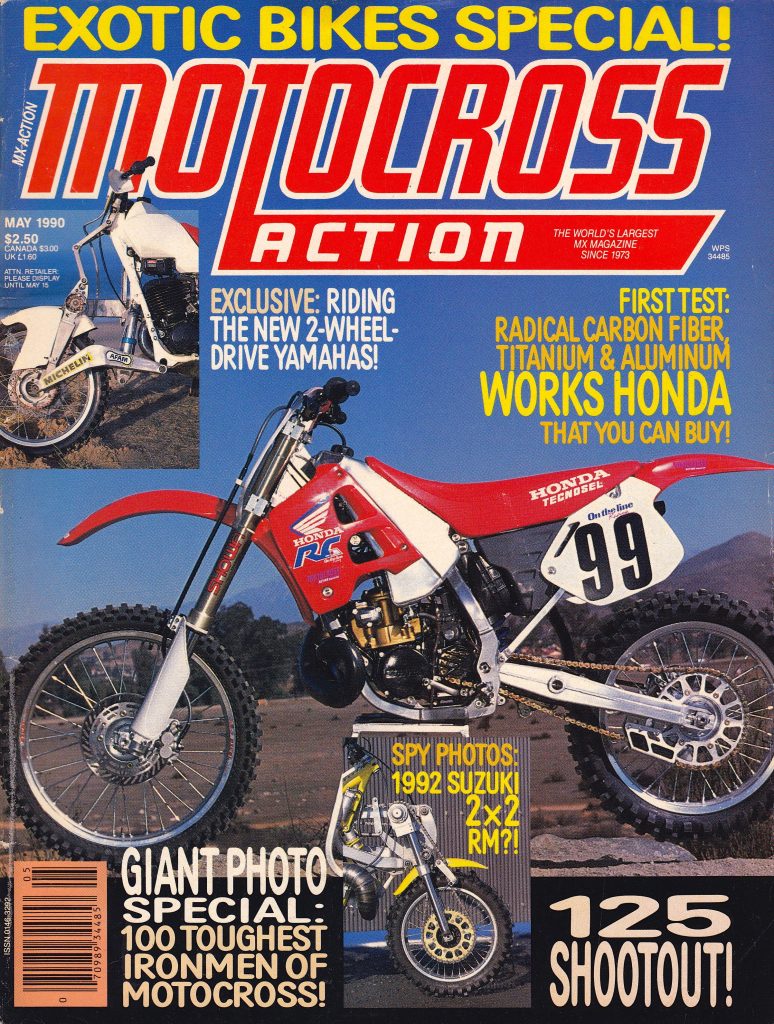 MXA got a little too cute for my taste in 1990 with their 125 and 250 shootouts. Both used an odd narrative structure that I found more frustrating than informative.
As frustrating as MXA’s weird shootout was, it was far better than the DNS Dirt Rider pulled in 1990. They did not even bother to hold a complete shootout with all the contestants, which was a really odd choice. The only shootout they held was between the Honda CR125R and the Suzuki RM125; they even pulled a cop-out on that by failing to pick a winner. Double BOOO!
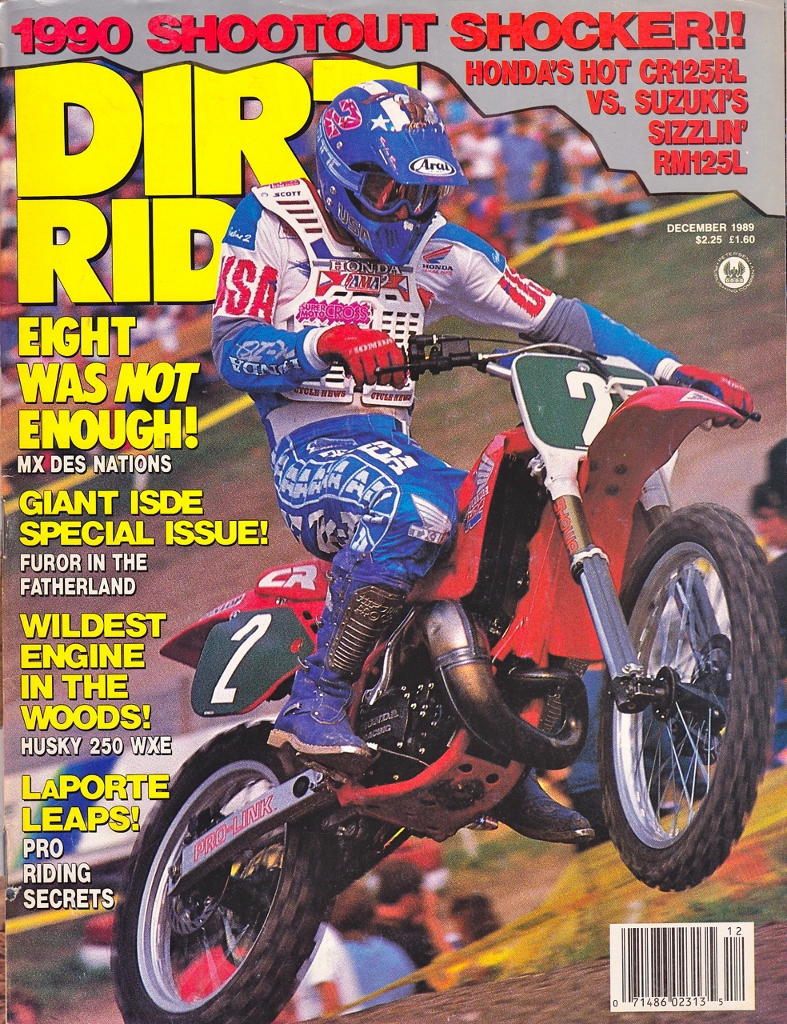 Whats more usless that boobs on a bull? A shootout that picks no winners.
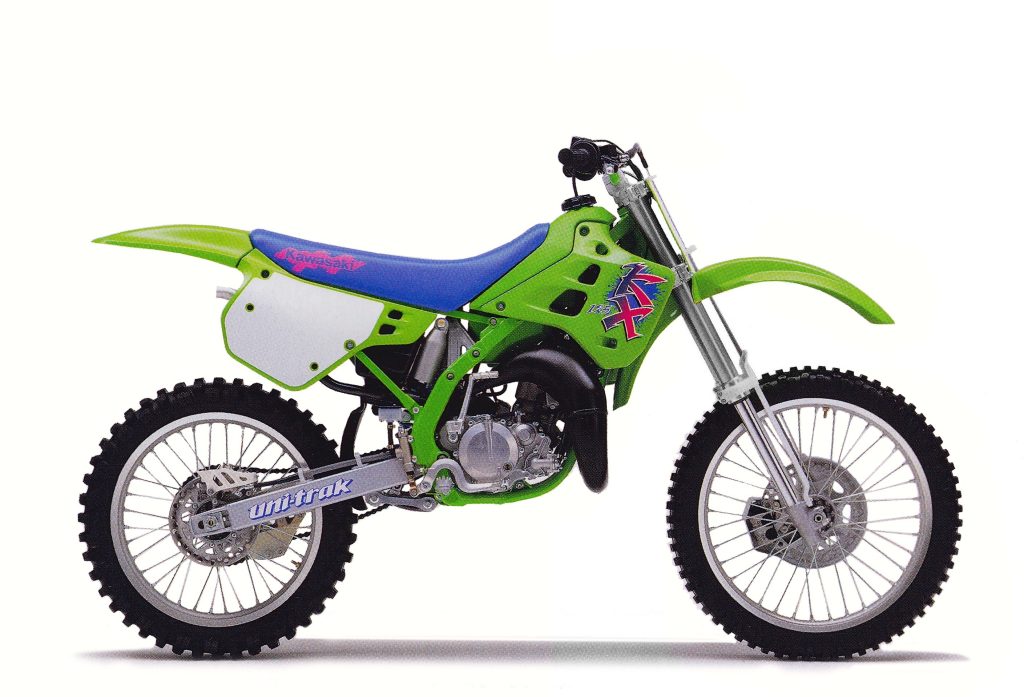 1990 Kawasaki KX125 Shootout Rankings: MXA – 1st (out of 5) Dirt Bike – 5th (out of 5) Dirt Rider – N/A Photo Credit: Kawasaki
1990 Kawasaki KX125 Overview: All-new from the ground up, Kawasaki made major changes to its 125 platform in 1990. An all-new steel perimeter frame and spacy new bodywork transformed the KX from an ugly duckling to the sexy swan of the class. Its case-reed KIPS motor received a major injection of horsepower, and all-new inverted Kayaba forks brought it up to the current state of the art in front suspension design.
On the track, the revamped KX125 was a remarkably different machine than its mild-mannered predecessor. The new motor was much faster than the year before with a hard-hitting midrange and shrieking top-end pull. There was far less low-end torque, but fast guys loved the newfound rev and more potent delivery. The new perimeter chassis was shared with the KX250, and that gave the 125 a much larger feel than previous green machines. The new frame was quite wide and tall, so it was not a great fit for everyone. Shorter riders preferred the more compact feel of the CR, YZ, KTM and RM, but taller pilots appreciated the KX’s more stretched-out dimensions.
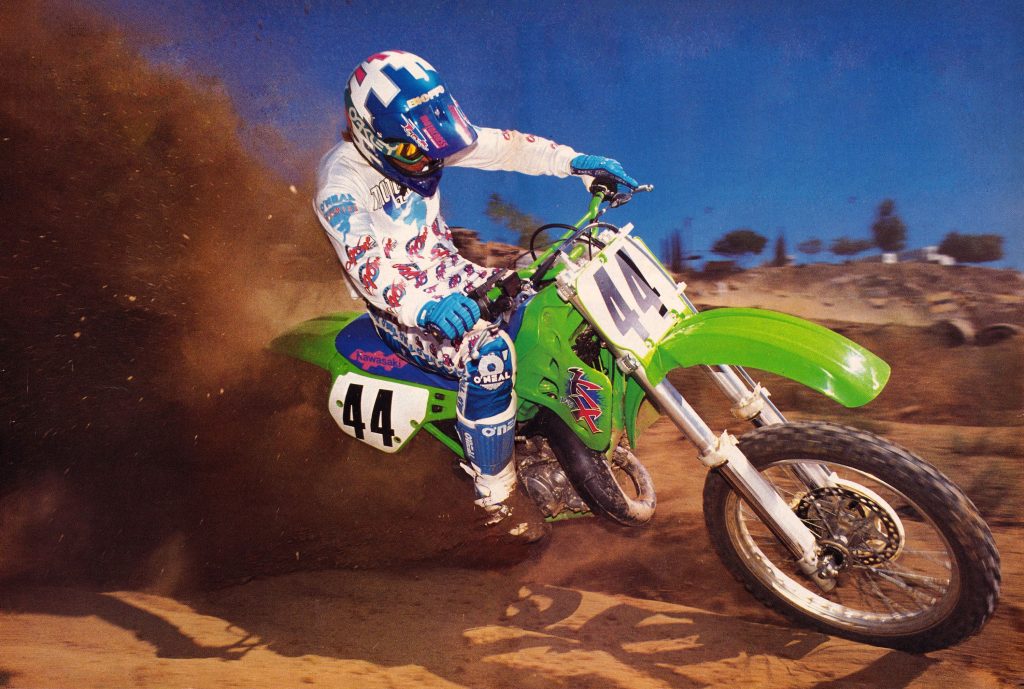 With its potent powerband and avant-garde looks, the KX125 was one of the most exciting 125s in the class in 1990. Photo Credit: Motocross Action
There was noticeably less flex on hard hits, and the KX turned well, but the new chassis was prone to occasional fits of headshake. This was very unlike Kawasaki’s previous 125 efforts and not everyone loved the change. The new inverted forks worked well, but many riders felt the 46mm conventional forks found on the KX125 in 1989 were superior performers. The shock action remained excellent as it had been in 1989.
Overall, the 1990 KX125 was a tremendous step forward in style, speed, and pro-appeal. The new chassis was far more aggressive handling, and the revamped motor packed the punch that pros craved. The flip side of this shift to high-RPM horsepower, however, was a machine that was much harder to ride. For MXA, the KX’s rocket motor, sharp turning, and stellar curb appeal were enough to land it in the top spot. For the more versatility-focused crew at Dirt Bike, the KX’s peaky power, Paul Buyan dimensions, and twitchy high-speed handling dropped it all the way to fifth in the final standings.
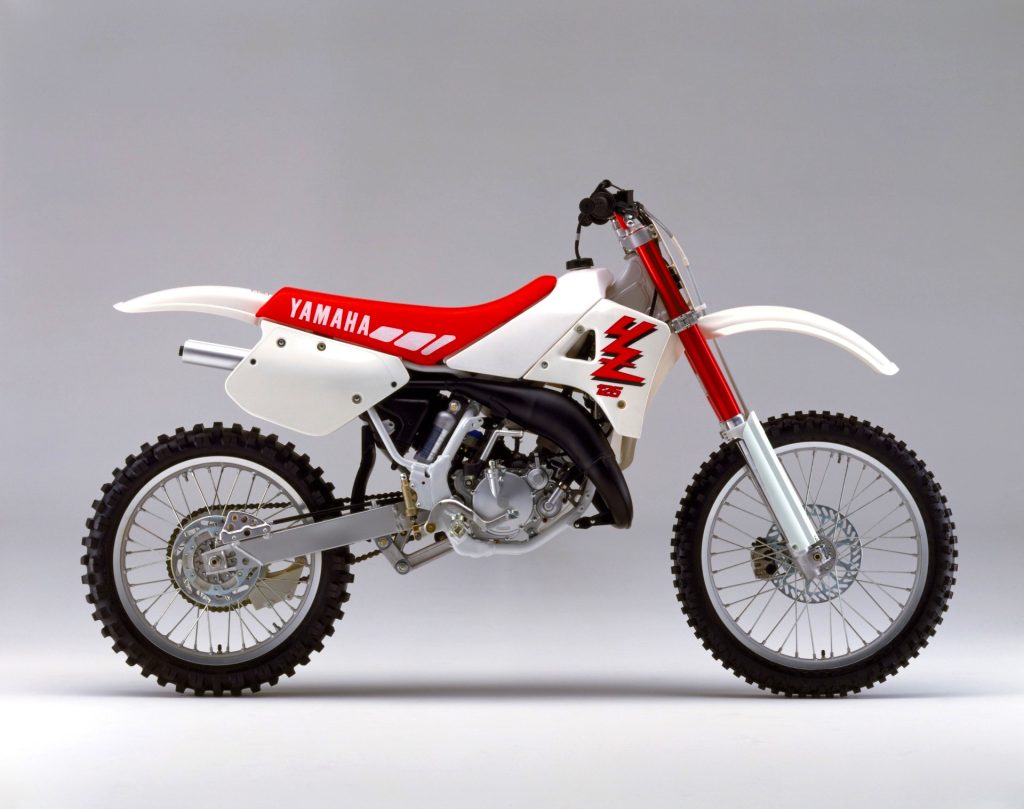 1990 Yamaha YZ125 Shootout Rankings: MXA – 2nd (In a tie with the KX, CR, RM, and KTM) Dirt Bike – 1st (out of 5) Dirt Rider – N/A Photo Credit: Yamaha
1990 Yamaha YZ125 Overview: Early 1990s YZ125s are often thought of as utterly uncompetitive machines, but in 1990, the YZ was still considered one of the best machines in the class. One year later, the YZ would go magenta and misplace its horsepower, but that was not the case in 1990. This season, the YZ125 received a new flat top piston, an all-new cylinder with revamped porting, a larger YPVS drum, a heavier crank, a hotter ignition, a beefed-up transmission, and all-new red anodized Kayaba inverted forks.
The result of all these upgrades was a very potent and competitive 125 package. The motor for 1990 was very abrupt with tons of midrange and a slightly better pull on top than in 1989. There was not as much power down low as RM and not nearly as much rev as the Honda, KTM, and Kawasaki on top, but when it was on the pipe, the YZ was very fast. Its midrange blast rocketed the Why-Zed out of corners and over doubles with ease. It was very fast, but also quite demanding to ride. If you shifted too soon, it bogged, and if you tried to leave it pinned, then it ran out of steam as the green and red machines motored by. Its narrow powerband demanded a quick right wrist and fast left toe to keep the white and red rocket roosting.
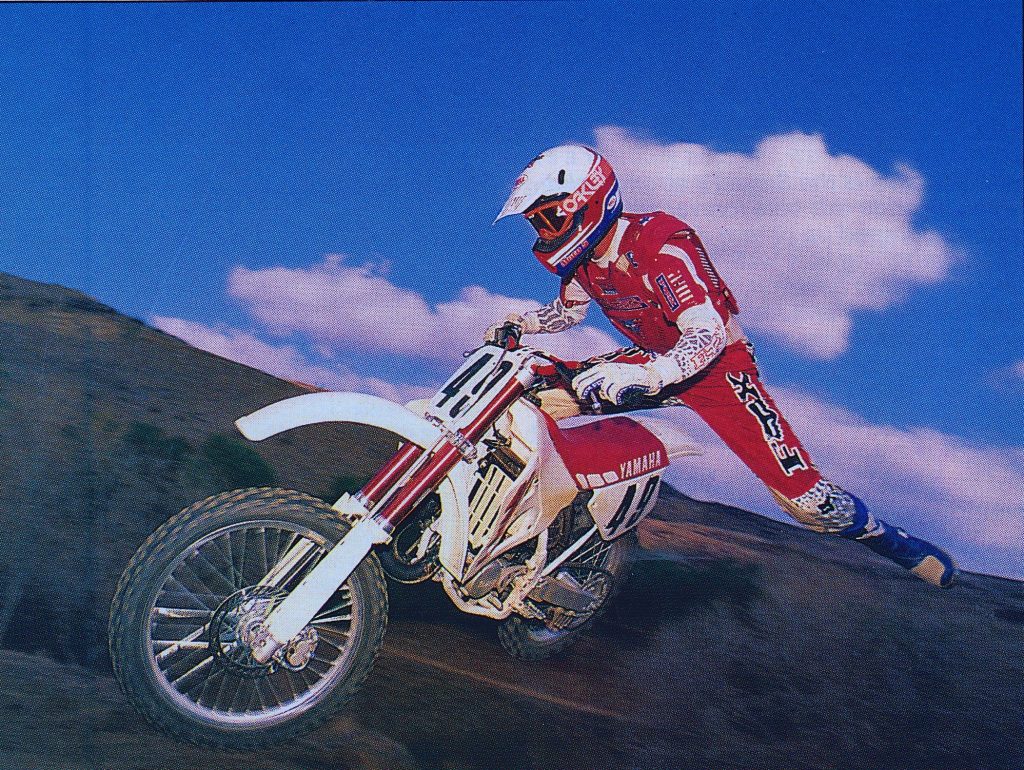 A potent but slightly demanding machine, the 1990 YZ125 had a lot going for it in 1990. Photo Credit: Dirt Bike
Unfortunately, the YZ’s transmission remained a weak point with its notchy engagement and notoriously stubborn action. Power shifting was nearly impossible with the Yamaha often demanding some clutch and backing off the throttle to hammer home the next gear. This made its narrow power spread even more difficult to manage. On the plus side were the YZ’s excellent Kayaba forks, very good shock, solid turning, good stability, and clean looks.
Overall, the YZ125 was a very capable if somewhat challenging machine. Its chassis, motor, and suspension were good fits for more experienced riders, but those of lesser talent often found its narrow powerband frustrating. If you had the skill to keep its peaky powerband percolating, then the YZ was a very fun and competitive machine. If, however, you did not have the patience to play transmission and powerband roulette, then the Yamaha could be a frustrating experience. For Dirt Bike, the YZ’s expert appeal was enough to rank it over its rivals in a very close battle. For MXA, the YZ’s narrow powerband and unrefined transmission slotted it below the green machine.
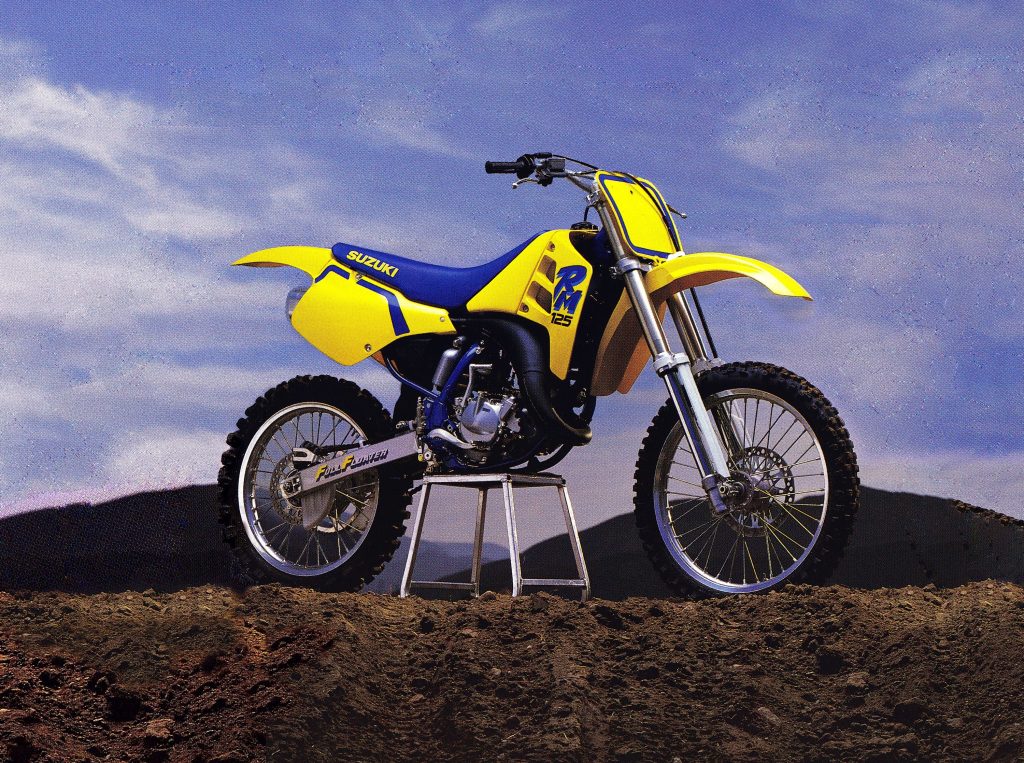 1990 Suzuki RM125 Shootout Rankings: MXA – 2nd (in a tie with the KX, CR, YZ, and KTM) Dirt Bike – 2nd (out of 5) Dirt Rider – 1st (in a tie with the Honda) Photo Credit: Suzuki
1990 Suzuki RM125 Overview: All-new from the ground up, Suzuki’s RM125 was a motor away from class dominance in 1989. The revamped RM shredded turns, floated over bumps, flew like a fighter jet, and looked like a million bucks. If only its new case-reed motor had not been so slow, the RM would have been unstoppable. As it was, however, the RM was 90 percent awesome in a class dominated by that last 10 percent.
Without the power to run with the Honda, the all-new Suzuki was left to play catch-up all year.
For 1990, Suzuki threw the kitchen sink at their 124cc single in an attempt to bring its output up to snuff. The cylinder was completely redesigned with a shorter intake tract, reshaped exhaust ports, and a larger valve for the AETC. The piston was beefed up with a new molten plasma injection coating, and the head was redesigned to increase compression and seal better with a new O-ring gasket. The reed valve was all-new with a redesigned shape and thinner petals for improved response. The airbox was redesigned for improved airflow, and the exhaust pipe was reshaped for better ground clearance and stronger top-end pull. Finishing off the motor changes for 1990 was a new quick-change cover for the clutch and a redesigned water pump that tucked in better for increased crash resistance.
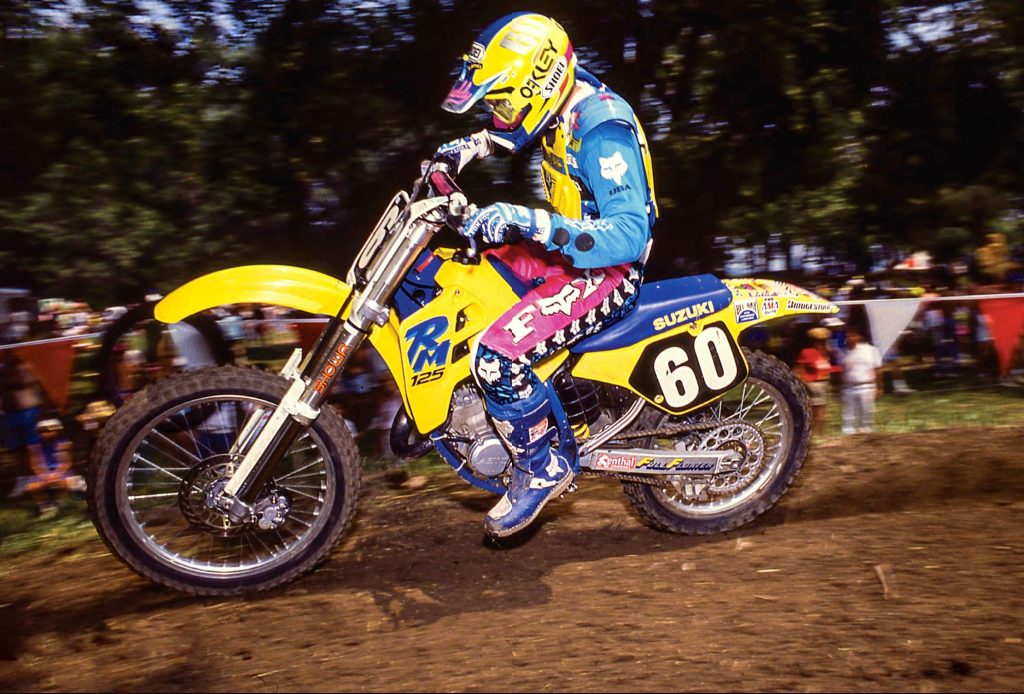
Suzuki’s RM125 had a lot going for it in 1990, but blistering horsepower was unfortunately not one of its virtues. Photo Credit: Motocross Action
Chassis changes included a switch to Kayaba’s all-new 41mm inverted cartridge fork for the front and a revamped Full Floater linkage in the rear. The Kayaba rear damper received all-new valving and a 2mm larger shock shaft for improved action and increased durability. Bodywork was a carryover from 1989 with the RM continuing to offer some of the most attractive lines in the class.
On the track, the 1990 Suzuki RM125 was easily one of the most fun-to-ride bikes in the 125 division. Its ultra-quick turning, snappy power, and feathery feel made it a joy to carve, whip, and flick the RM around the track. Its forks and shock were the class of the 125 field with a plush feel that gobbled up bumps that hammered the wrists of pilots on the CR. Its clutch was buttery smooth, and its transmission shifted with incredible ease. In any contest but outright speed, the RM was a winner.
Unfortunately, however, speed plays a tremendous role in 125 motocross racing, and on this count, the RM continued to disappoint. Its numerous motor changes bumped up its performance slightly, but the RM remained the least-powerful machine in the class. Like in 1989, it was quicker than fast — with a rapidly building power delivery that pulled early and signed off abruptly. It was great for newbies, who loved its immediate power, but disappointing to more experienced pilots who craved more pull on top.
In the final standings, the RM once again missed out by failing in the one category that mattered most in hardcore 125 motocross racing. All of the testers commented how much they loved riding the RM, but most of them thought the motor was too much of a handicap to overlook. Its superior suspension allowed it to outrank the far faster Honda, but that was just not enough of an advantage for MXA or Dirt Bike to place it at the top.
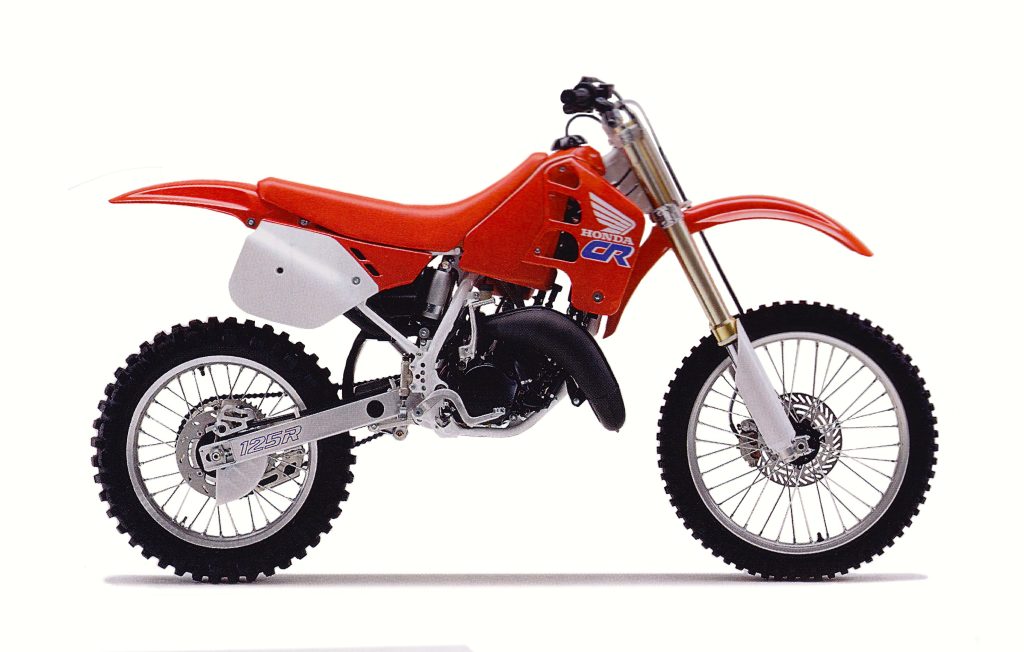 1990 Honda CR125R Shootout Rankings: MXA – 2nd (in a tie with the KX, RM, YZ, and KTM) Dirt Bike – 3rd (out of 5) Dirt Rider – 1st (tied with the RM) Photo Credit: Honda
1990 Honda CR125R Overview: In 1989, the CR125R was by far the fastest of all the Japanese 125s. In terms of performance, only Austria’s KTM 125MX could give the blood red bullet a run for its money. Its ATAC case-reed motor came on the pipe in the midrange and never stopped pulling until dogs started howling and the red ripper was at the front. It was the mount of choice for privateers on the National circuit and the darling of throttle jockeys everywhere. Its 43mm conventional forks and Showa shock were thoroughly mediocre, and its headshake was epically bad, but for hard-core professional racing the red machine was the pick of the litter.
While pros loved the Honda, its all-or-nothing powerband made it somewhat challenging for less experienced riders to use effectively. It ran the exact opposite of the RM with nothing down low and gobs of pull on top. Pros were also happy to overlook the Honda’s suspension mediocrity knowing they would have them fixed and stiffened anyway by a knowledgeable tuner. For Average Joes, the 1989 CR125R was a thrill a minute, but not necessarily the best fit for everyone.
For 1990, Honda looked to broaden the CR’s appeal by upgrading the suspension and broadening up its powerband. First up was an all-new top end that retired the ATAC power valve design in use since 1984 in favor of the CR250R’s Honda Power Port (HPP) system. On the CR250R, the HPP had delivered stellar results, giving the Honda deuce-and-a-half the broadest power in the class.
In addition to the revamped motor, Honda’s engineers retired the 43mm conventional Showa cartridge forks employed on the CR125R since 1987 in favor of an updated version of the 45mm Showa inverted forks found on the CR250R and CR500R in 1989. These forks had proved quite controversial the year before, with everyone from magazine editors to everyday consumers complaining about their harsh feel and punishing action. For 1990, Honda redesigned the bushings to reduce stiction, tapered the legs, revamped the valving, and added an all-new super-slick fluid to improve their grim action. The bodywork and frame were largely a carryover from 1989 aside from a slight change to the geometry, and a swap from deep red to the orange red used on the CRs from 1983 through 1987.
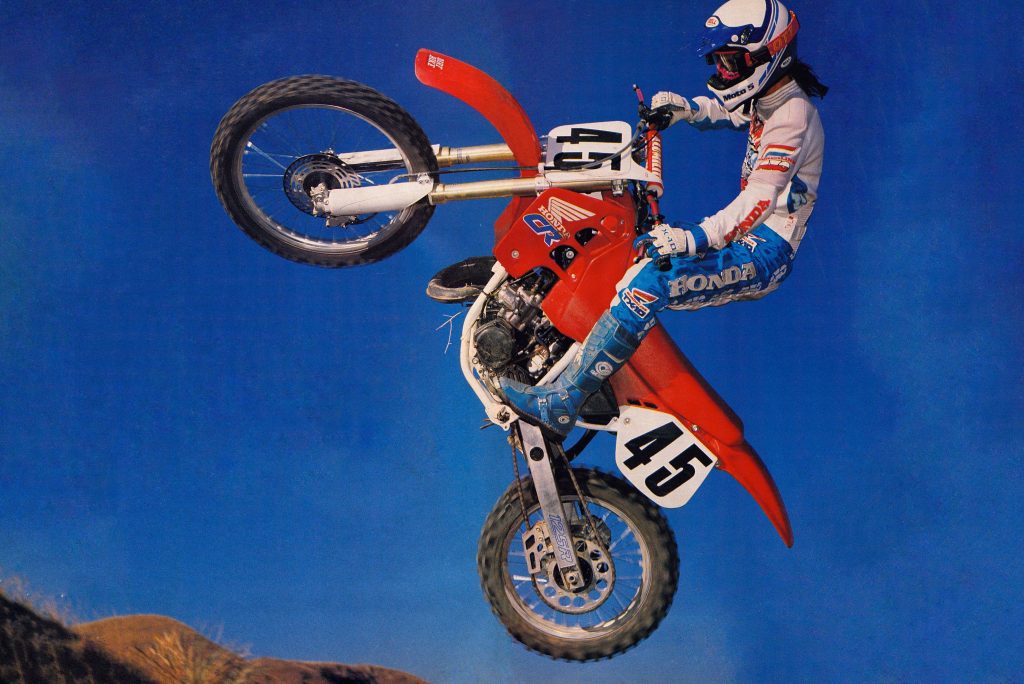 Big power, great ergos, and flawless build quality were the CR125R’s major calling cards in 1990. Unfortunately, supple suspension did not make the final cut. Photo Credit: Dirt Bike
On the track, the 1990 CR125R was once again a flawed but highly competitive machine. The new HPP motor delivered a bit more torque than the old ATAC mill, but most of its usable power remained from the midrange on up. It lacked the instant low-end snap of the RM but made up for it with a long and strong pull that never abated. Once it was on the pipe, only the Kawasaki and KTM had a prayer of keeping the Honda in sight. It was easier to ride than the ’89 CR but still a bit challenging if you were not prepared to keep the throttle pinned and your corner speed up. There just was not a lot of grunt to fall back on if you shifted too soon or tried to finesse your way out of a slick turn. For fast intermediates and experts, it was a fantastic motor, but less-experienced pilots seemed to be happier with the RM’s more forgiving power.
On the chassis front, the Honda was a real mixed bag in 1990. The CR remained a cornering fool with excellent turning manners only rivaled by the scalpel-like RM. It was also an excellent jumper with a light and tossable feel in the air. The ergonomics were the best in the class with a super slim layout, comfy seat, and excellent components.
Where things went south for the CR was once again on the suspension front. The new 45mm forks were only slightly less grim than the 1989 versions had been, with a harsh feel that transmitted every bump, hole, and pebble to the pilot’s wrists. They hung down in their stroke and hammed to the stops on hard hits. Even worse, this action only got grimmer over time as the forks sloughed off tiny bits of aluminum into the suspension fluid. This contamination was a chronic problem with all of Honda’s early Showa inverted forks, and it was imperative to keep the fluid fresh to preserve what little damping they had.
The shock’s action was better than the forks, but that was faint praise indeed. It was choppy in the rough and only happy when hammered at full tilt. If you backed off, then the damper got incredibly busy and unsettled. It was never plush and far less comfortable than any of the other Japanese dampers.
Overall, the 1990 CR125R was a step forward in some ways and a step back in others. The new motor was a fantastic success with tons of power and incredible hop-up potential. It was faster stock than most of the other machines once they were modified and a huge advantage if you had the skill and talent to keep it on the pipe. The new forks, however, were a big disappointment in every way. They were far worse than the forks they replaced and easily the poorest in the class. This held the CR back in the final standings despite its remarkable motor advantage. In the 125 class where motor is everything, that was no easy feat. For pros, it was once again the bike to get, but for everyone else, your wrists and backside would thank you if you went white, yellow, or green in 1990.
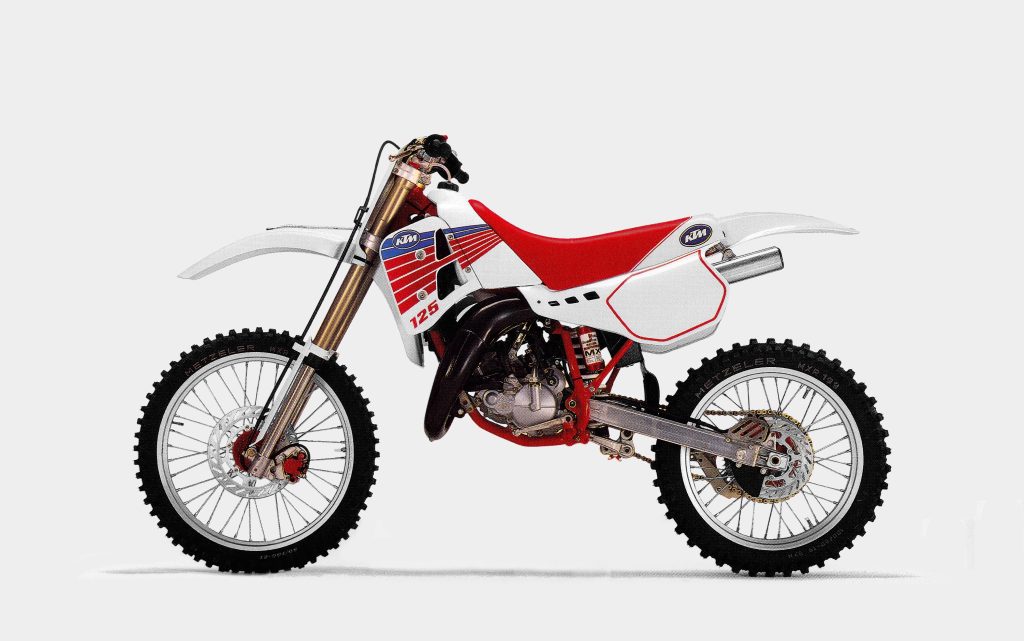 1990 KTM 125MX Shootout Rankings: MXA – 2nd (in a tie with the KX, CR, RM, and YZ) Dirt Bike – 4th (out of 5) Dirt Rider – N/A Photo Credit: KTM
1990 KTM 125MX Overview: In 1989, KTM shocked many in the motocross world by taking home the 125 World Motocross title with Louisiana’s Trampas Parker at the controls. At the time, KTM was little more than an afterthought on this side of the pond. Their dealer network was spotty, and their bikes were more of a curiosity than a real contender in the minds of most of America’s motocross youth.
Over in Europe, however, KTM was a well-respected motocross power. They had won several World titles in the 250 division and fielded a powerful 125 team with Parker and fellow American ex-pats Bobby Moore and Mike Healey chasing international glory. Over there, KTM was considered a legitimate rival to the ubiquitous Japanese.
In 1990, KTM began a serious push in the American market with the introduction of an all-new 250 machine designed to gel more with American motocross sensibilities. Developed in conjunction with multi-time AMA Motocross champion Broc Glover, the new 250MX was by far the most Japanese-like KTM ever. With the 250 getting a complete redesign for 1990, the 125 was left to soldier on with only minor updates.
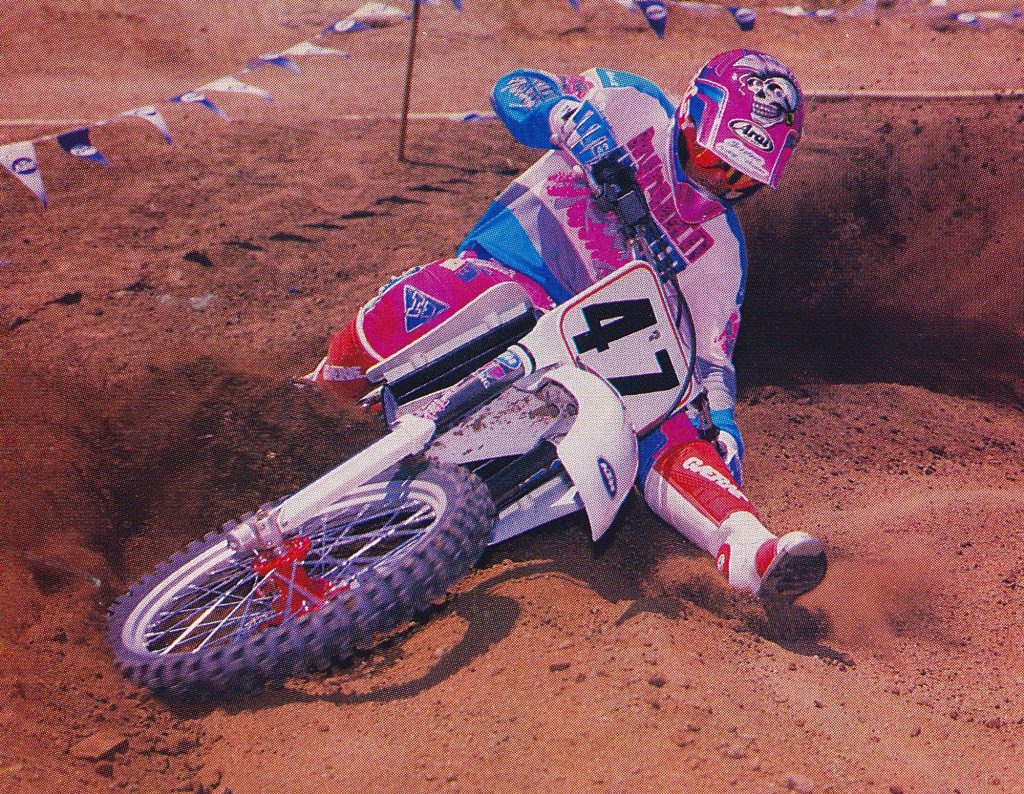 Skilled riders like Mike Healey could really make the powerful KTM sing in 1990. Photo Credit: Dirt Bike
In 1989, the KTM 125 was one of the fastest machines in the class, so KTM’s engineers stuck to small updates to its 124.8cc motor. They altered both the ignition curve and the power valve curve to boost midrange and added Dellorto’s new VHSB flat-slide carburetor. Internally, the White Power 4054 cartridge forks received updated damping and changes to improve oil flow. The WP Super Adjuster shock was shortened 2.5 mm and revised to cool better and deliver smoother action. The compression adjuster was also altered to deliver a finer range of adjustments. The chassis and bodywork were unchanged aside from a new Acerbis front fender and number plate and a set of very handsome Bold New Graphics.
On the track, the 1990 KTM 125MX was a very solid performer. The motor remained one of the best in the class with a wide powerband and strong top-end pull. It was one of the only machines that could hang with the Honda in a straight-up drag race. It offered good torque, a powerful midrange, and an excellent top-end hook. Riders loved its flexibility and were surprised by its performance. Some riders complained about its stiff clutch pull and slightly notchy transmission, but it held up to abuse well and was smoother than the sticky cogbox in the YZ125. Perhaps surprisingly, many testers picked the KTM as having the best overall motor in the 1990 125 class.
Where things failed to come together for the KTM was in the suspension department. The WP forks and shock worked decently when fresh, but their action deteriorated quickly. They suffered from an extreme case of fade, and once they heated up, their damping all but disappeared. In a long moto, the shock became a bottoming and bucking mess, and the forks blew through their stroke on big hits. Handling was very good when the suspension was fresh, but the KTM became a real handful once the damping started to go away.
Overall, the KTM was a really good bike in need of a knowledgeable suspension tuner. Like the Honda, its motor was amazing, but its suspension was just as remarkably bad. If you could get that sorted, you had a bike that could win World titles, but in stock condition it only bested one of the Japanese in Dirt Bike’s final standings.