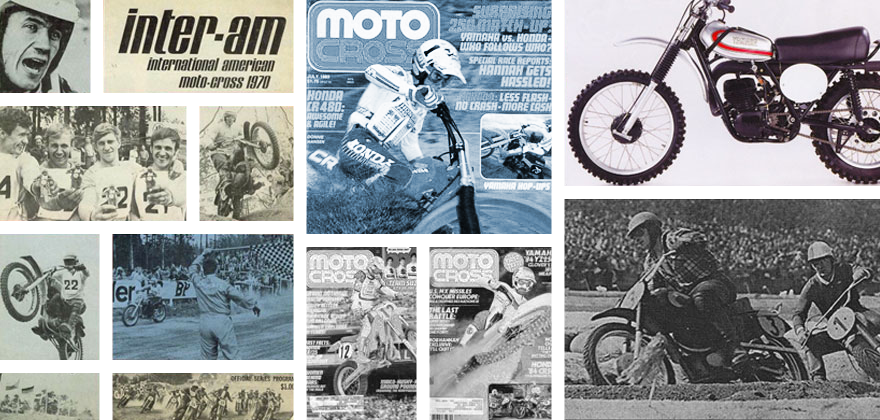

For this edition of Classic Ink, we are going to take a look back at the 1970s Japanese Trials craze in the USA.
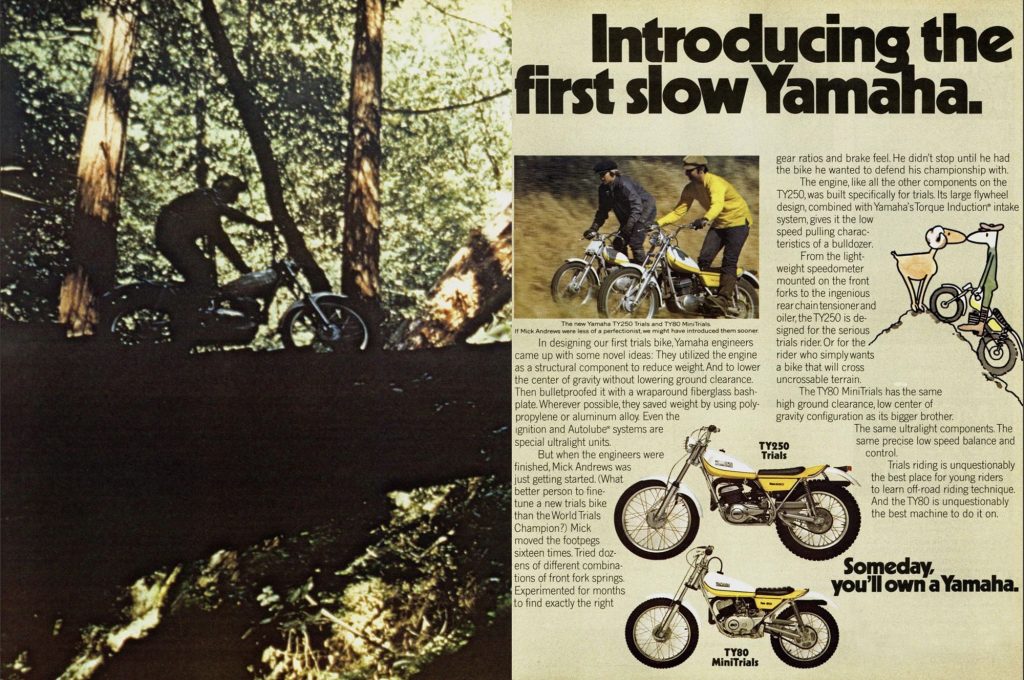 In 1974, Yamaha launched its TY250 and TY80 trials machines. The TY250 was developed with assistance of Observed Trials World Champion Mick Andrews and looked to introduce US buyers to the uniquely European sport.
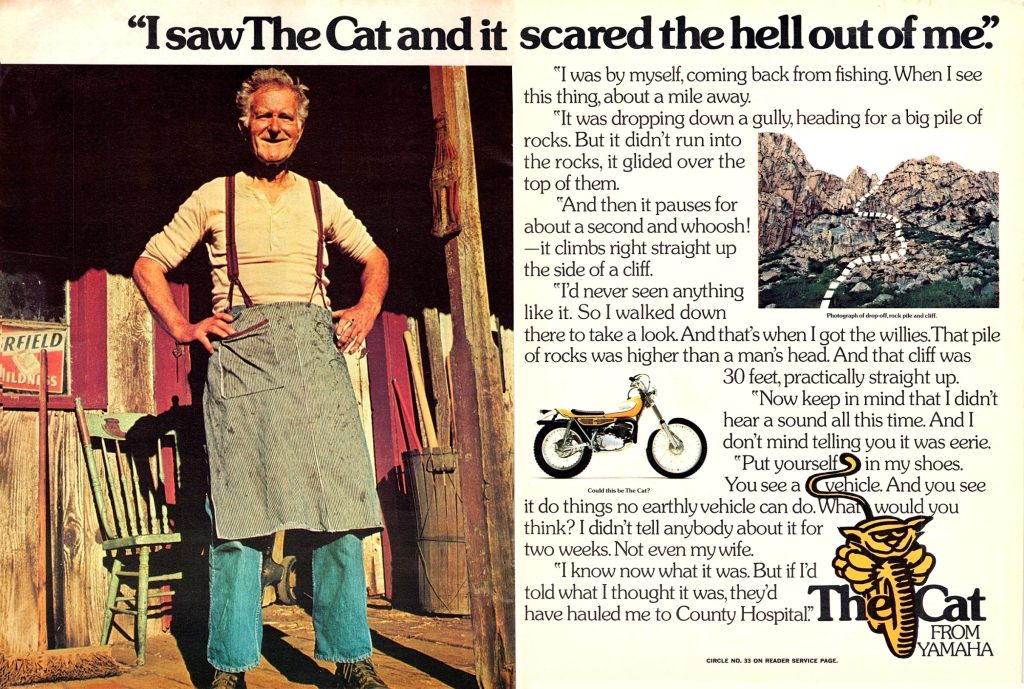
Yamaha used the “Cat” nickname to emphasis the agility of the new TY250 and make its more appealing and approachable to consumers.
Trials is one of the coolest off-road disciplines that many fans don’t know exists. Motocross, Supercross, GNCC, and desert racing get most of the press here in the US, but trials riders deserve every bit as much respect and adoration as the stars of other disciplines. Watching a top trials rider take on a difficult section is like watching a magician in action. Their skill, balance, and bike control is without peer in the two-wheeled world and many racers in other disciplines use trials as a way to hone their skills on the bike.
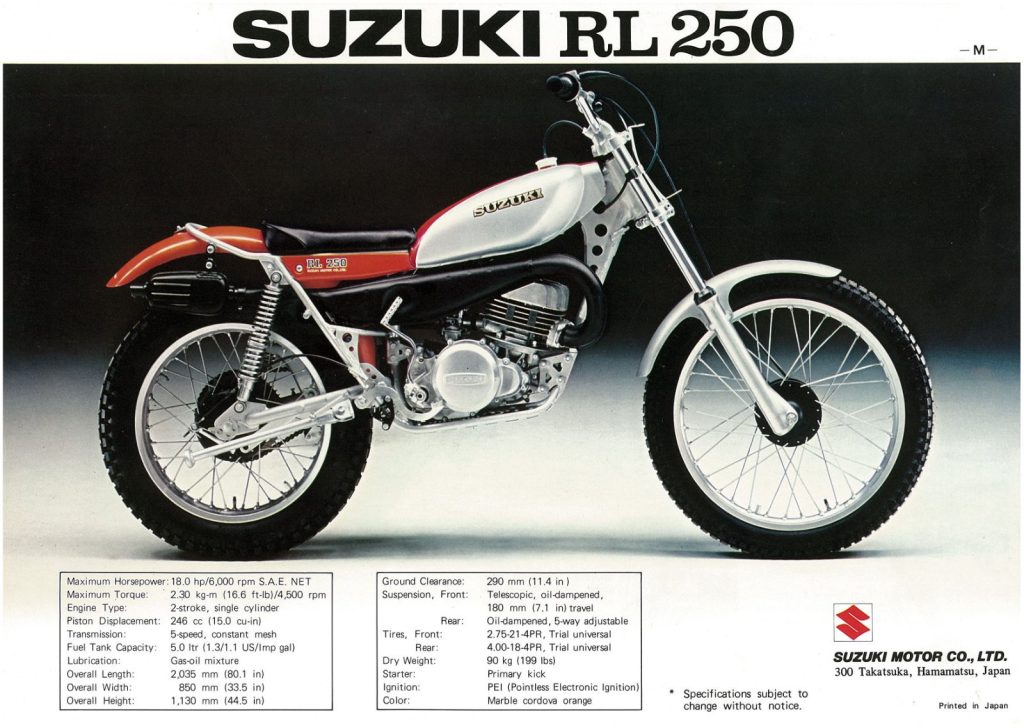 Suzuki’s RL250 was a handsome machine in 1974 with its trick alloy tank and tough chrome-moly steel frame. Its motor was considered a good performer, but the RL was heavy for a trials bike and testers at the time were unimpressed with the machine’s suspension and handling.
In the early seventies, trials enjoyed a moment in the mainstream when documentarian Bruce Brown highlighted its artistry in his groundbreaking film On Any Sunday. This bump in awareness and interest prompted the Big Four Japanese to dip their toes into the US trials market for a few years. Suzuki, Yamaha, Kawasaki, and Honda all debuted Trials machines looking to take some of the market away from the traditional Europeans marques. Yamaha’s TY250, Suzuki’s RL250, and Kawasaki’s KT250 all followed the European blueprint with lightweight two-stroke singles for propulsion, but in a nod to the brand’s future, Honda chose to put four-strokes in their TL-125S and TL250. This made them easy to manage, but heavier and less potent than their two-stroke competitors.
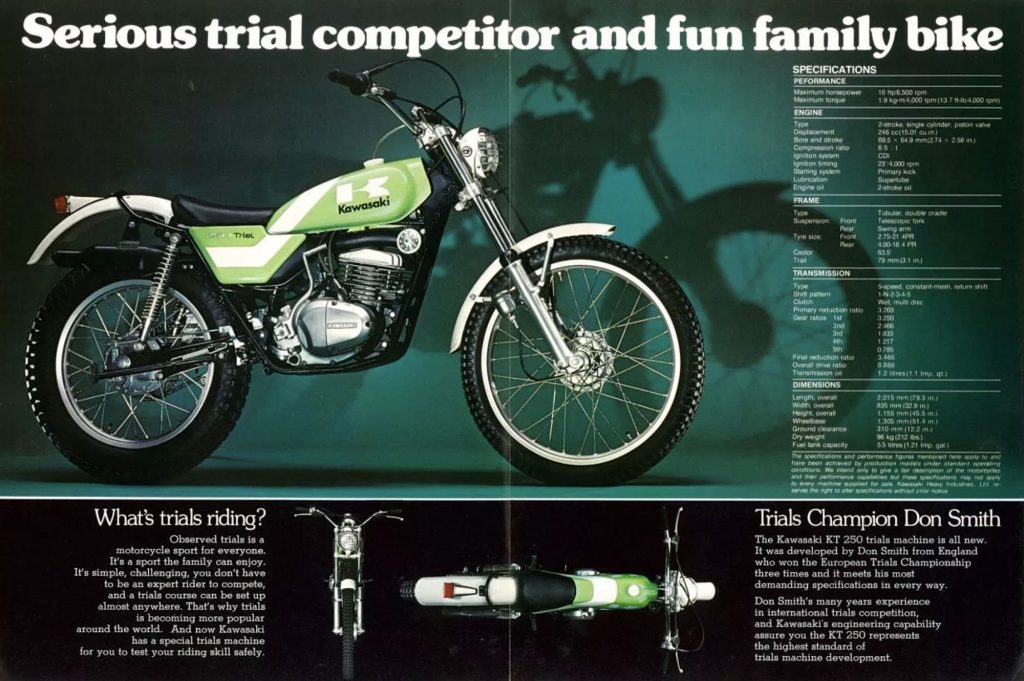
Kawasaki’s entry the KT250 was praised in 1974 for its clean styling and torquey motor. Like Suzuki’s RL250, the KT only lasted in Kawasaki’s US lineup for a few years in the mid-seventies.
The Big Four’s trials infatuation only lasted a few years before a lack of interest forced them to pair the unique machines from their US lineups. While Trials never caught on in the US in large numbers, it continued to garner a great deal of interest in other markets where the Japanese continued to offer bikes and support teams that did battle with the Europeans.
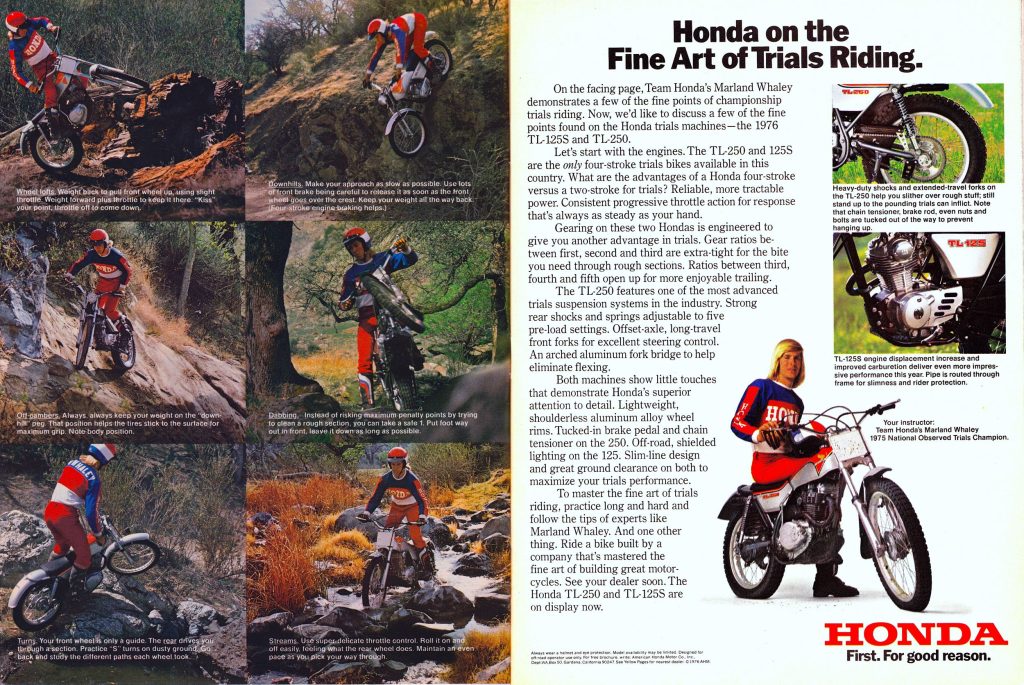 By far the most unique of the Big Four trails bikes available in the seventies was Honda’s TL-250 and TL-125S. These two thumpers pointed to Honda’s commitment to four-stroke technology in a two-stroke world.
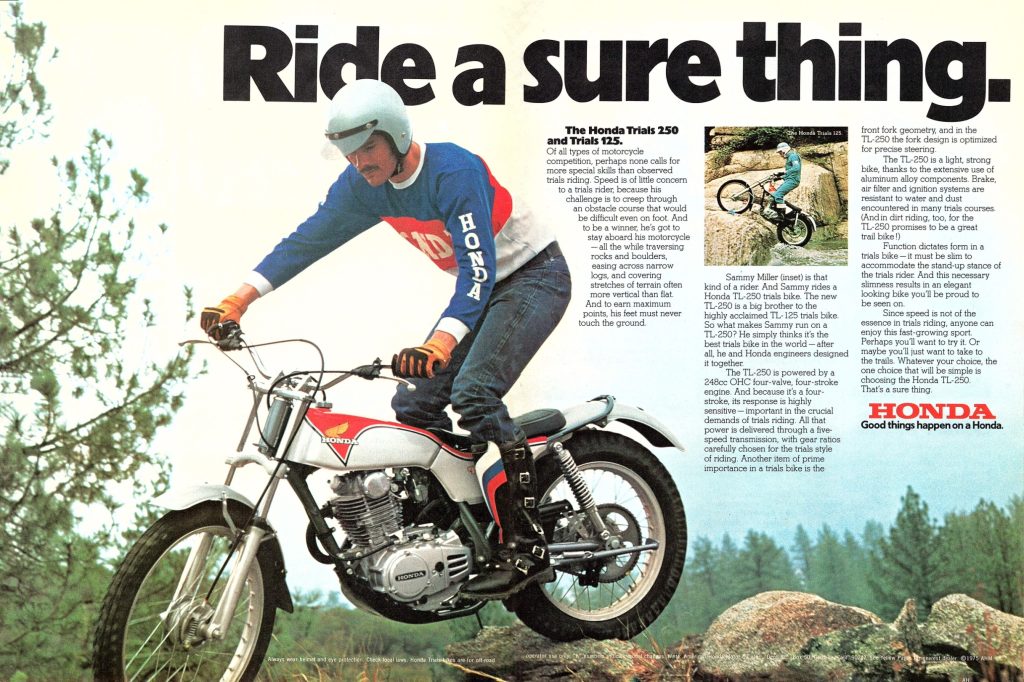
While the TLs only lasted a few years in Honda’s US lineup, Honda did continue to support Trials internationally. Today, you can buy a new Honda trails machine through their partnership with the Spanish brand Montesa.
Today, the only of the Big Four to still offer a trials machine in the USA is Honda who paired with the struggling Spanish brand Montesa back in 1982. Through their strategic alliance Honda and Montesa have continued to offer trials machines aimed at serious competitors. In 1976, that Honda four-stroke seemed like the oddball of the trials class, but now Honda’s advanced four-strokes power some of the best trials machines available.
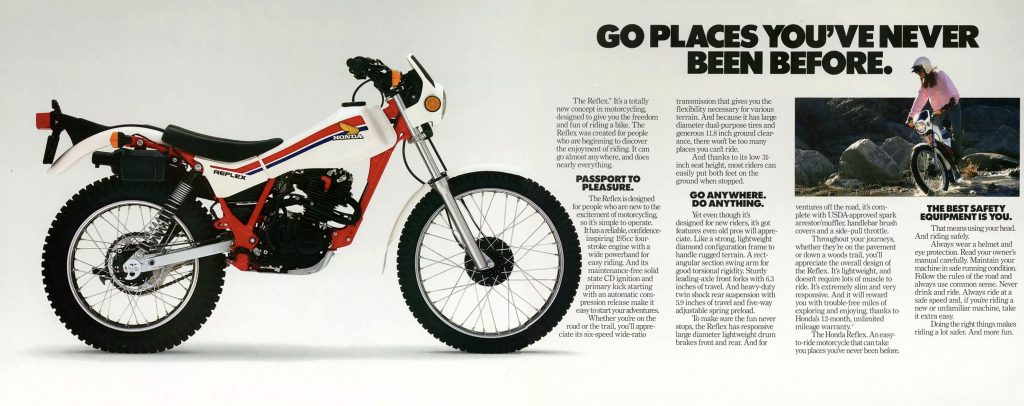
Honda’s Reflex was released in 1986 as an inexpensive dual sport. Many early trials machines from Japan were available with street going gear outside the US but it always seemed an odd choice for a machine that was designed to be ridden while standing. Any ride longer than a trip to 7-11 was likely to elicit a serious case of monkey butt for the Reflex’s pilot.