

For this edition of Classic Steel, we are going to take a look back at Honda’s all-new 2002 CR125R.
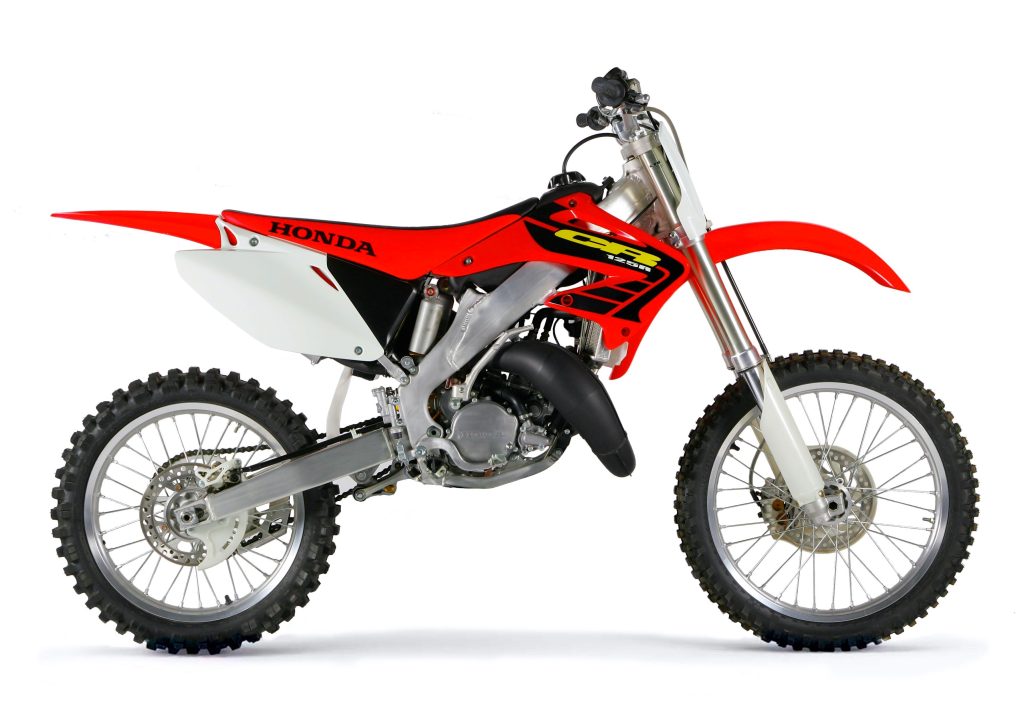 All-new from the ground up, Honda’s CR125R received its last major refresh in 2002. Photo Credit: LeBig
Once the purveyors of the fastest eighth-liter machines in motocross, Honda’s CR125R fell on hard times in the late nineties. For over a decade, Honda’s screaming red tiddlers dominated the 125 power standings with motors that hit like a ton of bricks and pulled to the moon. The red rippers lacked the low-end snap of many of their rivals but made up for it with endless rev and an unmatched pull on top. From 1987 through 1997, Honda’s position as the king of high-RPM power in the 125 class was unassailable.
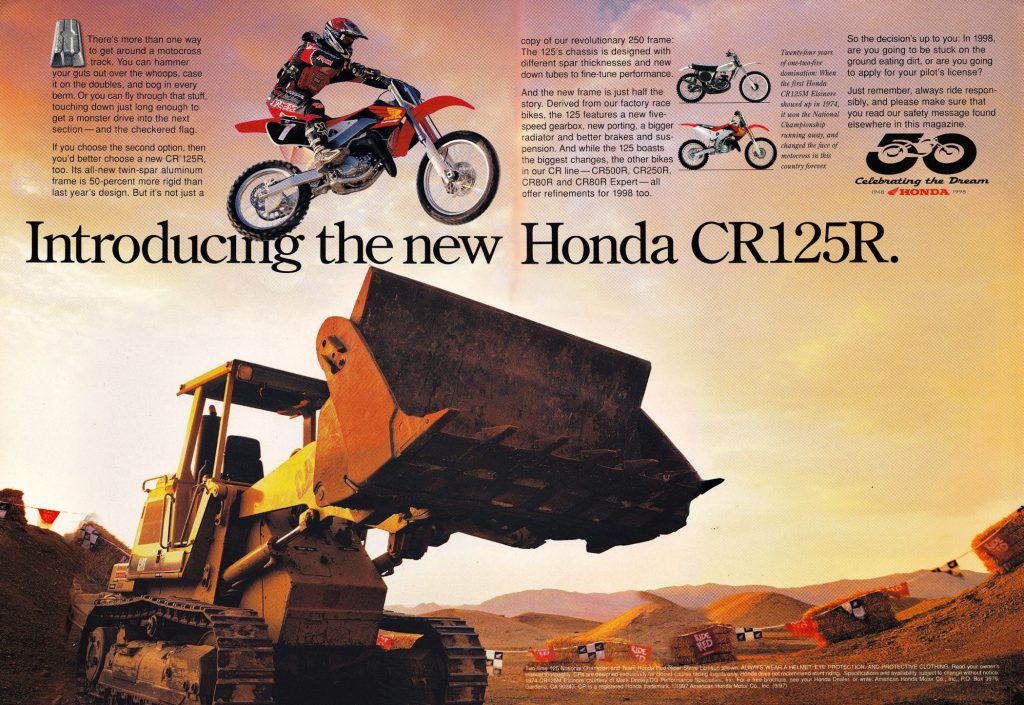 In 1998, Honda moved the CR125R to the new alloy chassis for the first time and, in doing so, crippled its greatest asset. After a decade of rocket-fast CRs, the new 125 offered an anemic powerband that confounded longtime Honda loyalists. Photo Credit: Honda
While the CR125R was the perennial pick of throttle jockeys, it was not always considered the best 125 for the masses. Its high-strung personality was perfect for the Guy Coopers and Doug Henrys of the world, but not always the best choice for kids who had not yet learned to leave the throttle always pinned. Machines like Suzuki’s RM125 often bested the CR125R in the magazine standings despite the yellow machine’s relative lack of high-RPM firepower. The RMs were often better suspended and much easier to ride, and for many, that made it a better box stock racer. For experts and aspiring privateers, however, the Honda was a near-unanimous pick during the late eighties and through the mid-nineties. For them, its horsepower advantage outweighed any lack of low-end torque or suspension finesse.
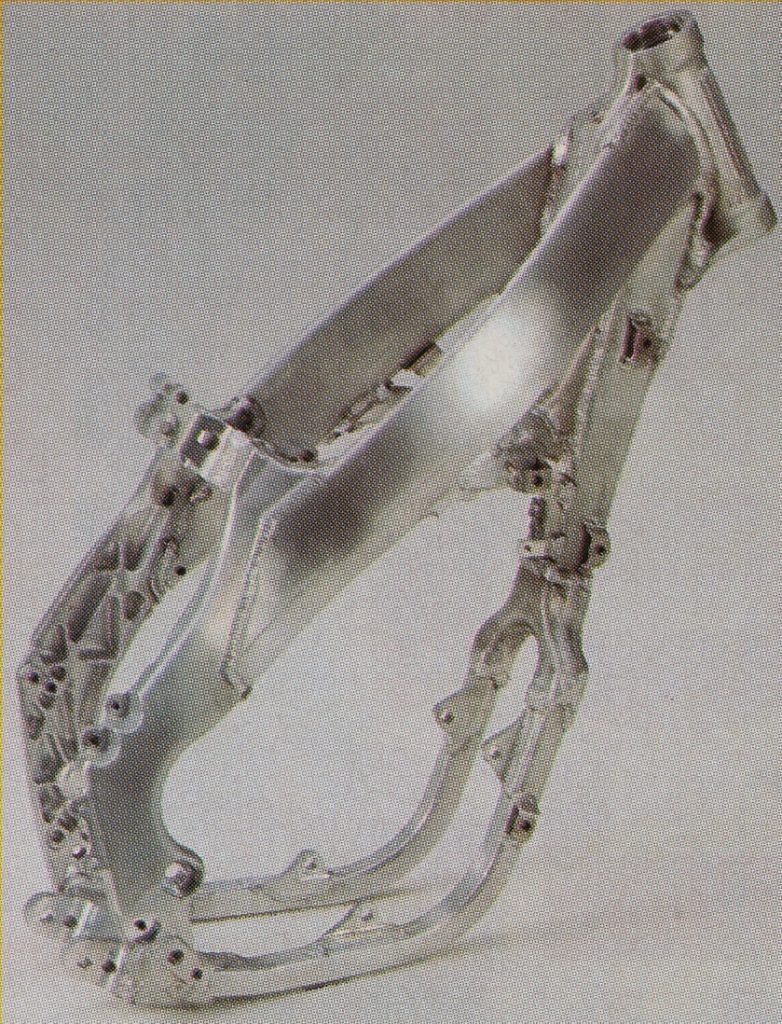 The 2002 CR125R featured the third generation of Honda’s aluminum frame design. The frame featured a combination of forged and extruded aluminum sections to dial in the ideal amount of strength and compliance. Photo Credit: Honda
In 1996, however, the power dynamics in the 125 class began to shift. That season, Yamaha introduced an all-new YZ125 that shocked riders with its amazingly broad power and potent performance. Long the whipping boy of the 125 class, this new Yamaha motor catapulted the YZ to the top of the 125 standings. The new blue Why-Zed ran more like a mini 250 than a traditional high-strung 125, and riders loved its flexible power and always-ready snap.
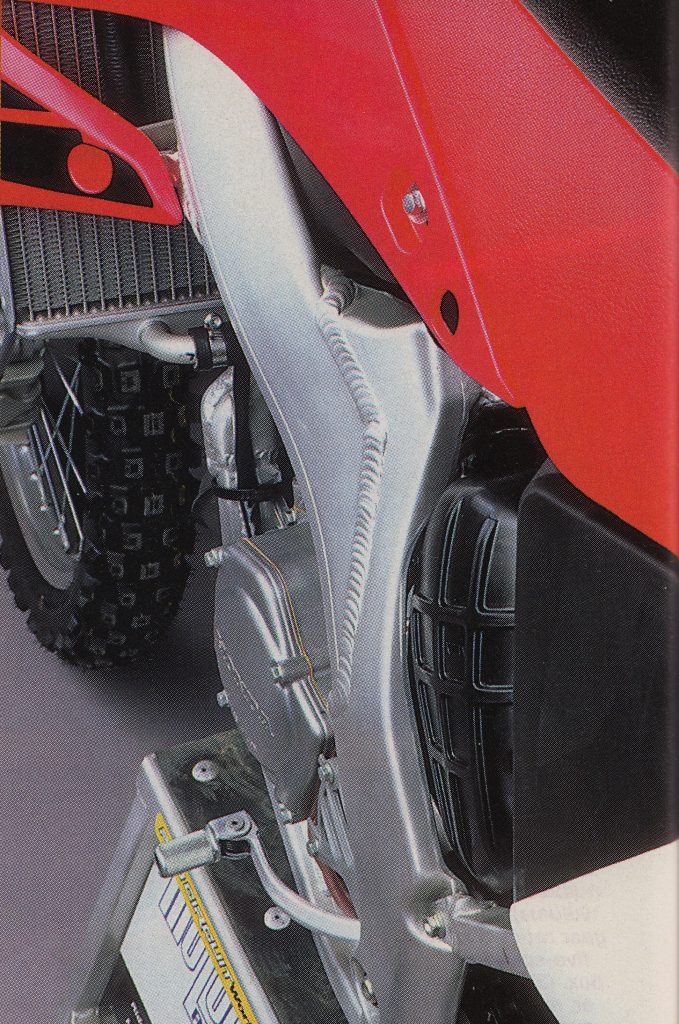 The new frame was narrower at the pegs and midsection to address one of the most common complaints about the first- and second-generation alloy frames. Photo Credit: Motocross Action
In the Honda camp, the CR125R remained appealing to riders who never shut off the throttle, but this style of power was becoming increasingly out of step with the changing tastes of the class. The original Honda Power Port mill, in use since 1990, lacked the powerband flexibility of the newer 125 designs, and even experts began to gravitate to the broader power offered by the new Yamahas.
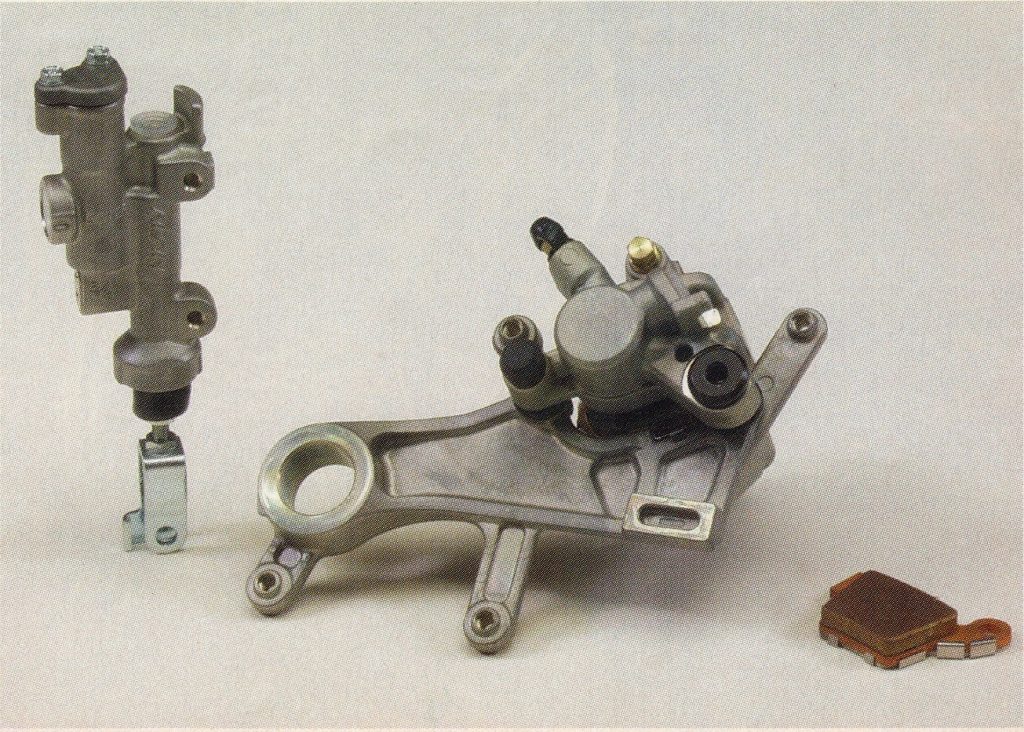 An all-new rear brake for 2002 saved 11.8 ounces by integrating the master cylinder and brake reservoir and downsizing the rear caliper considerably. Photo Credit: Honda
In 1998, things got much more complicated for the Honda faithful with the introduction of the all-new alloy-framed CR125R. Introduced a year earlier on the CR250R, it is hard to understate just how much hype Honda’s spacy new frame generated at the time. The trick twin-spar aluminum frame looked like something smuggled out of HRC’s skunkworks department, and riders lined up in droves to snap up the new alloy-framed wonder.
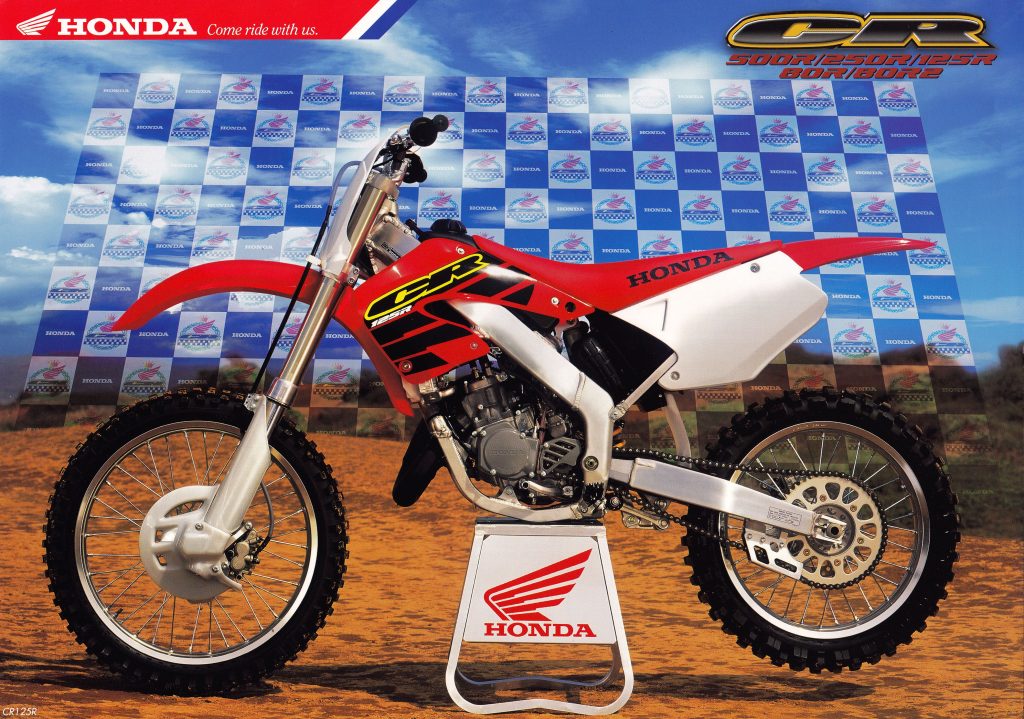 In 2000, Honda updated the CR125R with the second generation of their aluminum frame and an all-new power valve system. The revamped chassis was a significant improvement, but the new cylinder failed to bring back the glory days of early nineties Honda horsepower. Photo Credit: Honda
For 1998, the CR125R got the aluminum treatment, and once again, riders were hotly anticipating its eventual domination on the track. The new bike was incredibly beautiful and impeccably finished with clear attention to every weld, bolt, and component. It looked fast standing still, and racers were once again lined up to throw their hard-earned cash at their local Honda dealer to have a chance to own the trickest 125 in the land.
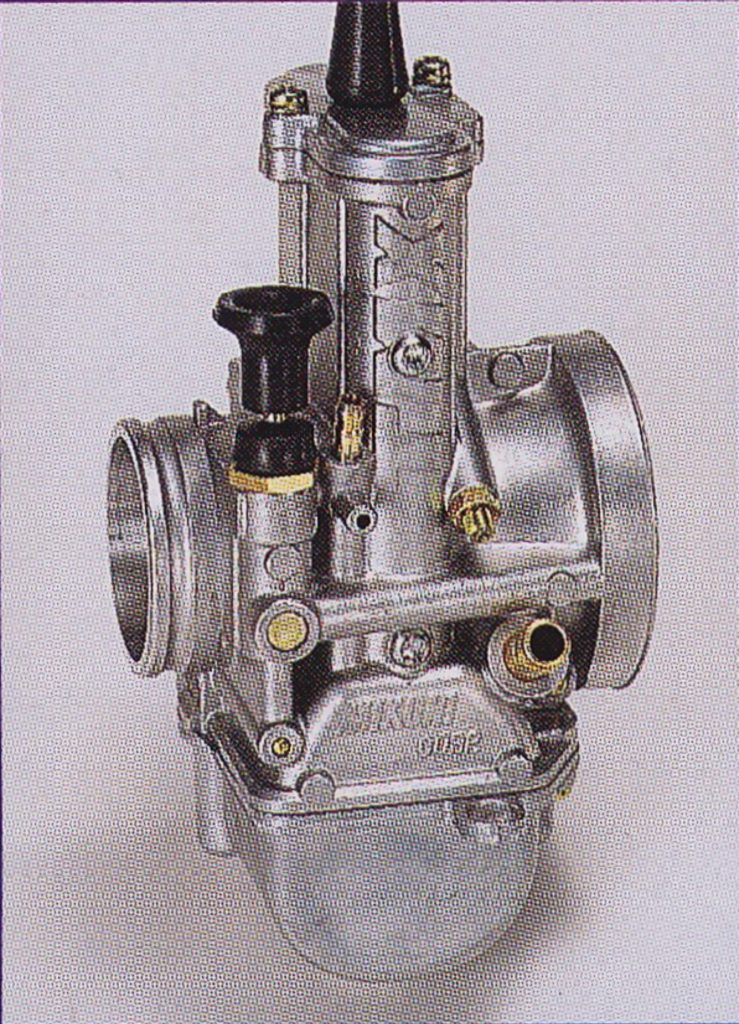 A new Mikuni TMX-x carburetor for 2002 improved throttle response and shaved 2.6 ounces of weight. Photo Credit: Honda
A funny thing happened on the way to the track, however; somewhere in the transition from steel to aluminum, all the CR125’s high-RPM power went missing. This had not been an issue on the CR250R, which continued to be a rocket in its new alloy guise, but on the 125, something went terribly wrong. For the first time in nearly two decades, Honda’s 125 was slow. Not just pipey, or difficult to ride; just plain slow.
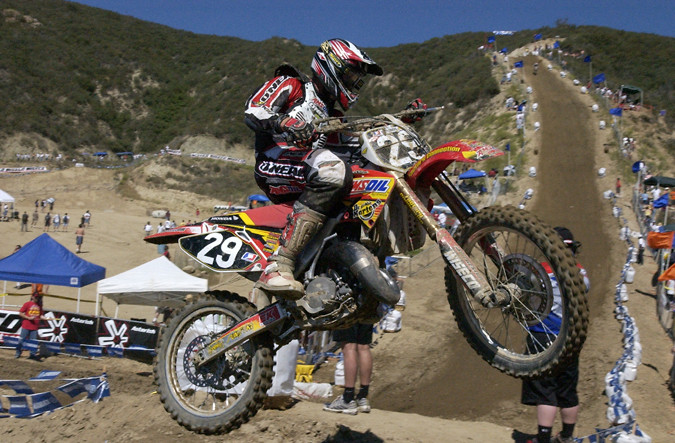 Journeyman racer Travis Preston became a star in 2002 on the new CR125R.
Longtime Honda pilots were baffled by this unexpected turn and quite disappointed with the new CR’s performance. The new alloy frame was substantially stouter than the outgoing steel chassis, but most riders were not certain it actually handled any better. The new alloy frame also transmitted tons of vibration to the rider from the motor and gave the suspension a dead feel that no one liked. In terms of showroom appeal, the spacy new CR125R was a home run, but on the track, the alloy wonder landed with a resounding thud.
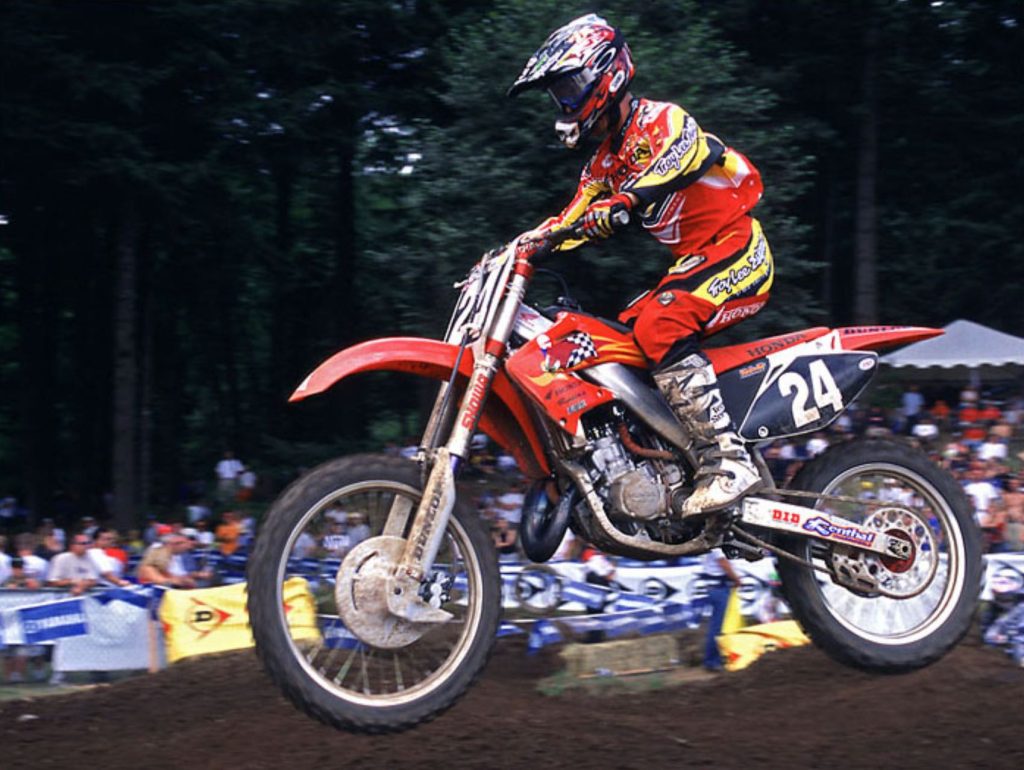 Ernesto Fonseca joined Preston on the new CR125R in the outdoors after racing a CR250R in the Supercross series. Photo Credit: Michael Stusiak
After two seasons of drubbings on the track and in the enthusiast press, Honda was back with an all-new and much-improved CR125R for 2000. The second generation of the alloy frame addressed many of the criticisms of the original design by slimming down the rider compartment and dialing in some additional flex to the chassis. The new frame transmitted much less of the track back to the rider, handled better, and vibrated less. All-new bodywork further refined the CR’s handsome appearance with revamped shapes, a new seat, and a move back to a less deep red for the plastic.
In 2000, Honda also finally retired its original Honda Power Port (HPP) power valve system in favor of an all-new exhaust valve design cribbed from their NSR Grand Prix road race machine. The new “RC” valve used a rotary flap in place of the HPP’s sliding guillotine valves to simplify maintenance and provide more precise control of the exhaust mechanism. Other than the cylinder, the new motor was largely a carryover from 1999 with the same basic configuration and somewhat controversial five-speed transmission.
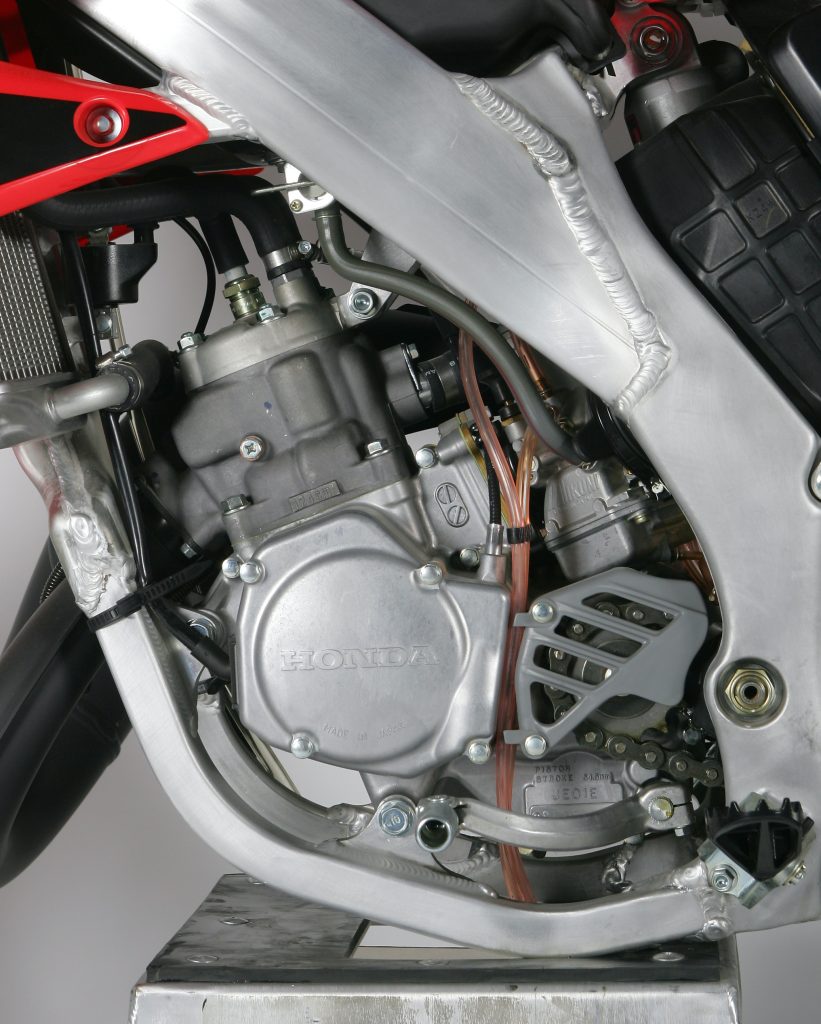 The CR125R’s 125cc mill was once one of the most dominant in motocross, but by the early 2000s, it was in need of a serious redesign. For 2002, all-new porting, a revamped power valve, updated ignition, and a freer-breathing airbox hoped to bring back a bit of that lost nineties Honda horsepower. Photo Credit: LeBig
While the all-new CR125R turned out to be a major improvement in most respects, its revamped motor continued to lack the boost of pre-1998 Honda 125 mills. The motor was much faster than the anemic 1999 CR125, but a far cry from the blisteringly quick Yamaha and KTM 125s. Riders loved the updated ergonomics, improved suspension, and more resilient chassis, but struggled to overlook the machine’s lack of low-end or top-end power. All of its ponies were found dead center in the midrange, and this made the CR a tricky machine to keep at full boil in the heat of battle. Overall, the 2000 CR was a tremendous improvement over the first-generation aluminum-framed Honda 125s, but for top-level racing, it needed a lot of motor work to run with the blue, yellow, and orange machines at the front.
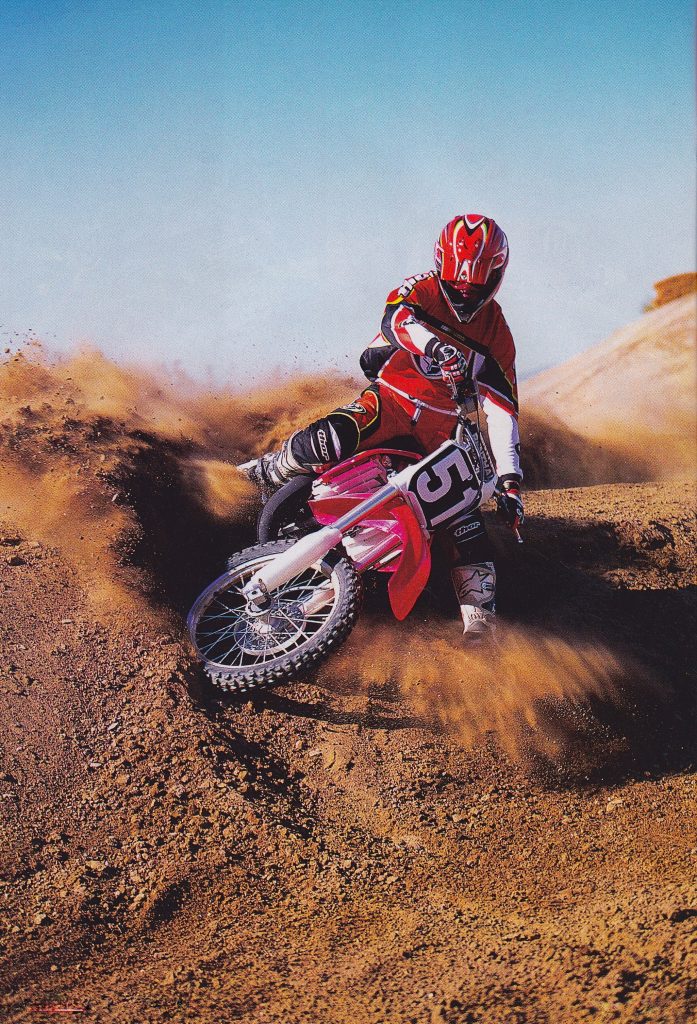 The new third-generation alloy chassis gave the CR125R some of the best handling in the 125 class. Photo Credit: Corey Neuer
After a year of minor tweaks in 2001, Honda was ready for another serious revamp of their 125 platform in 2002. Once again, Honda’s engineers dialed up an all-new chassis to underpin their high-revving tiddler. The new frame marked the third generation of Honda’s twin-spar alloy concept and incorporated six years of consumer and race team feedback into its construction and design.
One major concern with the first two generations of Honda’s alloy frames had been rider comfort. Initially, Honda had been extremely concerned about the durability of the alloy chassis and had erred on the side of reliability and safety. This led to a chassis that hindered suspension performance, dulled handling response, and transmitted unacceptable amounts of motor and track feedback back to the rider. Once Honda realized that their alloy frames were not going to begin snapping in half under hard use, they began dialing back that overbuilt construction to improve handling and comfort. The second-generation frame was much improved in both respects and largely well regarded against its steel competition. Some riders still found it a bit wide through the midsection and too prone to transmitting feedback through the chassis, but overall, the second generation of Honda’s alloy frames was a huge improvement in nearly every respect.
With the 2002 redesign, Honda’s engineers strived to find a way to combine the comfort of the old steel frames with the greater flex resistance and improved precision of the alloy chassis. To accomplish this, Honda rethought every aspect of the frame’s construction. The new frame retained the alloy construction and road-race-inspired layout of the first two generations of frames but featured a major change to the weight balance, geometry, and construction of the frame.
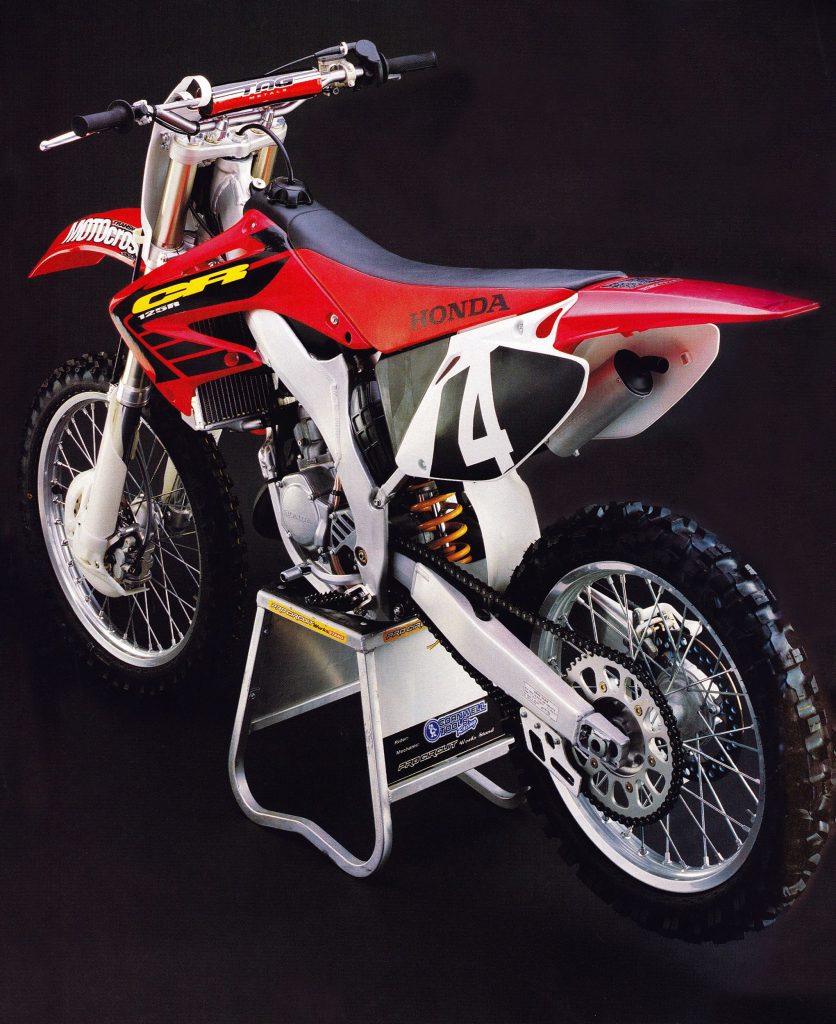 All-new bodywork for 2002 slimmed and flattened the CR’s riding compartment considerably. Photo Credit- Transworld Motocross
For 2002, Honda slimmed the large side spars that made up the backbone of the frame considerably. This allowed them to narrow the bike’s midsection, improve airflow to the motor, and fine-tune a bit more flex into the chassis. The new frame used forged aluminum for the plates that made up the rear suspension triangle and steering head, and more resilient extruded aluminum for the main frame spars. Everything from the placement of the mounting points to the material and techniques used in the welds was analyzed and optimized to improve resilience, response, and comfort.
Overall geometry was slightly more aggressive for 2002 with a half-degree steeper steering angle to improve cornering response. The footpegs were repositioned 10mm higher, and the handlebars were placed 2.5mm higher and 3mm closer to the rider for improved comfort. The rear subframe was also lowered to provide a flatter seating position. In addition to being slimmer through the midsection and more compliant on the track, the new frame was 1.1 pounds lighter on the scale. One interesting carryover from 2001 is the continued availability of a 20” front wheel as a factory option. This was a trick that some riders employed to improve the comfort and handling of the early Honda alloy chassis, and its availability remained on the optional parts list for 2002.
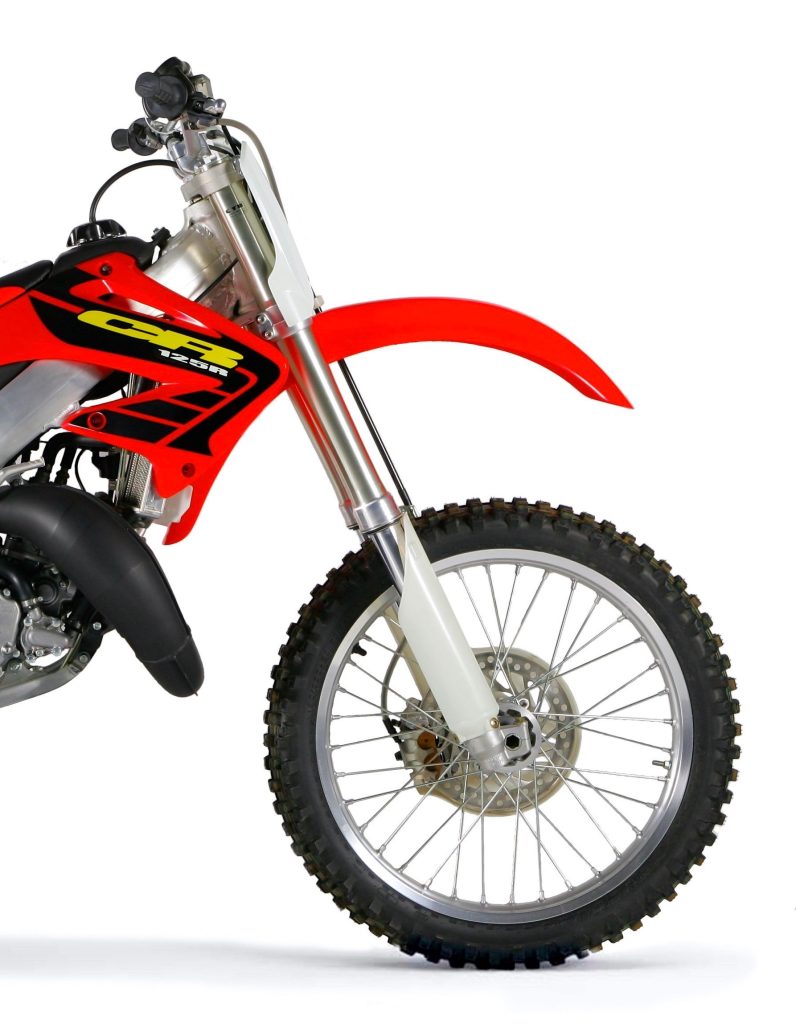 The CR’s 46mm Kayaba forks were some of the best-performing units in motocross in 2002. They were plush on small chop while also being firm enough to handle big hits with ease. Photo Credit: LeBig
Paired with the all-new frame for 2002 was sleek new bodywork that updated the CR’s aesthetics considerably. The redesigned shrouds were longer and leaner with a more angular design that increased airflow to the radiators and gave the machine a racier look. The seat was new as well, with upgraded dual-density foam and a 5mm taller profile for increased rider comfort. The redesigned side plates were longer and slimmer, with slightly less room for numbers but an increase in airflow to the redesigned airbox. The updated graphics for 2002 were quite handsome and continued to employ Honda’s iconic wing into their design. Every other year Honda liked to swap out the position of the “CR” and “Honda” logos on the shrouds and seat, and for 2002, the graphics once again traded places.
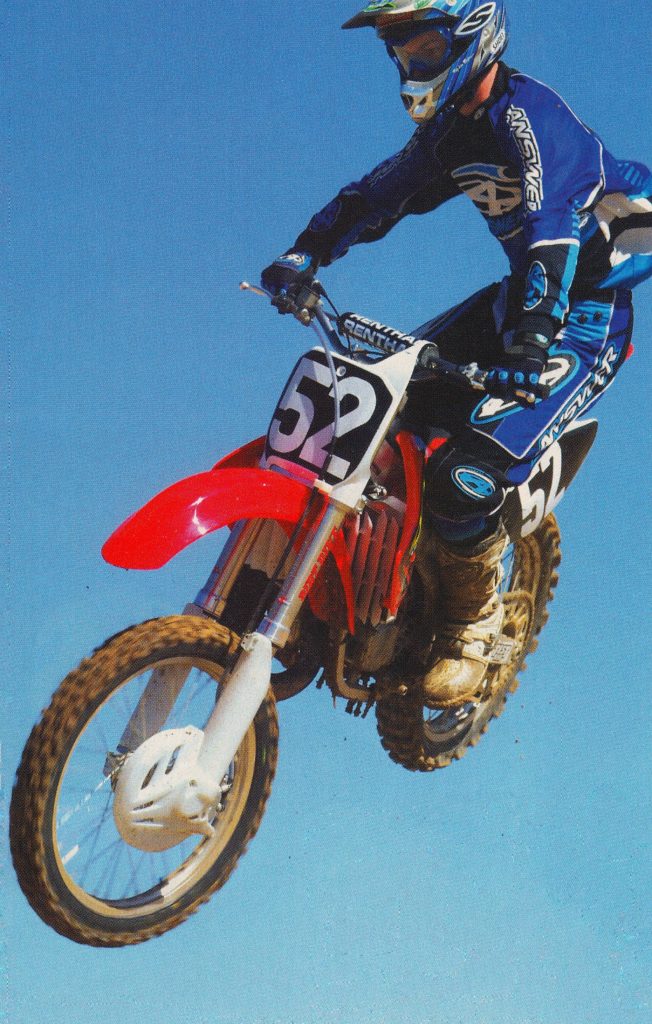 Honda put the CR125R on a diet in 2002, and the result was an impressive 11 pounds of weight savings over 2001. Photo Credit: Dirt Bike
On the motor front, the CR125R was not nearly as radically updated for 2002. In 2001, Honda had made some strides toward improving the narrow powerband of the CR’s motor, but the mill remained the biggest handicap to an otherwise excellent package. Without an all-new motor in the budget for 2002, Honda’s engineers were tasked with extracting every bit of available power out of a mill that traced its roots all the way back to 1987.
First up on the list of updates for 2002 was an all-new airbox and redesigned airboot that increased airflow to the motor. This had been an issue for the CR125R since the switch to the aluminum frame in 1998, and Honda knew they needed to get more air into their little motor if they were going to improve its power output. By narrowing the frame spars, the engineers were able to both improve the machine’s ergonomics and provide room for a larger intake boot and straighter intake tract. The airboot was enlarged by 12mm, with a Honda-claimed 40 percent increase in airflow capacity. Paired with the freer-breathing intake was an all-new 36mm Mikuni TMX-x carburetor. The new mixer was 2.6 ounces lighter and featured a redesigned “eyebrow”-shaped slide and a new body that moved the fuel nozzle closer to the engine to improve throttle response.
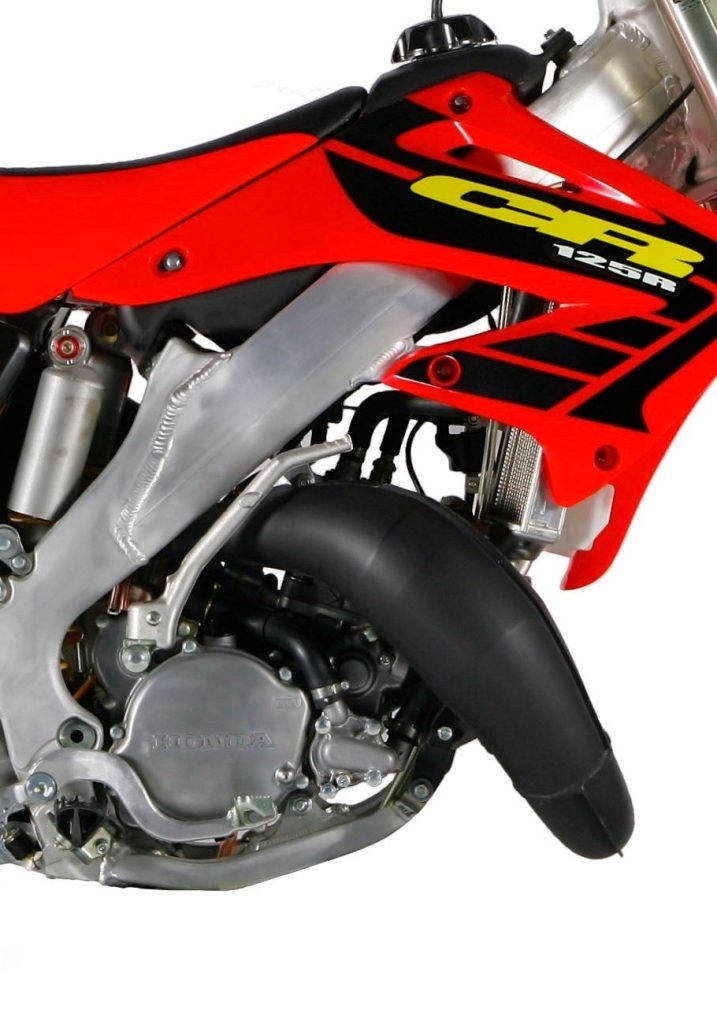 While the motor changes for 2002 yielded noticeable improvements to the CR125’s power output, it remained the runt of the 125 litter. There was very little power down low, a strong surge in the middle, and a mediocre overrev on top. If the soil was hard and you could keep it in its narrow sweet spot, then the CR was competitively fast, but if you threw in deep soil or big hills, you were likely to spend the moto eating roost from the orange and blue competition. Photo Credit: LeBig
The motor maintained the same 54mm x 54.5mm bore and stroke and 125cc of overall displacement as in 2001, but the cylinder did receive several updates to improve performance. The exhaust port and exhaust flange were both reshaped, and the exhaust header was increased in length by 8mm to improve low-end response. A new piston was added with a hard-anodized ring groove for improved durability. The NSR-style power valve was massaged with a new flap that provided more overlap to minimize exhaust gas leakage. A 2.5mm hole was added to the RC valve to improve low-end response, and the powervalve governor was retimed to open 500 RPM earlier. Unlike the new electric power valve on the CR250R, the CR125R continued to use a traditional centrifugal ball governor for its activation. The four-peddle carbon fiber reeds used in 2001 remained, but a new asymmetrical reed block featured a revised shape and a new stopper for increased overrev. An all-new exhaust featured a revised shape to work with the revamped frame and improve power output and delivery.
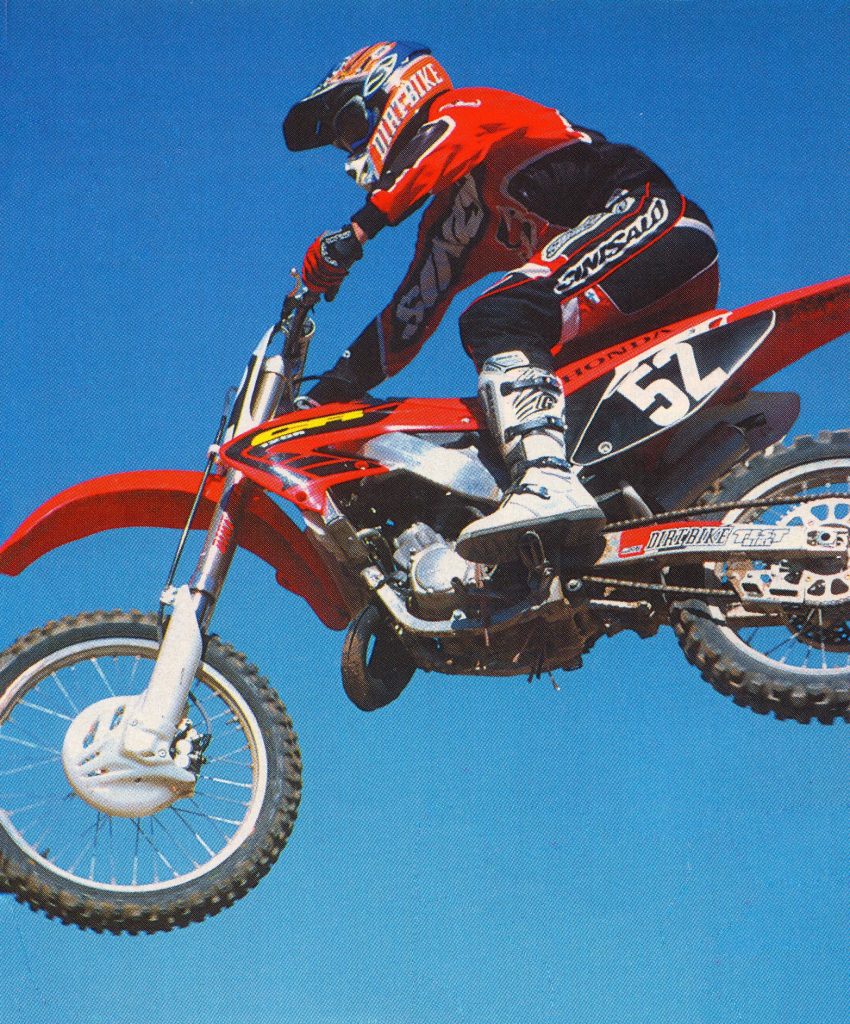 While its motor was no powerhouse, the CR125R remained one of the most fun-to-ride machines in motocross. Its feathery feel, excellent suspension, and nimble handling made it a joy to extract every ounce of speed out of its somewhat underwhelming motor. Photo Credit: Dirt Bike
In the bottom end, the updated motor featured all-new ratios for first, second, and third gear. First gear was slightly taller with a tighter spacing between first, second, and third to improve rideability. As in 2001, the transmission remained a five-speed. A revamped ignition for 2002 featured a new four-pole AGG design that increased voltage and reduced drag by 50 percent. The clutch was also updated with a new damper that Honda claimed would provide improved traction and feel while accelerating on rough terrain. Finally, the CR’s final drive ratio was updated from 13/52 to 13/51 to better match the power characteristics of the revised motor.
On the suspension front, the CR125R continued to use Kayaba as its suspension provider. This was interesting in that the CR250R used Showa for its suspension. For 2002, Honda revamped the 46mm inverted cartridge forks with updated valving, stiffer springs, and a 0.4-inch reduction in travel. Honda claimed the reduced travel would provide a “flatter” ride and reduce “pitching” in the rough. Overall travel was set at 12.0 inches with 20 selectable settings for compression damping and 18 available settings for rebound control.
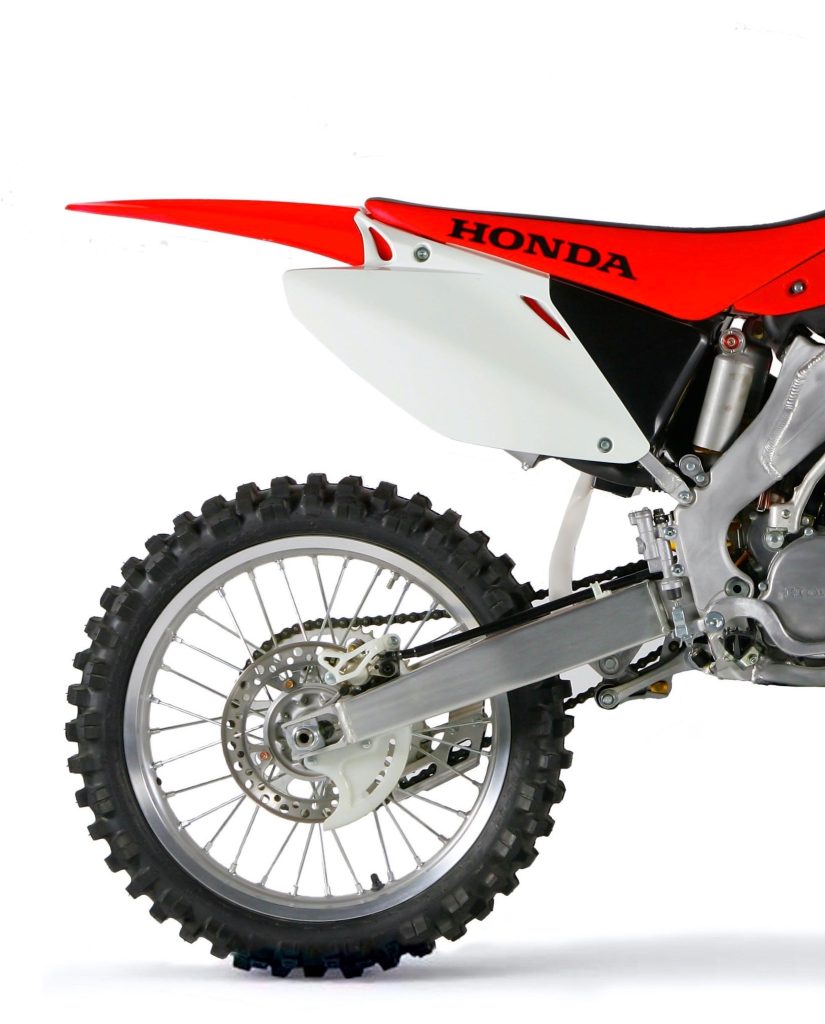 The CR’s Kayaba rear damper was just as well sorted as its excellent front forks. Riders from novice to pro praised its plush and well-controlled action. Photo Credit: LeBig
In the rear, the Pro-Link rear suspension used a Kayaba damper to provide 12.5 inches of rear wheel travel. For 2002, the shock featured all-new valving to work with the redesigned swingarm, frame, and linkage. As with the forks, the shock offered slightly less travel for 2002 with a 0.1-inch reduction in rear suspension movement. The fully adjustable rear damper offered 30 selectable settings for rebound control to go with 18 settings for low-speed and two turns of high-speed compression damping.
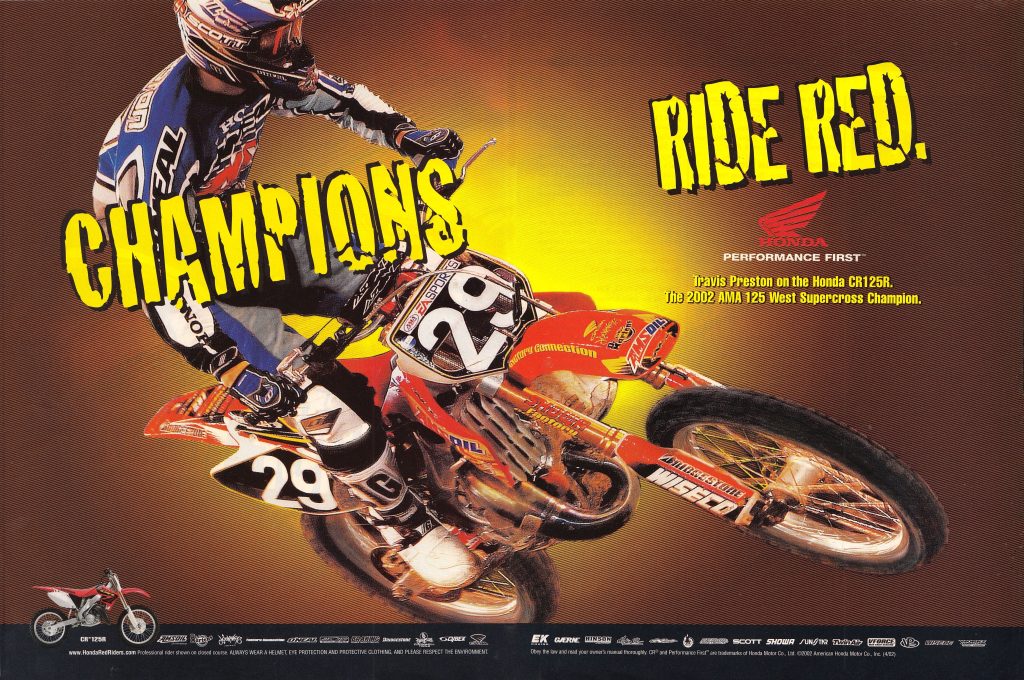 Despite him being quite large and heavy for a 125, Amsoil Honda’s Travis Preston took the new CR125R to the 2002 West Coast 125 Supercross title in a surprising upset over Kawasaki’s much-heralded rookie James Stewart. Photo Credit: Honda
Weight savings had been a major goal for Honda’s engineers in 2002, and they took great strides to make the CR125R one of the lightest 125s on the track. In addition to the lighter frame, the redesigned machine featured all-new wheels front and rear with new works-style aluminum spoke nipples that saved 3.5 ounces. The rear brake system was all-new as well, with a redesigned rear master cylinder that combined the mechanism and reservoir into one integrated unit. The integrated master cylinder saved weight and decreased the chance of having a hose-related brake failure. The rear caliper and pads were also downsized considerably, shaving 11.8 ounces off the rear brake system. To offset the reduction in surface area of the new pads, Honda increased the sweep area of the 240mm rear disc by 14 percent to maintain the CR’s stellar braking performance. Everything from the thickness of the plastic to the size of the bolts was analyzed in search of finding a few more precious ounces. Several bolts throughout the chassis were moved from 12mm to 10mm to save weight, and nearly every component on the machine was nipped, tucked, and trimmed. The result of all this effort was a claimed 11 pounds of weight savings for 2002.
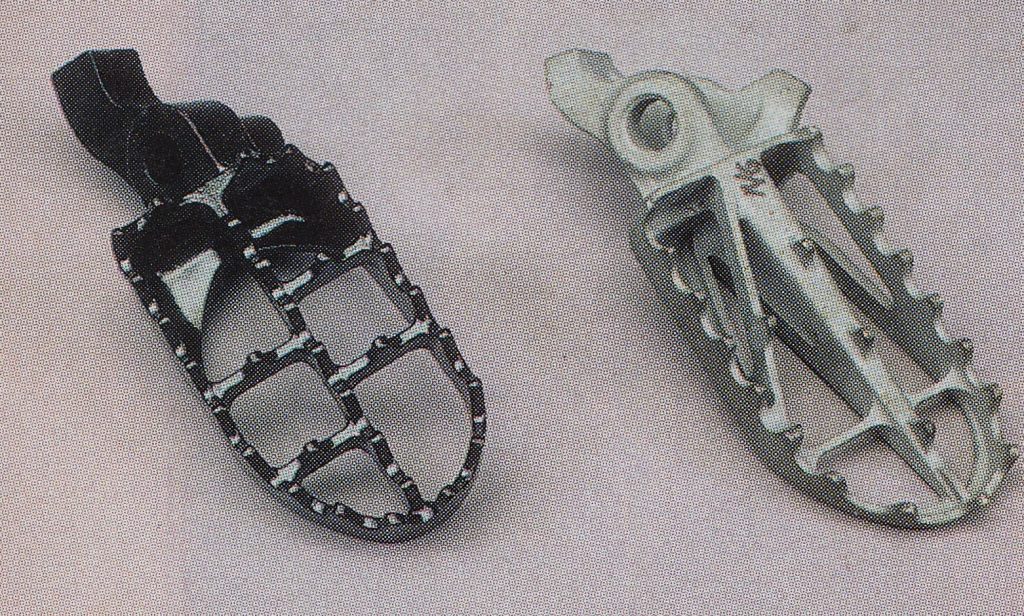 New pegs for 2002 (right) offered a revised shape for improved grip and greater resistance to mud buildup. Photo Credit: Honda
On the track, the 2002 Honda CR125R turned out to be a much-improved racer in nearly every respect. The revised porting, powervalve changes, and deeper-breathing intake yielded impressive power gains when compared to the 2001 CR125R. The case-reed mill was still lazy down low, but the midrange was strong, and the bike no longer choked on its air filter when forced to rev. It was by far the fastest CR125R mill since the switch to the alloy frame in 1998, but that was only half of the equation. If the CR had only been up against its red predecessors, it would have been a home run, but by 2002, the bogey for 125 class power domination had moved substantially.
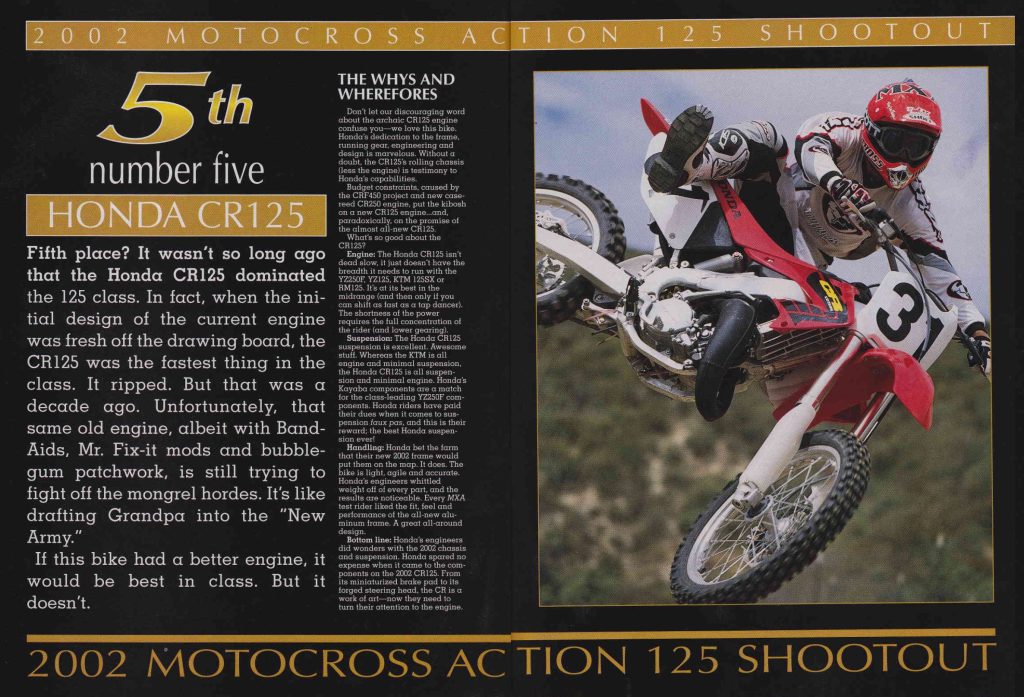
Despite being one of the magazine testers’ favorite bikes to ride in 2002, none of them were able to see past its lack of horsepower in the final shootout standings. Photo Credit: Motocross Action
When compared to the KTM, Yamaha, and Suzuki motor offerings of 2002, the revamped CR mill continued to be a disappointment. It was far less snappy out of the hole than the Yamaha, requiring proper gear selection, lots of throttle, and a quick clutch hand to get the red rooster out of turns and on the pipe. It was comparable to the other 125s in the midrange, but once the motors opened up, the CR was left in the wake of its blue, yellow, and orange competition. When compared to Yamaha’s cheater YZ250F, that gap became even more insurmountable. At its peak, it gave up 1.3 horsepower to the YZ125 and over three horsepower to the KTM 125SX. The Honda’s butter-smooth shifting and durable clutch made it easy to keep the CR at full song, but there was no way around the fact that the Honda’s pilot needed to be quick on the reflexes and fearless in the turns if they were going to keep the competition at bay.
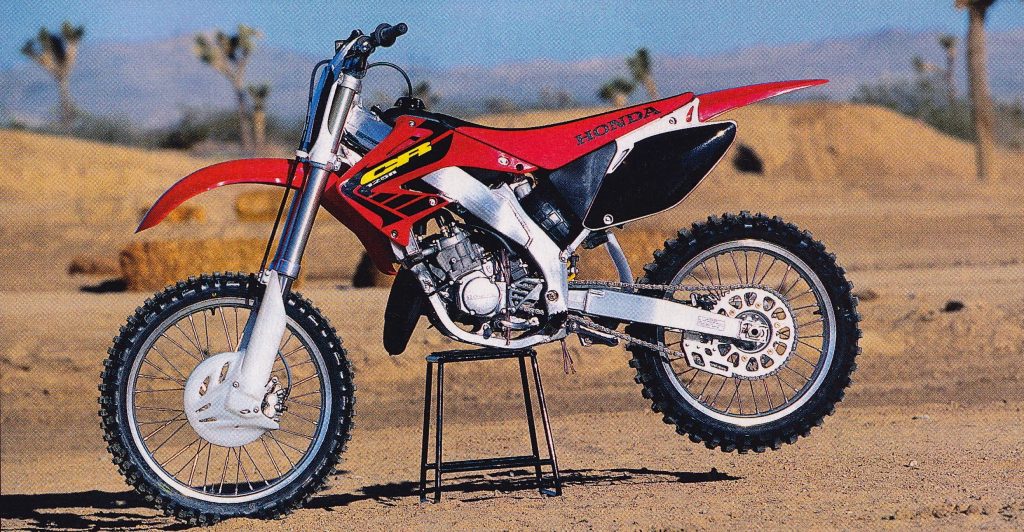 Judged on looks alone, the 2002 CR125R was a winner. Add in stellar reliability, the best build quality, and lots of aftermarket support, and you had a great bike for riders who were looking for more than the fastest machine available. Photo Credit: Corey Neuer
Thankfully for the Honda faithful, everything else about the new CR made going fast easier in 2002. The new chassis was super comfortable with excellent ergonomics and a much-improved rider compartment. The taller pegs, thinner midsection, flatter seat, and repositioned bars made the Honda a great fit for most riders. It was super light on the scale and felt every bit of its feathery light 202 pounds on the track. The third-generation aluminum frame remained noticeably stiffer than its steel counterparts, but the chassis no longer pummeled its rider’s palms and backsides and buzzed like a cheap massage chair. It was razor sharp in the turns and admirably stable at speed. The 20” wheel was still an option, but most riders felt it was unnecessary with the new, more accurate and supple chassis. In the air, the feather-light CR125R felt like a toy compared to the YZ250F and could be whipped, flicked, and tossed around with naked abandon. Riders loved the Honda’s nimble feel and raved about how fun the CR was to keep pinned around the track.
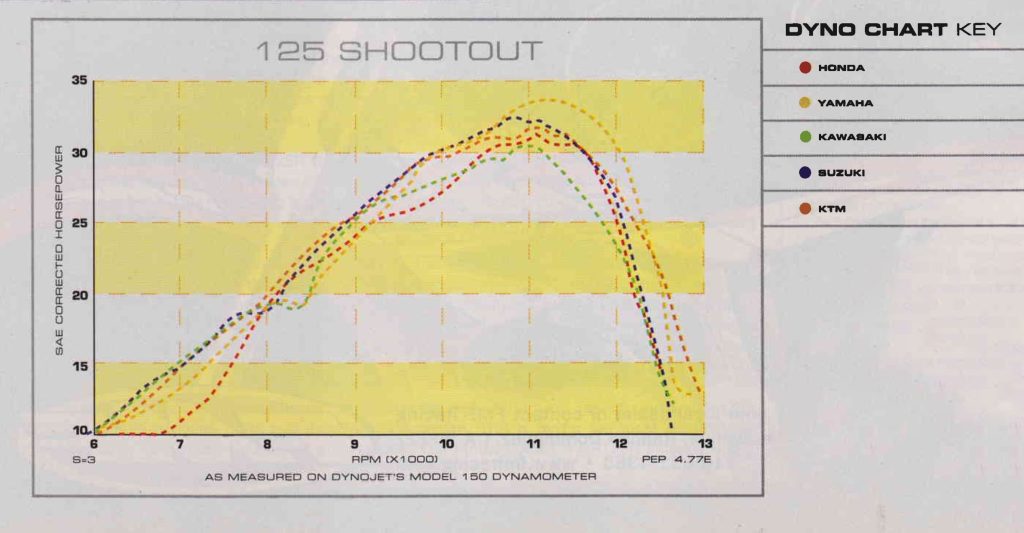
Red Runt: One look at the dyno told the tale for many 125 contenders in 2002. The CR got badly outpowered by all its rivals at every point on the curve, losing out by as much as 3.3 horsepower to the KTM 125SX at its peak. Photo Credit: Transworld Motocross
The other half of the CR’s handling excellence was its plush and well-sorted suspension. After a decade in the suspension doghouse, Honda finally got their suspension settings sorted out in the early 2000s. The CR’s Kayaba “bladder style” cartridge forks were both supple on small chop and firm on big hits. Riders of all skill levels praised them for their well-controlled action and ability to tackle a myriad of track obstacles. Jumps, whoops, and braking bumps were all taken in stride by the CR’s excellent silverware.
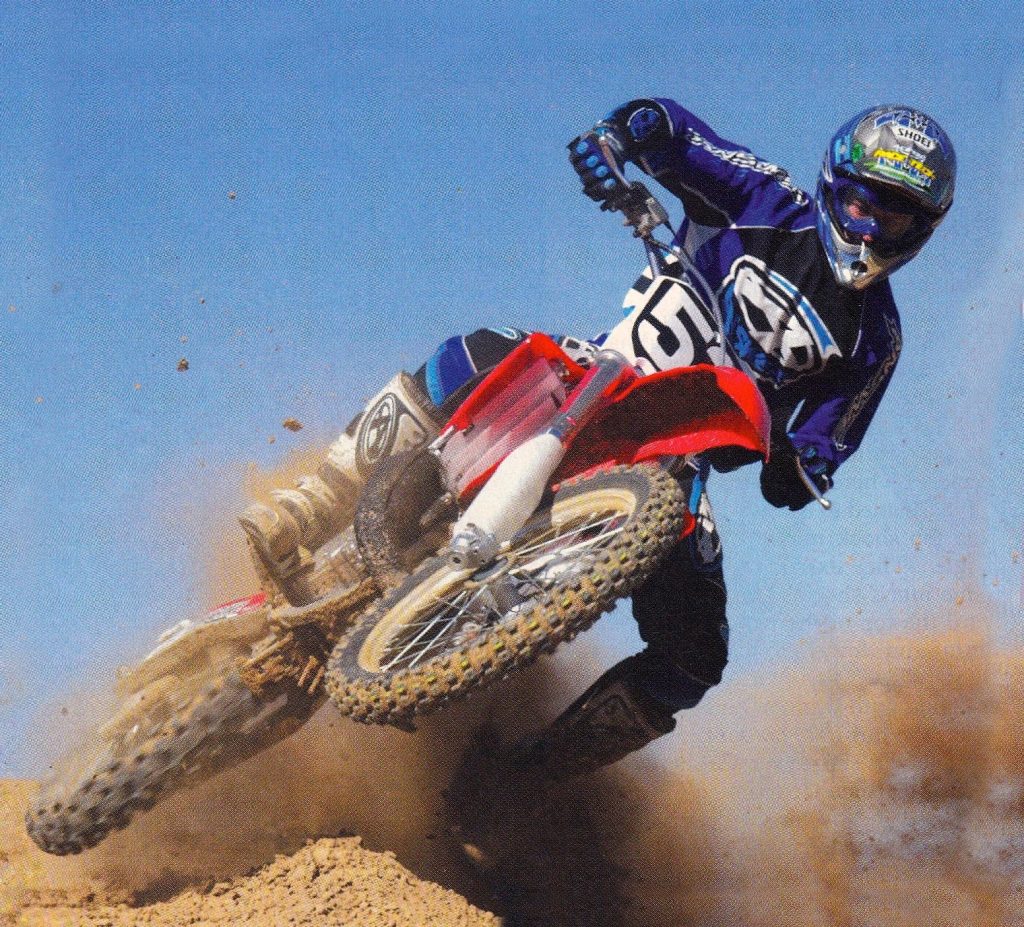 Talented riders could toss the new CR125R around like a minicycle in 2002. Photo Credit: Dirt Bike
Out back, the revamped Pro-Link was just as well-liked with well-chosen spring rates and excellent damping settings that allowed fast guys to charge the track while also not punishing newbies. It was plush on acceleration bumps and capable of tackling most jumps outside of A1 with ease. The rear end tracked straight in the rough, never kicked, and bottomed out with comfort and control. Riders fast and slow loved the shock’s action. Even pros felt the stock suspension package was good enough to handle most tracks with only a bit of fine-tuning of the clickers and a small step up in spring rates. Overall, it was an excellent suspension package and easily the best fork and shock combo ever offered on a red machine.
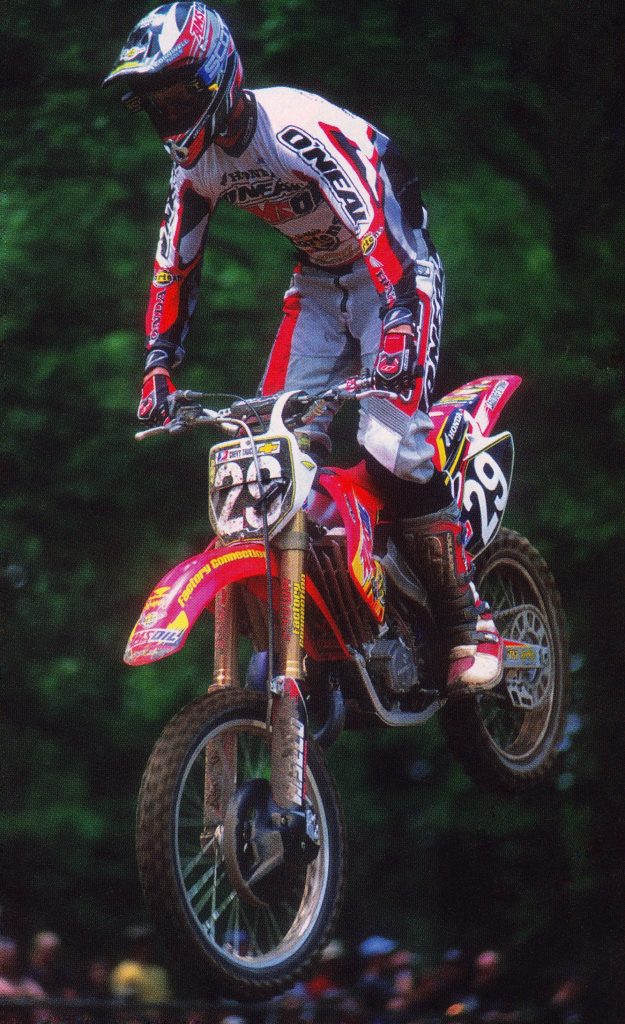 Travis Preston could not duplicate his indoor success outdoors in 2002, finishing the series tenth overall. His best finish of the series would be a solid third in the sand of Southwick. Photo Credit: Motocross Action
On the detailing front, the CR125R remained the class of the field in 2002. The new frame had no paint to wear off, and all the plastic, decals, and switchgear were of the best quality. The CR offered the most comfortable seat in the class, with a well-designed shape and perfect foam density that stood up to tons of abuse without sacking out. The clutch was bulletproof, and the five-speed transmission never missed a shift. The stock half-waffle grips, rubber-mounted clamps, and forged levers were comfortable and durable, but the continued use of steel for the handlebars seemed out of step with the premium quality of the rest of the machine. Severe brake draggers had some issues with the miniaturized rear brake, but most riders found it continued to work flawlessly. The 240mm front Nissin stopper remained a standout, but KTM and their Brembo binders were starting to nip at the Honda’s heels in this department. Overall reliability remained excellent, and the Honda was as bulletproof as any high-strung high-RPM single-cylinder two-stroke could hope to be.
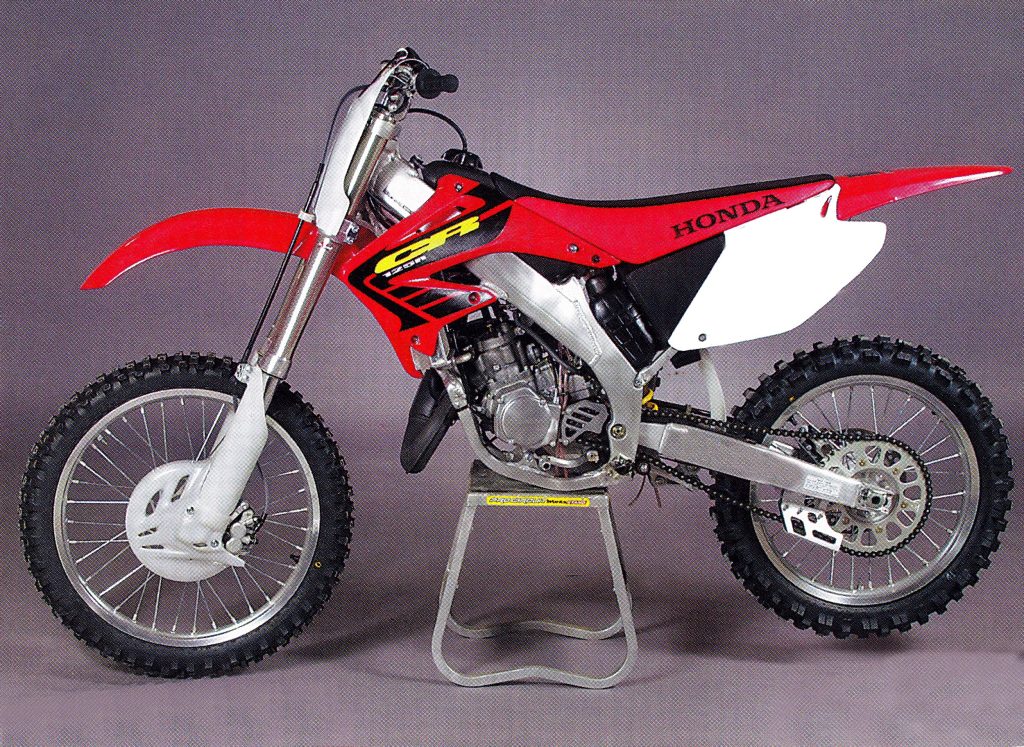 In 2002, Honda unveiled a phenomenal machine in every way but one. It handled like a dream, turned on a dime, and floated over bumps like they were not even there. If only it had been blessed with more power, it would have been the greatest 125 of all time. As it was, however, it remained an incredibly fun machine in need of a bit of aftermarket help to make the most of its motocross potential. Photo Credit: Dirt Bike
In the end, the 2002 Honda CR125R turned out to be the best Honda 125 in its long history, but the competition remained a step ahead. The CR was incredibly light, supplely suspended, beautiful to behold, and built for the long haul, but its continued lack of serious horsepower made it a tough sell in a class dominated by pony preoccupation. With the arrival of Yamaha’s YZ250F, the 125 two-stroke’s time as a top-level racer appeared to be numbered, but it was nice to see Honda putting so much development into one last hurrah for its 125. The days of Honda’s domination of the 125 class may have been in the rear-view mirror, but its days as a fun alternative to the thundering thumpers were still in full swing in 2002.