
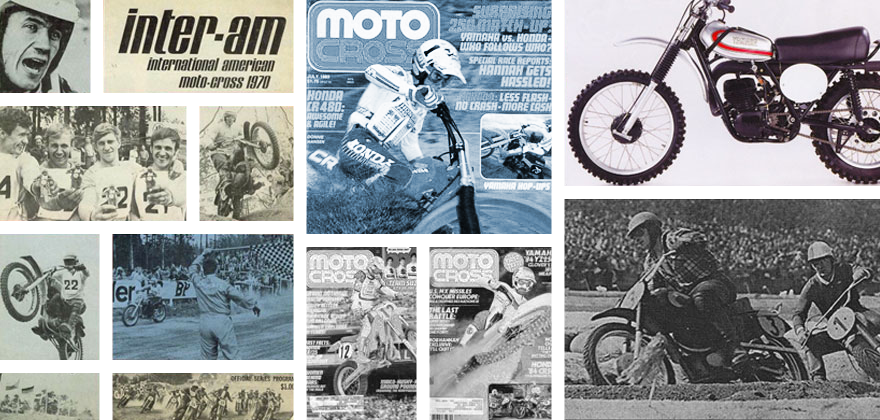
For this edition of Classic Steel, we are going to take a look back at the last of Yamaha’s International Trials machines – the 1986 IT200.
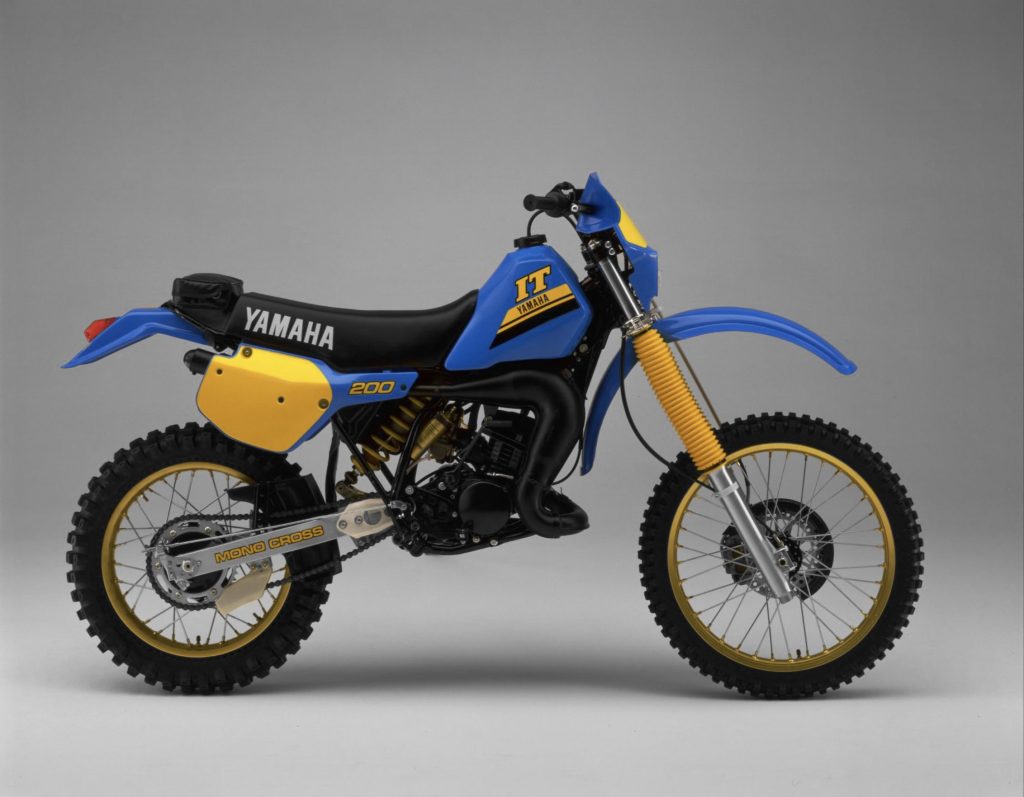
In 1986, Yamaha’s popular line of International Trial Enduro machines came to an end with the retirement of the IT200. Photo Credit: Yamaha
Yamaha’s iconic International Trials line began with the introduction of the big-bore IT400 in 1976. Based on their new monoshock YZ400, the IT featured wider ratios with beefed-up helical cut gears in its five-speed transmission. The tank was enlarged from the motocrosser’s 2.1 gallons to an Enduro-ready 3.25 gallons. The IT also added a heavier flywheel, coil-spring forks (the YZ had air forks in 1976), quieter exhaust, lighting-capable ignition, spring-loaded chain tensioner, and a high-breather air intake to set it apart from the YZ. The bodywork was similar to the YZ with a new blue hue, lights, and the larger tank being the most visible difference between the motocross and off-road big bores. Aside from the more restrictive intake and exhaust, beefed-up wide-ratio transmission, and lighting-capable ignition, the IT400’s power plant was identical to the one found on the YZ400C. With 8.5 inches of travel in front and a massive for the time 7.0 inches of movement in the rear, the IT’s motocross chassis made going fast in the woods easier than ever before. Riders loved the tractor-like power from its 397cc single and but found its somewhat tall final drive gearing, notchy shifting, unpredictable turning, and penchant for kicking under deceleration less praiseworthy. While not perfect, the all-new IT400 proved that the Japanese could indeed compete with the Europeans in the woods as well as on the track.
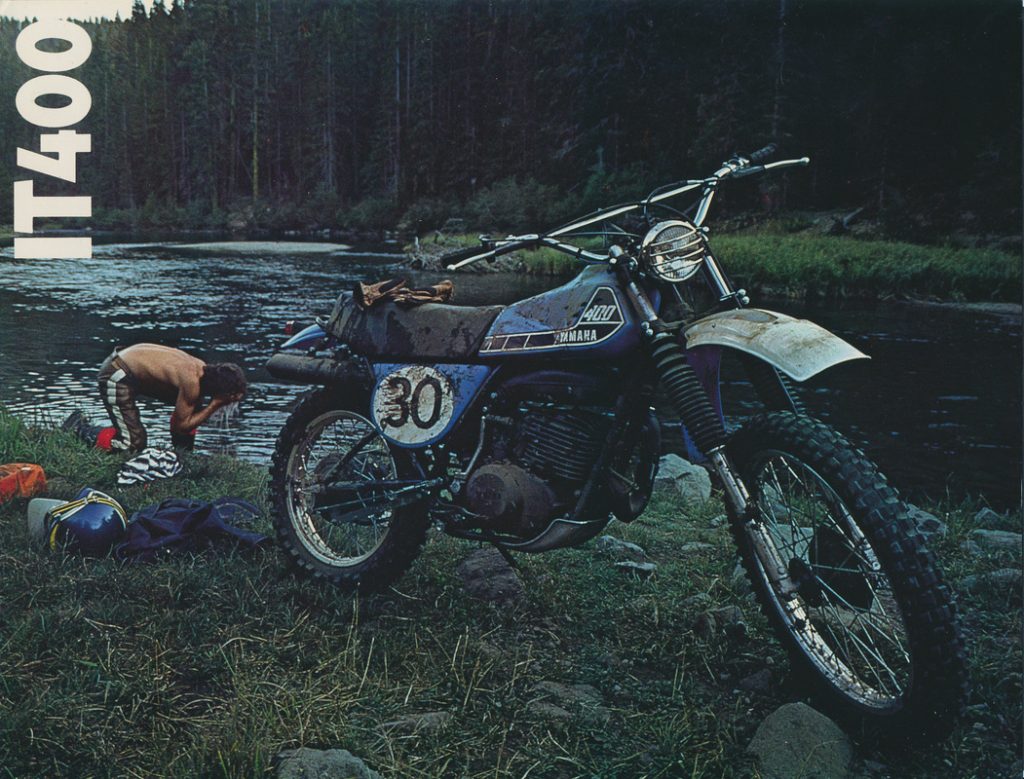 In 1976, Yamaha launched their IT line with a big-bore Enduro based on the new monoshock YZ400. The IT400 was only lightly modified from the motocross version and was an excellent off-road performer for the time. Photo Credit: Yamaha
For 1977, Yamaha expanded the International Trials lineup with a pair of all-new machines designed to do battle with Penton (KTM), Husqvarna, Can-Am, and Suzuki. The IT175 and IT250 were once again based on their motocross counterparts with engine, suspension, and hardware upgrades designed for the rigors of off-road competition. Of the two, the IT175 was the real standout, with nimble handling, a torquey motor, and a bargain basement $998.00 price tag.
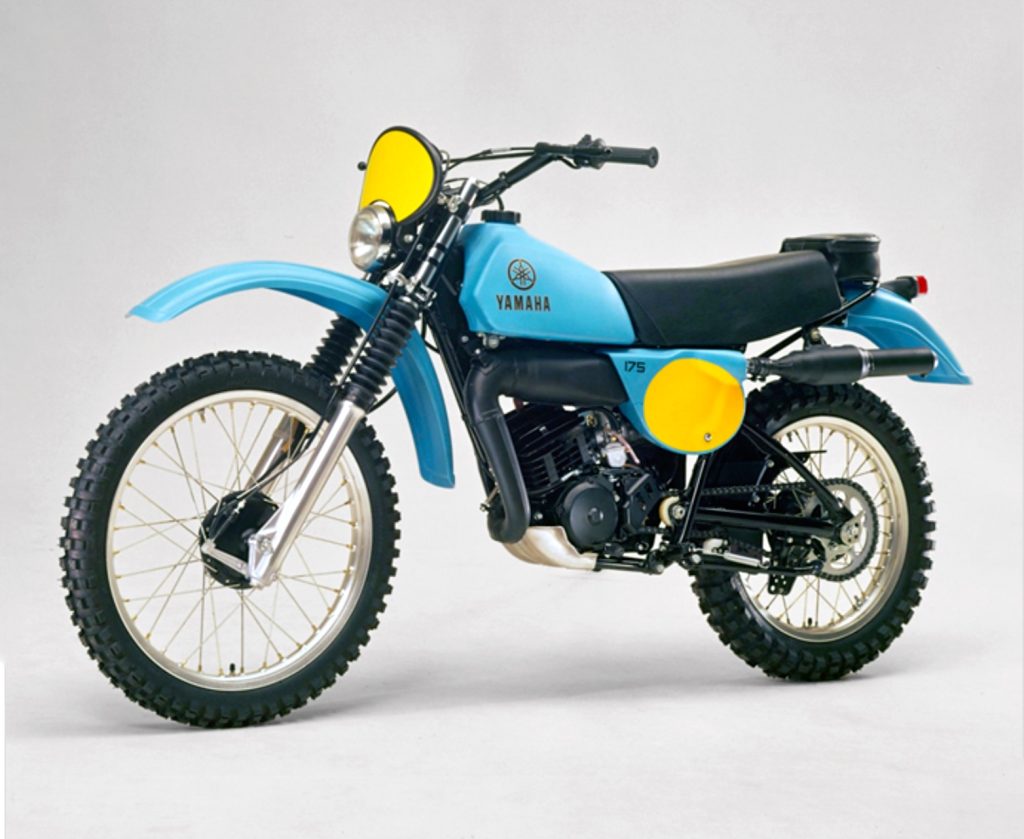
In 1977, Yamaha expanded their International Trials line to include the lightweight IT175. Like the IT400, the new 175 delivered excellent performance by sharing much of its DNA with the YZ125 motocrosser. Photo Credit: Yamaha
Over the next five seasons, Yamaha continued to develop their IT lineup, further separating itself from their motocross cousins. In 1976, there was very little difference between the YZ and IT, but over time, that gap widened. By 1982, the IT175 shared almost nothing in common with the new liquid-cooled and power-valved YZ125. Both bikes offered rising-rate single shock rear suspensions, but the IT’s linkage was crafted out of steel instead of the YZ’s aluminum. The IT’s 171cc motor also lacked the liquid cooling and high-tech power valve system found on the YZ. The IT’s shock and forks looked like the units found on the YZ, but both units offered less travel and much lighter springs and damping than the motocross versions. While certainly motocross “inspired,” the IT series had become a unique branch of the Yamaha lineup by 1982, with a less serious racing focus than earlier ITs had purported to intend.
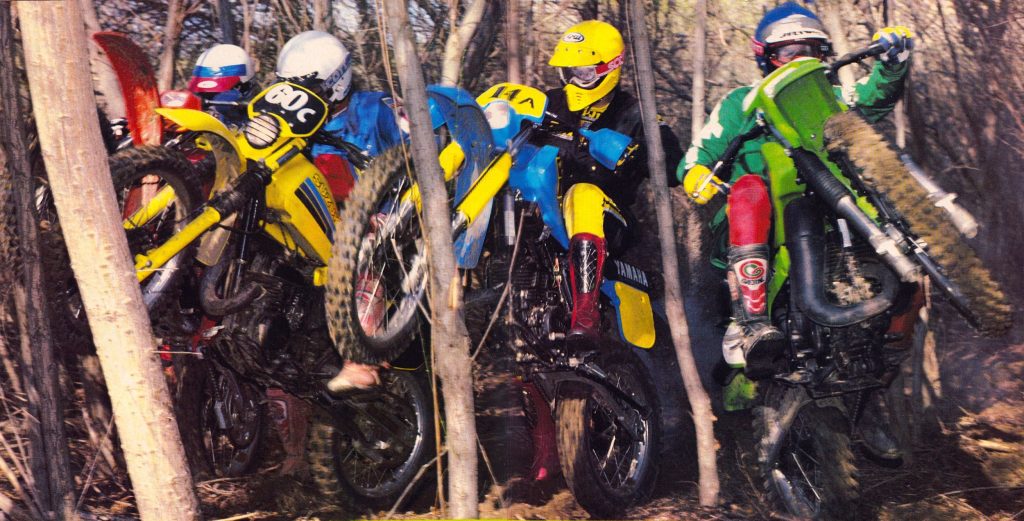 In the early 1980s, there was a great selection of off-road racers available from the Japanese manufacturers. Photo Credit: Dirt Bike
Originally, the ITs were marketed as serious racers aimed at taking on the traditional European powerhouses in prestigious competitions like the International Six Days Trial (from which the IT derived its name), but by the early eighties, it seemed that the Japanese powers were more content to build fun semi-racers that took on their Japanese rivals more than the harder core machines from KTM and Husqvarna. Honda’s XR200R, Kawasaki’s KDX175, Suzuki’s PE175, and Yamaha’s IT175 all played in the same waters on the fringe of serious competition. Yes, they could be raced, and they could certainly win an Enduro in the right hands, but they were as much about fun and ease of use as about outright performance.
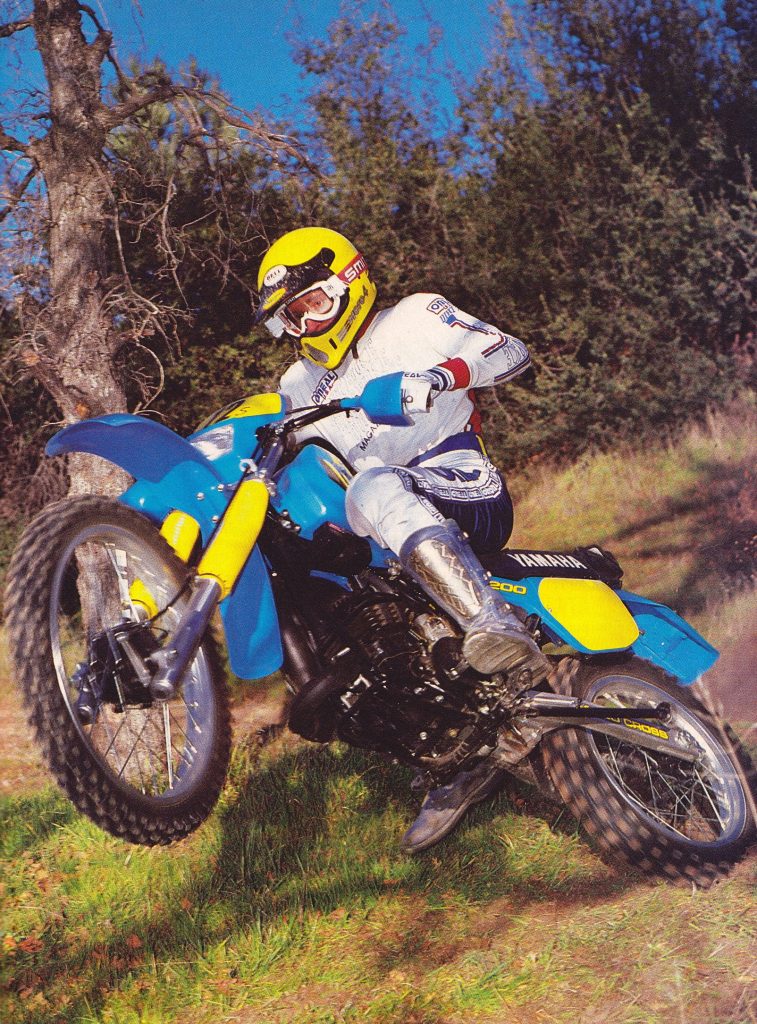 In 1984, Yamaha upgraded the IT significantly with an all-new chassis, upgraded suspension, and a new, larger 195cc motor. Photo Credit: Dirt Bike
That shift away from maximum performance helped keep the manufacturing and development costs down, but it also seemed to sap some of the Japanese manufacturer’s interest in pumping money into the class. By the mid-eighties, Yamaha’s IT490 and IT250, Suzuki’s PE250 and PE175, and Kawasaki’s KDX250 were all out of production in the USA. Some of them remained available in other markets where recycled off-road models could be sold as street-legal dual sports, but here in the US, emissions standards precluded that as an option.
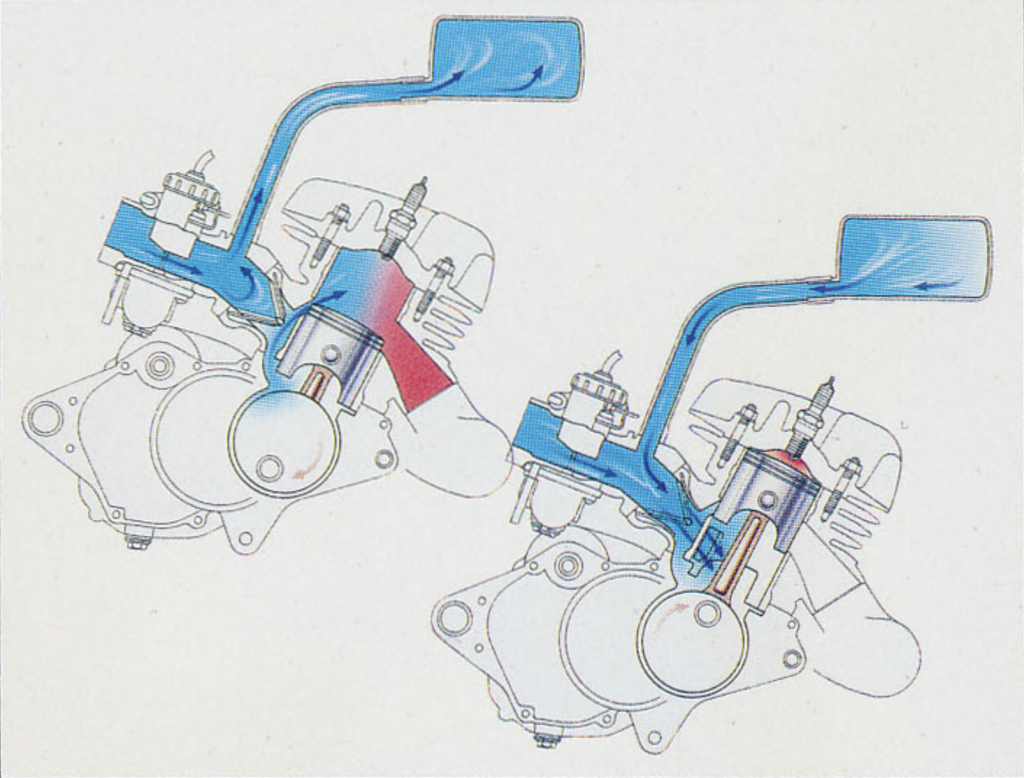 Introduced in 1981 on the YZ250, Yamaha’s Energy Induction System (YEIS) consisted of a small canister mounted to the intake manifold that provided a reserve of fuel and air designed to smooth out the intake pulses and improve low-end throttle response. Photo Credit: Yamaha
While interest among the Japanese seemed to be waning for the Enduro market broadly, they did still feel there was room for lightweight machines that were fun, inexpensive, and sporty in their performance. Honda, which had abandoned their two-stroke Enduro intentions back in 1977 when it retired the MR175, offered a full lineup of four-stroke XRs designed to deliver grins and great reliability. Kawasaki, which had discontinued the four-stroke KLX250 and larger KDX250, continued to put development into their popular KDX200. The little Kawasaki was a cult hit among enthusiasts who prized its nimble handling and gutsy performance. Its 198cc two-stroke mill was super torquey and just fast enough to be competitive if the course was tight and the conditions gnarly.
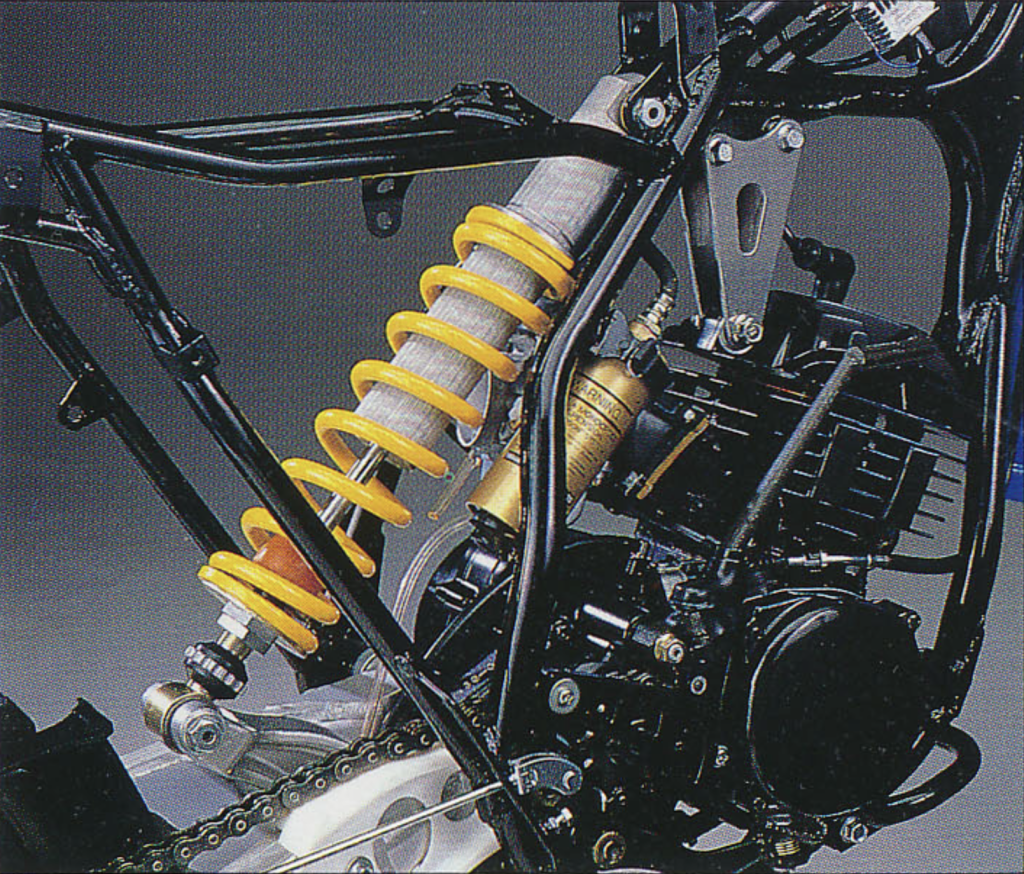 Dating back to 1984, the IT200’s Monocross rear suspension lacked the upright shock positioning and updated linkage the YZ line adopted in 1986. Photo Credit: Yamaha
In the Yamaha camp, the IT175 got the 200 treatment in 1984 with the introduction of an all-new platform that upgraded the middleweight’s performance considerably. This would, unfortunately, be the last major update the IT200 would see. This redesign boosted the IT’s performance by upping the displacement of its two-stroke single from 171cc to 195cc. As before, the motor remained air-cooled for simplicity and continued to lack the variable exhaust valve found on Yamaha’s potent YZs. The updated motor maintained the same 66mm bore as 1983 but added 7mm of stroke to boost torque and overall displacement. Updated porting, a stronger piston, a beefed-up connecting rod, and an all-new exhaust further aimed to boost power and reliability for 1984. Yamaha claimed the motor changes yielded an impressive increase of 2.2 ft-pounds of additional torque over the outgoing motor design.
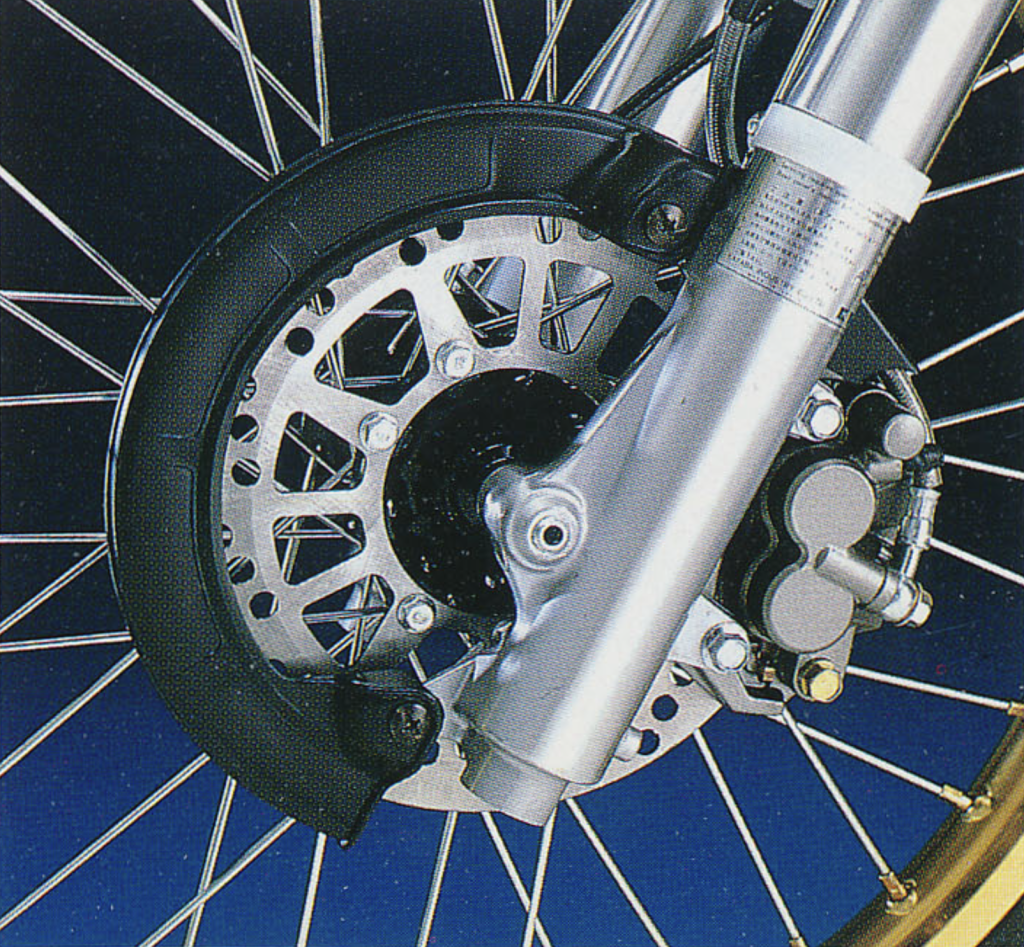 An all-new dual-piston caliper and 230mm front disc for 1986 offered much improved braking performance. Photo Credit: Yamaha
In addition to the larger motor, the IT200 received a completely redesigned chassis for 1984. The new frame retained the same wheelbase as 1983, but repositioned the steering head 20mm rearward. The all-new alloy swingarm was also 20mm longer than the outgoing design. This was done to improve handling by moving the machine’s weight balance forward. The new frame featured a slimmer profile through the middle for increased rider comfort and a complete redesign of the Monocross rear linkage system. The new linkage was similar to the design found on the YZs in 1984, with a lower mounting and more compact layout. The revamped frame and linkage also allowed Yamaha’s design team to mount the shock much lower on the frame for improved handling. With the new shock location, Yamaha was also able to reduce seat height by one inch for improved rider control when the going got tough.
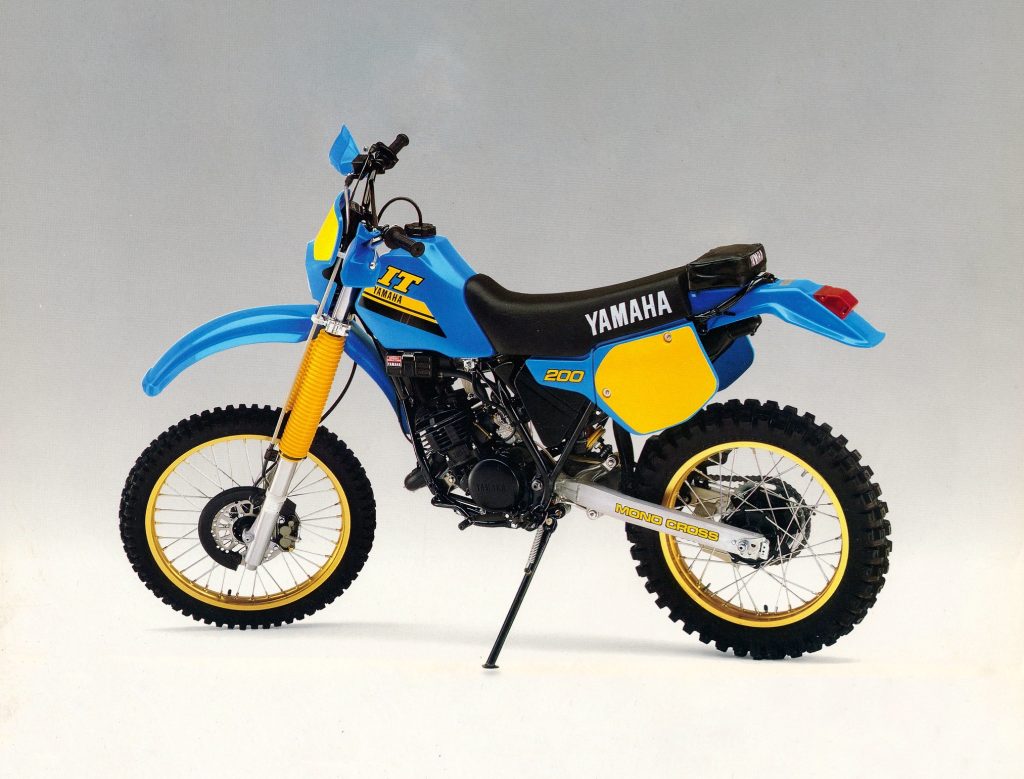 With a nearly three-gallon tank, sidestand, lights, tools, hand guards, and quick-release wheels, the IT200 was ready to mix it up in the woods right out of the crate. Photo Credit: Yamaha
Paired with the redesigned Monocross linkage was an all-new Yamaha-built rear damper that provided 10.6 inches of rear wheel travel. Unlike the fully adjustable shocks found on the YZ line, the IT’s remote reservoir damper offered adjustments for rebound only. There were 35 settings available using an easily accessible dial at the base of the IT’s shock.
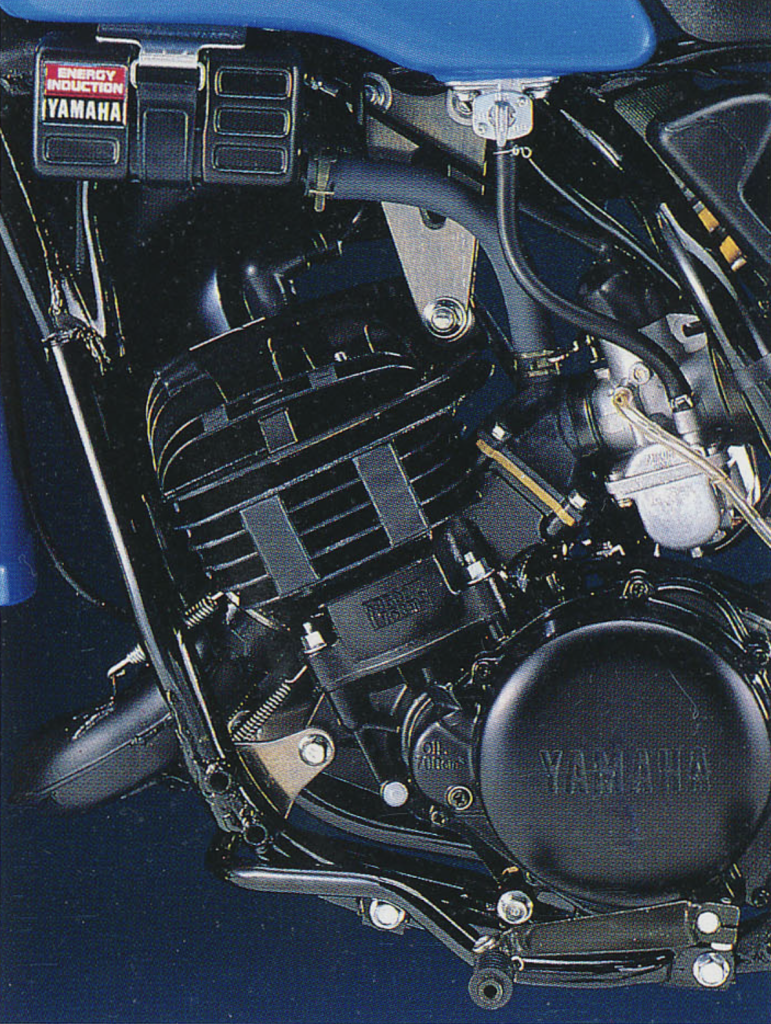 The IT’s 195cc air-cooled single traced its roots back to the mid-seventies, but it continued to deliver surprisingly competitive performance. With the YEIS and a crisply jetted Mikuni mixer, the IT was snappy on the trail and capable of conquering most off-road obstacles with ease. Photo Credit: Yamaha
Up front, the ‘84 IT received a significant upgrade with the move to a 43mm front fork. At the time, the IT’s competition was all using 38mm sliders. These were the same basic forks found on the YZ motocrosser with slightly less travel and considerably softer settings. The addition of the larger stanchions produced a notable improvement in flex resistance and steering accuracy. The new forks offered 10.6 inches of travel (1.2 inches less than the YZ125) with external adjustments available for air pressure and compression damping. Finishing off the updates for 1984 was all-new bodywork that gave the IT a very handsome and modern appearance.
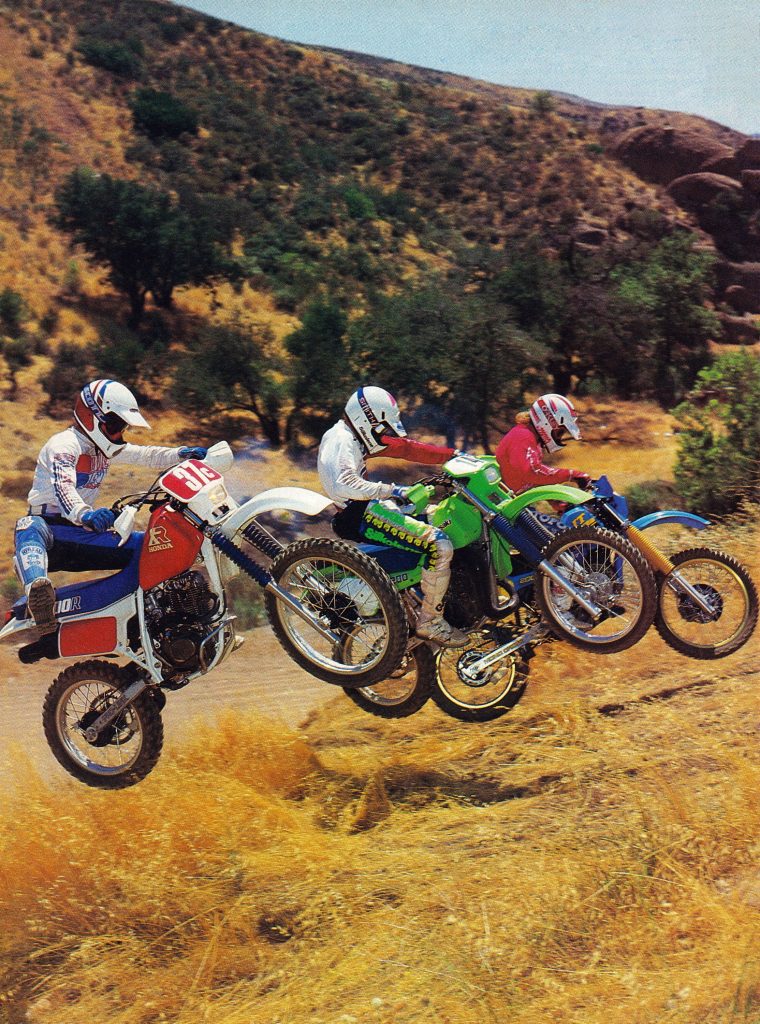 In 1986, the IT200 was the Goldilocks of the 200 division. Honda’s XR200R had the beginner market cornered, and Kawasaki’s new KIPS KDX delivered the performance that faster Enduro pilots preferred. The IT was significantly more potent than the Honda but not as powerful as the power-valved Kawasaki. For many riders, the Yamaha’s combination of simplicity and easy-to-handle power was an excellent fit. Photo Credit: Dirt Bike
For 1985, the only updates made to Yamaha’s middleweight woods warrior were a set of new fiber reeds and some updated tank graphics. This season, the IT lost one of its main competitors when Suzuki decided to shelve its PE175. Long considered one of the best machines in the class, Suzuki had stopped putting serious development into the PE after the 1982 season and never bothered to give it the 25cc boost its blue and green competitors received. This left Yamaha’s IT200 and Kawasaki’s KDX200 as the only remaining two-stroke Enduro competitors from the Japanese. Honda continued to try and convince riders that the four-stroke XR200R was a serious Enduro machine, but its lack of horsepower compared to its rivals made that a hard sell to anyone serious about winning in the woods.
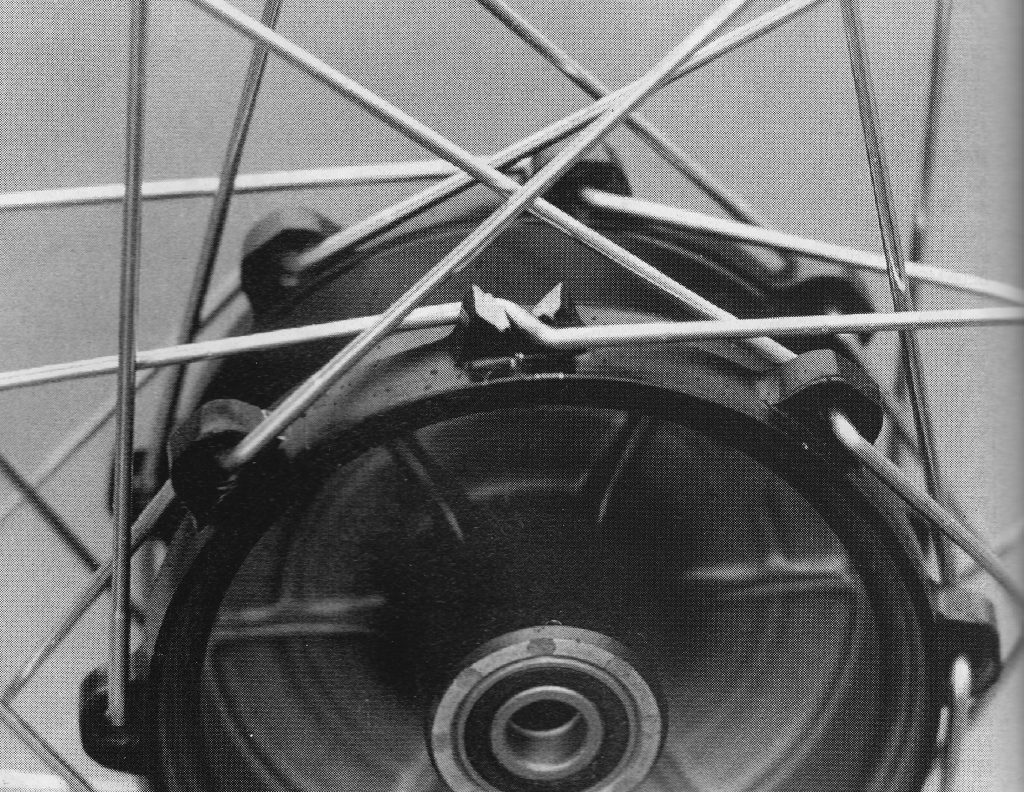 Yamaha used their notoriously problematic Z-spokes on both the front and rear wheels of the IT, but they proved less prone to failures on the less demanding IT than they were on the motocross machines. As long as you did not let the spokes get too loose and kept your sky shots within reason, the IT’s quick-change wheels were reliable and trouble-free. Photo Credit: Mecum
For 1986, the IT200 marched into what would turn out to be its last season with a small but significant upgrade. This season, Yamaha saw fit to retire its mediocre single-leading-shoe front drum brake in favor of a much-appreciated dual-piston disc stopper sourced from the YZ line. This stopper was a great improvement over the barely adequate drum used in the previous two seasons. Unlike the old drum, this new binder was powerful enough to lock the front wheel with a single finger and unaffected by the mud, water, and guck common to woods riding back East. Aside from this upgrade and some very minor tweaks to the tank graphics, the IT was the same bike it was in 1984.
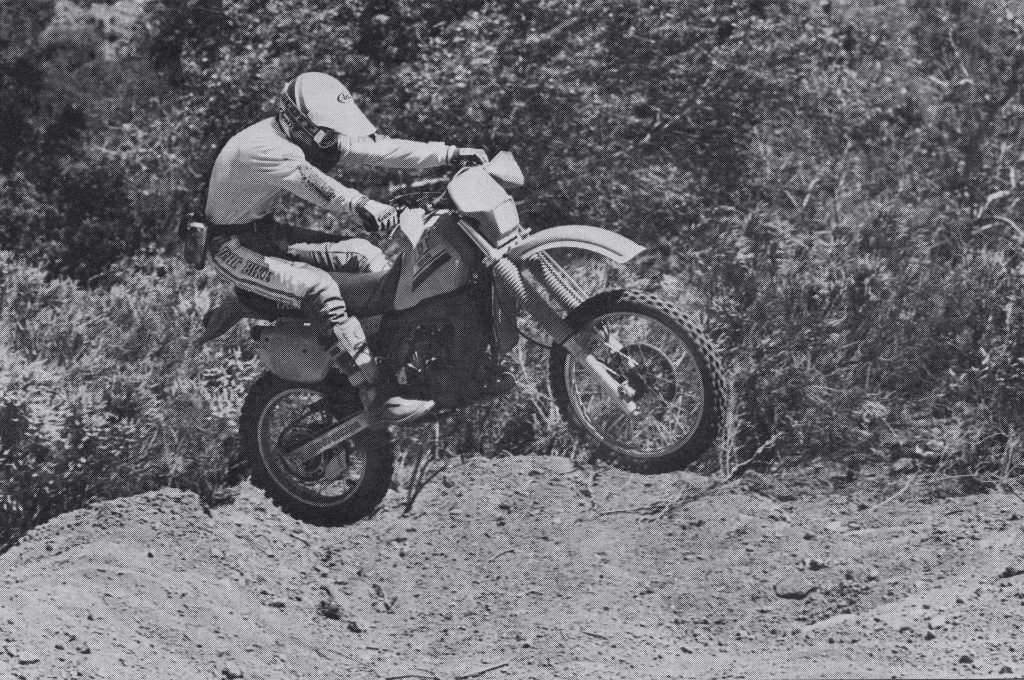 With its peppy two-stroke motor and light 220-pound weight, the IT was a willing flyer when the opportunity for a little airtime arose. Photo Credit: Dirt Bike
While the lack of serious changes for ‘86 was disappointing to many blue bark-busting enthusiasts, the IT200 remained a very competitive Enduro mount. As before, the IT continued to use a 195cc air-cooled single for its propulsion. This motor could trace its roots all the way back to the IT and DT motors of the 1970s, but it was far from outdated. The engine still lacked the YPVS (Yamaha Power Valve System) found on the YZs, but it did an admirable job of putting every one of its 22.5 horsepower to the trail. With its 34mm Mikuni carb and Yamaha Energy Induction System (YEIS), the motor cranked out tons of low-to-mid grunt. It was super responsive, and there was always a bit of extra snap on tap to loft the front end over a rock or tree in the trail. On top, it ran out of steam a bit, but it could be revved if a steep hill or deep soil demanded it. Shifting remained notchy (a Yamaha staple of the time), but the engagements were solid if somewhat reluctant. With its six-speed transmission there was a gear for every situation, and the IT’s motor was incredibly versatile for such a small displacement.
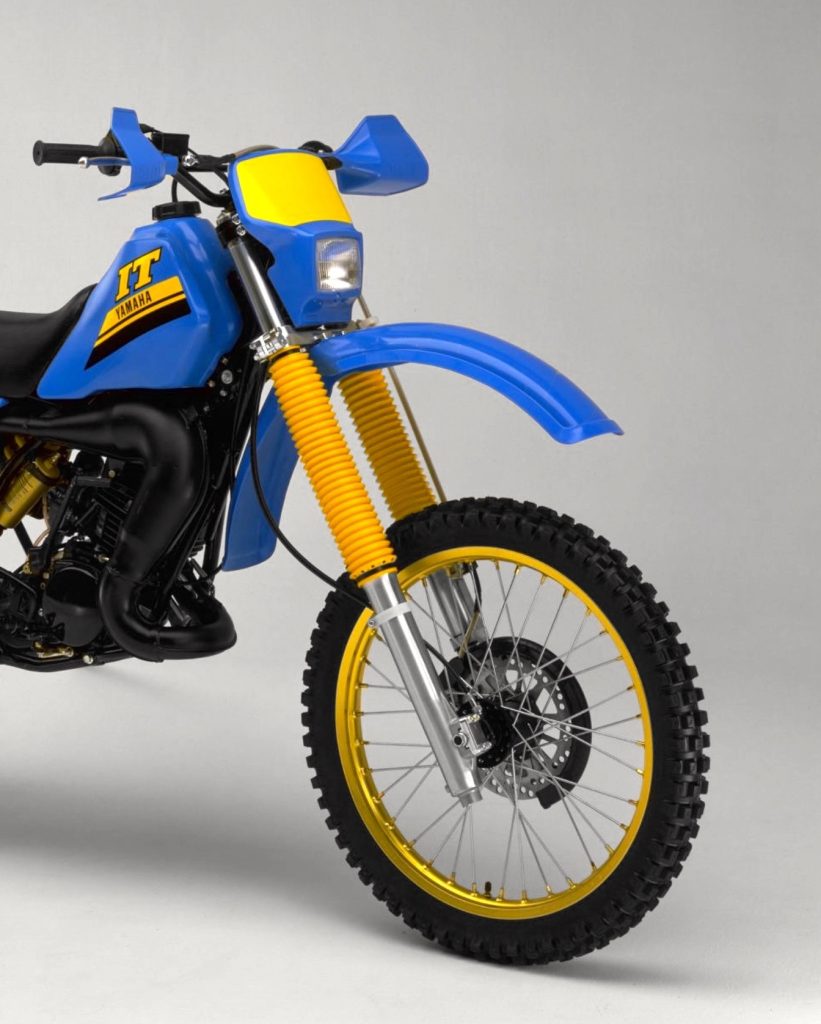
In 1984, these 43mm Kayaba forks were the class of the 200 division. By 1986, that gap had lessened, but the IT’s forks remained excellent at taming the trail and keeping the rider on time. Photo Credit: Yamaha
While the IT’s motor remained quite competitive, it was no longer the torque king of the 200 division. In 1986, that crown fell to the revamped KDX200 and its new power-valved motor. The addition of the KIPS (Kawasaki Integrated Power-valve System) beefed up the bottom-end power of the KDX’s 198cc mill considerably, and the difference was noticeable on the trail. The KDX was much snappier out of the hole than the 1985 version and featured a strong midrange and decent top-end hook. In an outright drag race, the KDX easily pulled one to two bike lengths on the IT200 and even more on Honda’s plucky but underpowered XR200R. Of course, this was less of a concern in the woods than it would have been on a motocross track, but experts naturally gravitated to the more advanced and powerful Kawasaki in 1986.
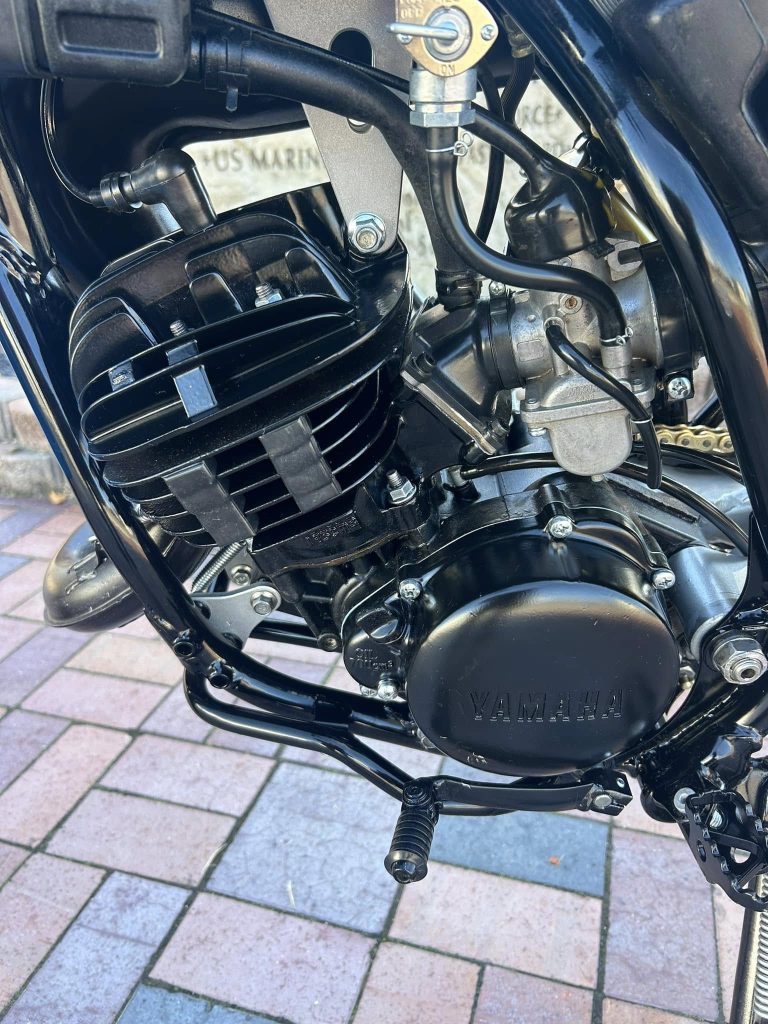 While not as powerful as the KDX’s new KIPS mill, the IT’s motor was still a solid performer. It was super torquey down low, with excellent response and a strong mid-range surge. There was not a lot of power on top, but it worked very well in most off-road situations. Photo Credit: Mecum
On the suspension front, the IT was a bit of a mixed bag in 1986. The Yamaha’s 43mm Kayaba forks were a few years behind the latest motocross offerings, but they still did a great job of smoothing out the trail. They were plush and well-damped for their intended purpose. In their element, they did a great job of gobbling up rocks, roots, and ruts. Big jumps and deep whoops bottomed them out, so stiffer springs were a good idea if you were more interested in bombing across the desert than dodging trees.
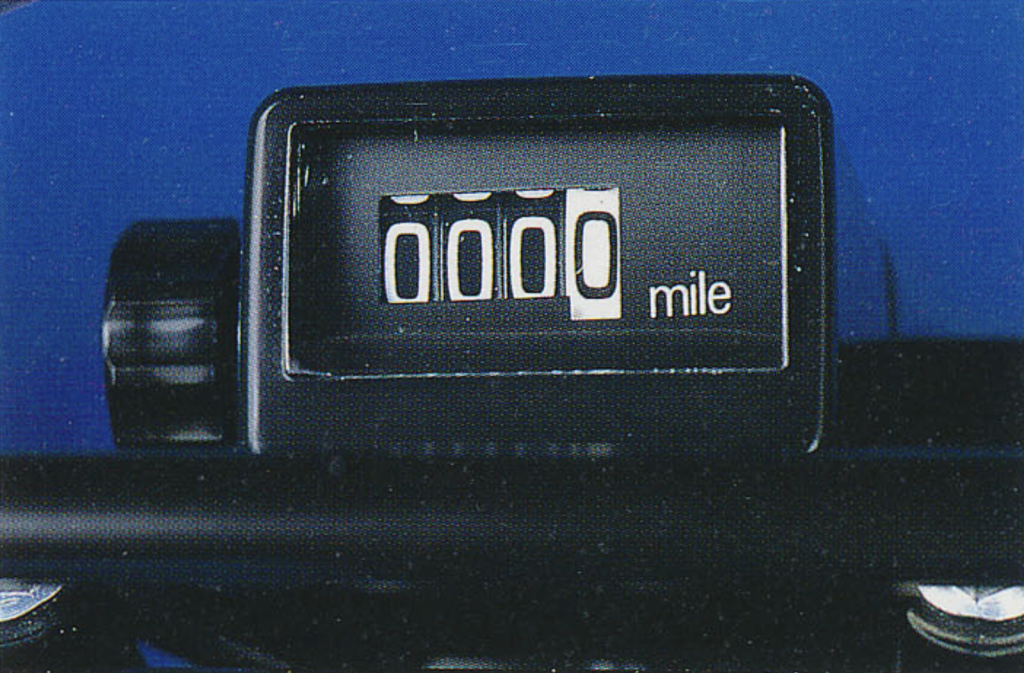 An odometer was standard equipment for riders who wanted to race their IT in Enduro competition. Photo Credit: Yamaha
The previous two seasons, the IT’s 43mm forks had been a considerable advantage over the 36mm and 38mm forks found on the competition, but for 1986, that advantage was nullified somewhat. The XR200R continued to use a pair of spindly 36mm sliders, but the all-new KDX finally upgraded to motocross-spec 43mm legs. This upgraded the Kawasaki’s steering precision and ability to charge through rough sections considerably. The new Kawasaki forks were solid performers and no longer a disadvantage versus the Yamaha. Most testers rated the two forks equally effective at taming the trail and far above the comically soft Honda silverware.
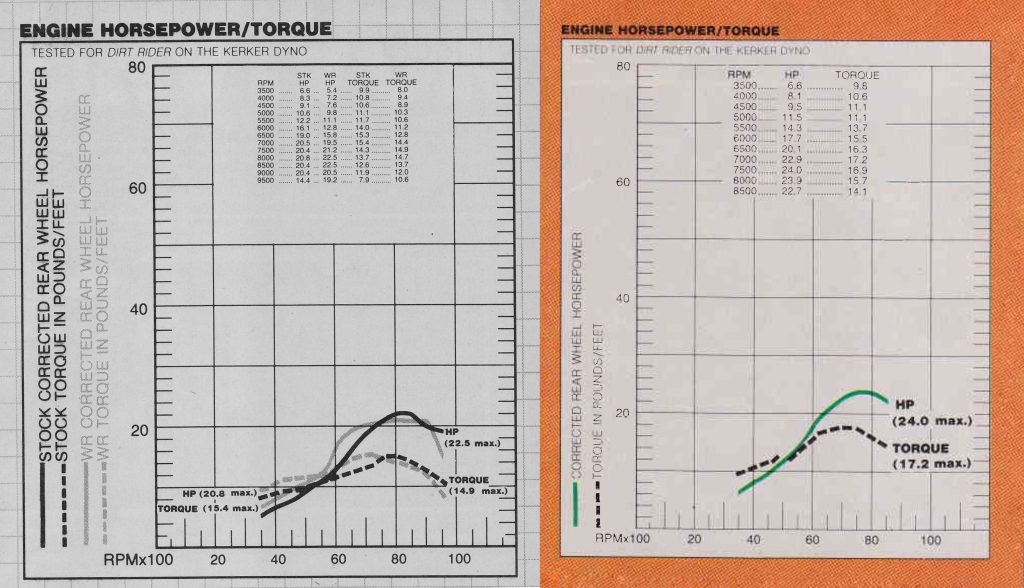
Kawasaki’s new KIPS motor (right) put out 1.5 more horsepower and 2.3 ft pounds more torque than the IT (left) in 1986. While this did not render the IT uncompetitive in the woods, it was a noticeable advantage that more experienced riders appreciated. Photo Credit: Dirt Rider
Out back, the situation was not as kind to the IT. The Yamaha-built damper was considerably better than the pogo stick found on the Honda XR200R, but a notable step below the performance of the revamped Uni-Trak found on the ’86 KDX. The IT’s damper was plush and comfy when puttering around the back forty, but it became much less refined if you bumped things up to a race pace. Once you upped the intensity, the shock quickly reached the limits of its capabilities. It bottomed out on hard hits and rebounded suddenly on G-outs. Big air and serious road jumps were inadvisable if you valued the health of your ankles. For tight woods work, it functioned well enough, but if you planned on riding out West, a shock upgrade was advisable.
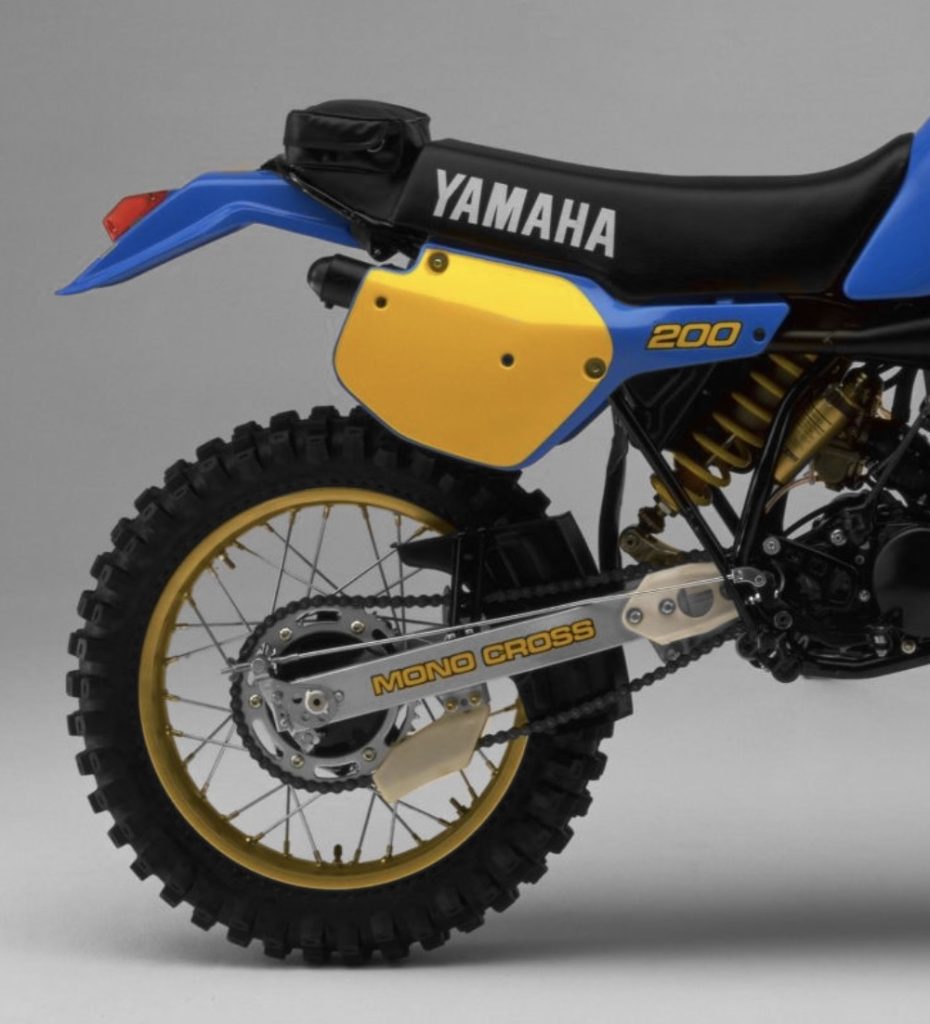
The IT200’s rear shock was probably the weakest link in its overall package in 1986. It worked well enough for play riding and light off-road exploring, but if you planned on racing your IT, an upgrade through the aftermarket was advisable. Photo Credit: Yamaha
On the handling front, the IT200 was a nimble partner in 1986. The motocross-inspired chassis and light 220-pound weight gave the blue bomber a flickable feel in the air and on the trail. It was the lightest of the three Japanese Enduro competitors, and that paid major dividends when the trail got tight and gnarly. The IT turned very well under most circumstances and was stable at speed aside from the occasional Yama-hop from its overworked rear damper. There was not even a hint of headshake on the IT, and the Yamaha was an excellent jumper as long as you kept its soft stock suspension settings in mind when sizing up the leap.
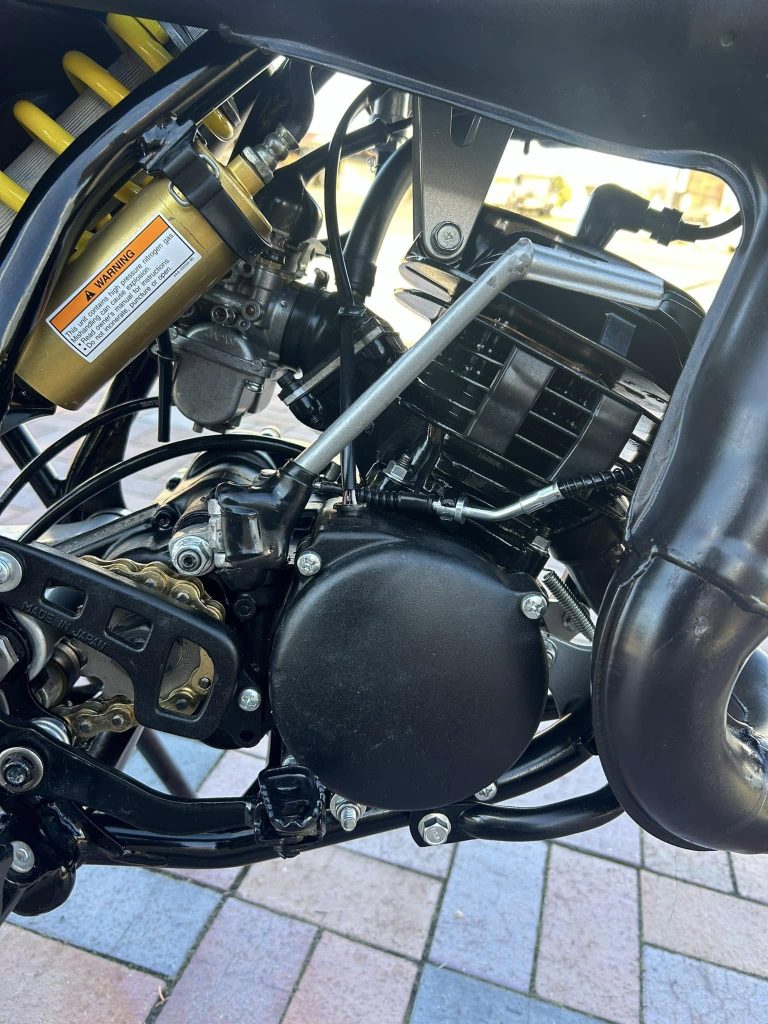 The IT200 was a super easy and reliable starter in 1986. The motor rarely took more than a kick or two to light, and the starter was well placed and did not send your boot into the footpeg at full extension. Photo Credit: Restoration X Cycles
On the detailing front, the IT200 was a nicely put-together Enduro machine. Its motor was simple to work on and as reliable as a claw hammer. The lack of a power valve cost it some ponies, but it did make engine servicing far less complicated than on the Kawasaki and four-stroke Honda. The transmission and clutch were not the smoothest in the class, but they were durable and took abuse well. The 34mm Mikuni never bogged or burbled, and the IT was happy to sit and idle all afternoon if necessary. The Yamaha was also an easy starter, requiring only a kick or two, hot or cold. The stock exhaust produced good power out of the box and delivered a pleasantly subdued exhaust note that kept neighbors from calling the Federales. There was still a bit of fin clatter from its air-cooled top-end, but the standard rubber dampers kept most of the ringing under control. The Yamaha also vibrated noticeably less than the slightly buzzy Kawasaki when the motors really got spinning.
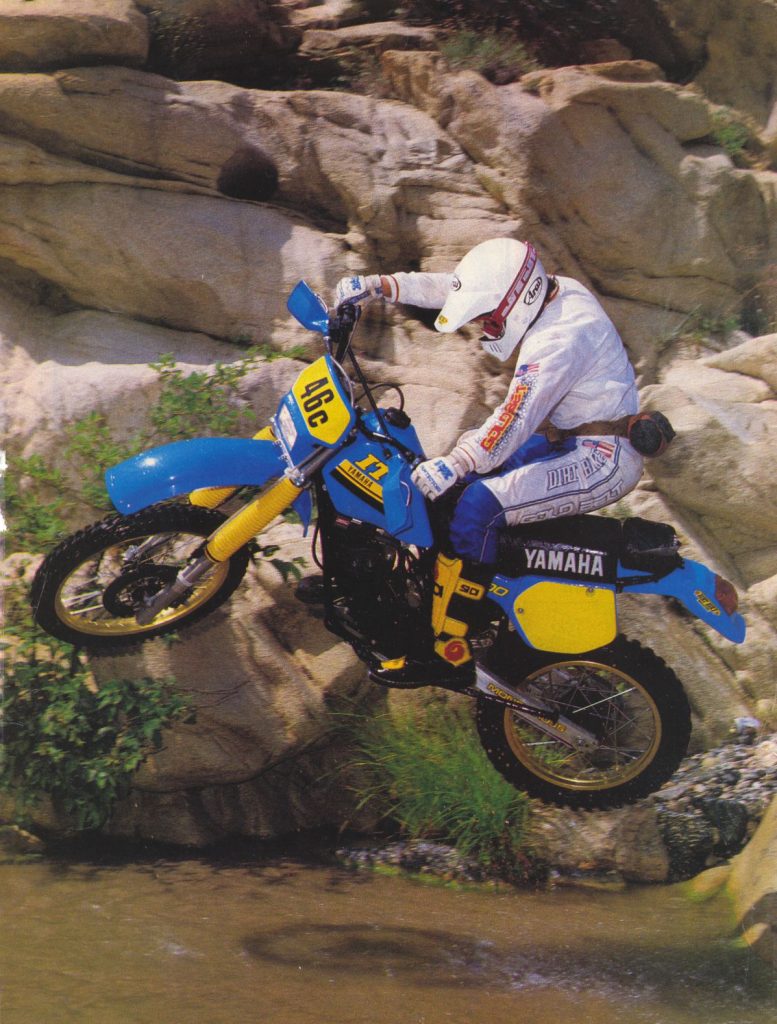 Big fun on the trail was what Yamaha’s IT200 was all about. Photo Credit: Dirt Bike
Also on the winning side of the ledger for ’86 was the IT’s new front disc, which was a tremendous improvement in braking force and feel over the drum it replaced. The rear brake was no standout, but worked at least as well as the similar drums found on the Kawasaki and Honda. Toolless filter access, a set of quick-release wheels, and a snail-type chain adjuster made servicing the IT on the trail a breeze. The standard odometer, lights, tool kit, and hand guards had the IT ready to chase checks right out of the box.
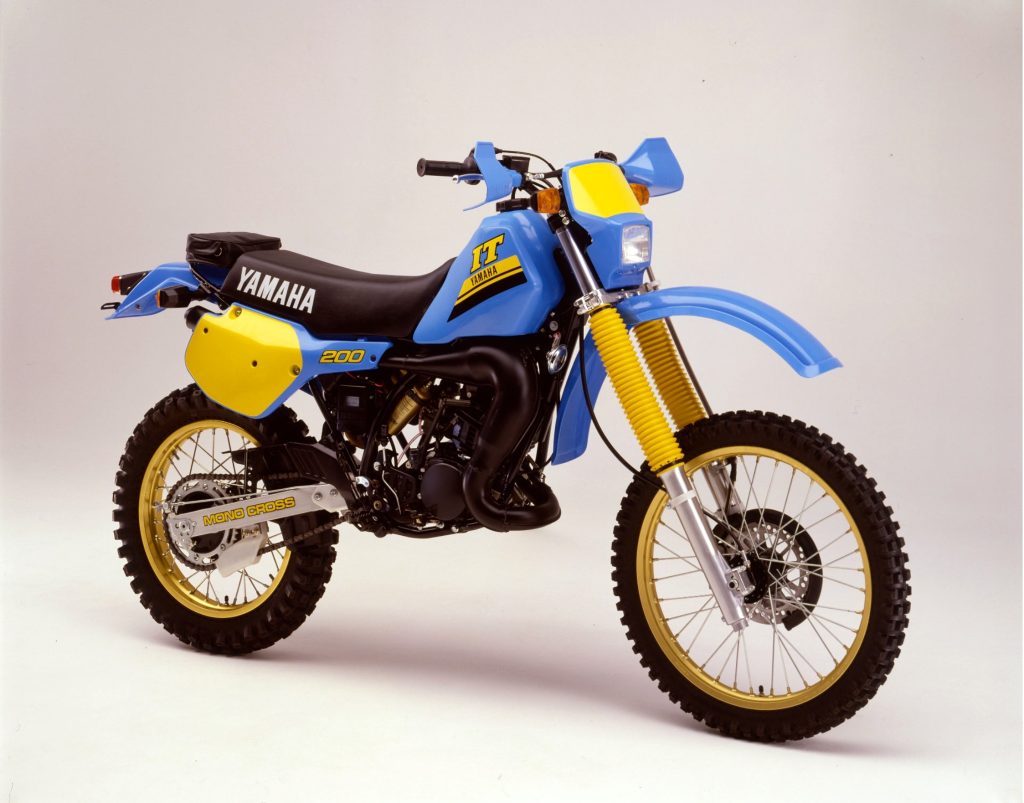
Here in the US, the IT200 was strictly an off-road only machine, but in many parts of the world with more lax emissions standards, the IT was street legal and sold with different lights and turn signals. Photo Credit: Yamaha
On the blown checks side of the route sheet for 1986 were the IT’s ergonomics, which did not seem to really please anyone. The scooped-out stock seat and bulbous 2.9-gallon tank locked riders in place and made it difficult to slide back in the rough and forward in the turns. The low seat height was a bonus in really gnarly conditions, but the low-slung saddle and tall pegs made the bike feel quite cramped to many. The bend of the stock bars and hand-chewing stock grips also got a big thumbs down from everyone but the aftermarket. The kickstand, while convenient, tended to get in the way quite often, and many riders found it more annoying than it was worth. The stock chain was also of questionable quality and not long for this world if the IT was ridden back East in the mud. Switching to a Sidewinder or other high-quality O-ring chain and sprocket combo was advisable if one hoped to keep the wheels spinning properly.
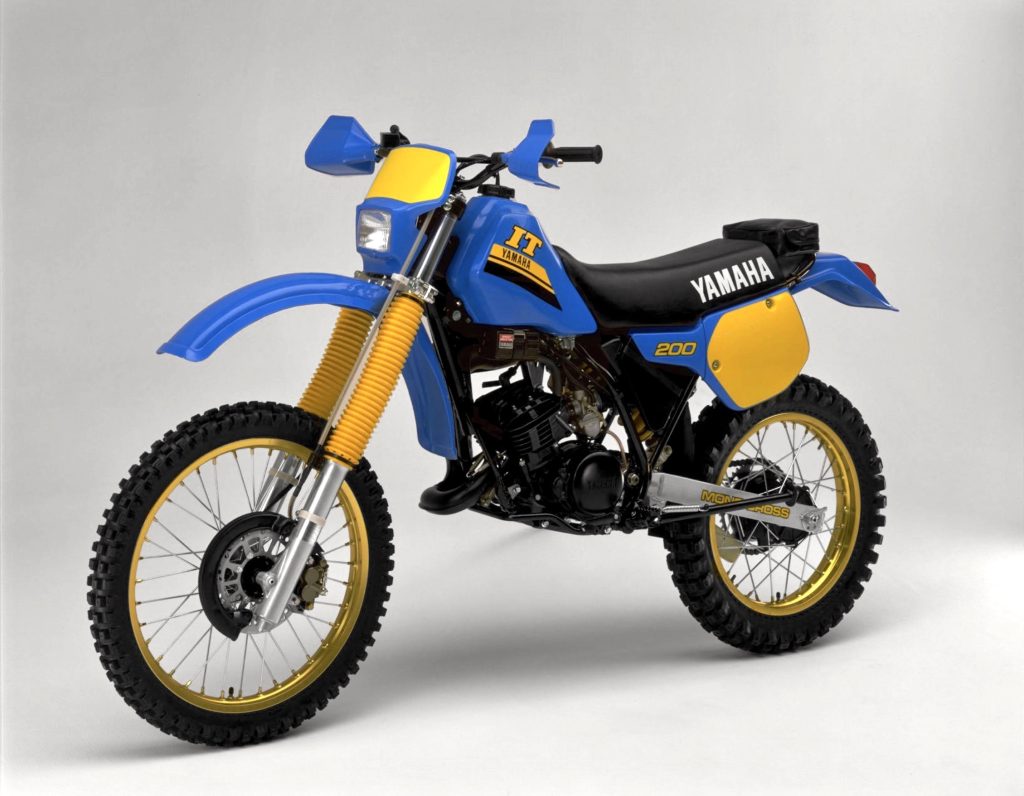
Simple, reliable, beautiful, and potent enough to be fun for beginners and pros, Yamaha’s 1986 IT200 was a great machine whose time was unfortunately coming to an end. With the retirement of the IT series in 1986, Kawasaki was left as the only two-stroke Enduro in the 200 division. Three years later, Yamaha would introduce the YZ250WR, but its focus was far more serious than the do-it-all IT and KDX models. Photo Credit: Yamaha
Overall, the 1986 IT was a very solid competitor despite its three-year-old design. As a racer, it was a tick or two behind Kawasaki’s more advanced KDX, but it was still more than capable of winning in the 200 class with only minimal upgrades. It was far more capable than Honda’s XR200R while only being a bit more intimidating than the little thumper for newbies. If you were looking to score ISDE gold, then you might have been better off going green, but for the majority of riders interested in a lightweight, reliable, and easy to work on occasional racer, it was hard to go wrong choosing blue in 1986.