
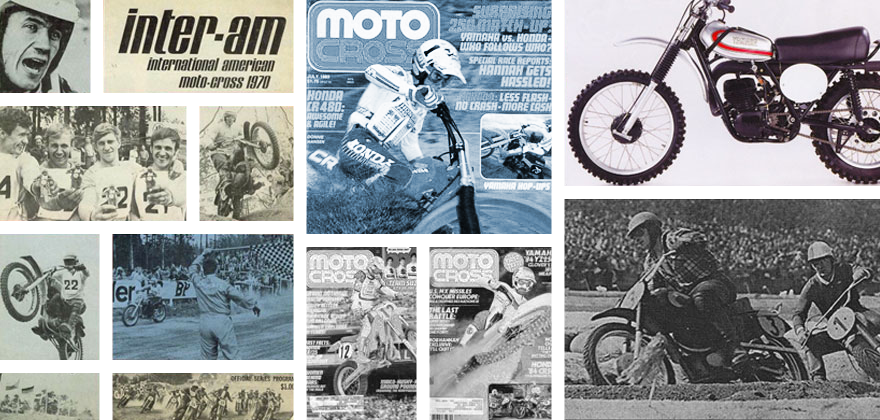

For this edition of Classic Ink, we are going to take a look back at some classic bike hauler ads from the heyday of mini trucks in America.
If there is one thing we can all agree on in these contentious times, it is that dirt bikes and trucks go together like peas and carrots. The two are a perfect match for each other, and the marketers in Detroit and Japan know that well. While bikes have gotten considerably more expensive over the last forty years, they can’t hold a candle to the cost, size, and option bloat that has afflicted the truck market over the last four decades. Today’s trucks are massive three-ton behemoths that cost a fortune and are often more about showing off than any sort of real utility.
While the success of Ford’s Maverick shows there is still a market for an affordable small truck, the market long ago moved away from the practical and inexpensive mini trucks of our youth. Hopefully, the affordable mini truck will make a comeback, and today’s riders will get to experience the joy of throwing their bike in the bed without needing a ladder to climb in. Leather, massaging seats, and 30” screens are certainly nice, but nothing will ever beat the joy of throwing your dirt bike in the back of a cheap little 2WD S-10 and heading off to the track or trail to rip it up with your buddies.
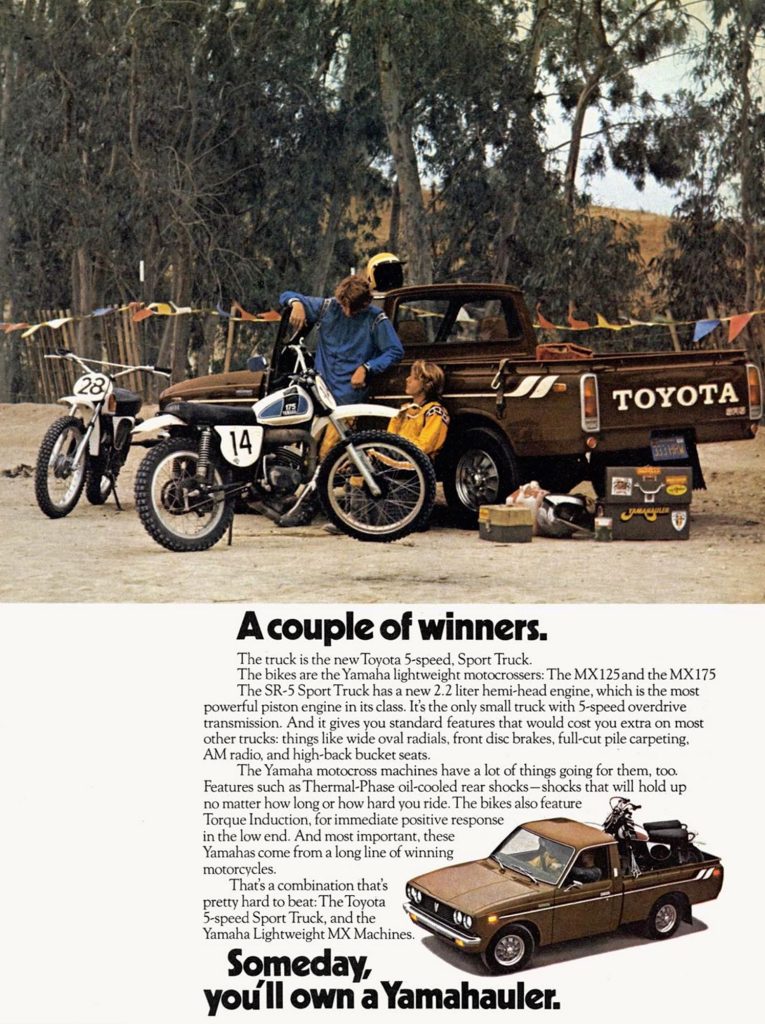 Toyota has been a friend and partner of the motocross industry for decades, and this ad from 1975 for Toyota’s new 5-speed Sport Truck and the new MX125 and MX175 is a great example of the synergy between the two.
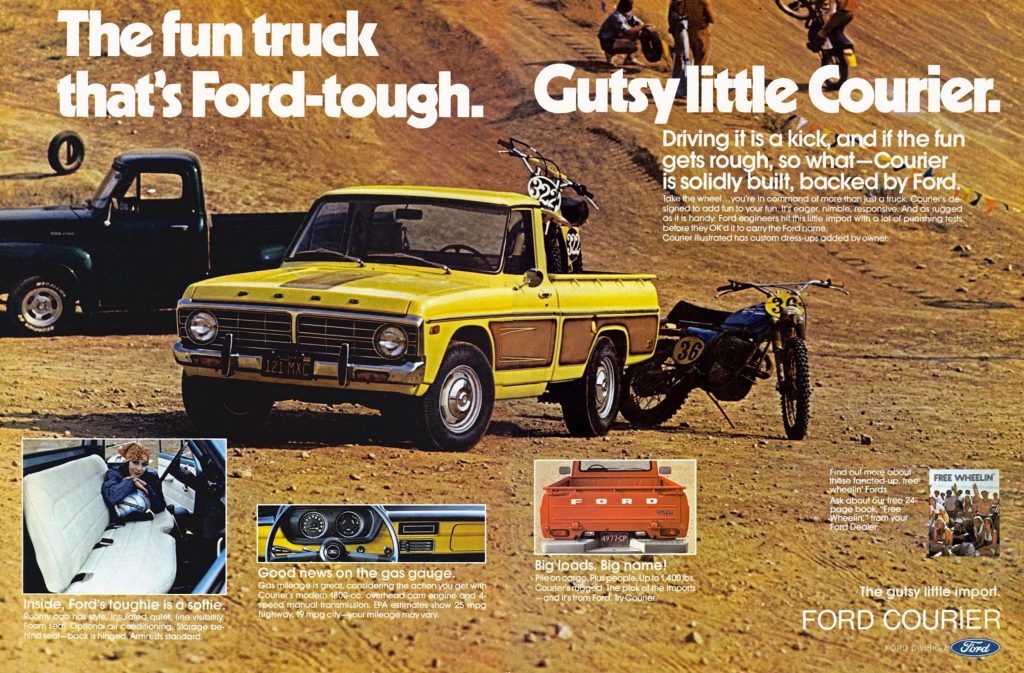 In the mid-seventies, Ford introduced a Mazda-built small truck designed to go toe-to-toe with the popular small trucks being offered by Toyota and Datsun (Nissan). The all-new Ford Courier promised potential buyers a “gutsy little truck” with lots of capability and excellent efficiency. It probably did not hurt that they stole Mark Barnett’s #322 RM for the ad as well.
 For 1976, Toyota added a longer bed to their sporty 5-speed SR-5 Pickup so you could pack three bikes into the bed on your way to Saddleback.
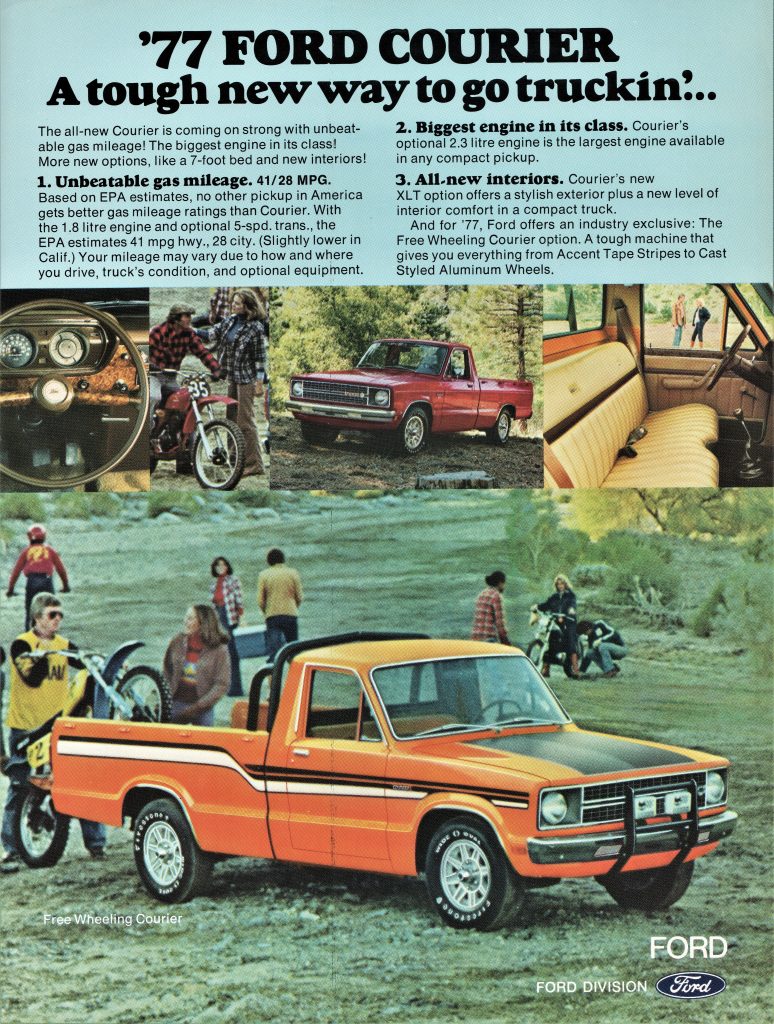 In 1977, Ford/Mazda updated the Courier with a longer box and attractive new styling. With its optional 2.3-liter powerplant (the LARGEST in the class!), the Courier put 90 bike-hauling horses to the pavement.
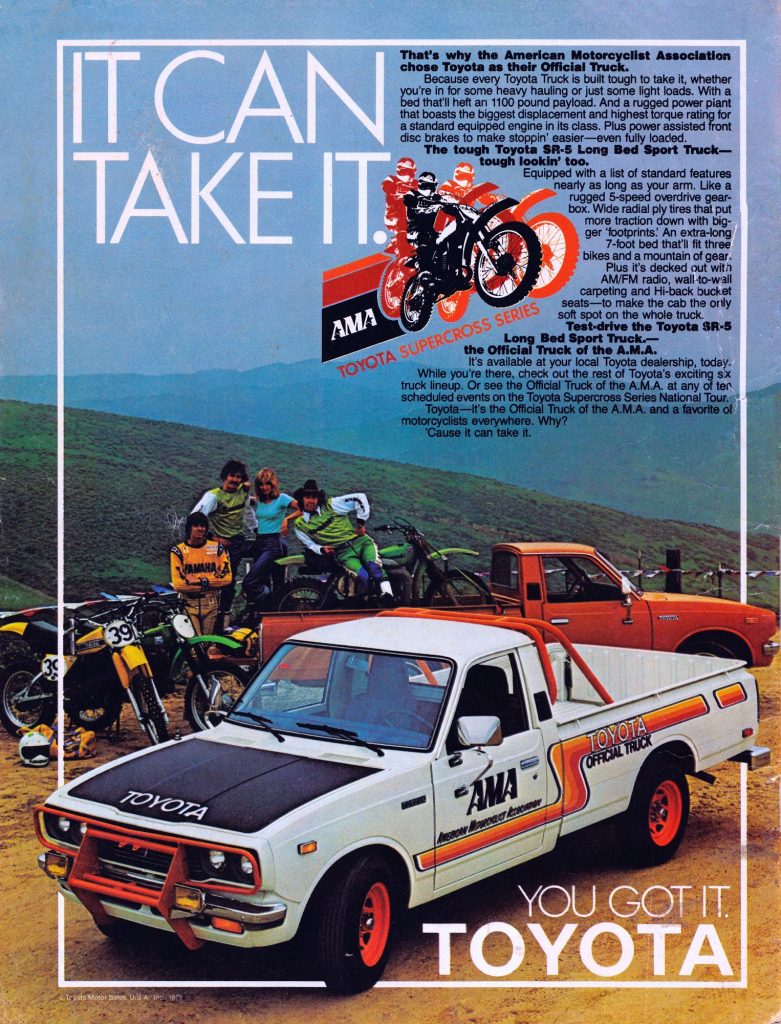 In 1978, Toyota was the official truck of the AMA Supercross Series. I would absolutely love to have this truck now, but I don’t think Toyota actually sold a replica of this truck in ’78.
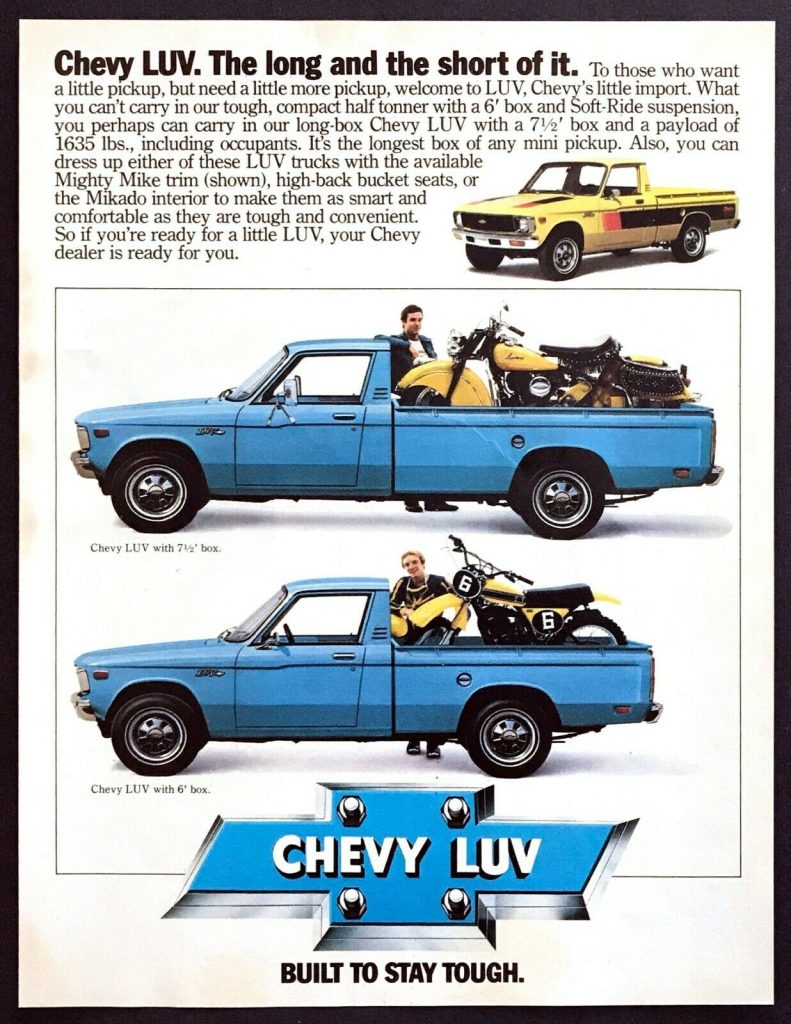 Never one to miss out on the fun, Chevrolet commissioned their Japanese partner, Isuzu, to build a mini truck for the US market in 1979. The new LUV (Light Utility Vehicle) was offered in short and long box trim with an impressive 1635 pounds of available payload and a 75 horsepower 1.8-litre in-line four as its sole engine choice.
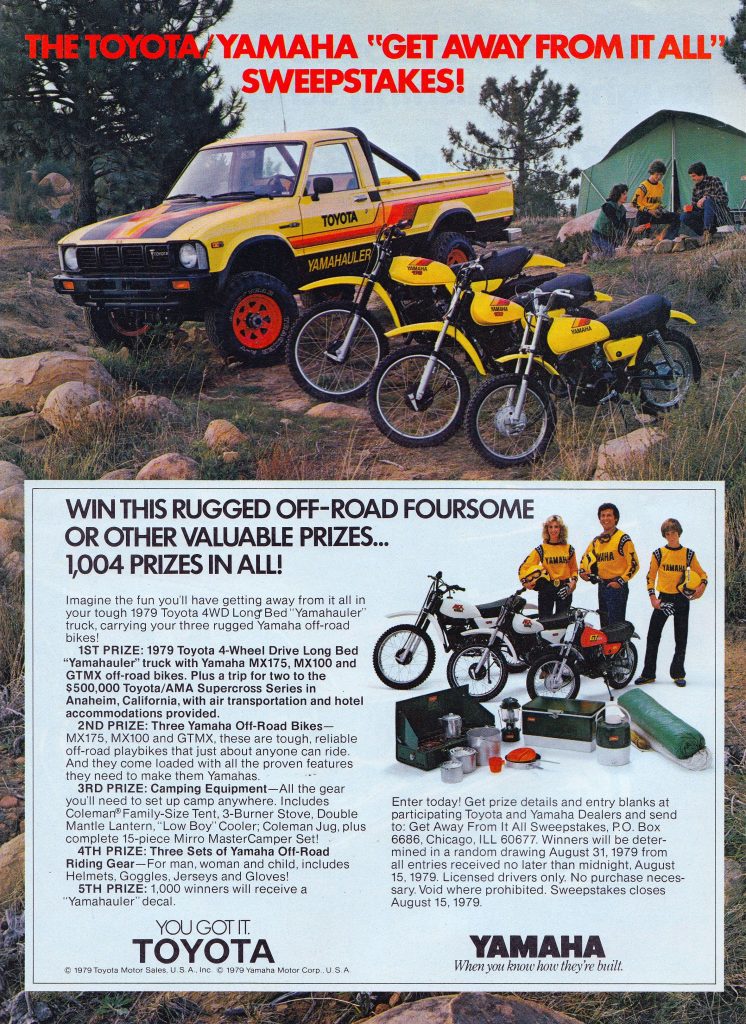 This 1979 Toyota 4×4 “Yamahauler” pickup is the epitome of seventies mini truck cool. Ad in the three Yamaha trail bikes and you had the perfect off-road camping adventure.
 In 1979, Nissans were still called Datsuns here in the USA. Interestingly, Datsun and Toyota did not deem their trucks worthy of an actual name here in the US, preferring to just refer to them as “Truck” at the time.
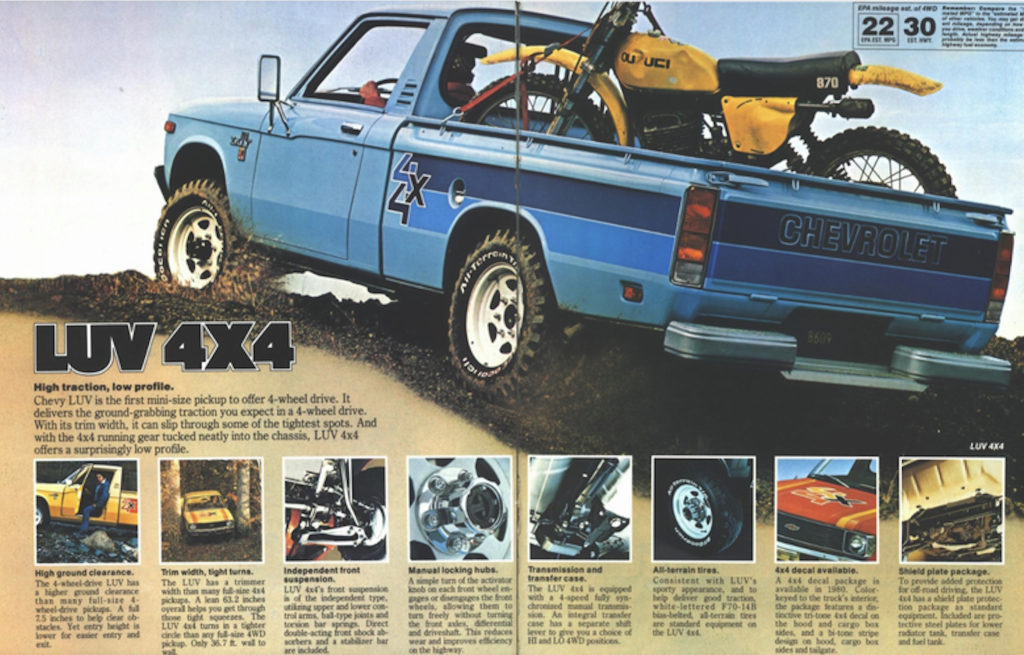 In 1980, you could get your Chevy LUV in a handy 4×4 version. I’m less certain about the availability of the one-off “Ouzuci 870” big-bore beast in the bed of this LUV.
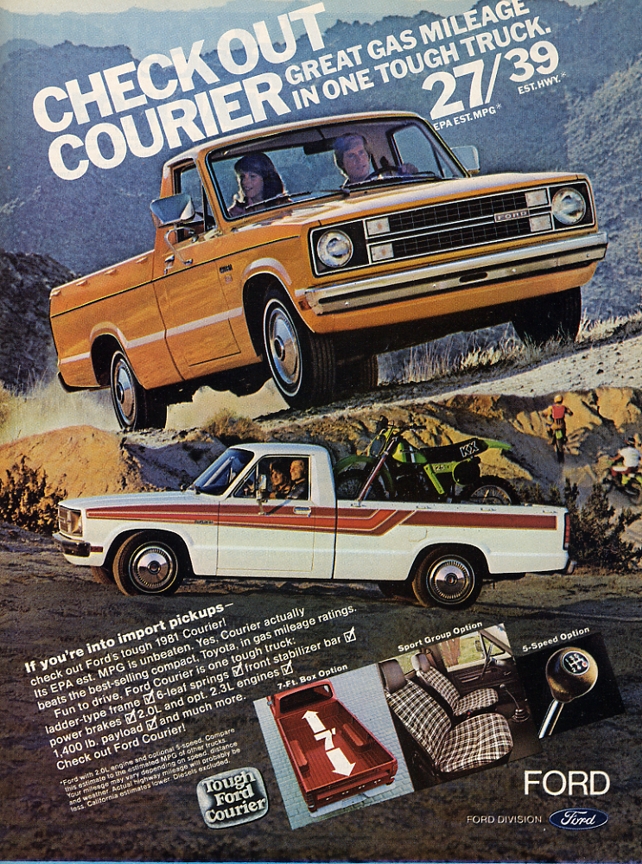 In 1981, the Ford Courier was still currying KX250s through the back country, and it was a sign of the times that the EPA rating was the most prominent feature mentioned. The gas crisis had shifted the focus of most ads of the time from bragging about horsepower and speed to crowing about miles per gallon. One thing they should not have crowed about was that god awful tartan vinyl interior. They should have left that one in the 1970s.
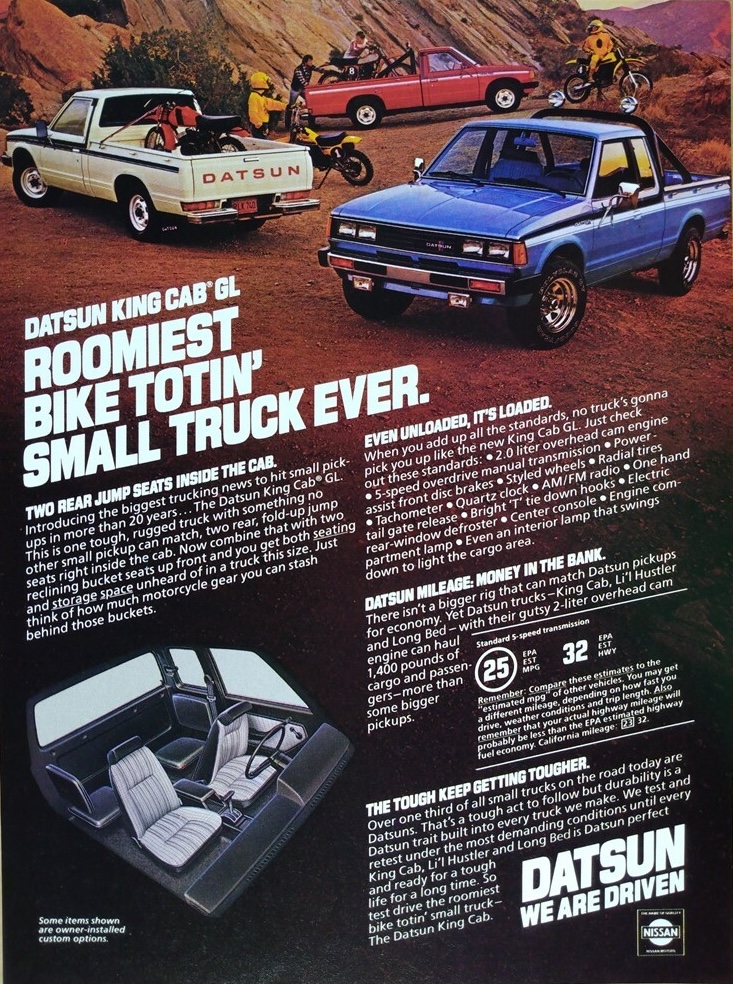 In 1980, Datsun introduced an all-new mini truck to take on the US market. The redesigned hauler offered updated styling, a factory 4×4 option (a first for Nissan), and a new “King Cab” model that expanded room inside the cab substantially.
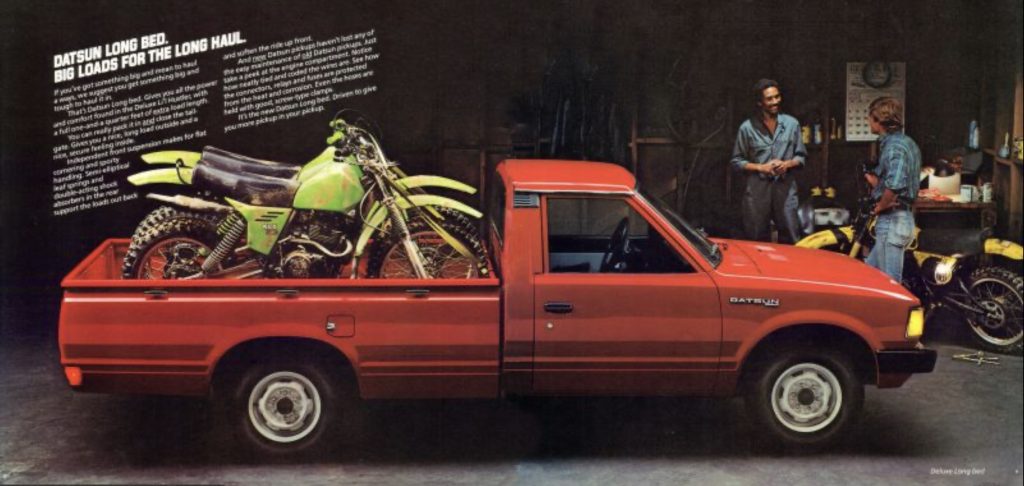
Kawasaki’s KLX250 thumpers never seemed to catch on like Honda’s iconic XRs, but they did seem to be a favorite of someone in Datsun’s marketing department.
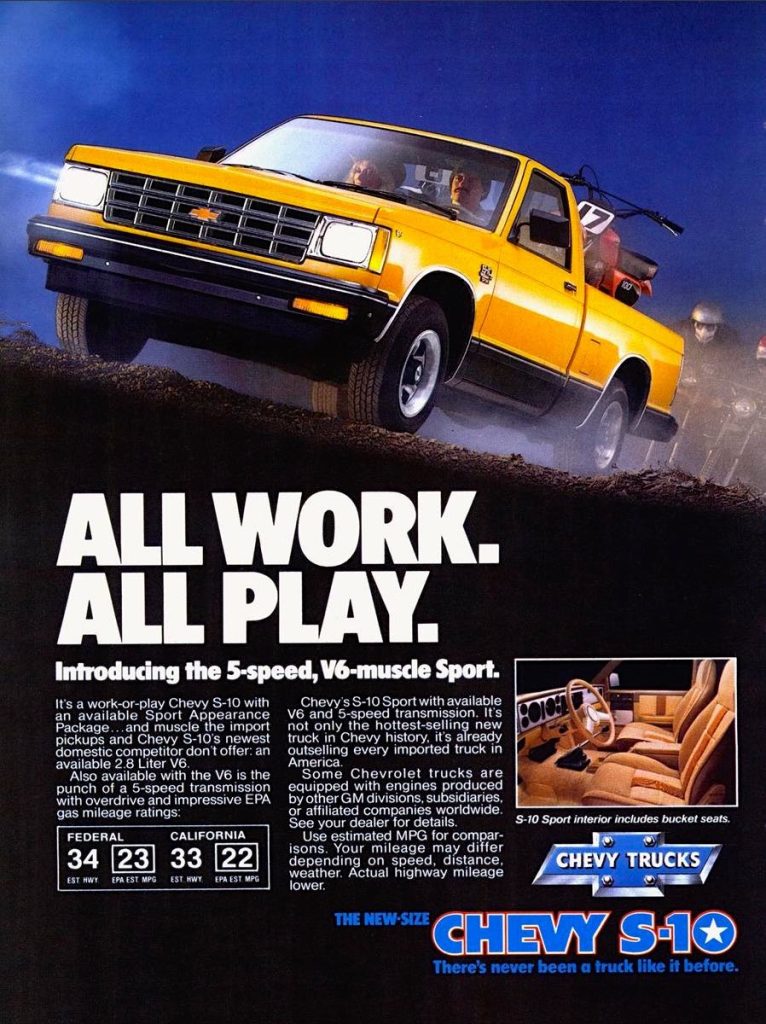 In 1982, Chevrolet retired the Isuzu-built LUV in favor of the all-new Detroit-designed S-10. The S-10’s 2.8-liter V6 was the biggest motor and only V6 in the class at the time, but its underwhelming 110 horsepower was a testament to just how choked off these early eighties motors were.
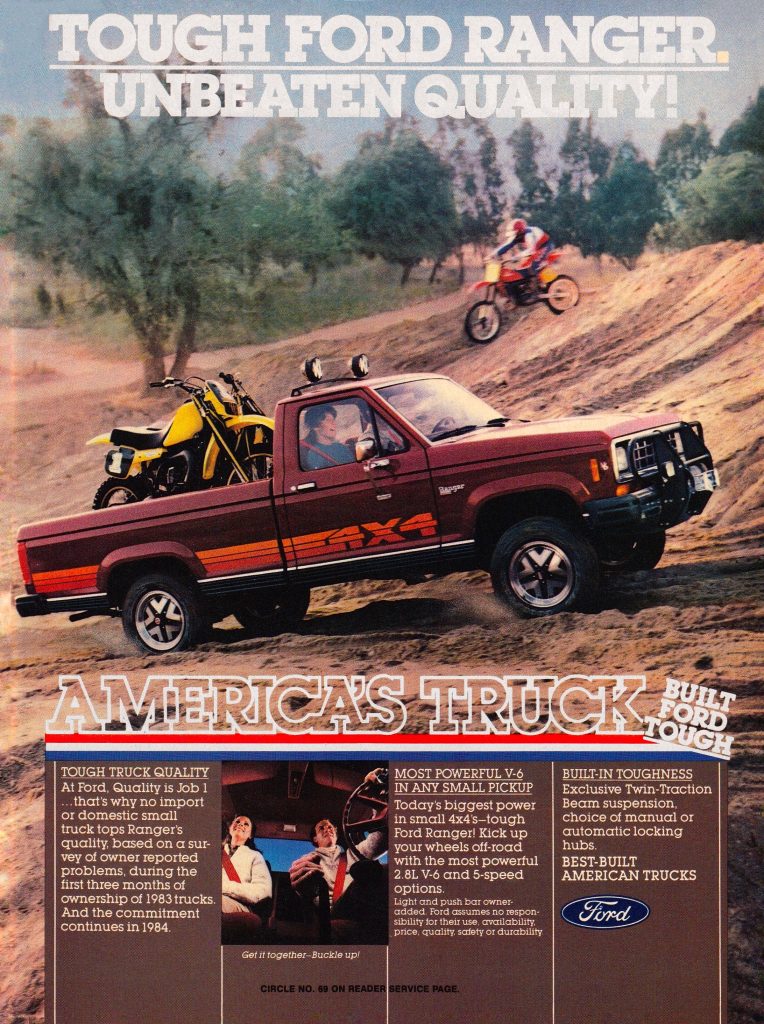 In 1982, Ford retired the Courier and joined Chevrolet with a home-built bike hauler of their own. The new 1983 Ford Ranger offered handsome styling and a 2.8-liter V6 that topped the class with a fire-breathing 115 horsepower to haul around your new liquid-cooled YZ125.
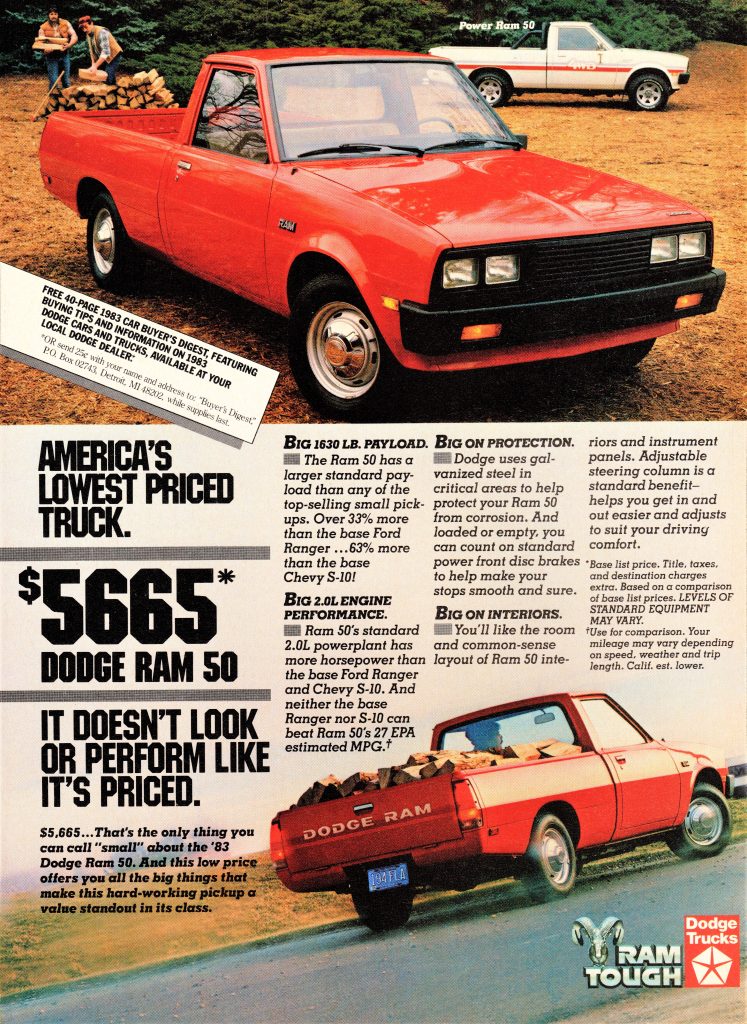 Dodge had their own version of a mini truck import in the early 1980s in the form of the Mitsubishi-built Ram 50. While it was certainly not the prettiest truck on the road, it was hard to argue with that rock bottom $5665.00 selling price.
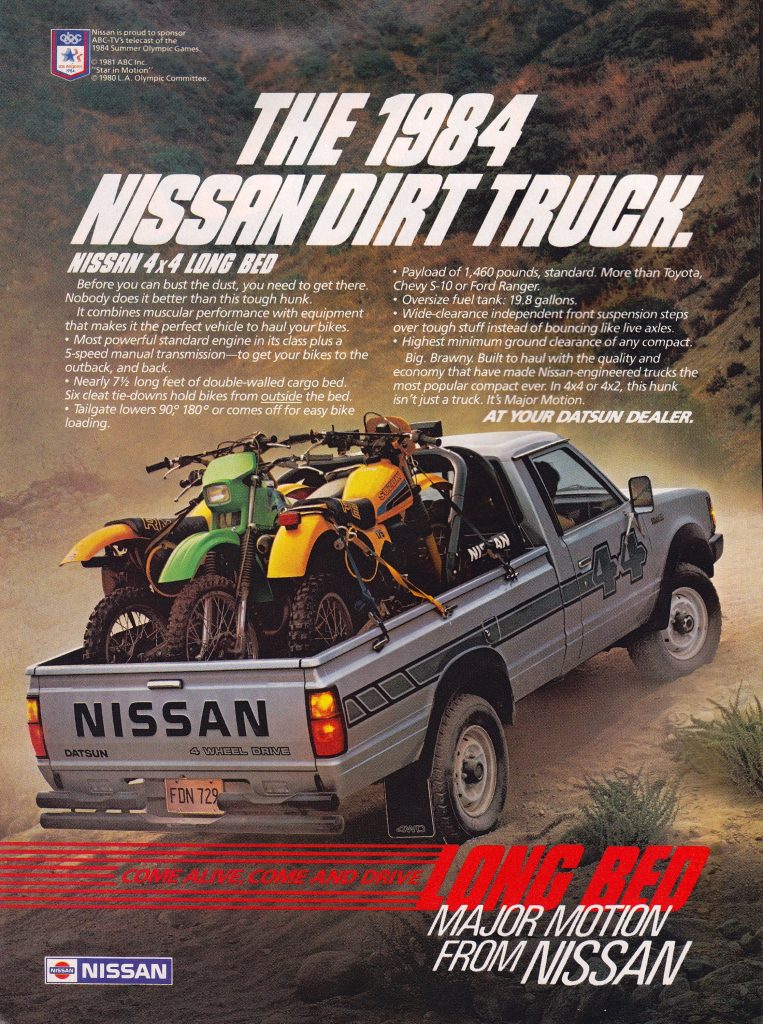 By 1984, Datsun was officially transitioning to use its global Nissan name here in the US. I must have looked at this ad a million times in high school, dreaming of owning that new Nissan truck with a bed full of yellow and green fun mobiles in the back.
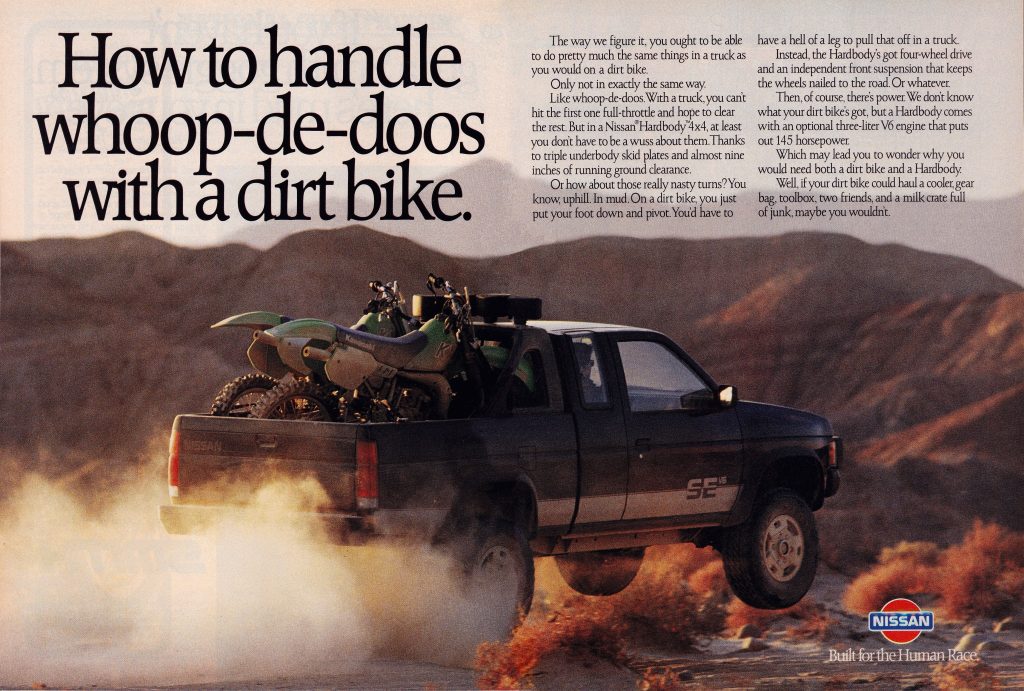 In 1987, Nissan introduced the truck that really put them on the mini truck map – the all-new Hardbody. With its handsome styling and powerful 140-horsepower 3.0-liter V6, the new Hardbody proved a huge hit with truck and dirt bike lovers alike.
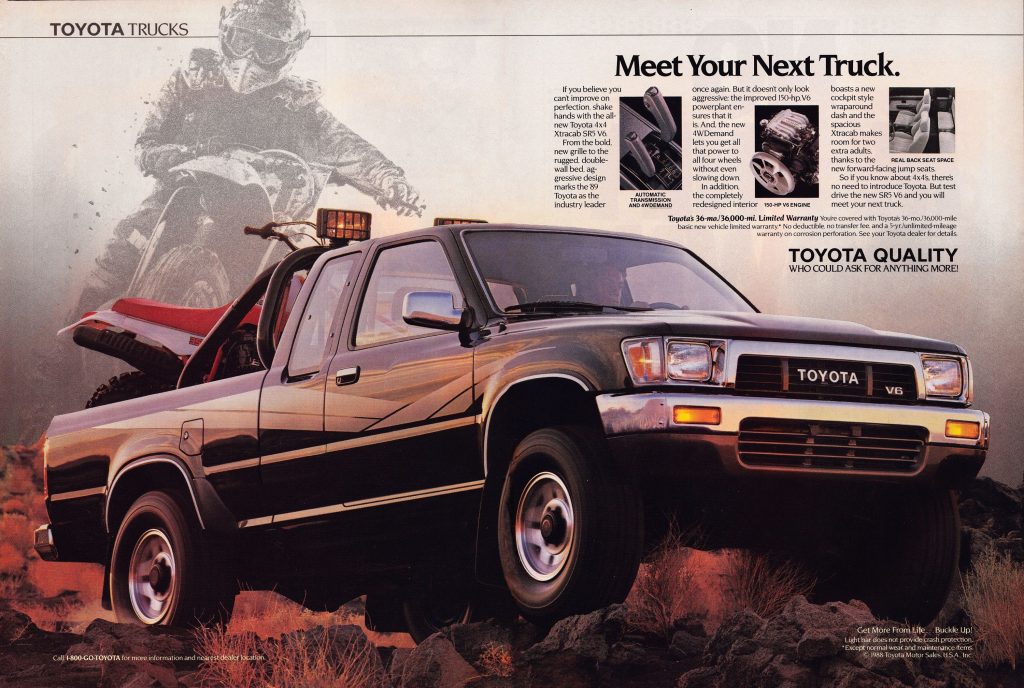 In 1989, Toyota introduced the sixth generation of its small truck platform. This was the last generation to go without an official name in the US (the Tacoma would debut six years later in 1995). The all-new 4×4 Xtracab SR5 V6 pickup featured updated styling, a redesigned interior, on-the-fly 4×4 shifting, and a new 150 hp 3.0-liter V6. While I always preferred the Hardbody to this truck, I would like to have that Yamaha BW350 bro has in the bed.