
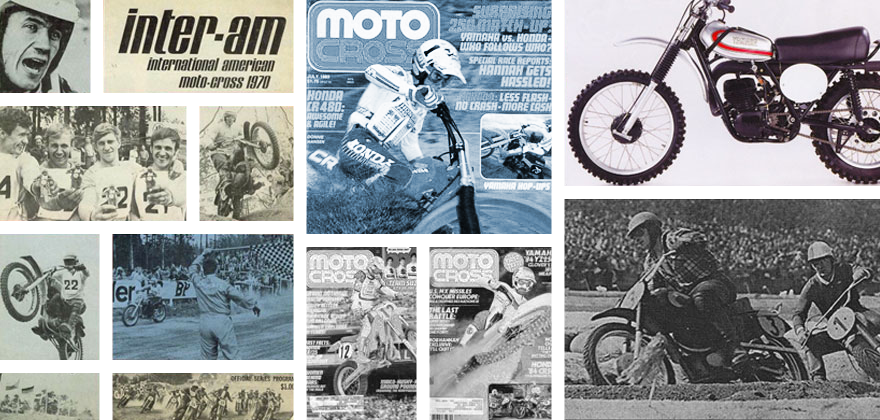

For this edition of Classic Steel, we are going to take a look back at Suzuki’s 2007 RM-Z250.
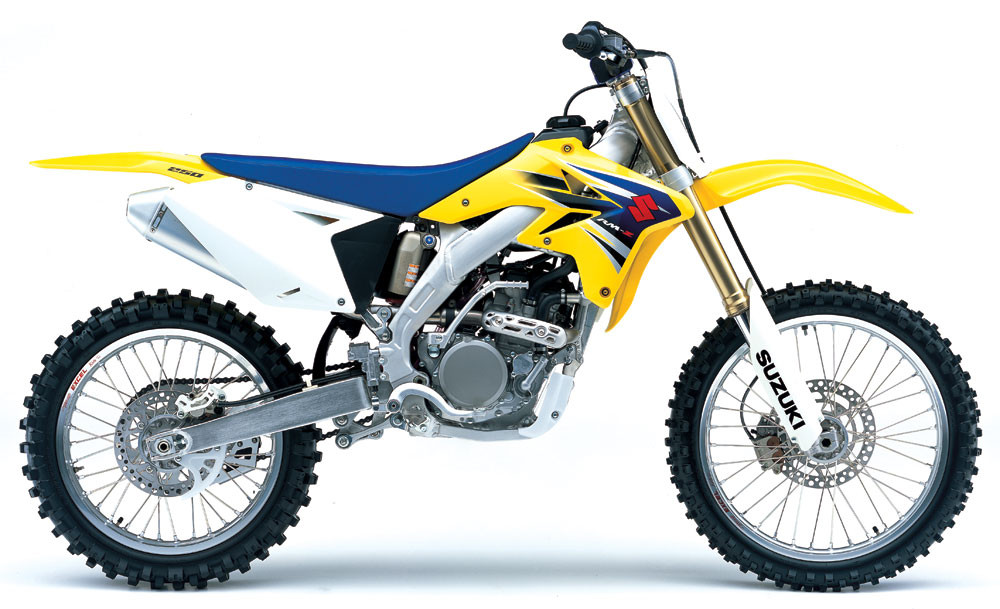 In 2007, Suzuki unveiled its first 100% in-house designed 250 four-stroke to do battle in the hotly contested 250F division. Photo Credit: Suzuki
In 2004, Suzuki made the plunge into four-stroke motocross racing with the release of the all-new RM-Z250. The first RM-Z was a joint venture with Kawasaki that proved popular in the showrooms but often problematic on the track. In 2001, Yamaha caught the motocross industry napping with the release of a smaller version of their revolutionary YZ400F super thumper. The all-new YZ250F proved incredibly popular with consumers who loved its wide powerband, excellent handling, and bulletproof reliability.
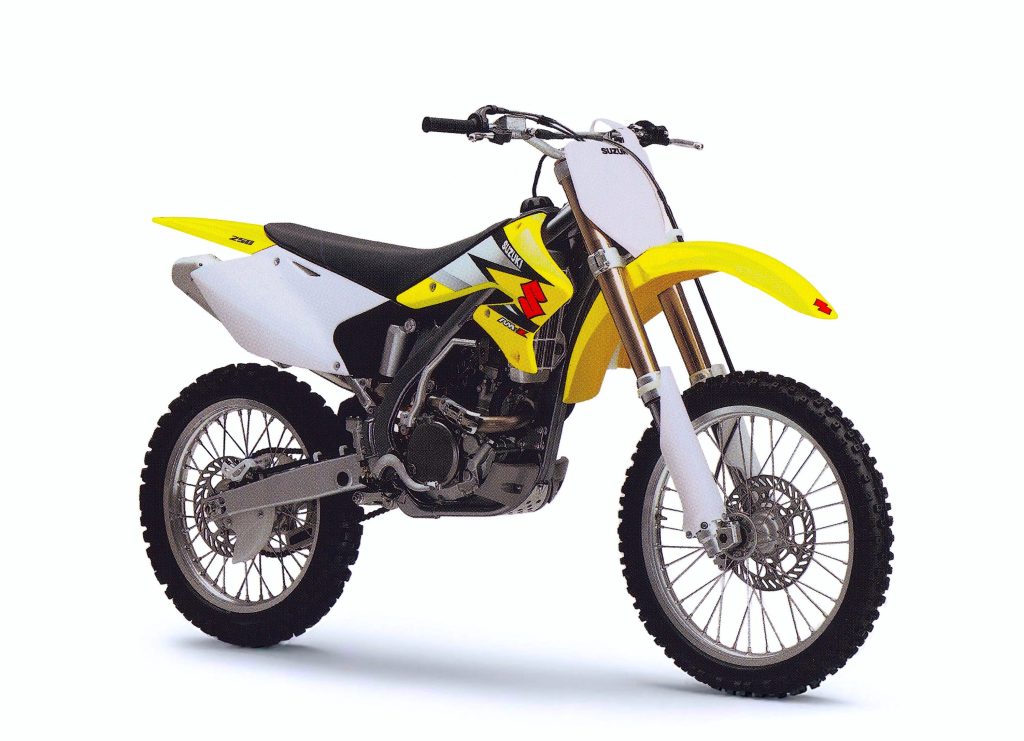 Launched in 2004, the first generation of Suzuki’s RM-Z250 had been a joint venture with Kawasaki that left both parties unsatisfied with the results. Photo Credit: Suzuki
Already on their back foot from the runaway success of the YZ400F, Suzuki and Kawasaki entered a joint venture in 2001 to fast-track a competitor to Yamaha’s groundbreaking 250F. Both manufacturers would contribute to the design of the new machine, with Suzuki handling much of the motor’s development and Kawasaki contributing the chassis design and final assembly. The result of this collaboration was the all-new RM-Z250 and its virtual twin, the 2004 Kawasaki KX250F. Both machines proved competitive, with strong low-to-mid powerbands, decent middle-of-the-road handling, and raceable stock suspension. Both bikes flew off the shelves to consumers deep in the throes of four-stroke mania.
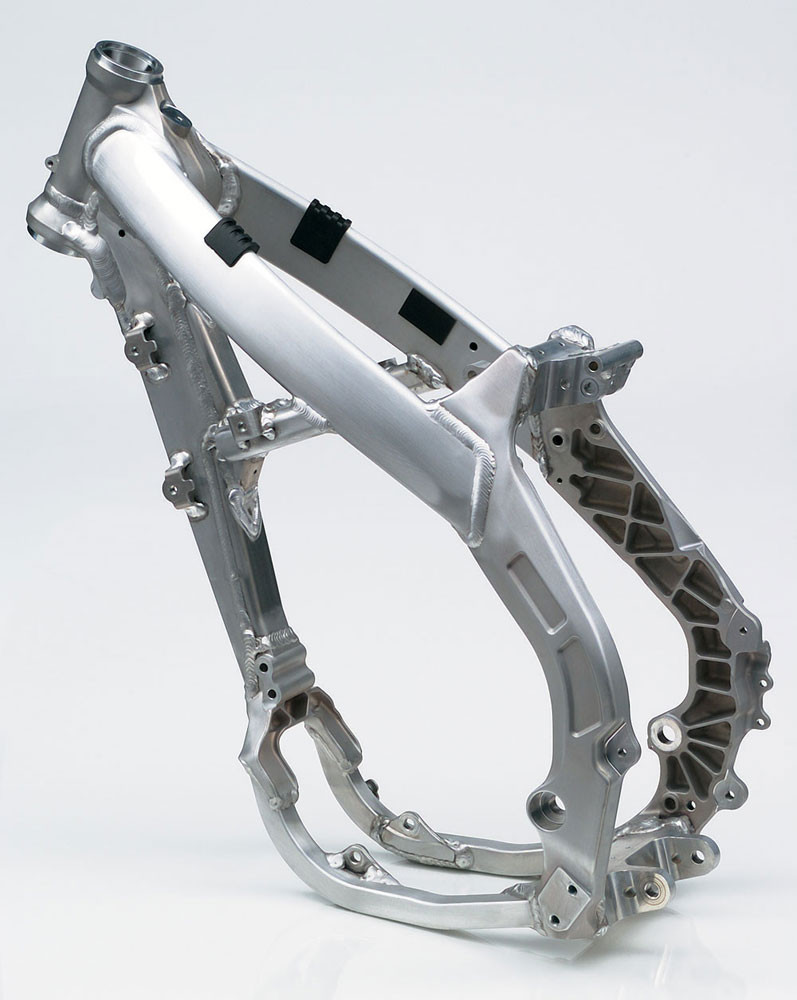 With the 2007 redesign, Suzuki moved to an all-new alloy frame that offered improved handling and a 2.5-pound weight savings over the 2006 steel chassis. Photo Credit: Suzuki
While both machines proved popular in terms of sales, their rushed production timeline showed itself in the twins’ myriad performance and reliability issues. The new motors suffered from issues with the valves, buckets, and springs in the top end and failures in the clutch and transmission down below. Overheating was a constant concern, and oil consumption was a worry not shared by riders on the more robust Yamaha thumpers. Both the RM-Z and KX250F could win on the track, but their fragile natures soured many riders unaccustomed to the intense maintenance schedules their high-strung power plants demanded.
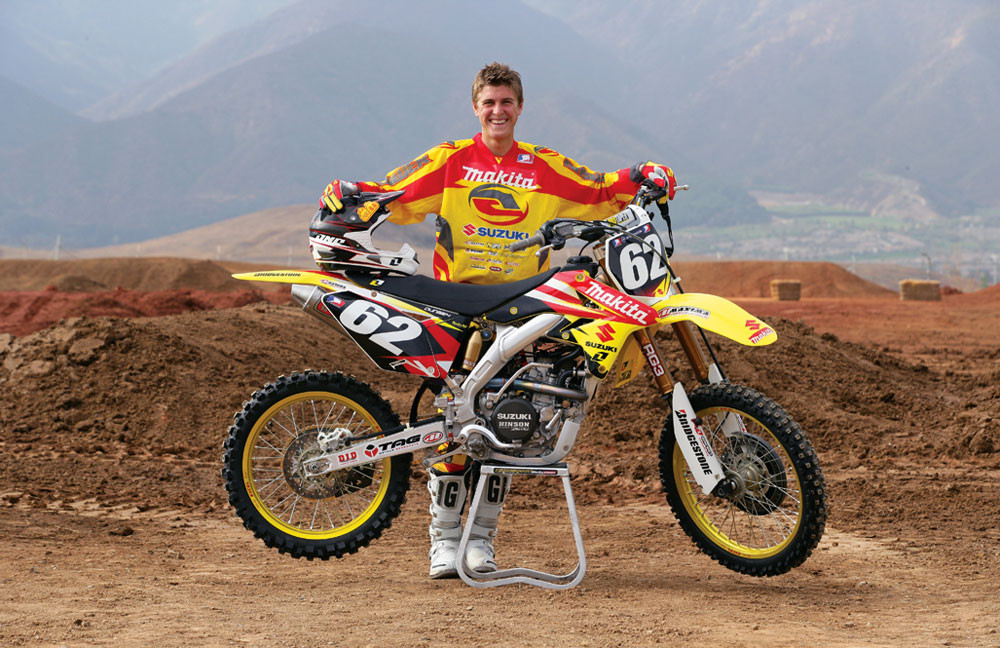 When Roger De Coster plucked a baby-faced Ryan Dungey out of the B-class to ride for his Factory Suzuki squad, few could have predicted he would become one of the sport’s all-time greats. After dipping his toes into pro racing in 2006, Dunge would move to the Factory Makita Suzuki squad aboard the all-new RM-Z250 full time in 2007. Photo Credit: Suzuki
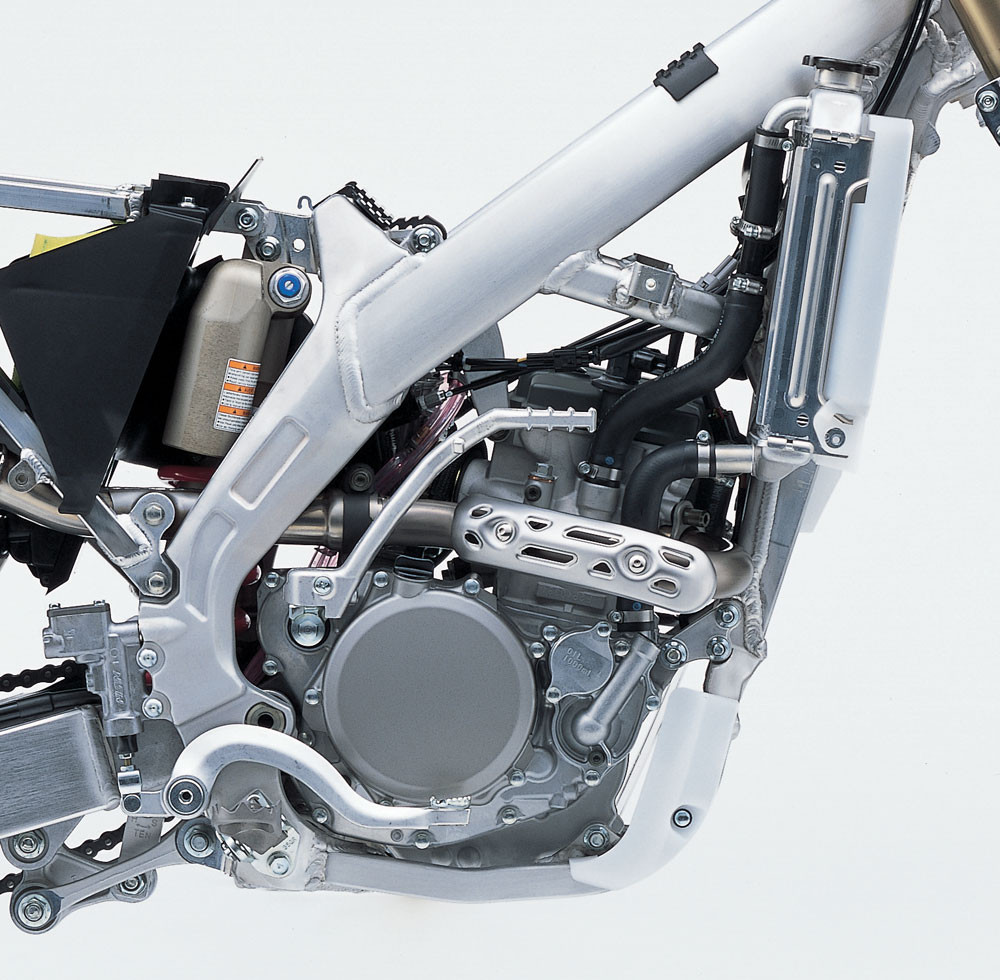 As the designer of the motor for the first-generation RM-Z250, Suzuki chose to keep most of its basic layout intact for generation two. With the 2007 update, the engineering team’s focus moved to improving the power delivery and increasing the reliability of their 249cc DOHC mill. Photo Credit: Suzuki
While the strategic alliance did allow Kawasaki and Suzuki to come to market sooner with a 250F, the project never really left either party satisfied. The new RM-Z felt completely different on the track from every other machine in the Suzuki stable. Its handling, switchgear, and feel were 100% Kawasaki, and this deluded some of the brand identity that Suzuki had established over the previous 30 years. The reliability issues with the machines left both manufacturers with a black eye, and it was quickly decided that the second generations of the RM-Z250 and KX250F would be wholly in-house projects.
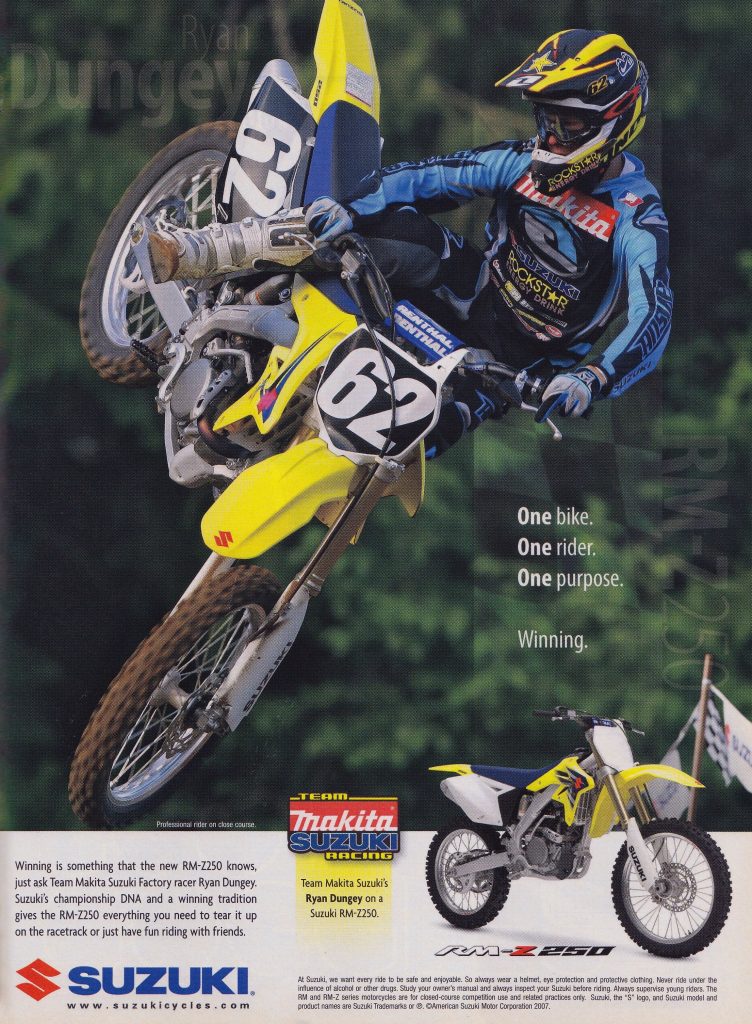 After three years of mediocre reviews for the alliance bikes, the arrival of a 100% Suzuki RM-Z250 was big news in 2007. Photo Credit: Suzuki
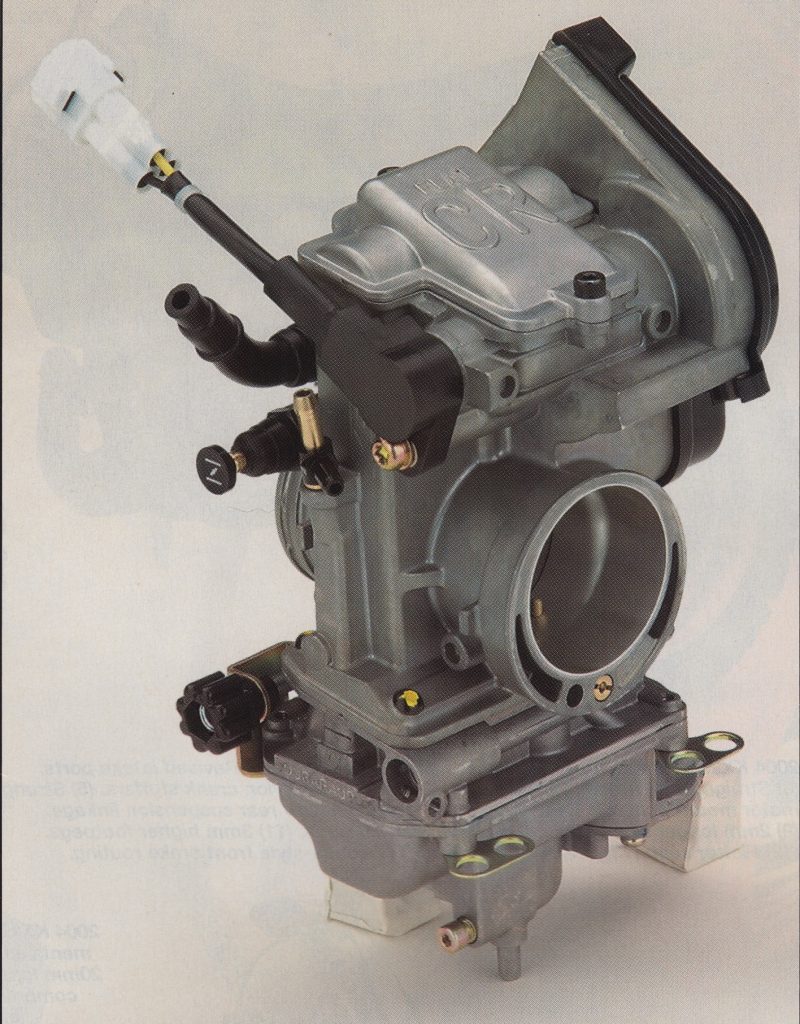 In the days before fuel injection, Keihin’s road-race inspired FCR flat slide carburetor was the four-stroke state of the art for fuel delivery. A 37mm FCR with Throttle Position Sensor (TPS) provided the 2007 RM-Z250 with excellent throttle response. Photo Credit: Motocross Action
In 2006, Kawasaki was the first of the alliance members to unveil a replacement for their first-generation machines. The redesigned KX250F was all-new from the ground up with a trick alloy chassis, revamped motor, and sleek new bodywork. While the KX250F was all-new, the 2006 Suzuki RM-Z250 was a mildly massaged version of the machine introduced in 2004. Small motor and chassis updates improved its performance and reliability slightly, but its inherent limitations remained. It continued to be a good choice for novice riders who appreciated its torquey delivery, but for hard-core motocross, the 2006 RM-Z250 remained the caboose of the most hotly-contested class in the sport.
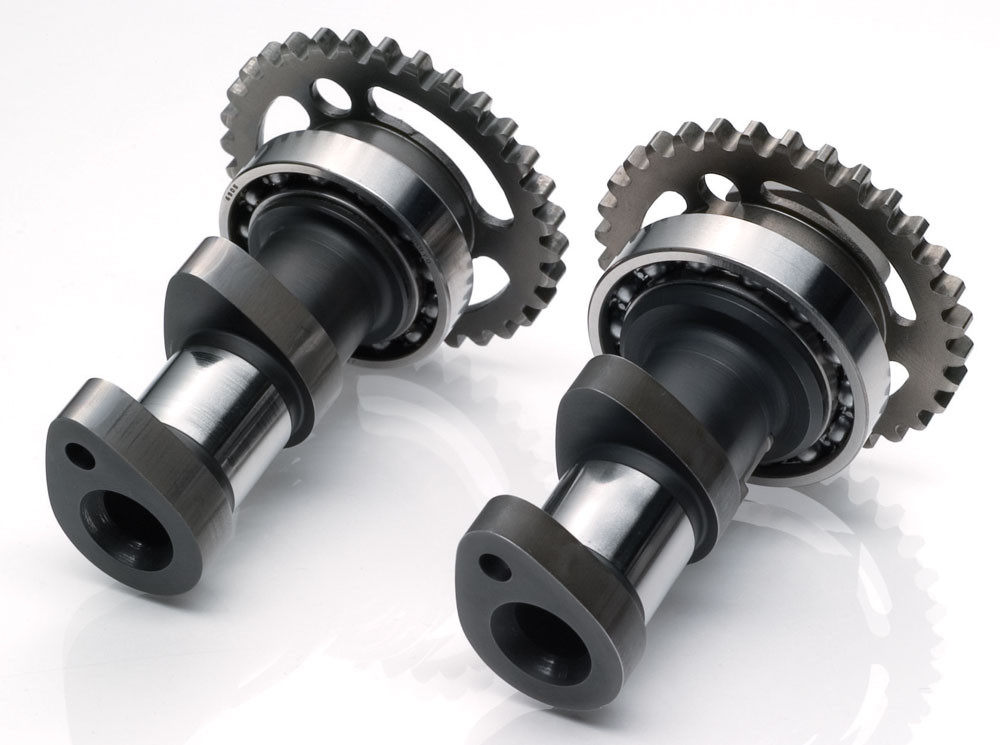 Dual Billet camshafts and titanium valves provided the RM-Z250 with a broad and potent power delivery. Photo Credit: Suzuki
In 2007, the engineers in Hamamatsu were finally ready to unveil an all-new and fully “Suzuki” 250F to the masses. Two years before, Suzuki had introduced their competitor to the CRF450R and Yamaha YZ450F in the form of the first RM-Z450. This first Suzuki 450 had proven very competitive on the track, taking Ricky Carmichael to the 2005 250 National Motocross title. Unlike the first-generation RM-Z250, the new 450 version embraced Suzuki’s tradition for sharp handling and lithe performance. It felt light, turned on a dime, and had excellent suspension. Really fast riders wanted a bit more snap, and its four-speed transmission limited its appeal for anything but moto, but overall, the new RM-Z450 proved to be a major success.
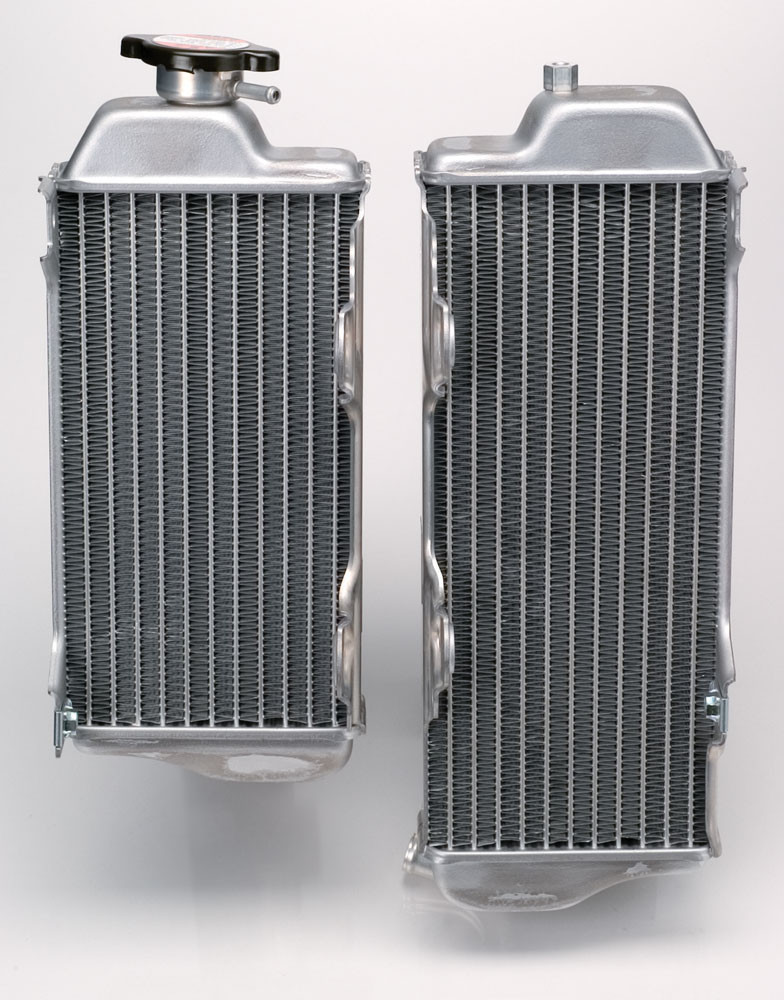 All-new radiators for 2007 offered 20% more capacity to help alleviate the overheating issues common to the first-generation RM-Z250. Photo Credit: Suzuki
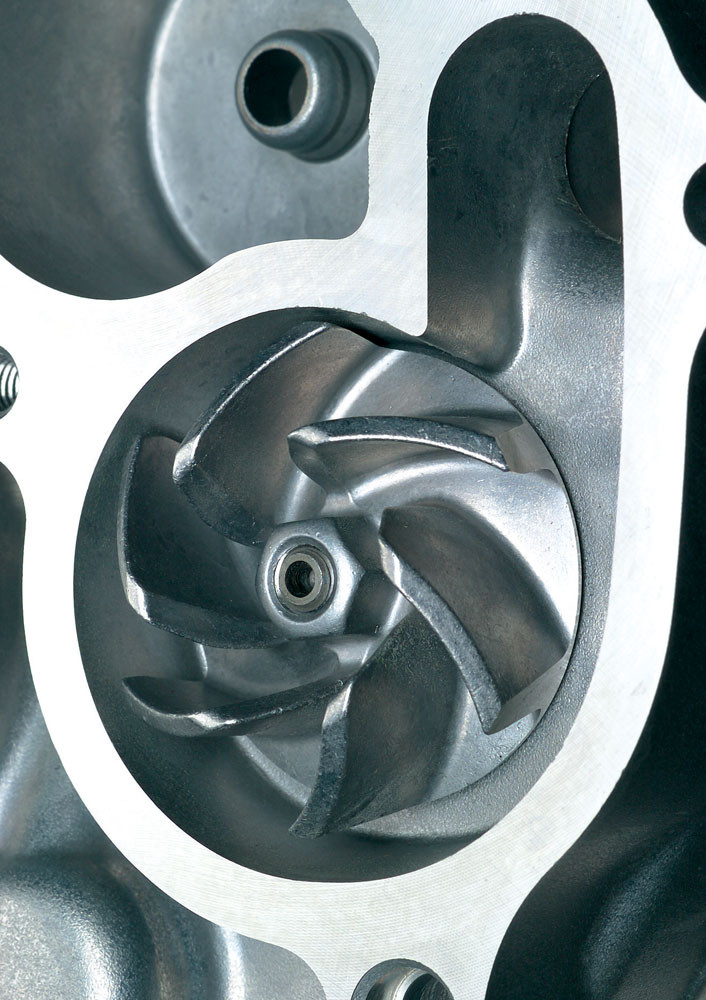 A new water pump featured redesigned vanes for improved coolant flow. Photo Credit: Suzuki
With the 2007 RM-Z250, Suzuki’s engineers knew they needed to inject a full dose of Suzuki flavor into their new 250F. That meant an all-new chassis that sharpened the RM-Z’s handling manners considerably. The new frame retired the Kawasaki-sourced steel perimeter design found on the ’04-’06 RM-Z250 in favor of an all-new alloy design. The new frame retained the perimeter configuration of the first-generation chassis but moved to a combination of forged, extruded, and stamped aluminum components for its construction. The new frame shaved over two pounds of weight off the chassis and offered more aggressive geometry for improved handling.
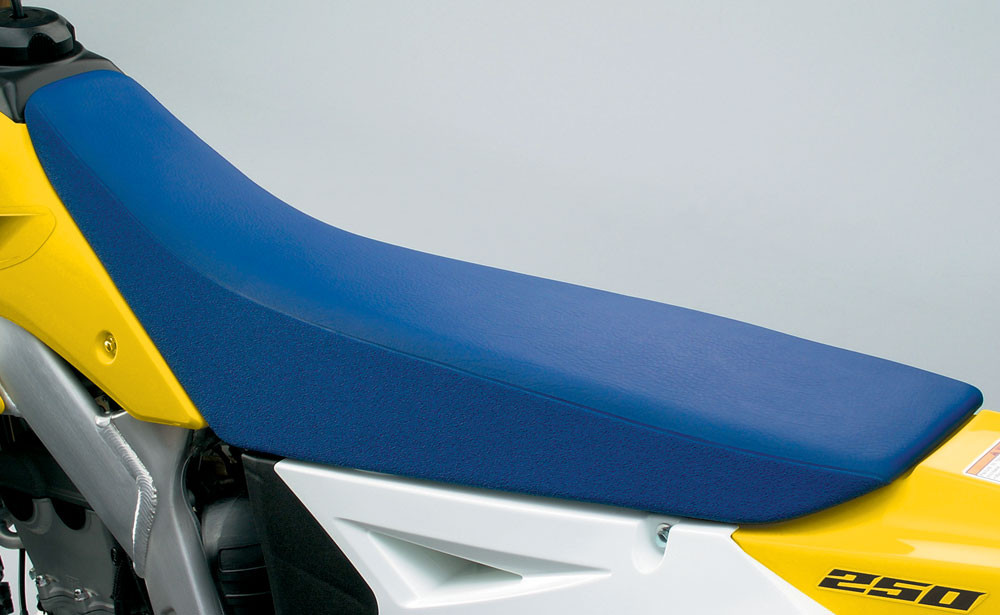 All-new bodywork for 2007 improved the RM-Z’s looks and refined its ergonomics. The new blue saddle was handsome and comfortable, but its stock foam sacked out quickly. Photo Credit: Suzuki
Paired with the new chassis was redesigned bodywork that freshened up the RM-Z’s looks considerably. The first-generation RM-Z had used Kawasaki plastic dyed yellow, and not everyone loved the fact that the Suzuki 250F looked very much like a lemon-colored KX. With the new RM-Z, Suzuki updated all the plastics to give the machine more of a family resemblance. The new bodywork was sleek, attractive, and an evolution of the aesthetics introduced on the 2005 RM-Z450. Unlike the 450, the new 250’s shrouds covered the entirety of the tank, cleaning up the lines and allowing for easier color swaps if desired. The redesigned side plates were longer and slightly slimmer than those on the 450, and the new rear fender design did away with the unique, but slightly controversial shape found on the larger machine. The new seat cover featured a trick non-slip coating on the sides and was crafted in a deep blue hue that brought back memories of Bob Hannah’s RMs of the late eighties.
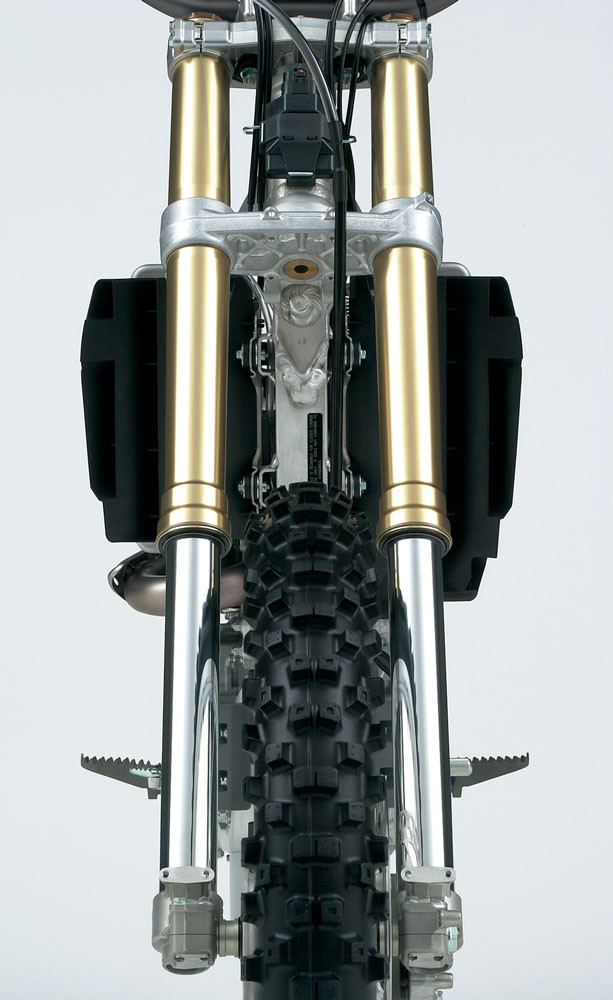 The move to in-house development meant the RM-Z250 adopted the RM-Z450’s 47mm Showa Twin-Chamber cartridge forks for 2007. Photo Credit: Suzuki
On the suspension front, the new RM-Z250 moved from Kayaba to Showa for 2007. This brought the 250F in line with the remainder of the full-sized RM lineup. Up front, the RM-Z250 featured a set of Showa’s latest 47mm Twin-Chamber cartridge forks with 12.2 inches of travel. The forks offered 22 external adjustments for compression and 20 selectable settings for rebound damping.
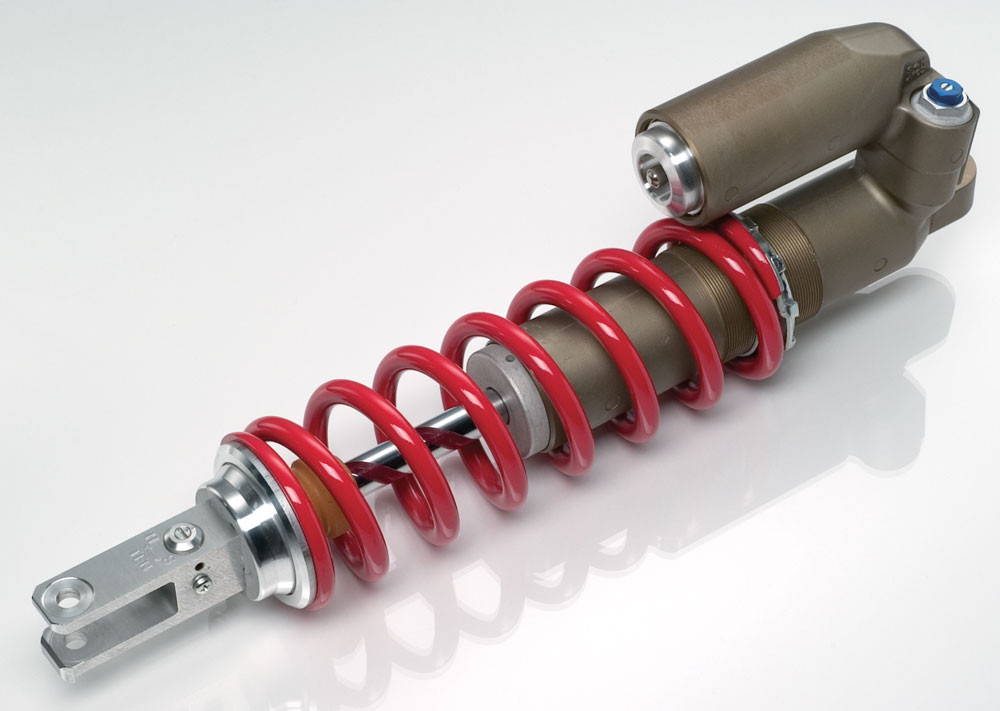 An all-new 50mm Showa shock with high/low speed compression damping control handled the rear suspension duties on the new RM-Z. Photo Credit: Suzuki
In the rear, the RM-Z250 featured an all-new linkage and beefed-up swingarm to go with its new alloy chassis. A new 50mm Showa damper featured 4 settings for high-speed control to go with its 16 external adjustments for low-speed compression and 19 available settings for rebound control. Like the front, the new Showa damper provided 12.2 inches of travel, smoothing out the track.
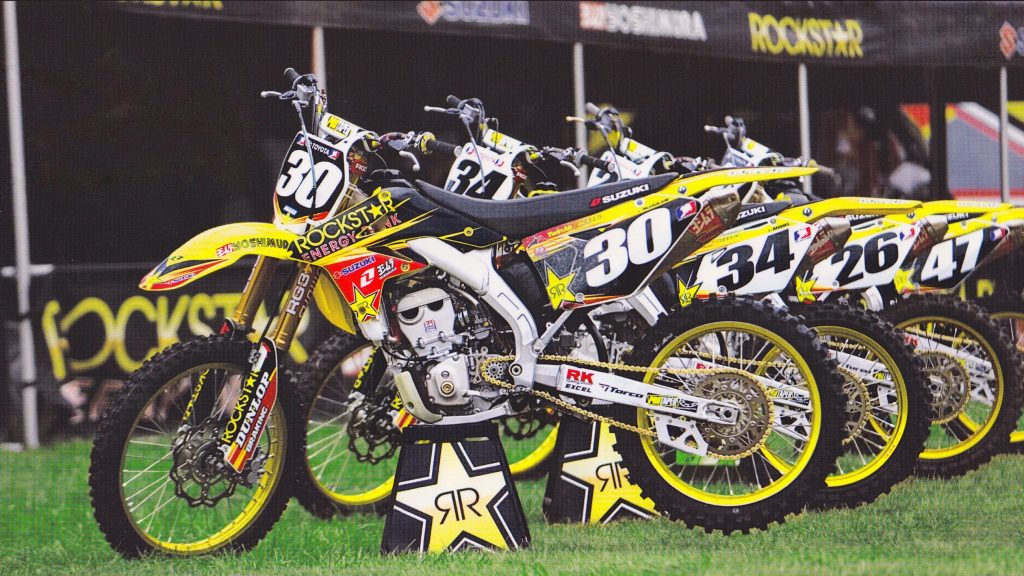 Rockstar Suzuki’s Andrew McFarlane (30) joined Ryan Dungey on the all-new RM-Z250 in 2007.
On the motor front, Suzuki chose to refine rather than redesign their 249cc DOHC powerplant. The original 2004 RM-Z motor was largely of their design, and Suzuki still believed in its potential. Its unique Suzuki Advanced Sump System (SASS) semi-dry-sump lubrication system allowed the engineers to keep the motor’s weight down and place the crankshaft at the lowest possible position in the bottom end for optimal handling. The top end was very similar in design to the 2006, but the all-new head featured a reshaped combustion chamber, updated porting, new titanium valves, and revised billet-type hollow steel camshafts. The cylinder continued to use Suzuki’s electro-plated nickel-phosphorus-silicon-carbide coating for the liner and a forged dual-ring alloy “slipper” piston with microscopic grooves built into the skirt to help oil retention and reduce friction. A new ignition employed a secondary map to increase idle speed under deceleration to reduce stalling and minimize decompression braking. A revised crankcase breather system for ’07 reduced oil consumption by allowing easier breathing at high RPM.
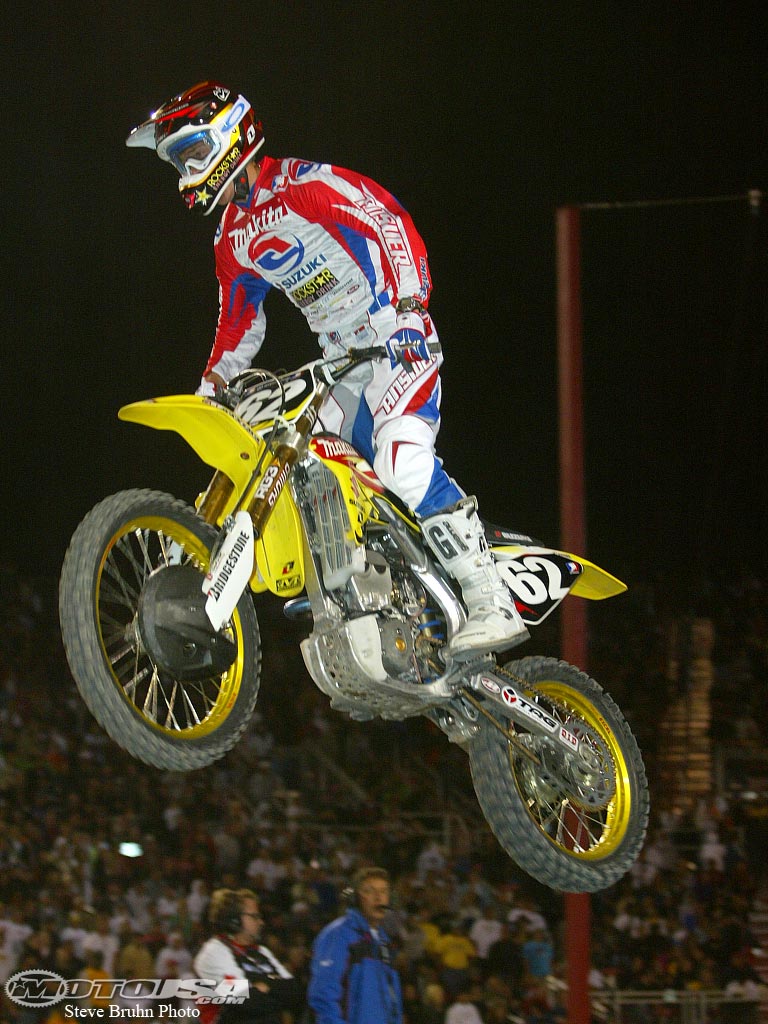 In 2007, Ryan Dungey surprised many by racing his RM-Z250 to four wins in the 125 East Coast Supercross series, including a victory in the season-ending 125 East-West shootout. Unfortunately, poor results at rounds two and three would torpedo any chances the rookie would have at the 125 East Coast title. Photo Credit: Steve Bruhn
The new exhaust employed titanium for the header pipe to save weight and a trick alloy silencer to keep sound in check. A 37mm Keihin FCR flat-slide carburetor fed the motor fuel and featured a throttle-position sensor to provide quick, clean throttle response. Earlier RM-Z250s were notoriously hot runners, so for 2007, Suzuki upped the size of the radiators by 20% and redesigned the water pump vanes to provide more efficient cooling of the high-revving motor. In the transmission, the ratios of third through fifth gear were tightened up to optimize power delivery and complement the revised powerband.
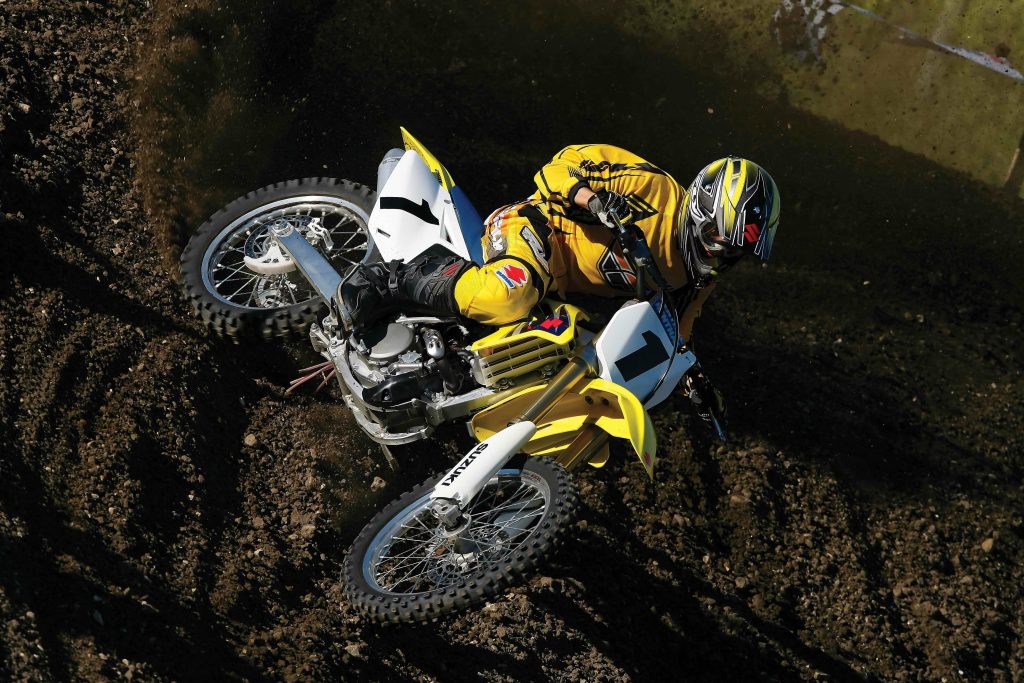 Shred: The new alloy chassis for 2007 brought back the sharp Suzuki handling that had been missing on the alliance machines. Photo Credit: Suzuki
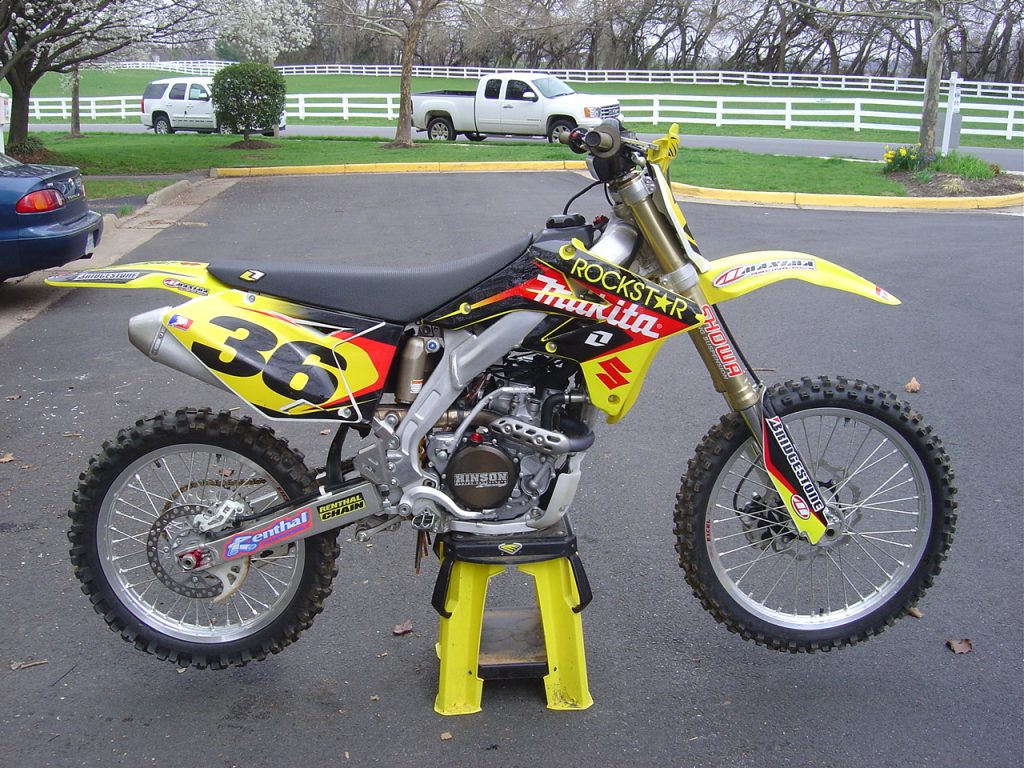 Grinmobile: In 2007, I bought the all-new RM-Z250 and immediately fell in love with its incredible handling and excellent feel. The motor felt a bit slow after two years on my 2005 CRF450R, but the chassis felt like a 125 compared to the big Honda. Once I upgraded to stiffer springs, the bike was magic. I could charge 100% of the track and generally felt like a hero as I pinned its throttle out of every corner. It was not the fastest bike on the track, but it may well have been the most fun. Photo Credit: Me
On the track, the redesigned RM-Z250 was a much-improved machine. Most notable of these improvements was the little Suzuki’s upgraded handling. The first-generation RM-Z used a Kawasaki chassis, and while it was not a bad-handling machine, it was certainly not your typical razor-sharp Suzuki. With the RM-Z’s new alloy chassis, that legendary Suzuki swagger in the turns was back. The new chassis craved the inside line and carved tight arcs with ease. The ‘07 machine was only slightly lighter on the scale, but it felt considerably lighter on the track. The revamped ergonomics were slim and comfortable, and the bike was an excellent flyer. Unlike many of Suzuki’s two-strokes, the new RM-Z was actually decently stable at speed. Overall, it was super fun, incredibly nimble, and the consensus pick for the best-handling 250F of 2007.
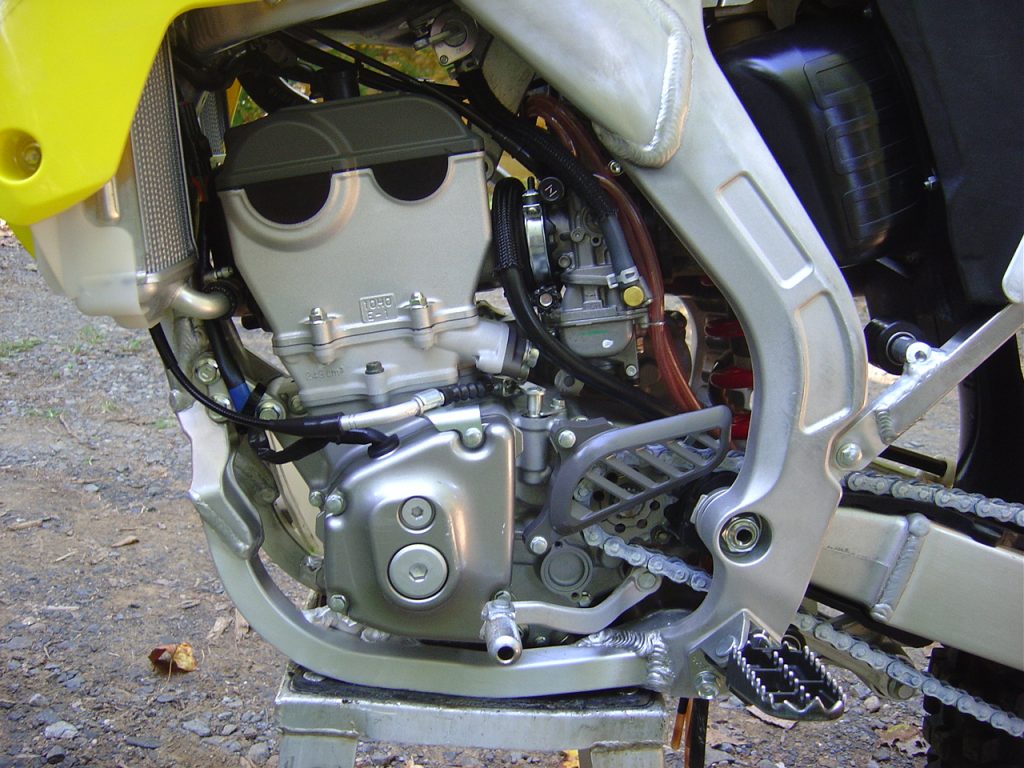 The 2007 RM-Z250 motor featured a strong low-to-mid delivery that was super fun, easy to ride, and unique to the 250F division. It was snappy out of turns and pulled well through the midrange, but it did taper off noticeably if you tried to rev it out like a Yamaha or KTM 250F. Adding a pipe helped open up its lackluster top-end, but its nature was not going to be much changed without delving more deeply into costly modifications. Photo Credit: Me
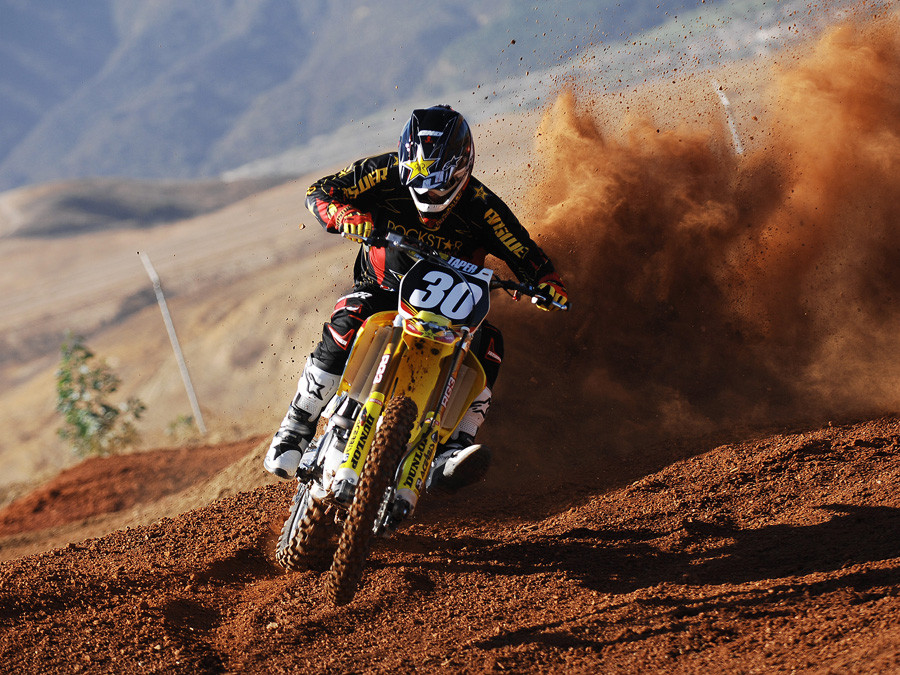 Andrew McFarlane had a bit of a tough year on the RM-Z250 in 2007, but he did score a season-best 5th place at Unadilla before ending the MX Lites season in 13th overall. Photo Credit: Rockstar Suzuki
On the motor front, the RM-Z250 continued to offer a unique style of 250F power. In contrast to rev rockets like the KTM, KX-F, and YZ-F, the new RM-Z did its best work lower down in the powerband. It was super responsive off-idle and barked out of turns. Its strong low-to-mid burst made the RM-Z very fun to ride and easy to keep on the pipe. It was very quick from turn to turn, but the power tapered off noticeably past the midrange. The RM-Z250 could be revved out, but it did not continue to pull on top with the authority of its rivals. If the track was tight and the soil was not too deep, then the RM-Z was very competitive. If you threw in deep loam and a lot of hills, however, the Suzuki’s lack of high-RPM horsepower became apparent. Some riders really loved its chunky low-to-mid delivery as it allowed them to ride it like a small 450 rather than a high-strung 125. Others, however, found its lack of a shrieking top-end disappointing. Overall, the RM-Z250 motor was very competitive despite its relative lack of top end. It was the snappiest and most responsive of all the 250Fs, and more than a few testers picked it as the best motor of the ’07 250 thumpers.
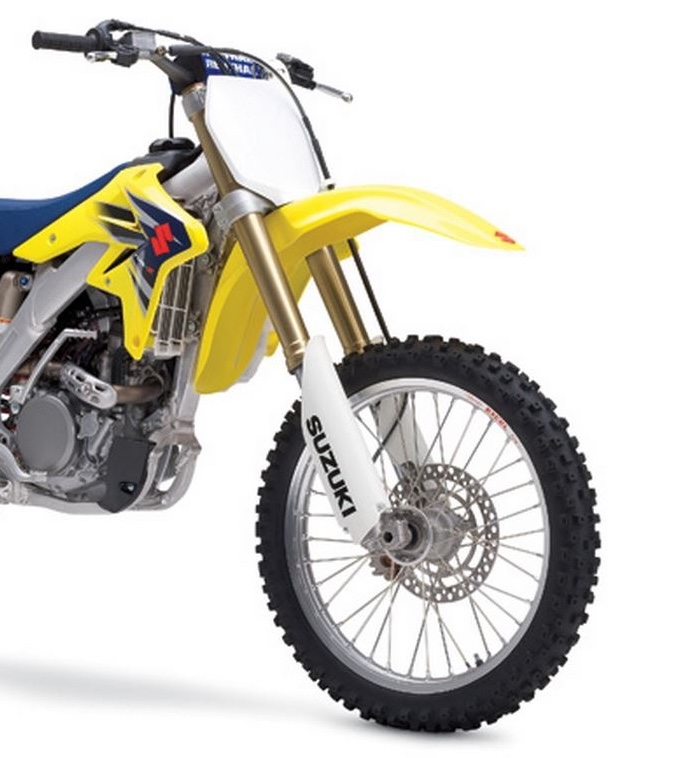 Most of the issues riders had with the RM-Z’s stock suspension in 2007 had to do with its overly soft stock settings. The 47mm Showa forks were set up for very light or less skilled riders, and most pilots over 130 pounds found that an upgrade in springs was mandatory. Once the coils were upgraded, however, the forks worked very well and did a great job of smoothing out the track. Photo Credit: Suzuki
On the suspension front, the new RM-Z250 was also much improved with one important caveat. If you were a small kid making the jump from an 85, then its stock settings were excellent, but for anyone over 130 pounds, the stock springs were just not up to the task. Up front, the new 47mm Showa forks were super plush and did a great job of gobbling up small bumps, holes, and chop. Breaking bumps disappeared under their smooth action, but once the speeds ramped up and obstacles increased in size, most riders quickly reached the limits of the RM-Z’s stock settings. On big hits, the forks blew through their stroke and bottomed heavily. Unless you were 110 pounds soaking wet, a complete novice, or planning to do most of your riding off-road, an upgrade in springs was mandatory. Thankfully, beefing up the spring rates did wonders for the Suzuki’s front end, and once that upgrade was made, the fork’s action was excellent. They remained plush in action, and most riders praised their performance once the marshmallow coils were sent to the recycling bin.
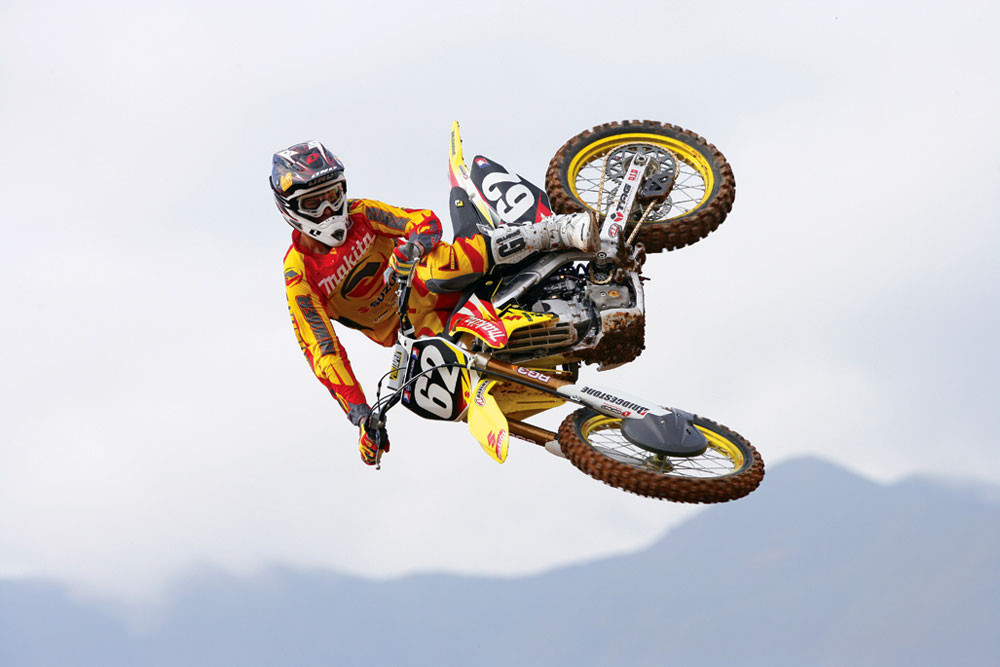 The new RM-Z250 was an excellent jumper, and the bike felt super nimble in the air. Riders like Ryan Dungey could whip it with ease, but the landings from such antics were liable to be a bit painful until the stock springs were upgraded. Photo Credit: Suzuki
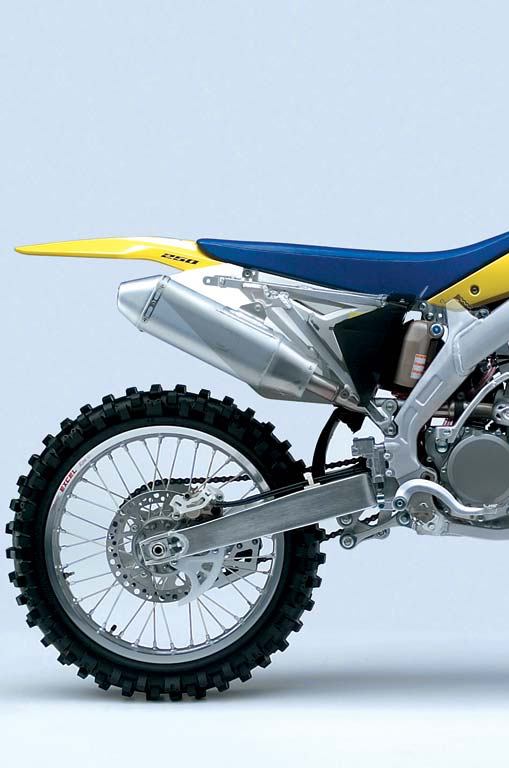 Just as with the forks, the RM-Z’s stock Showa damper was sprung more for mini converts than full-sized humans. With an upgrade to the spring and some fine-tuning of the clickers, it became an excellent rear end. Photo Credit: Suzuki
In the rear, the new Showa damper was equally undersprung and too soft for most full-size adults with even moderate skill. It was super plush if you were planning to hit the trail, but unable to handle serious motocross obstacles without using up all its travel. Like the front, a spring swap was required for all but the lightest and least speedy pilots. In stock condition, the Suzuki’s rear end dropped appreciably under acceleration and blew through its travel on serious hits. It never did anything scary or unexpected, but most racers felt it was far too soft for serious motocross use.
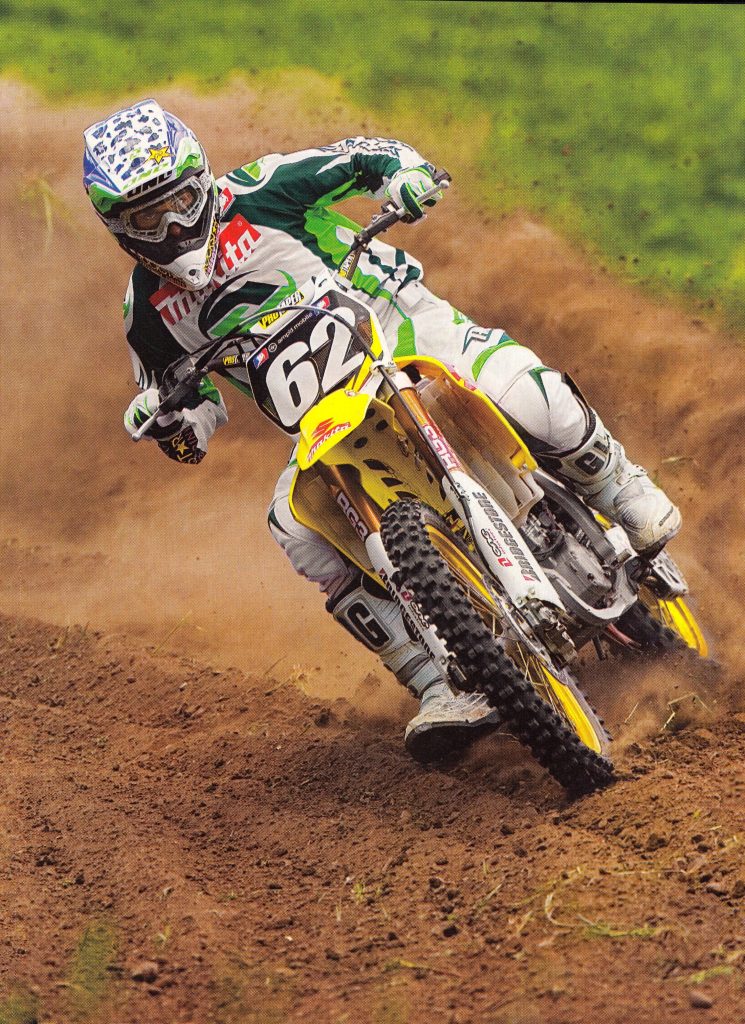 In the great outdoors, Dungey was only slightly less successful on the RM-Z in 2007. Four podiums and a second at Unadilla highlighted a solid first full outdoor season. Photo Credit: Transworld MX
When setting up the new RM-Z, Suzuki clearly determined that it was going to be aimed at lighter and less skilled riders, but this left larger and faster racers looking for the number to White Brothers or Pro Circuit. Thankfully, however, this turned out to be another easy fix. With a spring upgrade, the stock damper’s performance improved immensely. It no longer drooped under acceleration and painted the underside of the rear fender with Dunlop rubber if you looked at a serious double. Some racers still felt the stock rebound damping was a bit light, but it seemed most racers could find a setting they liked with the available external adjustments. Even with the stiffer springs, the shock remained very smooth in action and very comfy on the track. Stock, the Suzuki’s suspension was a bit underwhelming, but once you dialed in the springs, it became a very capable suspension package.
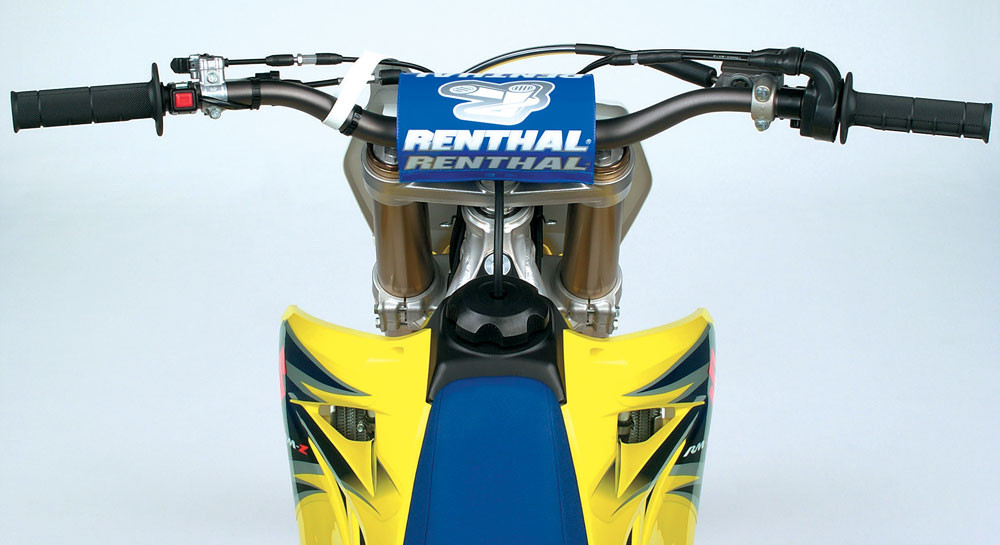 Nice features like Renthal alloy bars as standard equipment pointed to Suzuki’s commitment to improve the fit and finish of their motocross machines. Photo Credit: Suzuki
On the detailing front, the new RM-Z was mostly well thought out and well-finished. Riders praised the looks of the machine, and the overall ergonomics were slim and very comfortable. The stock saddle was well-shaped, but the stock foam went from firm to flabby after only a few rides. Ponying up for aftermarket foam was good insurance for your backside. Not everyone loved the bend of the stock bars, but the fact that it was a premium Renthal FatBar was a notable improvement over the junk metal bars found on previous RM-Z250s. The bolts and fasteners Suzuki used continued to be a step below the quality found on the Honda and KTM, but it was better than the pot metal of some previous RM models. The disc brakes were also not as strong as ones found on the CRF and SX-F, but they got the job done and were not a serious handicap to the RM-Z’s performance. The stock exhaust was well-built and quiet, but it seemed to hinder the RM-Z’s top-end performance. Adding an aftermarket pipe and silencer combo did wonders to beef up the stock bike’s lack of revs.
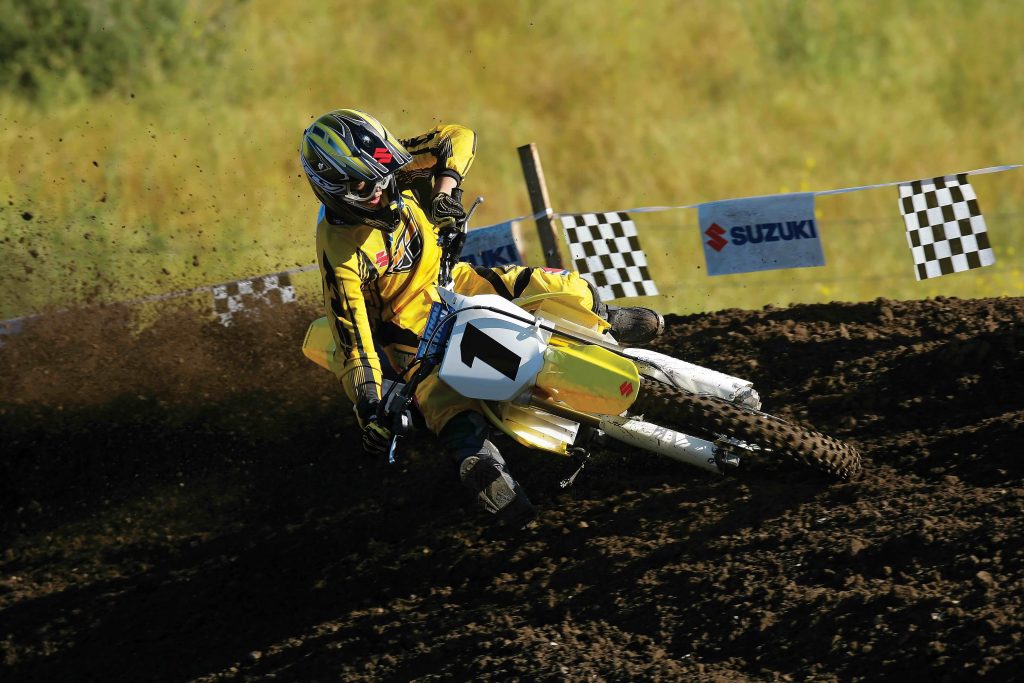 Light, nimble, and incredibly responsive, the all-new RM-Z250 was one of the most fun machines to shred laps on in 2007. Photo Credit: Suzuki
Most riders liked the updated ratios in the five-speed transmission, but its action was not as smooth as some previous Suzuki cogboxes. Shifting could be a bit notchy, and finding neutral with the motor running was often an exercise in futility. The clutch offered a feather-light pull, but it was not a fan of too much abuse. Pros and habitual clutch hammerers were likely to be happier with a Hinson upgrade. For most riders, however, the RM-Z’s ample torque made clutch abuse unnecessary. The new cooling system did a good job of keeping temps under control, and the RM-Z no longer boiled over if left to idle for more than 30 seconds. Overall reliability was good, and the motor proved far less problematic than the first-generation RM-Z250 mill had been. As long as you kept a close eye on the oil level and stuck to a reasonable maintenance schedule, the little Suzuki was as reliable as a high-strung race machine could be expected to be.
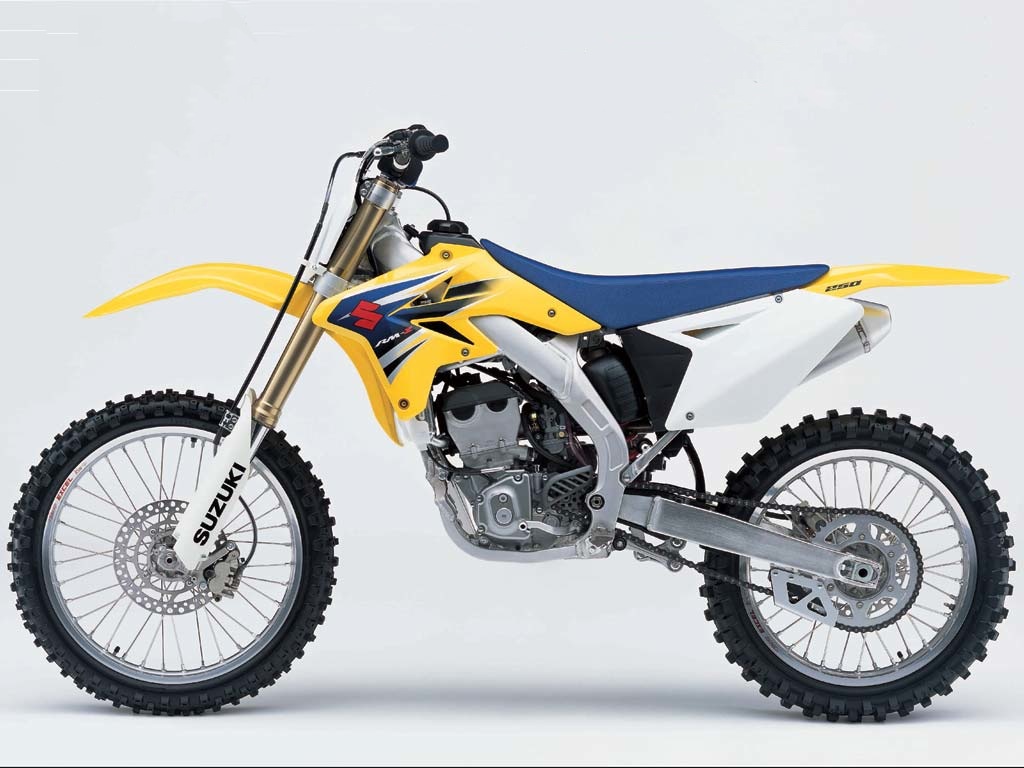 In 2007, Suzuki finally jumped into the 250 four-stroke division with both feet and came out a winner. It was not the fastest 250F available, but many racers and magazine editors thought it might well be the best. Excellent handling and a wide powerband allowed riders to focus on going fast while the nimble and well-sorted Suzuki did the rest. Photo Credit: Suzuki
In the end, Suzuki’s first attempt at a 100% home-grown 250F turned out to be a huge improvement in almost every way. The failings of the alliance bikes were nearly all addressed, and the result was a much more competitive machine. The new chassis brought back the legendary Suzuki handling, and the revamped motor proved far more durable than in the past. The motor’s chunky low-to-mid powerband was snappy, fun, and effective, and no other machine in the class could outturn or outjump the nimble Zook. Its lack of top-end continued to be an issue for some, and its stock suspension settings seemed to have been dialed in by someone on Honda’s off-road XR team, but overall, it was an excellent base from which to build a championship-winning machine.