

For this edition of Classic Steel, we are going to take a look back at Suzuki’s 1999 RM125.
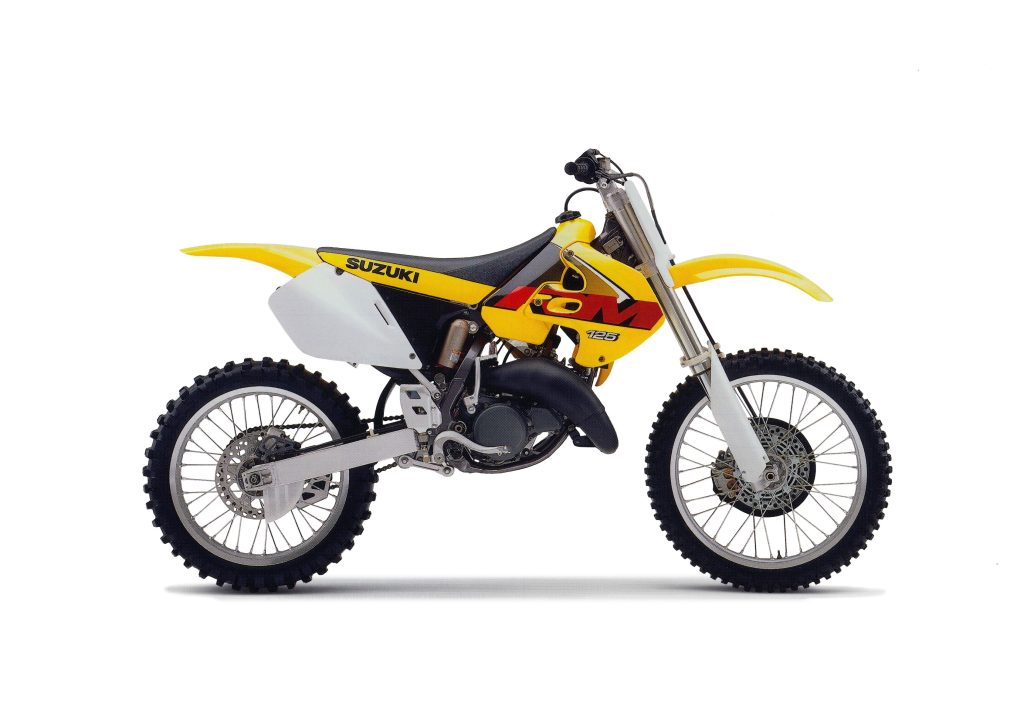 In the fourth year of its development cycle, Suzuki’s RM125 received a significant list of motor and suspension updates in 1999. Photo Credit: Suzuki
In 1996, Suzuki took a major gamble by completely redesigning their championship-winning 125 package. Starting with the 1992 RM125, the yellow tiddlers had consistently been one of the best eighth-liter racers available. Their lithe handling, solid suspension, and instant power made them fun to ride and hard to beat. Honda’s CR125R was faster, and Kawasaki’s KX125 was plusher, but no other machine in the class was as well-rounded as Suzuki’s screaming yellow zonker.
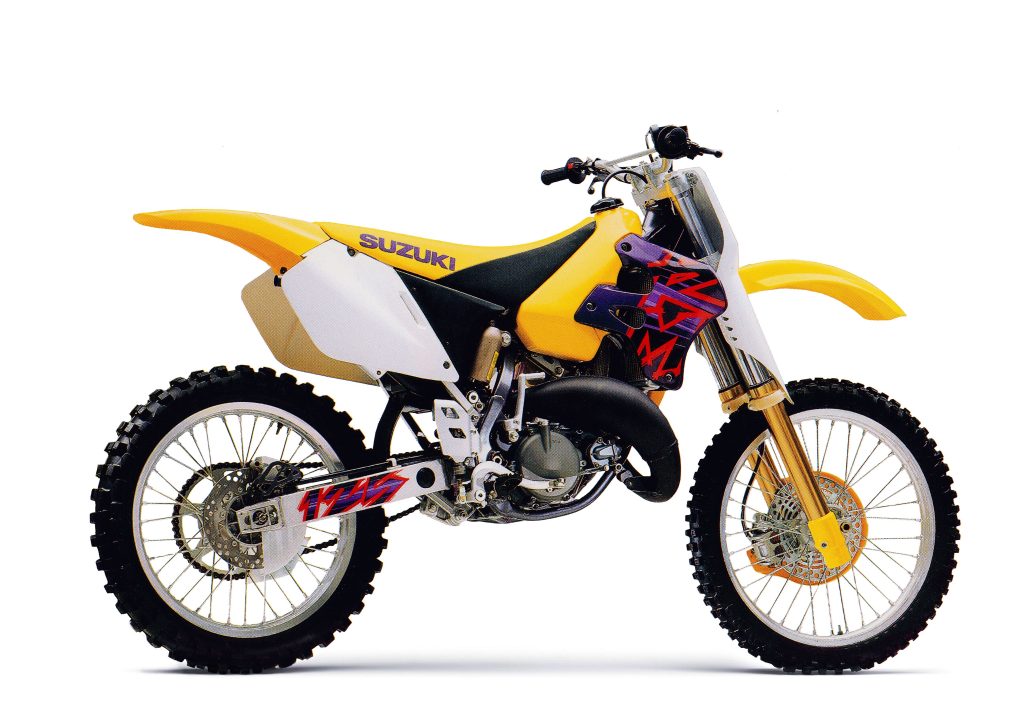 All-new in 1996, Suzuki’s RM125 was an excellent machine living in the shadow of Yamaha’s omnipotent YZ125 in the late 1990s. Photo Credit: Suzuki
With the 1996 redesign, Suzuki scrapped every part of their shootout-winning 1995 machine. The frame, motor, bodywork, and suspension were all new with a move back to conventional forks for the first time since 1989. The new 49mm Showa twin-chamber conventional forks were a huge hit with consumers, but the redesigned case-reed motor was somewhat underwhelming. Racers loved the RM’s supple suspension, sleek ergos, and excellent handling, but shrugged at the new motor’s narrow powerband and relative lack of ponies.
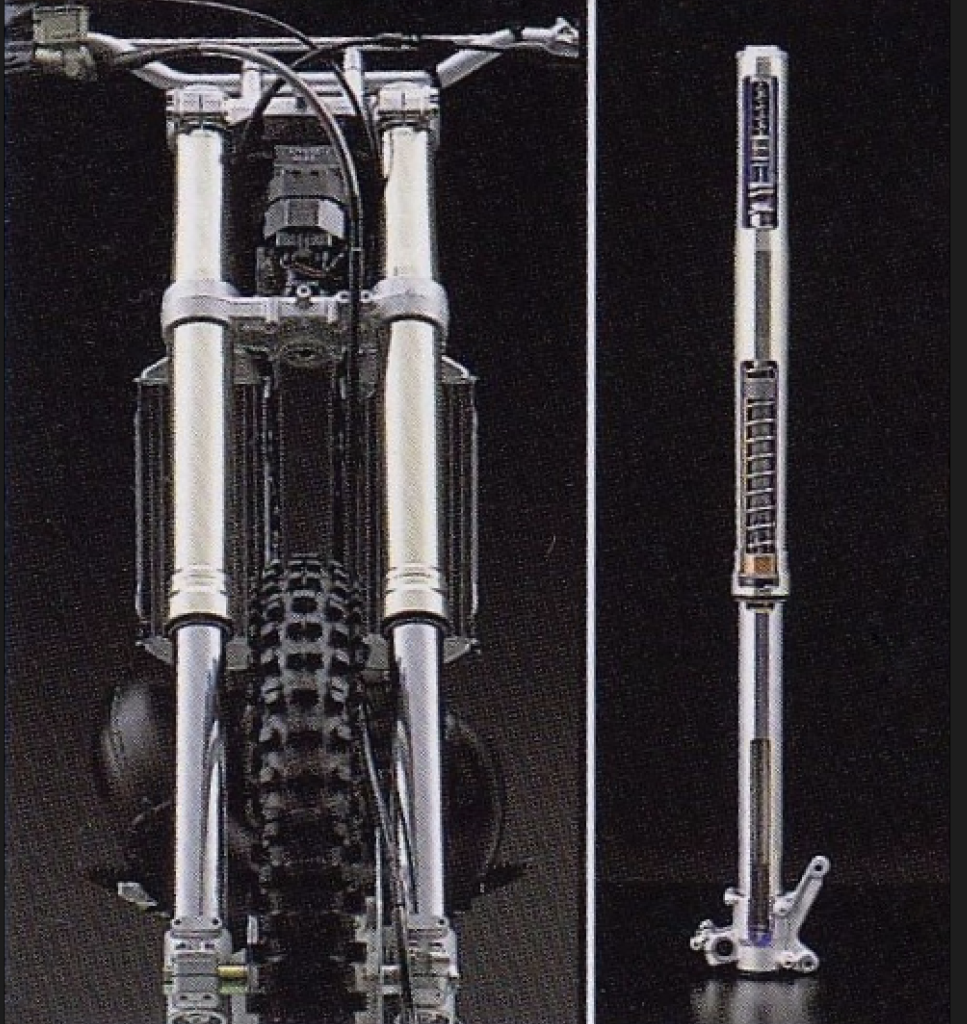 After three years of blazing their own suspension trail, Suzuki threw in the towel in 1999 and switched back to an inverted fork design for their RM125. The all-new 49mm Showa Twin Chamber cartridge fork was designed to combine the compliance of the old conventional forks with the precision of an inverted design by carefully selecting the wall thickness of the tubes, adding ultra-slick bushings, and spec’ing all-new valving. Photo Credit: Suzuki
Over the next two seasons, Suzuki’s engineers worked hard to breathe a bit more fire into the RM’s 124cc mill. In 1997, the RM picked up some midrange, and in 1998, they found the motor’s missing revs. Suzuki transformed the RM’s mill from a midrange burst motor into a high-RPM screamer with a nearly endless pull on top. It loved to rev and took the new alloy-framed Honda’s crown as the king of the rev rockets. A good many riders preferred the broader and more flexible power of Yamaha’s YZ125, but for those who loved to leave it pinned, the RM125 was the hot ticket in 1998.
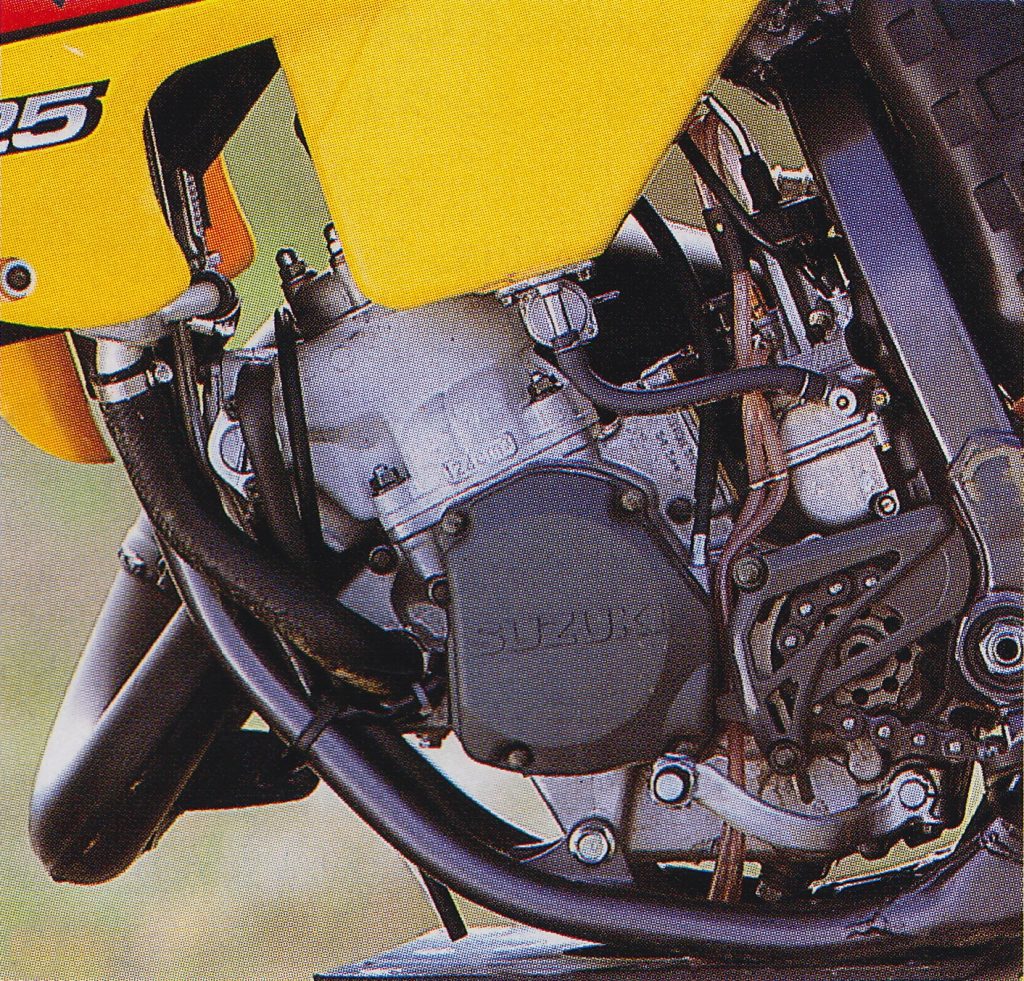 Motor changes for 1999 included a longer connecting rod, heavier flywheel, hotter ignition, revised porting, larger carburetor, ultra-slick piston, and beefed-up clutch. Photo Credit: Naoyuki Shibata
Riders also loved the RM’s forks, which continued to dominate the magazine shootout standings. Showa’s 49mm conventional forks bucked the inverted trend and were loved by amateur racers and magazine editors alike. They were super plush and gobbled up the track with amazing ease.
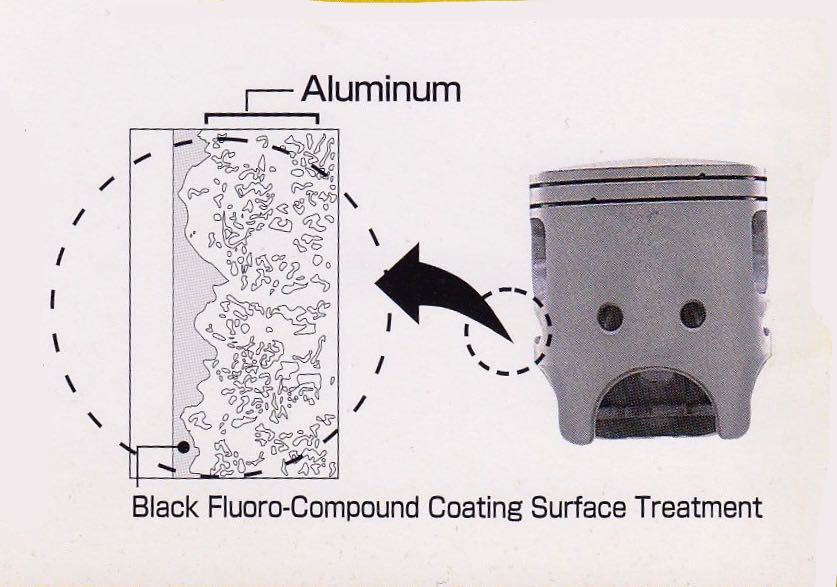 A new ultra-hard “Black Fluoro-Compound” coating was added to the RM’s piston for 1999 to reduce friction and increase durability. Photo Credit: Suzuki
While mere mortals loved their performance, top-level professionals found their supple action and inherent flex characteristics less appealing. They cared much less about ride comfort than maximum control and preferred the more precise feel the inverted forks provided. For riders pushing the limits of their machines, the conventional forks just did not provide the level of rigidity and flex resistance they required.
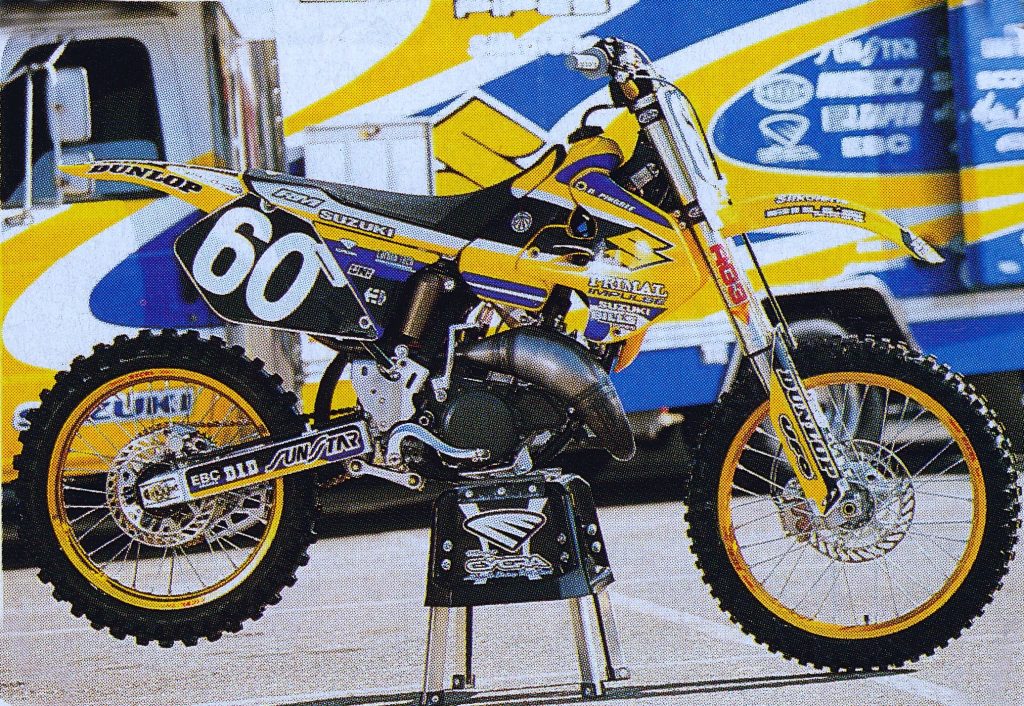 The Primal Impulse team was Suzuki’s factory supported 125 effort in 1999. With Robbie Reynard moving up to the 250 team, David Pingree became Suzuki’s best shot for a 125 title in ’99. Photo Credit: Dirt Bike
As the professional teams soured on the charms of Showa’s conventional forks, the money men in Hamamatsu lost interest in forging their own suspension path. By 1998, the writing was on the wall for Showa’s innovative silverware. They remained the best-reviewed forks in the class, but without the support of the factory teams and other OEMs, Showa’s fork experiment was doomed to fail.
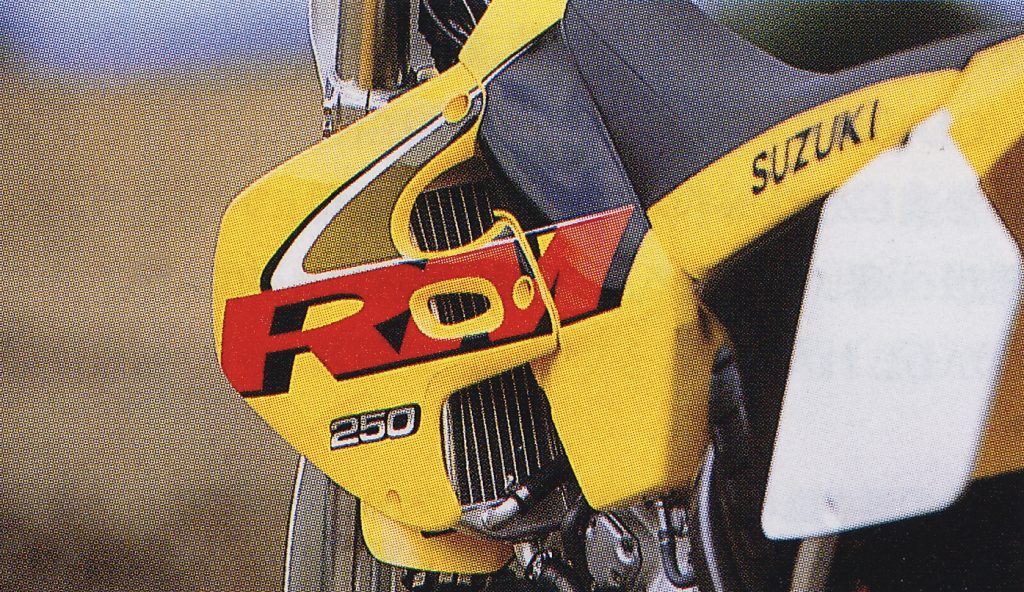
By far the most controversial aspect of the ‘99 RMs was the addition of these massive new radiator shrouds. Suzuki claimed they increased airflow and reduced engine temps, but most riders seemed to feel their effect on the RM’s appearance and ergonomics was less successful. Photo Credit: Naoyuki Shibata
After three years of development, Suzuki officially retired their conventional fork experiment in 1999. The decision to move back to an inverted design was met with incredulity by many, but Suzuki assured the press and their consumers that the new fork would outperform both the 1998 conventional fork and the inverted designs of the competition.
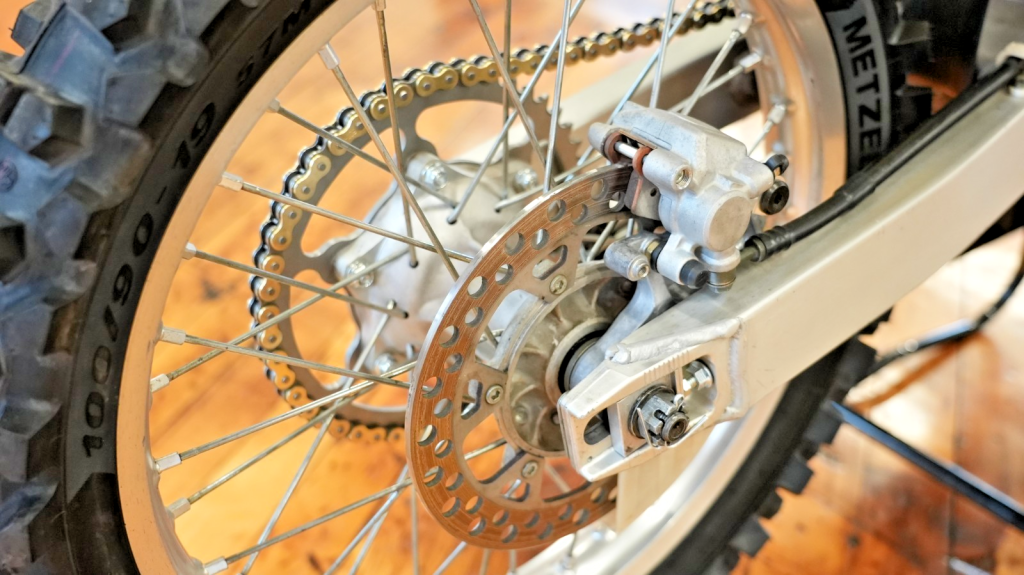 Updated pads and a 20mm larger rear rotor improved the RM’s braking for 1999. Photo Credit: Kaplan Cycles
To accomplish this, Suzuki spec’d an all-new 49mm inverted design that they claimed combined the plushness of the new-generation conventional forks with the rigidity of the inverted designs. The new forks continued to use Showa’s innovative “Twin Chamber” internals that separated the air and oil for smoother action and reduced aeration of the fluid. The inner and outer tube thickness was optimized to provide the new fork with just enough flex to take the bite out of small chop while also holding up under heavy torque loads from supercross-style obstacles. Special bushings were added to reduce friction and prevent the tubes from binding under heavy loads. The new forks weighed half a pound less than the 1998 fork and offered 12.4” of travel with 16 external settings for compression and rebound damping.
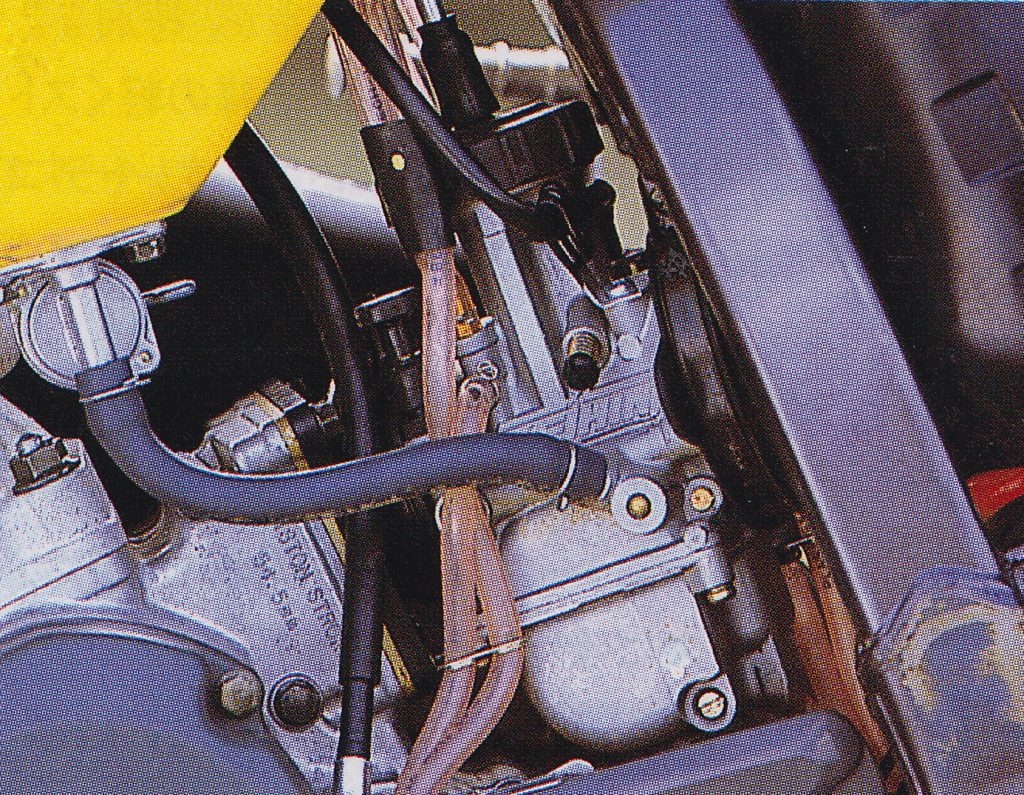 An all-new Keihin PWK38PWJ carburetor for 1999 added 2mm of capacity and a “Powerjet” circuit to widen the powerband and improve top-end power. Photo Credit: Naoyuki Shibata
In the rear, Suzuki continued to employ Showa as its shock supplier. A revised Full Floater for 1999 featured updated valving for smoother low-speed response and improved bottoming resistance. The linkage and spring rate were unchanged from 1998. Rear wheel travel was set at 12.4” with 26 selectable settings for compression and rebound control.
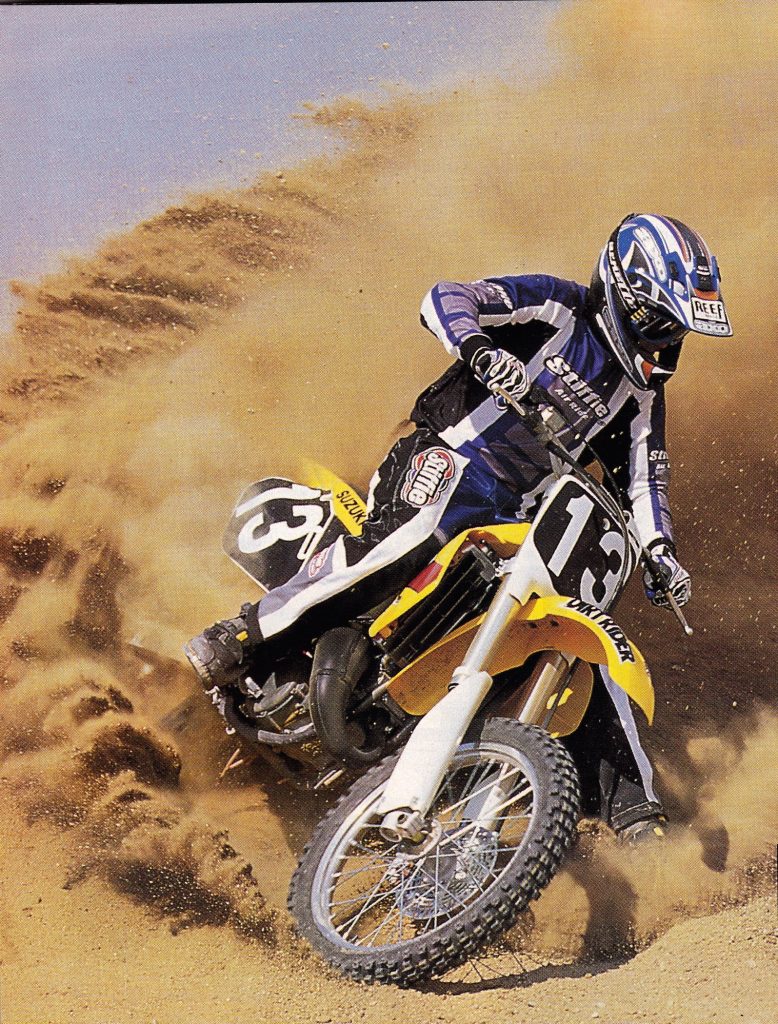 If shredding turns was your cup of premix, there was no better mount in 1999 than Suzuki’s Ginsu-like RM125. Photo Credit: Dirt Rider
Frame and chassis changes were minimal for 1999, with the basic frame carrying over from 1998. The frame’s geometry was unchanged, but Suzuki did add additional bracing at critical points to accommodate the stiffer forks. The swingarm pivot area was also beefed up to reduce flex under heavy loads. The RM’s bodywork was largely a carryover as well, aside from a new front number plate and a set of much larger radiator shrouds. The new shrouds made some amount of sense on the RM250, which enlarged its radiators in 1999, but on the RM125, it was mostly a cosmetic “upgrade.” At the time, the new look was quite polarizing, but Suzuki did claim the larger shrouds provided an increase in cooling air to the motor. Brake upgrades for 1999 included a new material for the pads and a 20mm larger brake rotor in the rear.
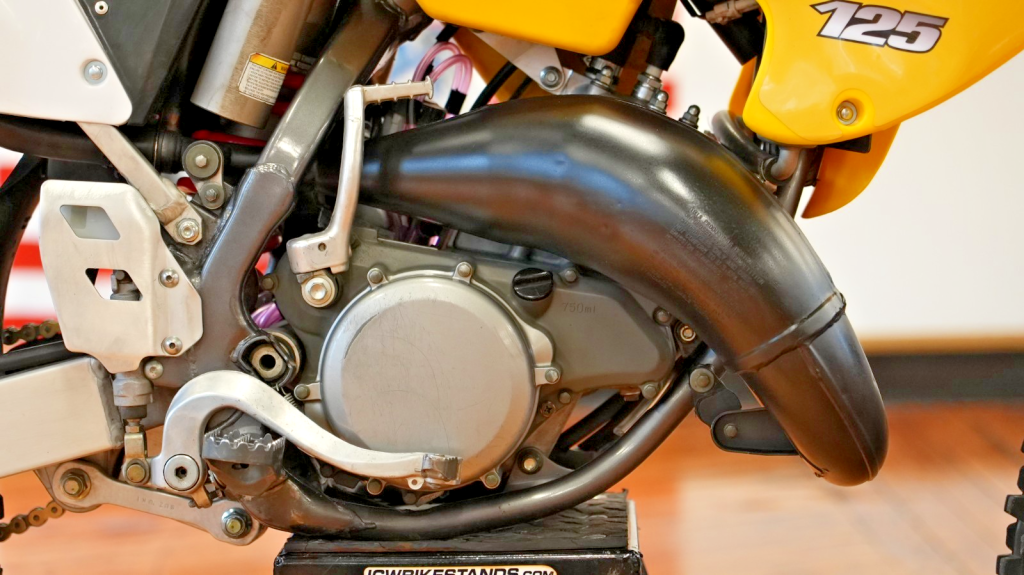 The RM’s motor changes for ’99 yielded impressive results on the track. The powerband was noticeably wider than the peaky ’98 mill and the engine delivered a strong midrange blast that rocketed the yellow machine out of turns. It was still less powerful than the class bully YZ125, but most testers felt it was easily the second-best motor in the ’99 125 field. Photo Credit: Kaplan Cycles
On the motor front, the RM125 was substantially updated in 1999. The year before, the RM125 was one of the fastest bikes on the track, but its powerband was not nearly as easy to manage as Yamaha’s broad and powerful YZ125. For 1999, Suzuki looked to unseat Yamaha’s omnipotent Why-Zed by boosting the RM’s torque and bringing back a bit of the 1997 mill’s midrange bark. To accomplish this, Suzuki increased the length of the connecting rod by 2mm, upped the mass of the flywheel, reprogrammed the ignition, and added a super-slick coating to the piston. This “Black Fluoro-compound” surface treatment both reduced friction and increased the hardness of the piston for increased durability. To allow the motor to breathe deeper, Suzuki bolted on an all-new 38mm Mikuni “Power Jet” carburetor. This mixer was 2mm larger than the one used in 1998 and the same size as the one found on the RM250. Clutch upgrades for 1999 included increased capacity, stronger springs, and a higher lift release cam for smoother engagement. The transmission remained a close-ratio six-speed.
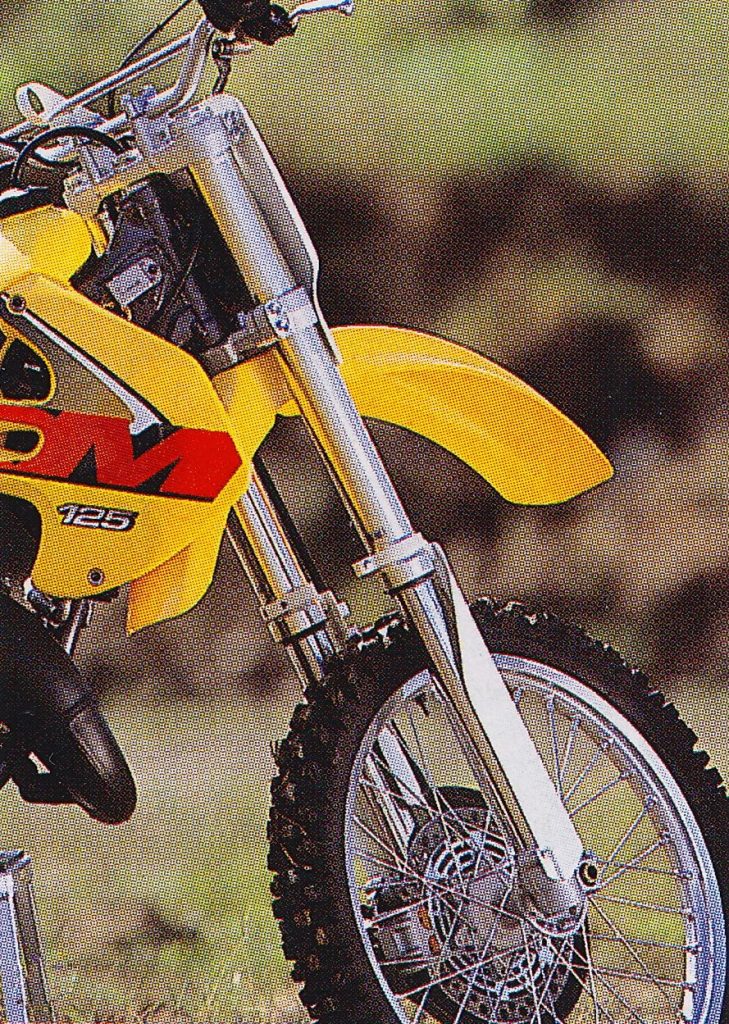 The RM’s new inverted forks were very good, but most testers still felt they were a notch below the ultra-plush conventional forks found on the bike the year before. Pro racers appreciated the less flexy front end, but for most riders it was not a clear upgrade. Photo Credit: Naoyuki Shibata
On the track, the ’99 RM125 was an improved machine in most respects, but a few of the changes were not a total success. At the top of the improvements list for ’99 was the updated powerband, which brought back the RM’s missing midrange. The new motor was much easier to ride than the ’98 version, with good bottom end, a strong midrange, and a long pull on top. It required less clutch out of corners and was far easier to keep on the pipe than the year before. Riders loved its snappy pull and quick response.
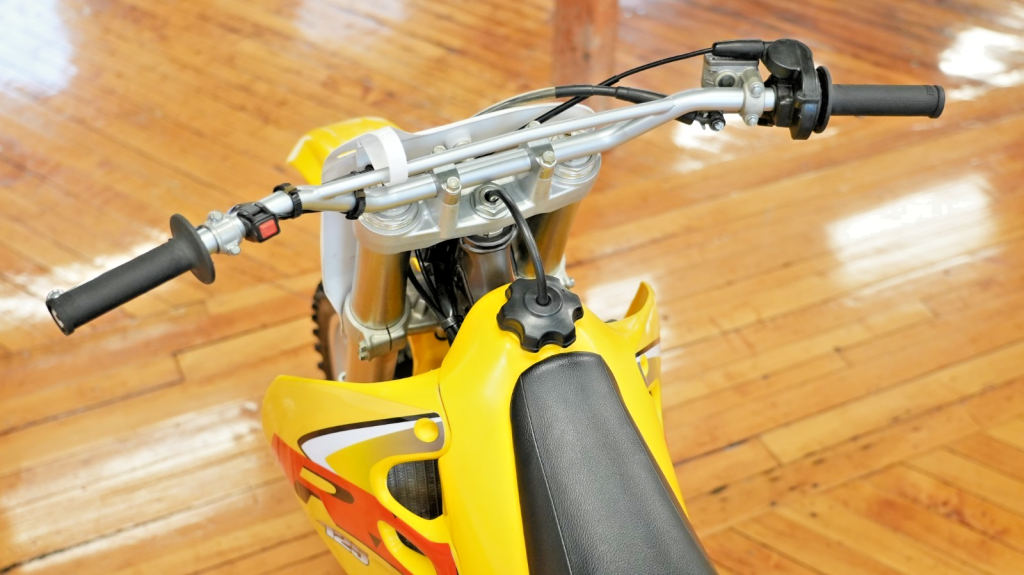 The stock bars, levers, and controls were not particularly durable, but the RM’s clutch and throttle did offer the lightest pulls in the class. Photo Credit: Kaplan Cycles
About the only complaint most riders had with the RM’s motor was with its sticky transmission and weak clutch. Traditionally, Suzuki’s RM offered some of the slickest transmissions on the track, but the 1999 version had a serious problem finding neutral and would occasionally refuse to shift under power or deliver a false neutral. The effort at the lever remained very light, but if the motor was running it was nearly impossible to get it out of gear without a lot of fiddling. The clutch effort was also incredibly light with a very smooth engagement, but hammering the lever repeatedly caused it to go away in short order. Habitual clutch abusers were wise to upgrade the mechanism with aftermarket components to keep its action consistent in the heat of battle.
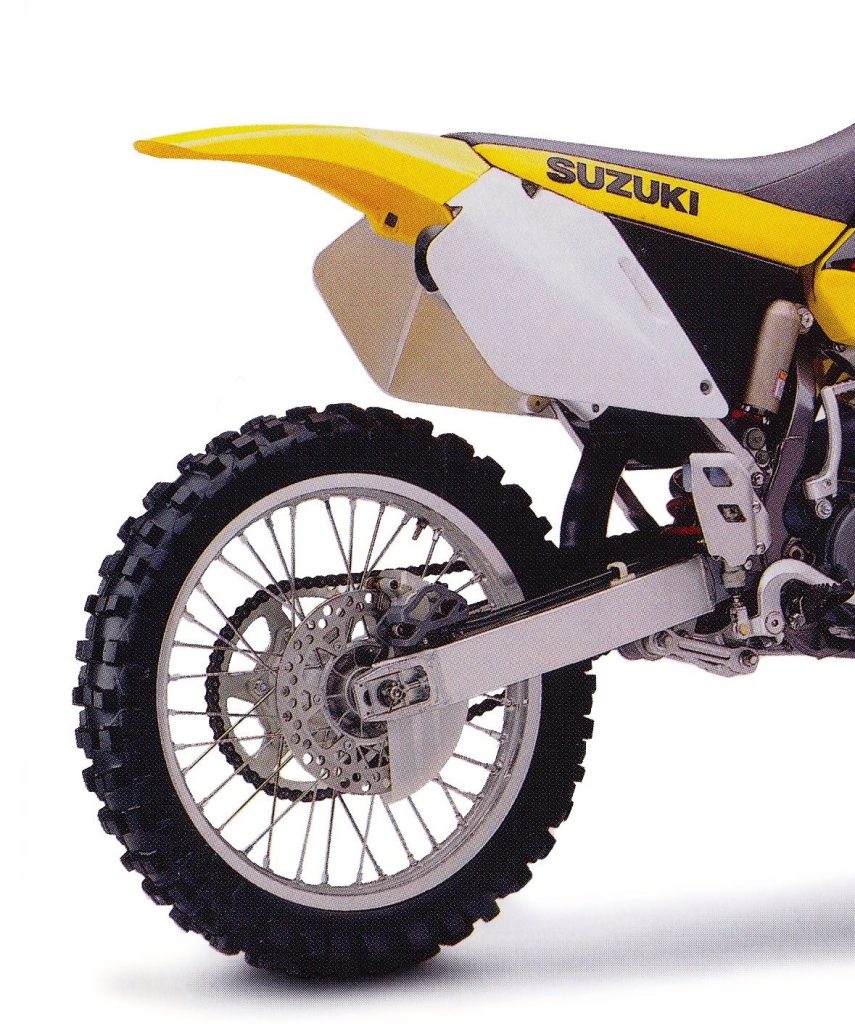 The RM’s shock remained the weak link in its suspension package. It tended to pack in the rough, kick under braking, and blow through its stroke on hard hits. For all but the lightest, least-experienced riders, a revalve was a good investment. Photo Credit: Suzuki
Overall, it was an excellent engine and a solid upgrade over 1998. The transmission issues were annoying, but not enough to sour most testers on the RM motor’s other charms. Its wide powerband and quick response made the RM fun and easy to ride, and most testers rated it as the second-best motor in the 1999 125 division. No other machine could match the Yamaha’s incredible combination of power and usability in ’99, but the RM came the closest to unseating the horsepower champ.
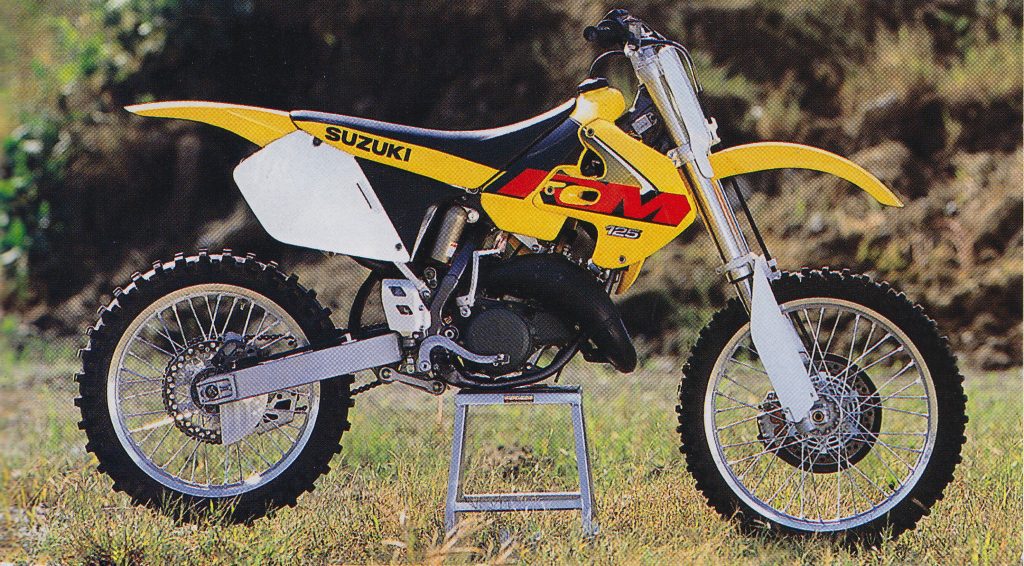 Aside from the giant snow shovel radiator scoops and odd “ROM” graphics the ’99 RM125 was a handsome motorcycle. Ditching the barn door shrouds and going back to the cleaner 1998 design helped the RM’s looks tremendously. Photo Credit: Naoyuki Shibata
On the suspension front, the RM was a bit of a mixed bag in 1999. Up front, the new Showa inverted forks were not as plush as the old conventional units, but they did do a good job of smoothing out the track. They offered excellent bottoming feel and were less prone to flex on hard hits. Low-speed compliance was on par with the YZ and KX, but most riders did not feel they were as smooth on small bumps and square edges as the old conventional units. Some riders also complained that the new forks imparted a good deal more feedback to the bars than the ’98 forks. They may have been an improvement for the Primal Impulse guys, but most magazine testers felt they were not an upgrade for the average RM125 buyer.
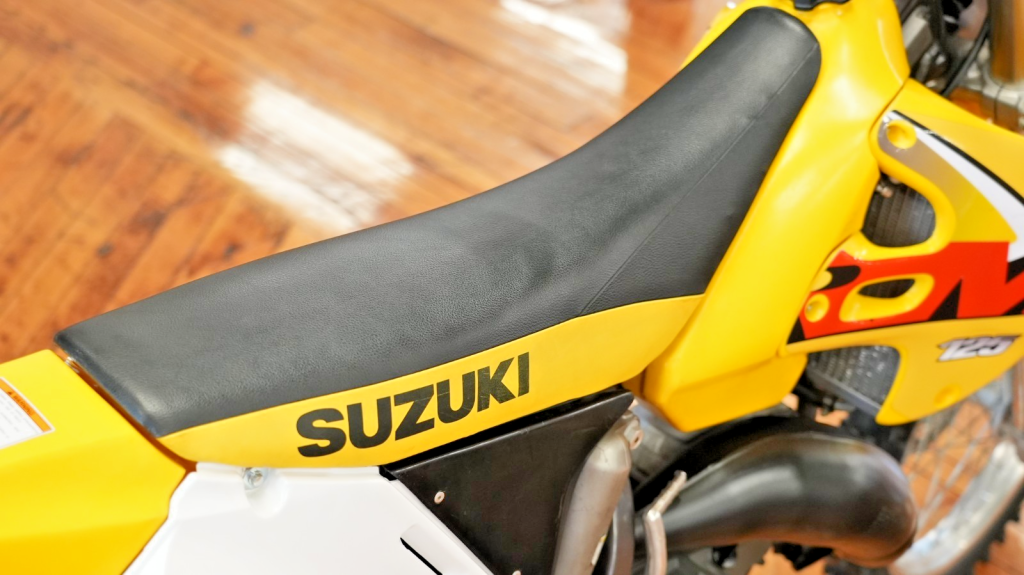 Many riders complained about the wide, boot-catching new shrouds, but the majority of the RM’s bodywork was sleek and well integrated. The machine could accommodate a wide range of rider sizes and was one of the most comfortable machines in the class. Photo Credit: Kaplan Cycles
In the rear, the RM was improved but still well behind the best performers in the class. The updated valving reduced the shock’s tendency to kick in the rough, but it remained prone to packing and still delivered the occasional hop under braking. Hard landings also delivered a pronounced “thud” as the shock blew through all its travel. Upping the compression damping and speeding up the rebound helped reduce these traits, but then the shock became very busy. No amount of dial spinning seemed to deliver a setting that was firm enough for big hits and compliant enough to soak up small chop. The shock was far from hopeless, but most testers ranked it mid-pack in 1999.
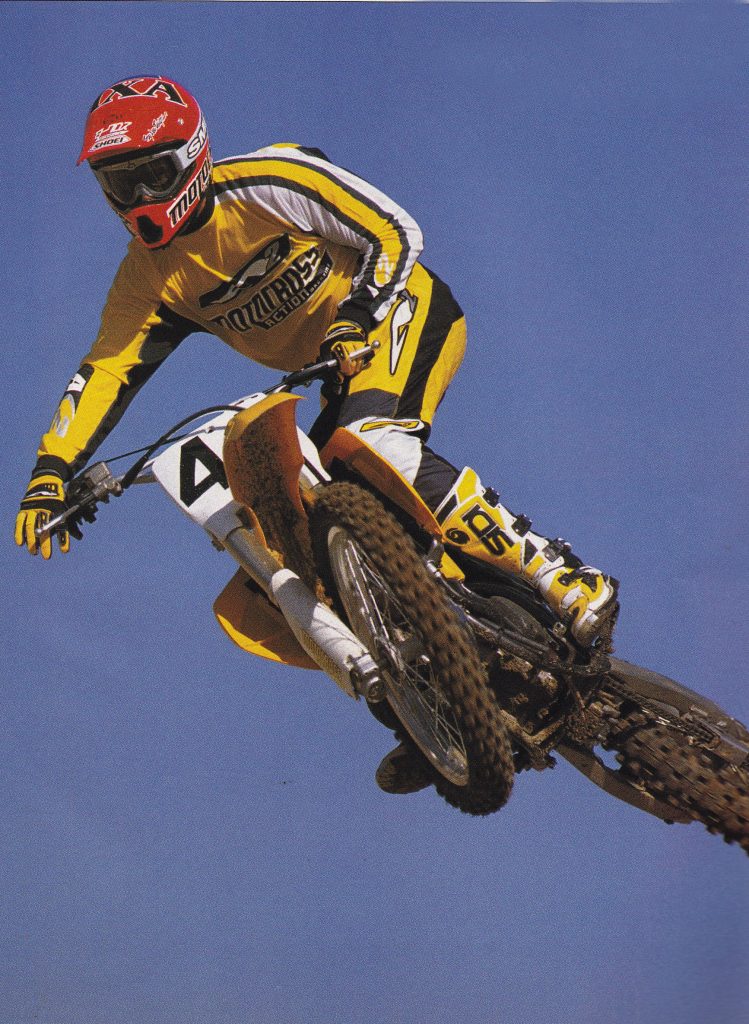 Airing out an RM125 is one of the true joys in motocross. The yellow machines feel like they were meant to fly, with an ultra-light and flickable feel that begged you to go big and soar with the eagles. Photo Credit: Motocross Action
On the handling front, the RM125 was easily one of the most fun-to-ride bikes in the class. The RM’s chassis was a cornering fool, and no other 125 had its combination of steering precision and ultra-light feel. In the turns, the RM felt like it was hardwired to the rider’s brain, and the bike went exactly where its pilot intended. It stuck like glue in off-cambers and never washed out or understeered the front end. About the only complaint riders had with the RM’s turning was the new radiator shrouds, which stuck out quite a bit more than the 1998 versions. They were quite noticeable when sliding forward for turns, and some riders found that they hooked on their boots and generally got in the way. Taller riders seemed to have less of an issue with them, but no one thought the jumbo shrouds were an improvement. Aside from the giant shrouds, the RM’s ergonomics were excellent, and it did a good job of fitting a wide variety of pilots.
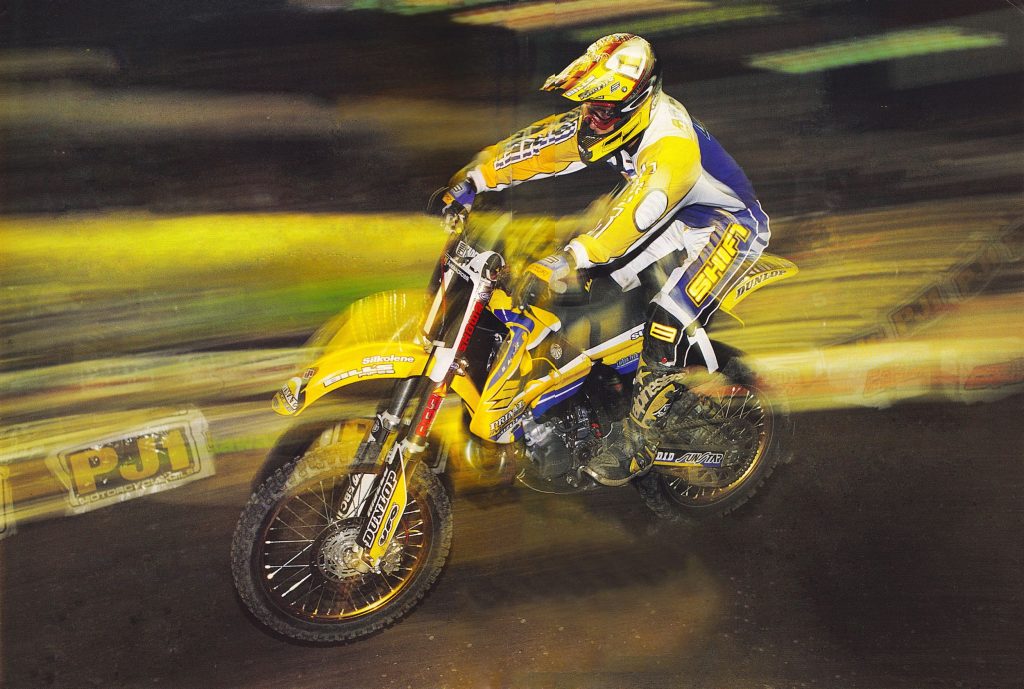 Suzuki’s most successful professional rider on the RM125 in 1999 was undoubtedly Buddy Antunez. Once one of the most lauded amateurs in the sport, Antunez resurrected his career in the late nineties in the AMA Arenacross series. Ater winning the series in 1997 on a Tuff Racing Honda, Antunez would switch to Suzuki and take the yellow machines to four more Arenacross titles before making a brief jump back to the stadiums in 2002. Photo Credit: Karl Ockert
For most riders, the only real quibble with the RM’s handling came down to its penchant for the occasional bout of headshake. Here the stiffer forks and busy shock seemed to work against the RM. It was twitchy at speed and could be a real handful if the track was fast and rough. For many, this was an acceptable tradeoff for the RM’s excellent turning, but not everyone was comfortable with the Suzuki’s wandering ways.
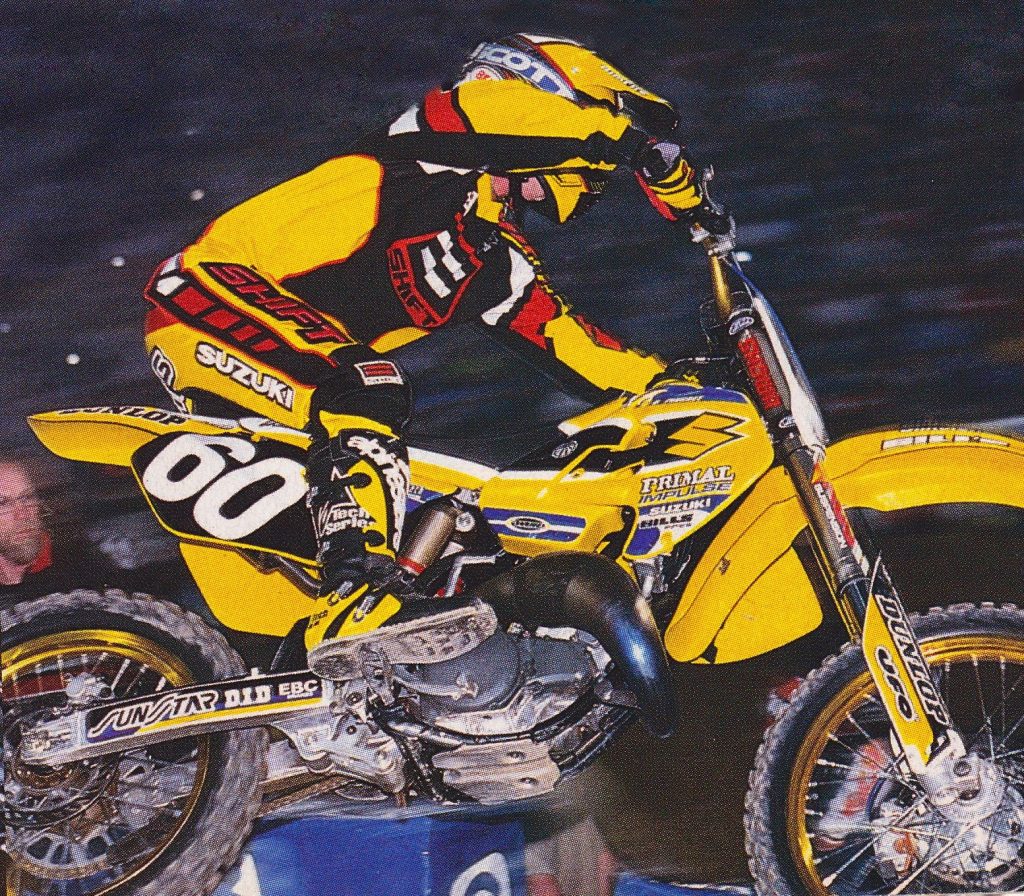 In the stadiums, David Pingree was Suzuki’s top finisher, carding a win in Minneapolis and finishing the West Coast Supercross series in fourth overall. Photo Credit: Donn Maeda
On the detailing front, the RM was a somewhat disappointing performer. The Suzuki’s motor made noticeably more clatter than the competition and was known to crack the shaft that opened and closed the power valve system. If this happened, the RM’s top-end power all but disappeared. The stock pipe springs were also absolute garbage and prone to self-ejecting. Keeping spares handy or running a White Bros. or other aftermarket alternative was advisable. The clutch basket was butter soft and easily notched if the clutch was hammered. Running a Hinson or Barnett clutch was good insurance for those with a penchant for clutch abuse. The new hardened piston proved more durable, but some RMs were known to stick their rings. If this happened, it could catch a port and roach the cylinder. Taking the top end down every four races and inspecting everything carefully was vital to keeping the RM roosting.
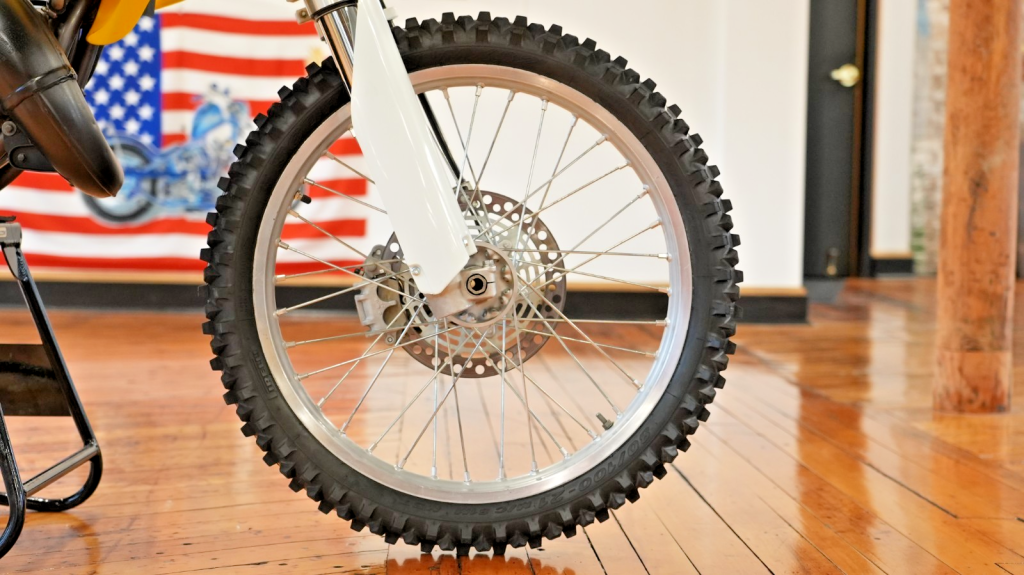 The RM’s powerful front binder was one of the best in the business in 1999. Photo Credit: Kaplan Cycles
The RM’s frame was an excellent handler, but hard-ridden ones were known to stretch badly enough to make it difficult to line up the motor mounts once the engine was removed. The footpeg mounts were also notorious for stretching and drooping. If neglected, a broken footpeg was in your future. The stock aluminum seat brackets were also very brittle and easily broken. Smart riders swapped them out for a pair of Yamaha’s steel brackets for a bit of extra insurance. Overall braking was excellent, and the RM offered one of the strongest front binders in the class.
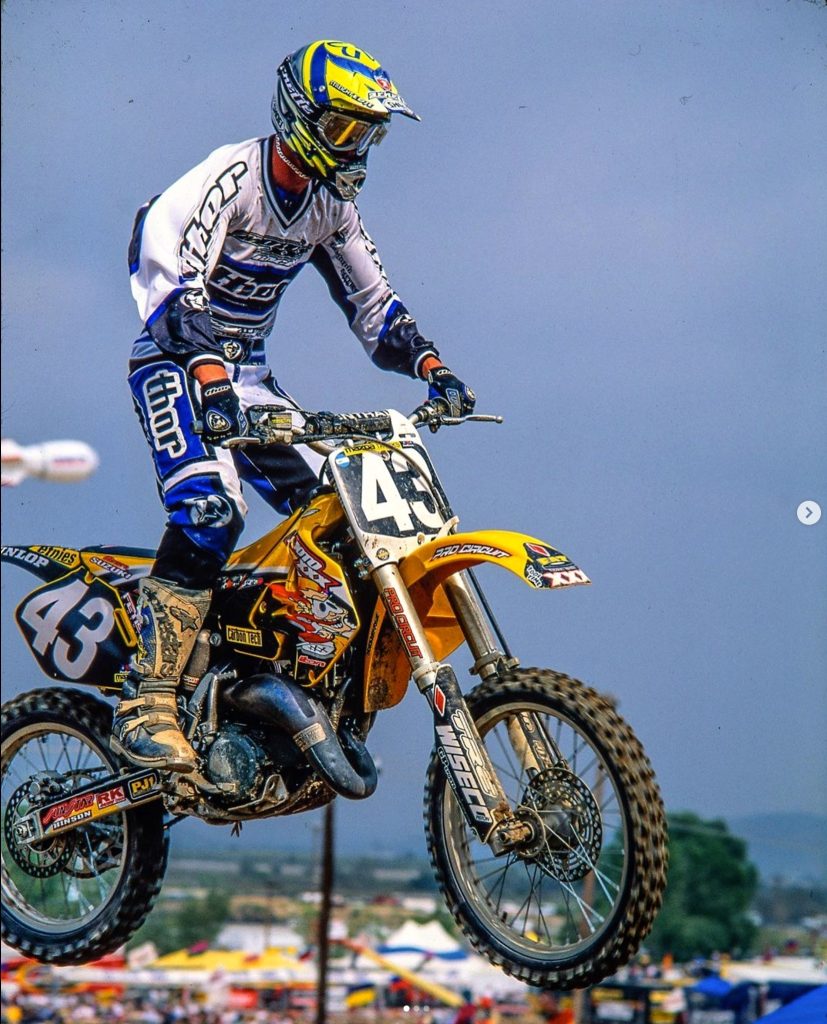
One of the young up-and-comers on the RM125 in 1999 was MotoXXX’s Travis Preston. Travis’ ninth overall in the 125 West was a solid finish for the third-year pro on the privateer Suzuki squad. Three years later, Preston would be the 125 West Coast Supercross Champ. Photo Credit: Chris Hultner
Most of the RM’s bodywork was clean and handsome, but the massive shrouds looked like something from a completely different motorcycle. It was a love-it-or-hate-it addition that seemed to skew more toward the latter. The odd “ROM” graphics also did not do the new look any favors. The stock graphics were quite flimsy and not likely to survive the first pressure washing, but most riders did not seem to miss them. The RM’s grips, bars, levers, and controls were quite comfortable, but even a minor tip-over was likely to leave them pretzeled and in need of replacement. The levers also seemed to get loose and develop an annoying jangle faster than those on the other machines. The stock chain and sprockets were typical Japanese pot metal but no worse than most of the competition.
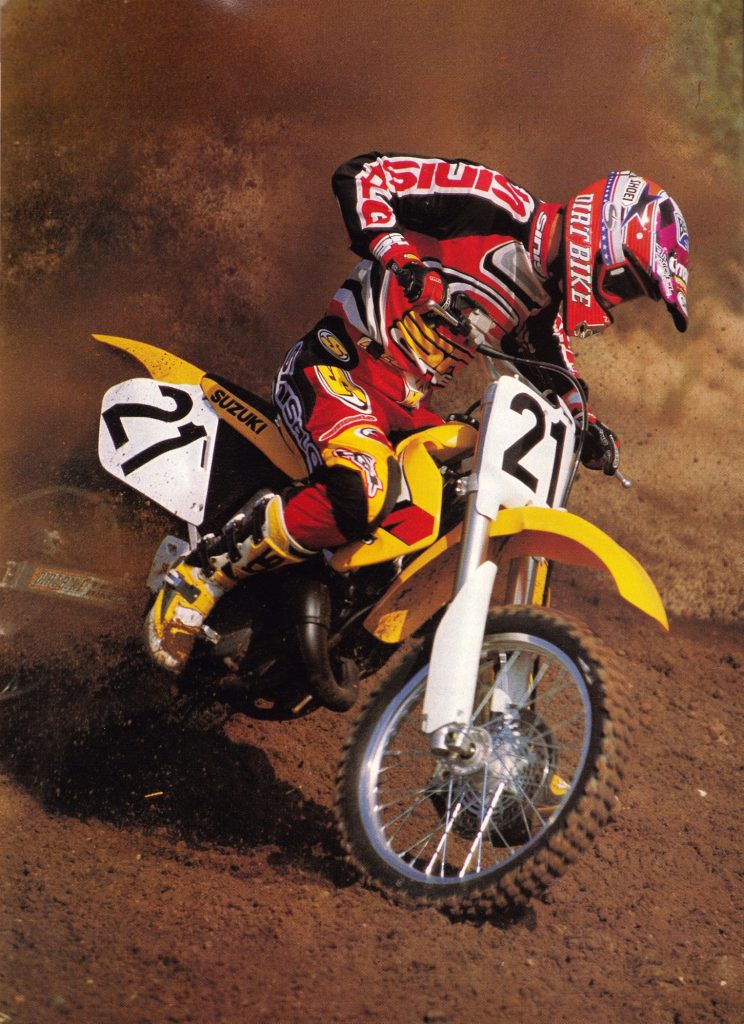 As in previous years, the RM’s chassis was most at home when the track was tight and twisty. Here it had no peer, but once the track opened up and the speeds increased, its penchant for wandering and wagging its front wheel left some riders looking for a fresh pair of BVDs. Photo Credit: Dirt Bike
In the end, the 1999 Suzuki RM125 proved to be a very competitive, if somewhat maintenance-intensive, machine. Its motor, suspension, and handling had the performance to run at the front, but it took a good mechanic and a solid maintenance schedule to keep it in top running condition. Yamaha’s YZ125 was still the pick of the litter for most 125 hopefuls, but Suzuki’s lithe and lively RM had a lot to offer. For tight and jump-filled tracks, the RM was an attractive alternative to the ubiquitous YZ and a far better performer than the Honda and Kawasaki. For many racers, that was more than enough to warrant going yellow in 1999.
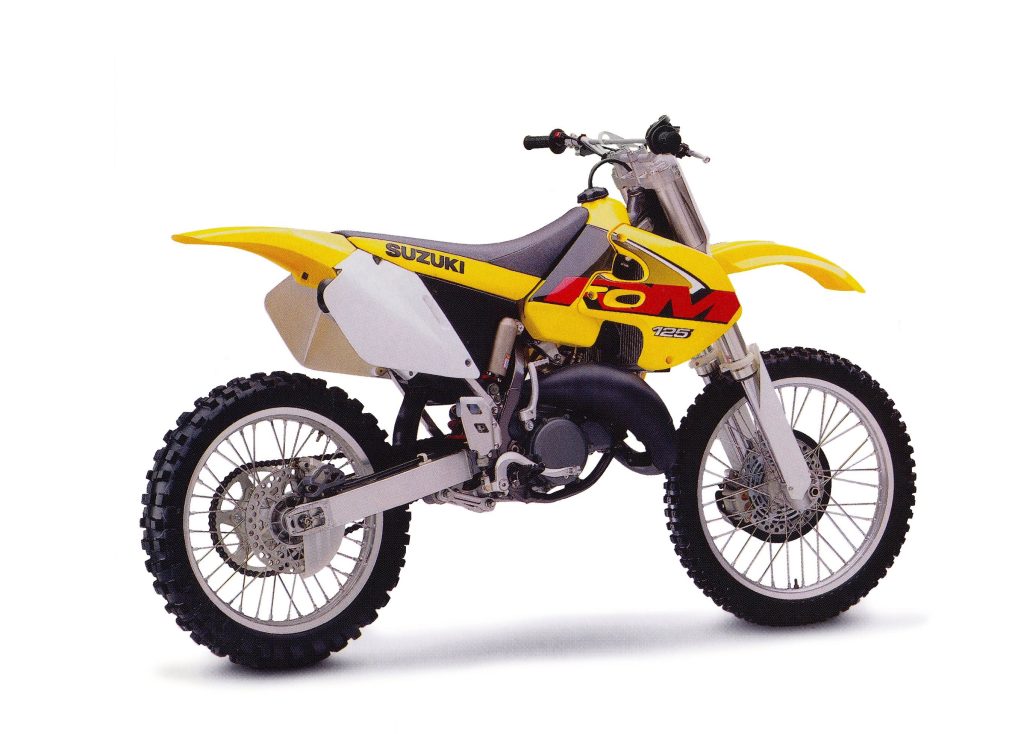 Suzuki’s 1999 RM125 gave riders who didn’t want to go blue a seriously fun and sharp-handling package. With razor-sharp cornering, a strong motor, and excellent forks, it was a legitimate contender capable of winning races at the local and amateur national level — a fantastic choice for any aspiring 125 racer.