
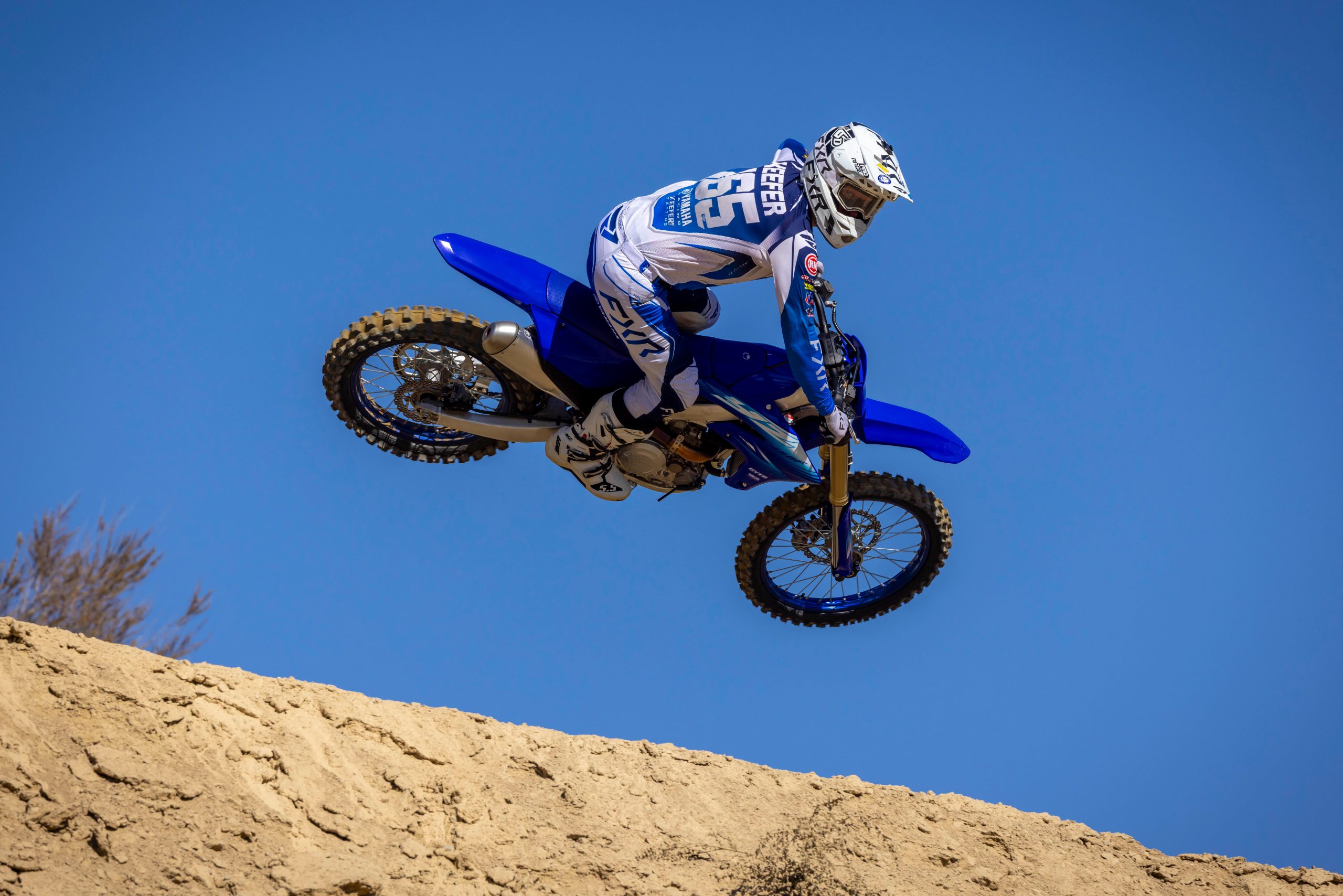
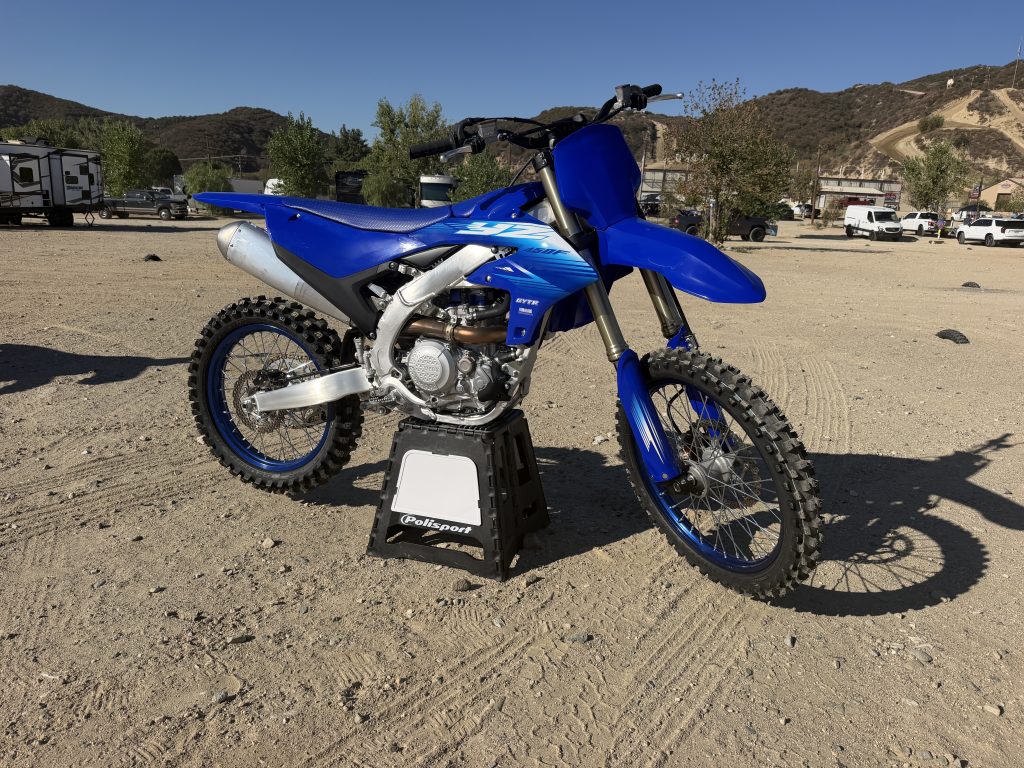
The Yamaha YZ450F received a fairly substantial makeover in 2026, so if you were expecting Yamaha to come back in 2027 and completely reinvent its 450, that isn’t what happened. The 2027 is more about refinement.
And I’m okay with that.
The 2026 YZ450F was already a better-balanced motorcycle than the previous-generation Yamaha, especially when it came to chassis comfort, front-end feel and overall rideability. For 2027, Yamaha basically took that package, addressed a couple areas and left the things that worked alone.
So the question isn’t whether the 2027 YZ450F is good.
The bigger question is: If you already own a 2026, is the 2027 actually better enough to justify buying one?
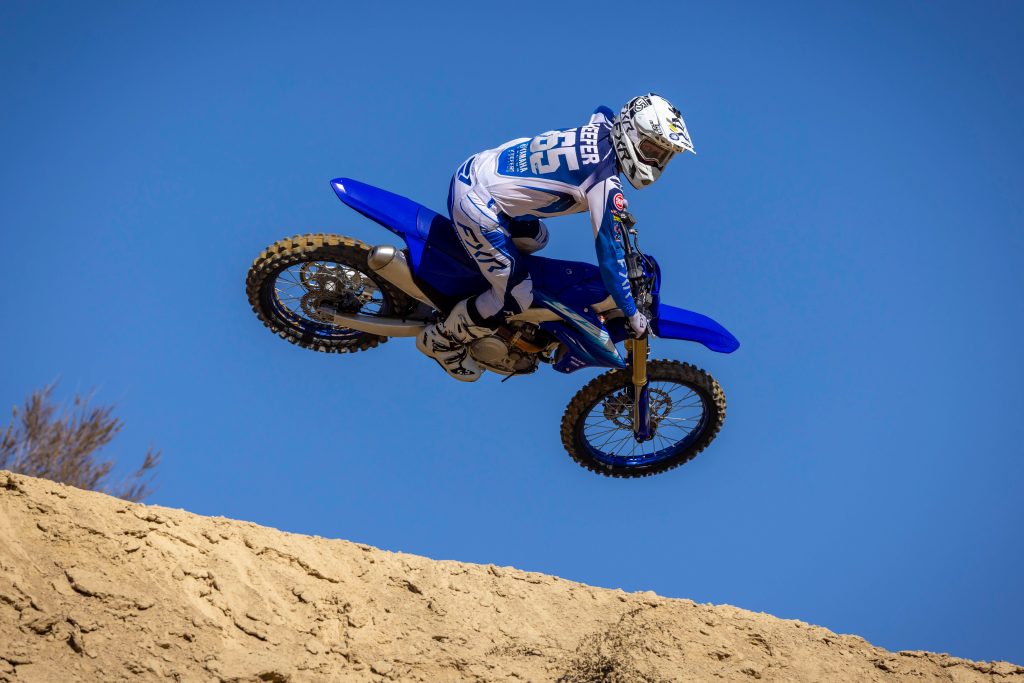
WHAT ACTUALLY CHANGED FOR 2027?
Let’s get this out of the way first because there can be some confusion about what is actually new.
The major engine, frame, hydraulic clutch and suspension changes came on the 2026 YZ450F. Those pieces carry over into 2027.
The biggest mechanical change for 2027 is the rear braking system, hydraulic clutch line, and suspension valving.
Yamaha went to a smaller and lighter rear brake package. The rear rotor drops from 240mm to 220mm, and Yamaha also reduced the size of the rear brake caliper and master-cylinder pistons. The brake hose material and rotor bolts were revised as well.
Altogether Yamaha claims the new rear brake system saves 180 grams, or just under 0.4 pound.
That doesn’t sound like much—and you’re not going to get off a 2026 and say, “Wow, this thing feels four-tenths of a pound lighter”—but reducing unsprung weight is never a bad thing.
The front fork got softer valving specs and a higher oil volume. The rear shock adjuster also got updates for more comfort.
The hydraulic clutch hose got softer and received increased expansion.
ENGINE
The YZ450F engine is still one of the strongest parts of this motorcycle.
If you’re looking for a 450 that has a lot of usable power without needing to ride the thing at 10/10ths all the time, the Yamaha continues to do that extremely well.
The engine has plenty of meat down low (even with the 109dB sounds level), a strong midrange and enough pulling power up top that you don’t have to constantly grab another gear. What I like about this engine is that you can be lazy with it. But.. There is a double edge sword here: If you’re tired late in a moto, you can leave it in a taller gear and let the torque do the work. Also if you try to ride more aggressive this bike can wear you out quickly. I feel like if you ride this bike at 80% all the time, this is the best engine for that type of riding.
At the same time, this isn’t some slow, mellow vet engine. There is plenty of horsepower available when you want it.
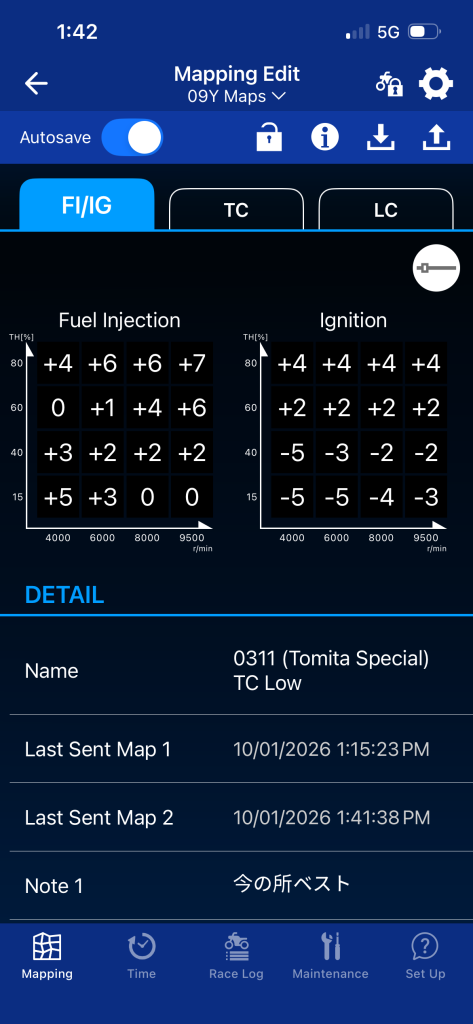
The Yamaha Power Tuner App remains one of the best OEM tuning tools available. Being able to change fuel and ignition mapping from your phone makes it much easier to tailor the YZ450F’s character to different tracks and rider abilities. Traction Control and Launch Control are also integrated into the system.
For most riders, I don’t think the YZ450F needs more power. I would concentrate on getting the delivery you want instead of trying to make a 450 faster. We will post a Tomita map here to help you with a smooth roll on transition.
HYDRAULIC CLUTCH
The hydraulic clutch introduced on the 2026 machine carries over.
This was an important update because the engagement point stays more consistent during a moto and doesn’t require the same cable adjustment as the older system.
The clutch has a better engagement point with the new hose for 2027, and when you’re trying to modulate power coming out of a tighter corner, that consistency helps. That on/off 2026 feel is better and less apparent. Is it better than a cable? No, but this is me being old school and preferring the cable feel. Hydraulic lovers will like the new updated lever feel and engagement.
Is it the lightest hydraulic clutch pull in the class? It could be, yes. But clutch feel and consistency are more important to me than simply having the lightest lever at the pits.
CHASSIS
This is where the current-generation YZ450F could be better but it is still one of the most well balanced chassis’ in the 450 class.
The 2027 has a calmer feel than the 2026 Yamaha thanks to the suspension package. It tracks better on lean angle through acceleration bumps and doesn’t give me as much of that nervous sensation when the track gets hard and choppy.
The Yamaha still has a substantial feel underneath you. I wouldn’t call it the lightest-feeling 450 in the class. But there is a difference between a bike feeling light and a bike being predictable.
The YZ450F is predictable. I know where it shines and I know where it doesn’t and I am ok with that.
The front tire contact feel isn’t like a Kawasaki or a KTM but if you buy a Dunlop MX3S front tire, the front tire contact feel goes up exponentially. The stock MX33 doesn’t build confidence so swap that out! Once you do that the predictability goes up and you will not have as much of a light front end feeling off throttle. Where the chassis of the YZ450F feels light is ON THROTTLE. The front can hunt and peck on throttle a little for me and even though that feeling is better in 2027, it isn’t the best in class. I would like a calmer ON THROTTLE feel and you can get that by going back to the old fork pressure spring (more on that in the suspension portion of the article).
Where I still want a little more from the Yamaha is front-end comfort and initial compliance. Depending on track conditions, the chassis/suspension combination can still give the rider more feedback than I would like.
But overall, the balance of the motorcycle is very good.
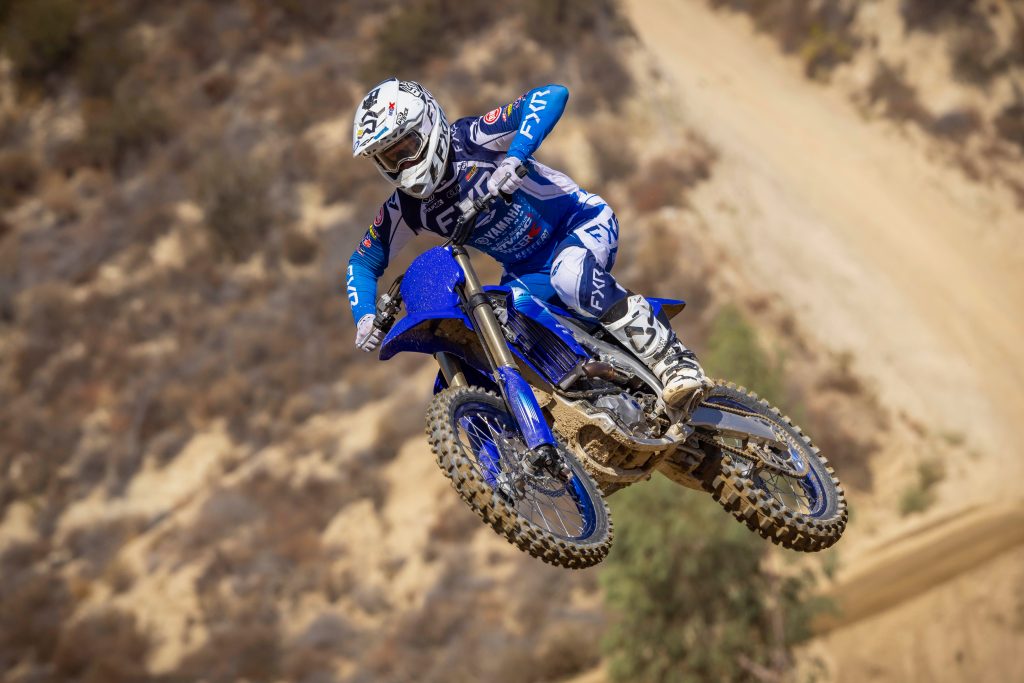
SUSPENSION
It’s difficult to talk about a YZ450F without talking about KYB suspension.
The KYB spring fork continues to be one of the best production forks in motocross. The fork has good hold-up, predictability and enough adjustment range that a wide variety of riders can find a setting without immediately sending their suspension off to be revalved.
The rear KYB shock also has the hand-adjustable low-speed compression clicker, which I appreciate because it makes trackside adjustments much easier.
The stock suspension isn’t necessarily going to feel perfect for every rider straight out of the crate. The fork can have a softer initial portion of the stroke and then ramp into a firmer feeling deeper in the stroke. Getting the balance between fork height, sag and compression settings is important on this motorcycle.
Don’t automatically start turning clickers everywhere. Get your sag correct, establish a baseline, ride it, and make one change at a time. The YZ responds well when the chassis is balanced.
Like I mentioned earlier, going to the older/shorter pressure spring with the 2027 valving can make the fork a lot calmer on light bump absorption. The older pressure spring is a 22 N/m and 107mm long. This can give a little less preload on the fork and calm it down. Doing this can also give you more tire contact and help the Yamaha track better.
THE NEW REAR BRAKE
This sounds like a small change on paper, but I actually like what Yamaha was trying to accomplish here.
Going from a 240mm rear rotor to a 220mm rotor changes the personality of the brake. Instead of having a lot of braking force immediately, the rear brake has a more progressive feel.
For motocross, I prefer this.
I don’t want a rear brake that is basically an on/off switch. I want to be able to drag the brake entering a rut or use it to settle the chassis without accidentally locking the rear wheel.
The smaller system also removes some unsprung weight from the back of the motorcycle. Is this change enough by itself to sell your 2026? No. But it is a legitimate improvement.
CORNERING
The YZ450F has become much easier to trust at corner entrance. Once you’re in a rut, the Yamaha holds a line well. Where I notice the Yamaha’s personality most is when you transition from braking into acceleration. The chassis stays relatively calm, and because the engine has such usable torque, you don’t need to be overly aggressive with the throttle to get the motorcycle moving.
Once you get a better front tire on the bike it becomes A LOT better to corner but it still will not have that front end feel of the Kawasaki or KTM. It does have more comfort than a KTM and isn’t as front end heavy off throttle as the KX so it is a neutral style cornering machine that needs a little extra coaxing when there isn’t anything to bank off of. If there are ruts on your local track. You’re good! If you ride GH a lot, then you may need to find stuff to bank off of to get back on the middle part of your tire quicker.
STABILITY
This might be one of my favorite traits of the YZ450F. The bike is comfortable at speed. When Glen Helen gets rough and you’re carrying speed down one of those nasty, beat-up straights, I want a motorcycle that doesn’t require a bunch of input from me. The Yamaha does a good job here. It doesn’t deflect underneath you excessively, and the combination of chassis balance, KYB suspension and broad engine character makes the YZ450F a very good rough-track motorcycle. Yes, it is a little stiffer than the 2022 and I would like more comfort with the chassis but it is still a very good machine in straight line.
That’s important because everyone talks about how a motorcycle corners when the track is freshly prepped. I care more about how it corners and tracks when the track looks like shit at 3:00 in the afternoon. That’s when you learn what a chassis is really like.
ERGONOMICS
The current YZ450F is much better ergonomically than the older, wider-feeling 2022 Yamahas.
The bodywork is slim, the seat is relatively flat and it’s easy to move forward and backward on the motorcycle. Yamaha’s rider triangle gives taller riders enough room without making shorter riders feel like they’re sitting inside a giant motorcycle.
The airbox location and reversed-cylinder engine layout are still uniquely Yamaha, but when you’re riding the motorcycle you really don’t think about any of that.
You just ride it. That’s a compliment. The seat needs improvement and I would prefer more cushion on the edges of the seat (maybe less rounded?) especially when I am coming out of corners.
WHO IS THIS BIKE FOR?
I think the YZ450F fits a wider range of riders than people give it credit for.
A fast A/Pro-level rider can use the engine and chassis hard enough to race it at a high level, but a 40- or 50-year-old vet rider can also short-shift the engine, use the torque and get through a moto without the motorcycle beating the hell out of him.
That versatility is important. You don’t need to be Deegan to appreciate this motorcycle. I do think this bike needs respect when tired so just know this is a big girl still and if you do get tired, back it down.
2026 VS. 2027: SHOULD YOU UPGRADE?
If you own a clean, well-set-up 2026 YZ450F, I wouldn’t tell you that you HAVE to sell it and purchase a 2027. The difference isn’t that dramatic. You’re starting with essentially the same generation of engine, frame, hydraulic clutch and suspension package. The 2027 rear-brake system is better in my opinion, but it’s not enough to make your 2026 obsolete.
If you’re coming off a 2025 or older YZ450F, that’s a different conversation. The changes Yamaha made for the 2026 generation—and that continue on the 2027—are much easier to feel. The newer chassis is calmer, the motorcycle has better overall comfort, the hydraulic clutch is more consistent, and the complete package is easier to ride when the track deteriorates.
My VERDICT
The 2027 Yamaha YZ450F isn’t about Yamaha chasing a dyno number or completely redesigning a motorcycle just so they can call it “all-new.” It’s about refinement.
The engine is strong but usable. The chassis is stable. The KYB suspension remains one of the bike’s biggest strengths. The hydraulic clutch gives better feel, and the new rear brake has a slightly more progressive character while also dropping some unsprung weight. Are there areas I would still like to improve? Absolutely.
I’d still like a little more comfort and compliance from the front of the motorcycle in certain conditions, and the Yamaha isn’t necessarily the lightest-feeling 450 when you’re changing direction. But when the track gets rough and you want to still go out and ride this is one of those motorcycles that starts making more sense.
The 2027 YZ450F isn’t drastically better than the 2026. It’s just a little more refined—and sometimes that’s exactly what a good motorcycle needs. -KK