

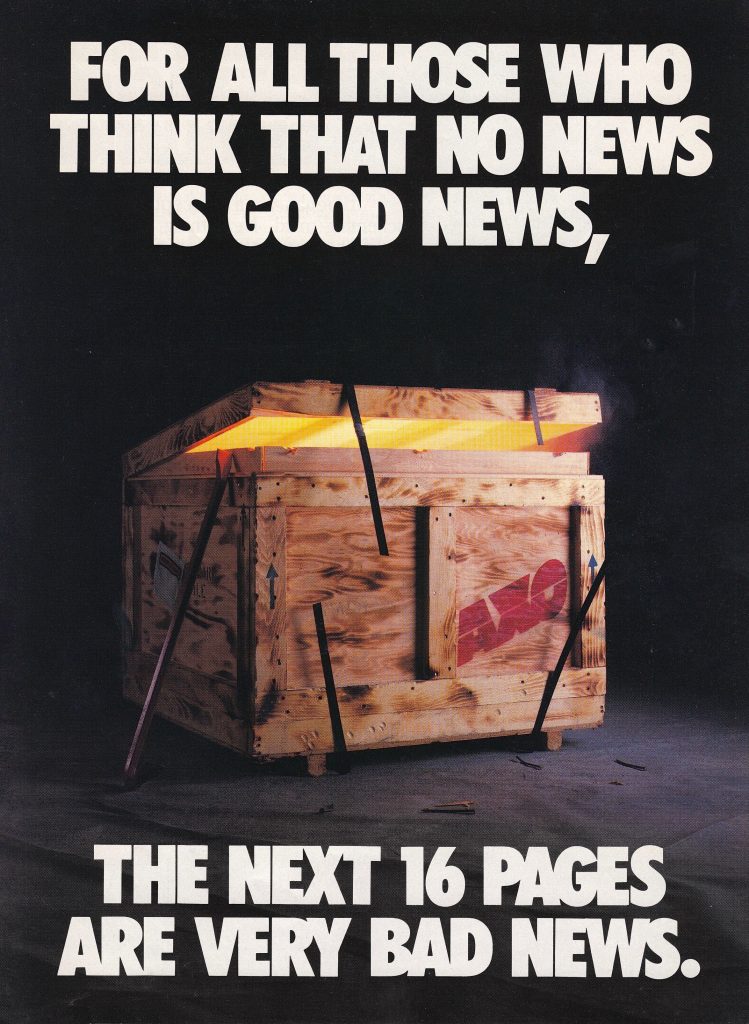
For this edition of Classic Ink, we are going to take a look back at an ad for AXO Sport’s new lineup for 1987.
 In 1984, Jim Hale partnered with AXO founder Remo Berlese to expand the Italian company’s presence in the USA. The newly founded AXO Sport America used Hale’s marketing know-how and AXO’s excellent reputation for boot quality to quickly become one of the major powers in the off-road gear market. By 1987, AXO Sport was firmly established as a serious contender to the dominance of JT and Fox.
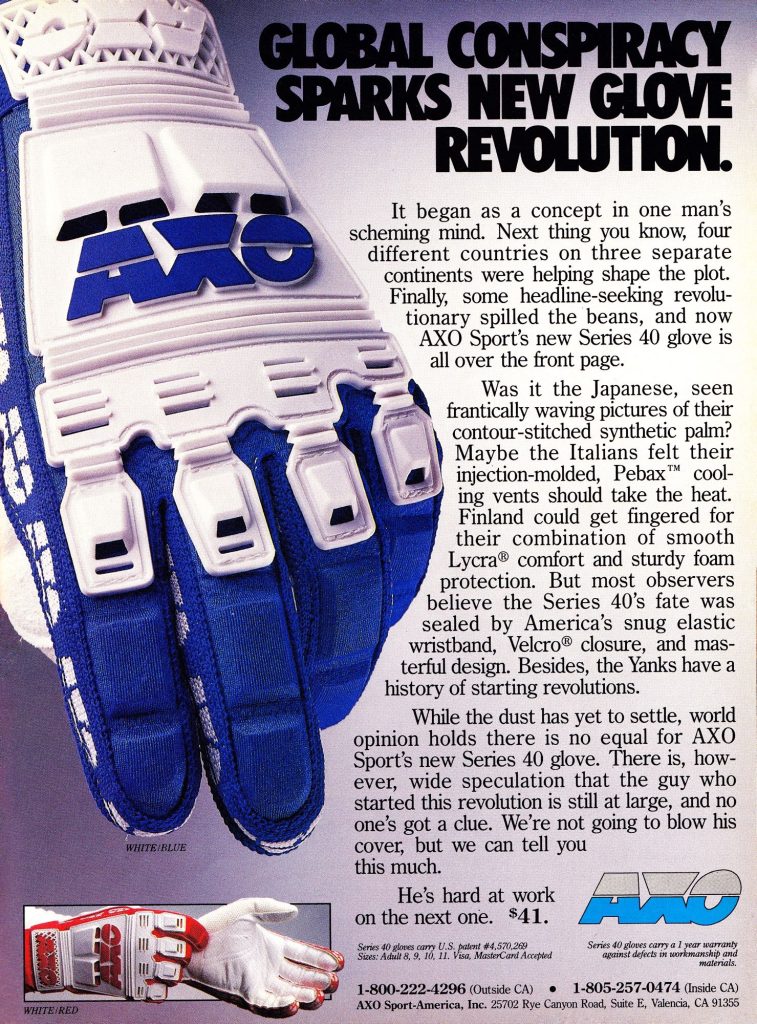 In 1985, AXO Sport hit a home run with their new Series 29 glove. The plastic-backed glove offered great protection and innovative styling that caught on fast with riders. Two years later, AXO introduced the new Series 40 glove that replaced some of the injection-molded plastic with foam and added additional coverage for the rider’s wrist. Personally, I did like the styling of the new Series 40 gloves, but I did not care for the resistance that the plastic section attaching the top of the glove to the wrist provided.
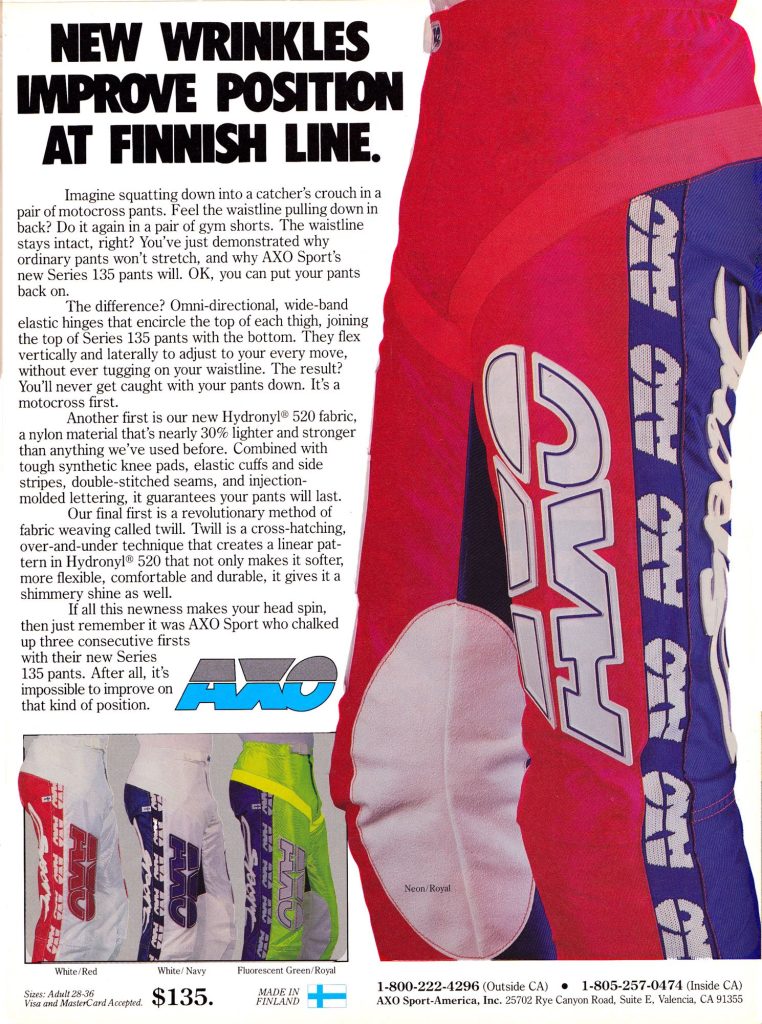 At $135 in 1987, these Finnish-built Series 125 pants would cost a whopping $395 in today’s dollars. For that eye-opening amount of money, you got a really high-quality pair of pants that looked great and were extremely durable. Adding the flexible spandex sections to the top of the legs was a real innovation at the time in terms of comfort, fit, and flexibility.
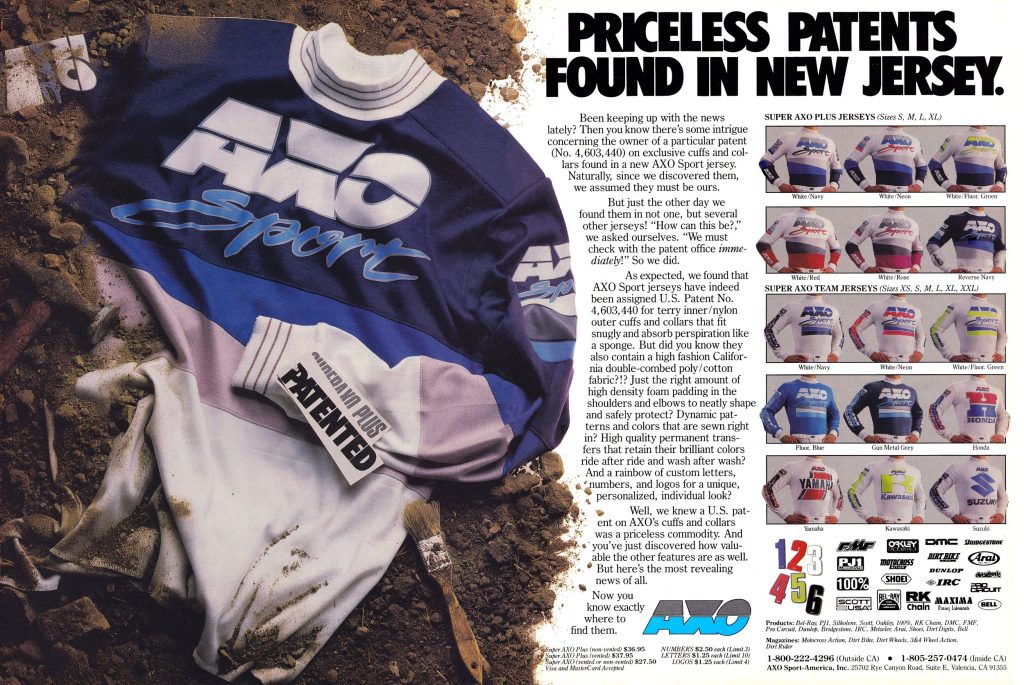 AXO Sport was very proud of their new patented terrycloth cuffs and collars in 1987. I had one of these jerseys, and they were indeed soft and absorbent. If you put one of these Super AXO Plus jerseys on now, however, they would feel like a turtleneck hotbox. Back in 1987, though, they were very trick. Even though modern materials are lighter and better-breathing, I do miss the classic cotton jerseys of the eighties and nineties.
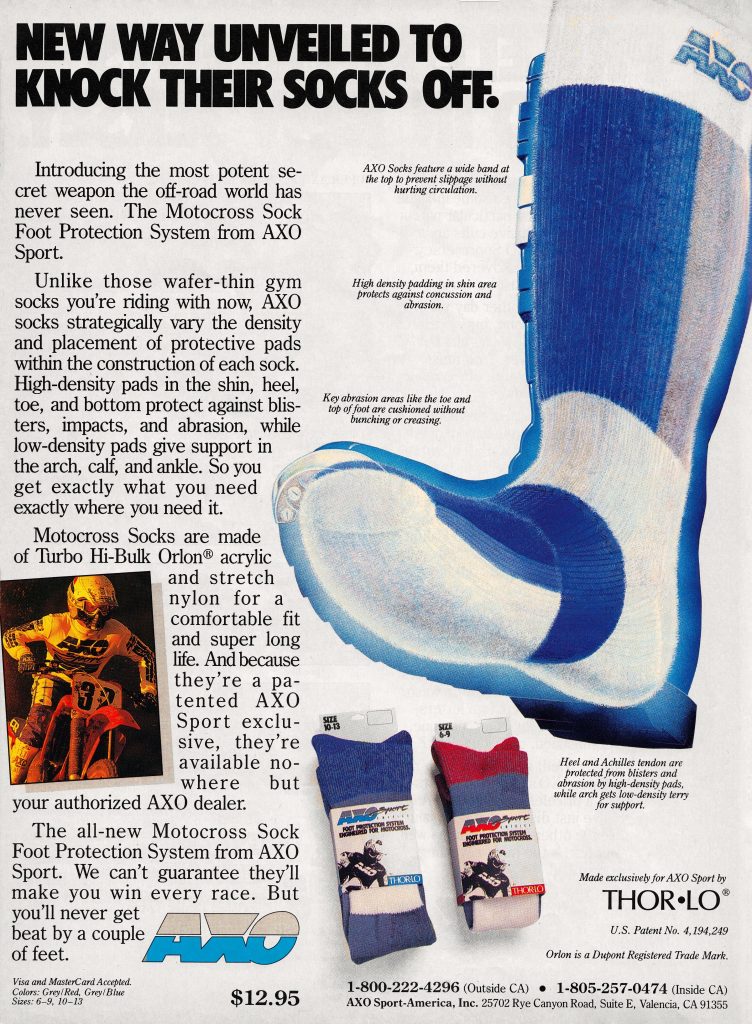 The first time I got a pair of these AXO Motocross Socks, I could not believe how much more comfy these were than the regular gym socks I normally rode in. It felt like an extra layer of cushioning inside the boot and kept my feet from sliding around inside when I got sweaty. It was a simple thing, but they made a real difference in my foot comfort when riding.
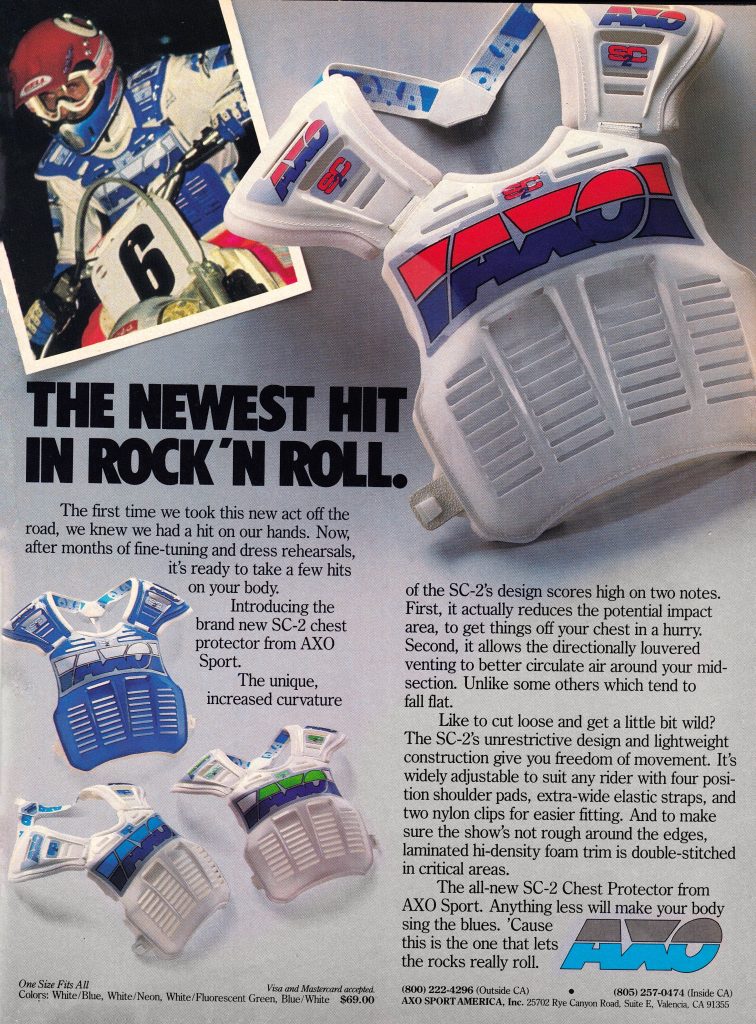 I was never a big fan of chest protectors when riding, and I never had one of these AXO SC-2 protectors from ’87. They are pretty decent-looking, but they don’t seem to offer as much protection as the Fox Racing Roost 2 and the HRP Flak Jak. If all you wanted was roost protection, however, the SC-2 seemed like a good option.
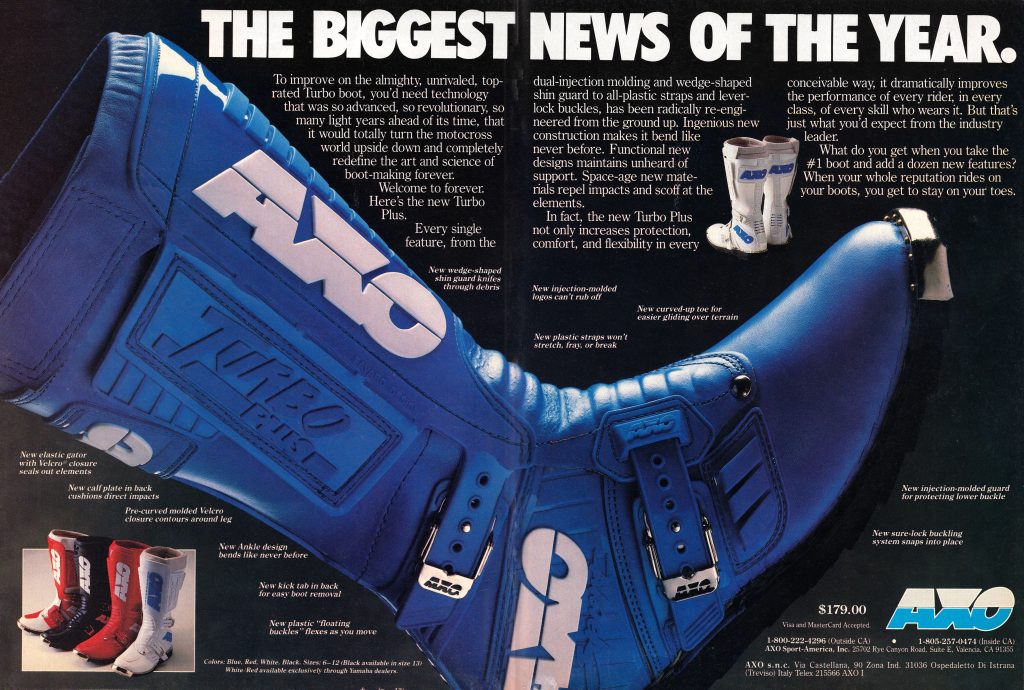 AXO made their name with boots, and the all-new Turbo Plus boot for 1987 was the latest offering from the Italian company. I was a big fan of AXO’s boots in this era with their sano styling and injected molded plastic protection.
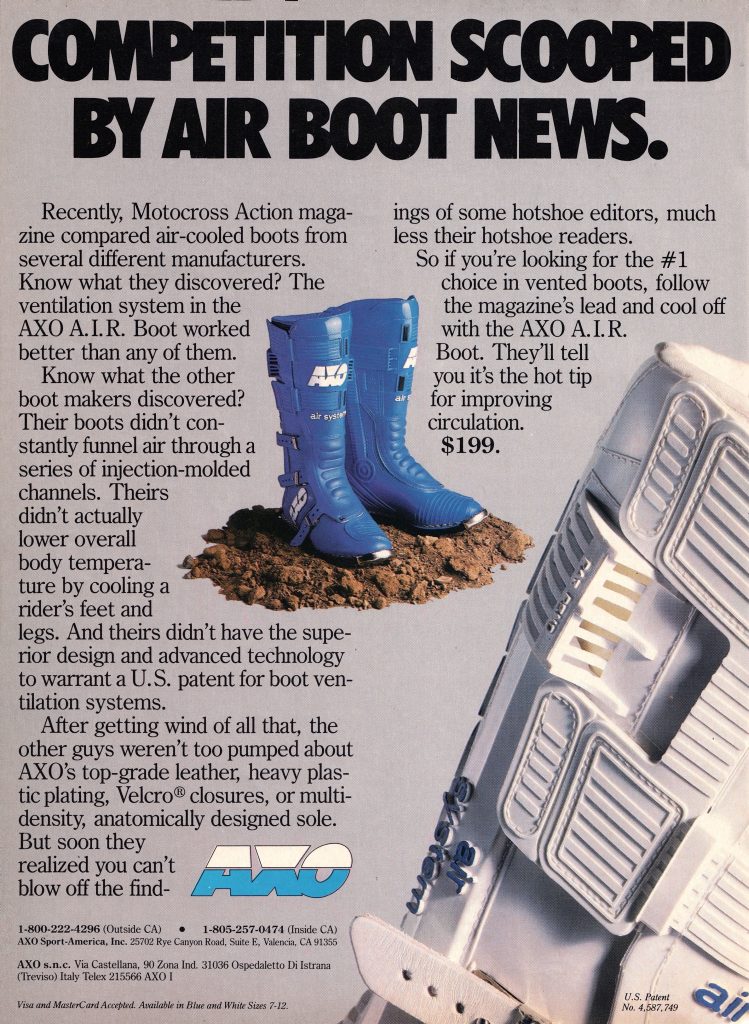 AXO’s new A.I.R Boot may have won Motocross Action’s vented boot shootout, but it seemed to be a victory in a category no one much cared about. The vented boot fad lasted a few years in the mid-eighties and quickly faded into obscurity.
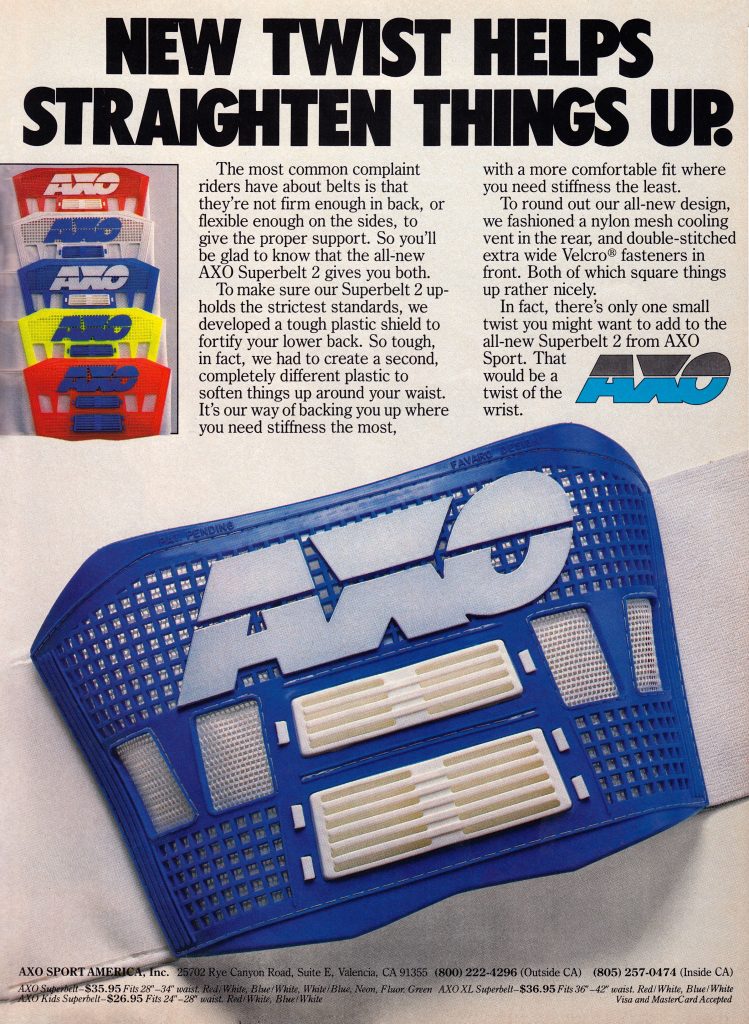 Unlike the A.I.R boot, AXO’s Superbelt 2 was a massive hit for the brand. Eventually, kidney belts fell out of favor, but for a solid decade, the Superbelt and Superbelt 2 were one of AXO’s most successful products. I never liked wearing a kidney belt personally, but that fluorescent orange and blue is still fire in my opinion.
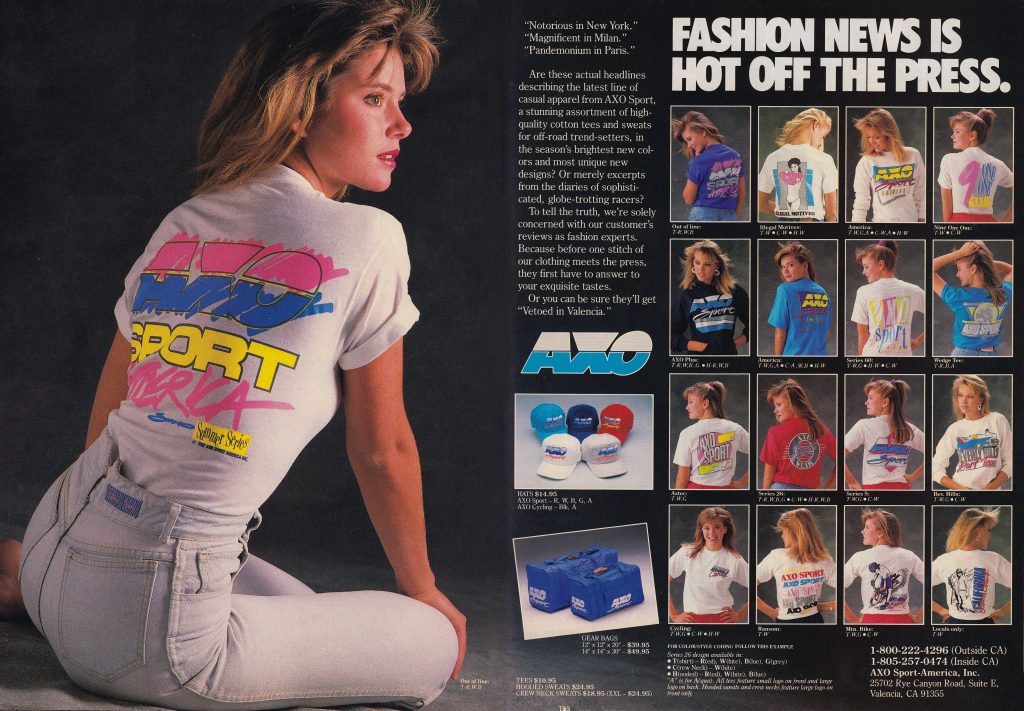 You can keep those corduroy hats, but the rest of this casualwear for 1987 is pretty sweet. I would love to have that blue AXO Plus shirt in the second row, and the Out Of Line shirt the model on the left is wearing is 80s awesome.
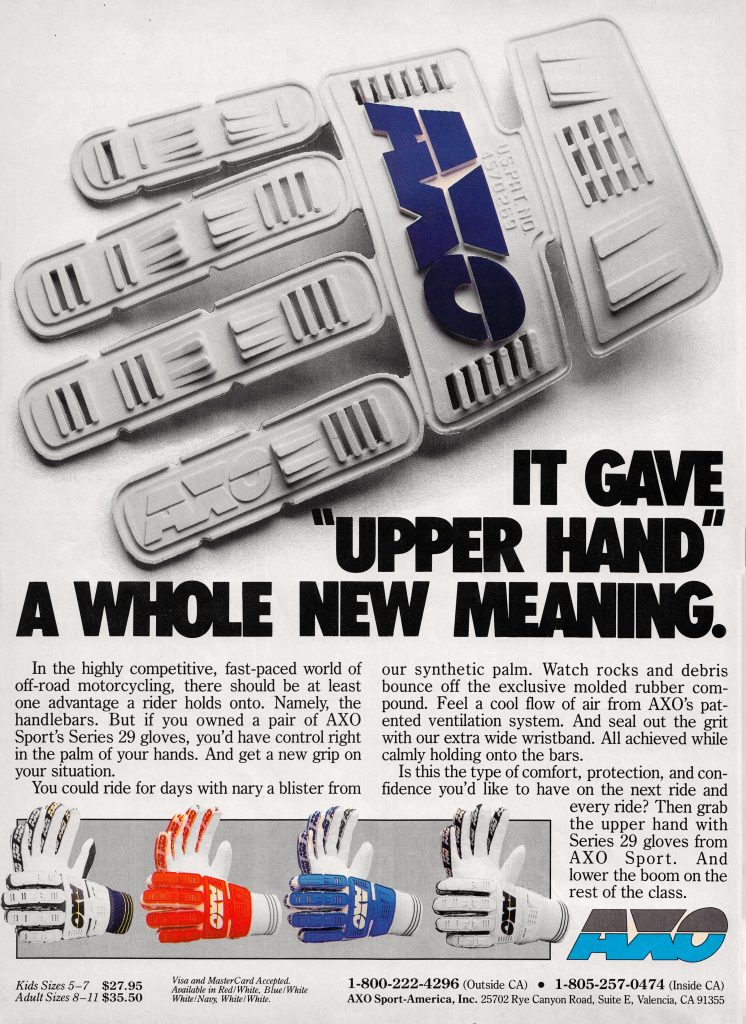 Today’s riders would be horrified by the amount of protection these Series 29 gloves provided, but I loved them at the time.
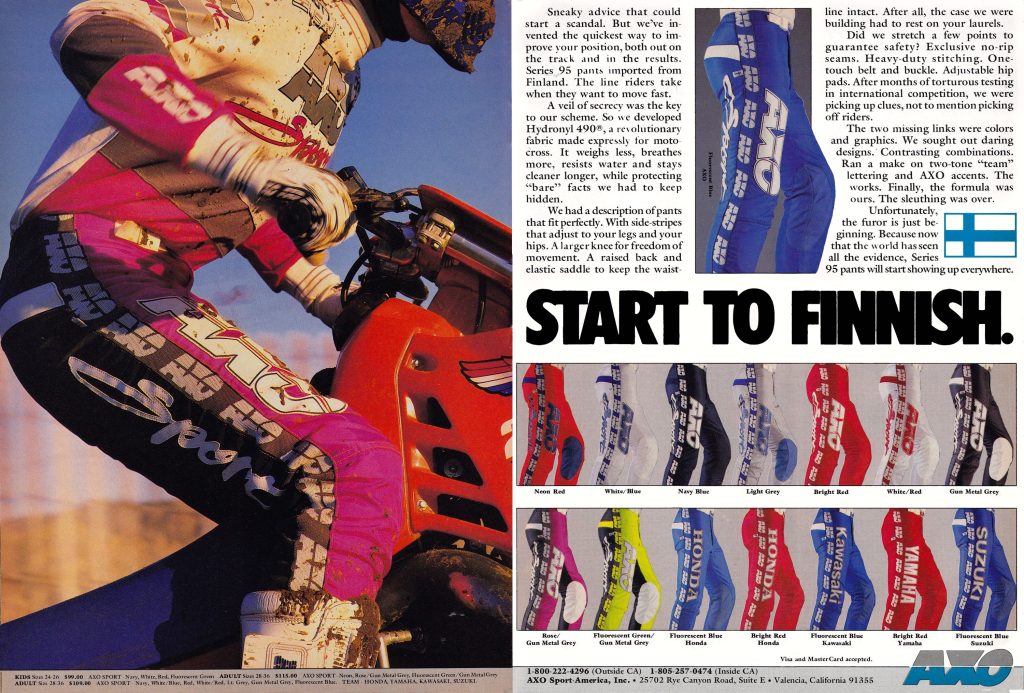 All of AXO’s pants were produced by Yoko in Finland, and the quality of their construction was quite apparent. That Neon Red was pretty cool, but my choice for Lit Kit in 1987 was that Rose and Gun Metal combo.
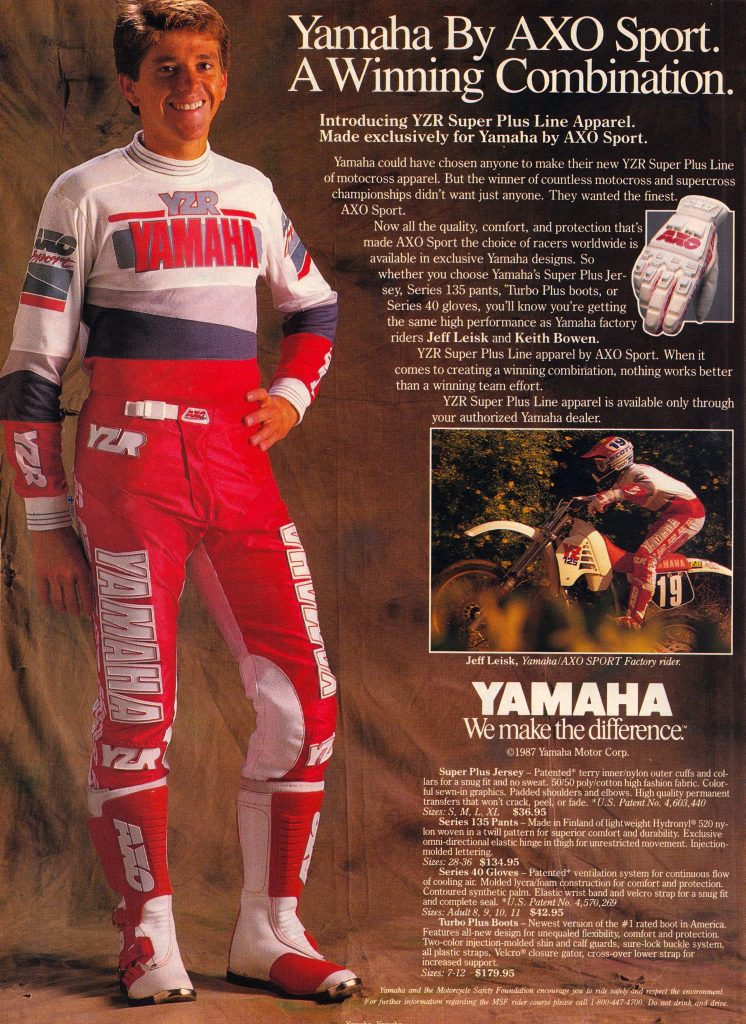 In 1987, AXO partnered with Yamaha to produce their YZR line of branded gear. Australia’s Jeff Leisk picked up a factory ride with Yamaha that season and ran the YZR gear in the AMA series.